


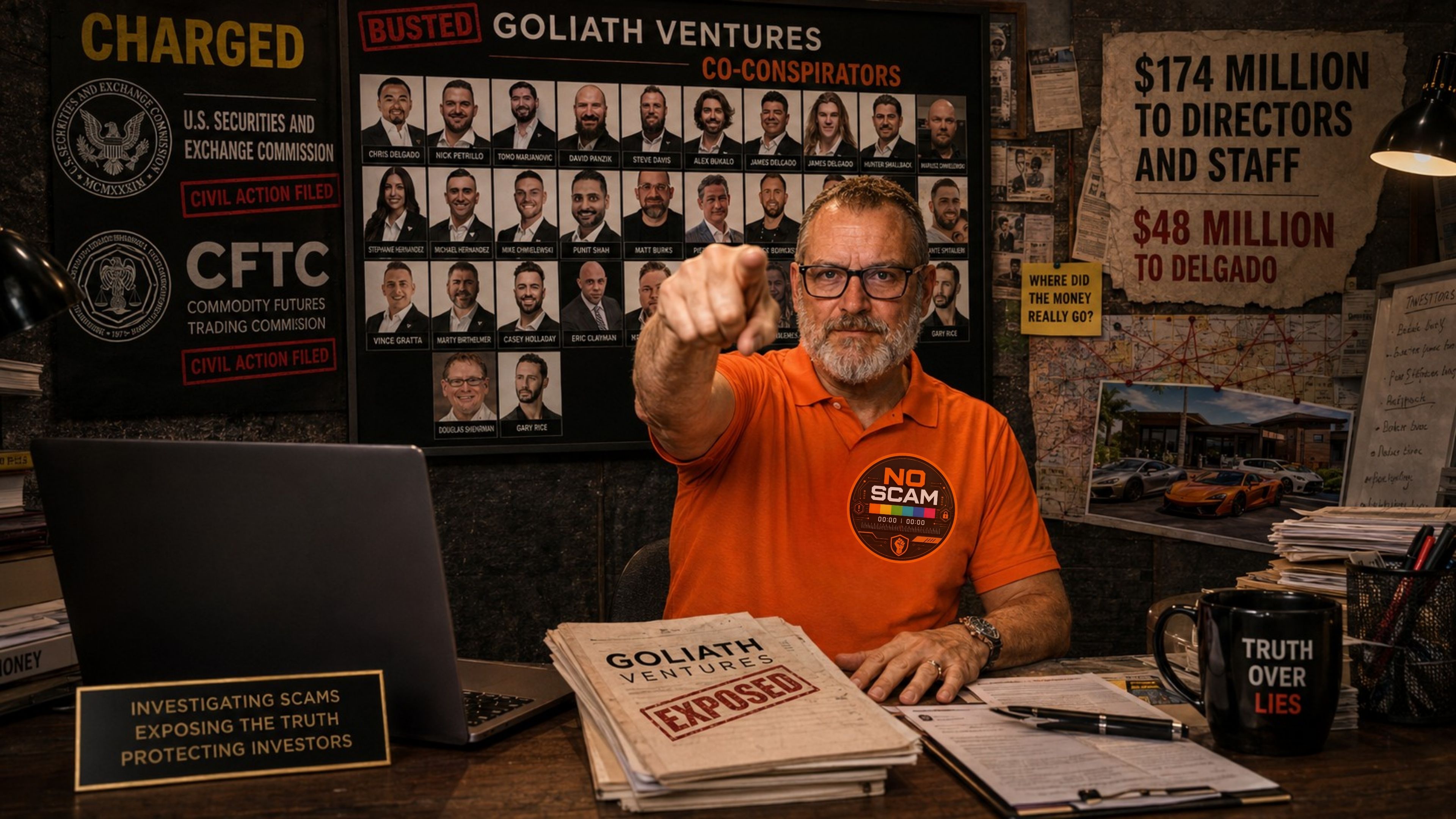
“Approximately 1,600 customers contributed at least $397 million to the defendants’ fraud.” — Commodity Futures Trading Commission, August 11, 2026
For almost a year, I have been following the money behind Goliath Ventures — examining its extraordinary returns, the people who promoted it, the luxury lifestyle surrounding it and, eventually, the explanations investors were given when the money stopped flowing.

On August 11, 2026, this investigation entered a significant new phase. The Securities and Exchange Commission (SEC) and the Commodity Futures Trading Commission (CFTC) filed separate civil enforcement actions against Goliath Ventures and its founder and CEO, Christopher Delgado.
The SEC alleges Goliath raised at least US$425 million from more than 1,300 investors through a multi-year Ponzi scheme. The CFTC puts its figure at at least US$397 million from approximately 1,600 customers. Both regulators allege investors were deceived about a cryptocurrency investment operation that was supposedly generating substantial and consistent returns.
But one allegation cuts straight through the story investors were sold: the SEC says Goliath did not invest investor funds or crypto assets into the liquidity pools it claimed were producing those returns.
Instead, the new complaints begin showing where regulators say hundreds of millions of dollars actually went.
And one figure immediately caught my attention.
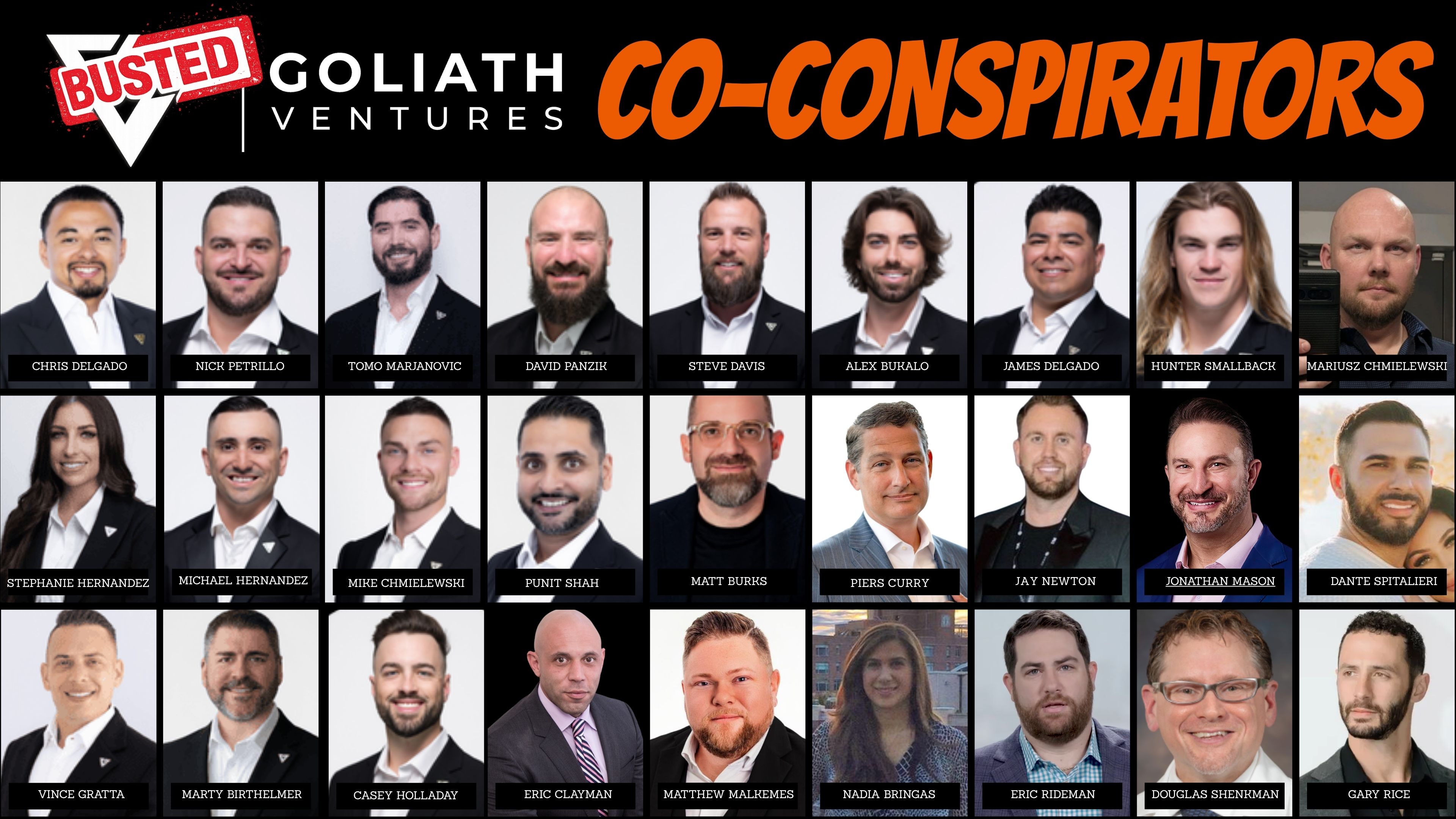
The CFTC alleges approximately US$174 million of customer funds was transferred to Goliath directors and staff, often as commissions for recruiting new customers. By comparison, the CFTC attributes approximately US$48 million to Delgado’s personal spending.
That doesn’t make every director, employee or recruiter a knowing participant in fraud. Individual responsibility requires individual evidence. But it does challenge the idea that the Goliath story begins and ends with Christopher Delgado and his lavish lifestyle.
Delgado has already pleaded guilty to federal criminal charges arising from the fraud. Now the SEC and CFTC are providing a much broader picture of the financial machinery surrounding him — the investor payments, commissions, recruitment structure, company expenditure and personal spending that allegedly consumed the money investors believed was working for them.
But buried inside the CFTC’s 26-page Complaint was something else I wasn’t expecting.
On page 12, under a section titled “Defendants Attempted to Cover Up Their Fraud by Making Further Misrepresentations,” the CFTC describes an unnamed investigative journalist who began publicly alleging by September 2025 that Goliath was a Ponzi scheme. It records how Goliath’s attorneys sent that journalist a cease-and-desist letter threatening a defamation lawsuit, followed thirteen days later by Goliath actually filing one. The CFTC then alleges the defendants knew the statements made in those legal communications denying the Ponzi scheme were false when they were made.
That investigative journalist was me.
I was raising these questions while Goliath was still operating, months before Delgado pleaded guilty and almost a year before these federal regulators put their allegations into black and white. I was threatened, then sued, while trying to answer the same fundamental question that sits at the centre of these new complaints:
Where was the money actually going?
For months, I have been asking that question.
These new federal filings are beginning to answer it — from the alleged absence of the promised liquidity-pool investments, to the money used for investor distributions and Delgado’s lifestyle, to the extraordinary US$174 million transferred to directors and staff.
And now the CFTC complaint has also documented what happened when I started asking those questions publicly.
This investigation is no longer simply about where hundreds of millions of dollars went. It is about the people who helped Goliath grow, the illusion that kept investors believing — and what happened when someone tried to expose it before the whole thing collapsed.
Two Federal Regulators, A US$400 Million-Plus Operation
On August 11, 2026, the SEC and CFTC filed separate civil enforcement actions against Goliath Ventures Inc. and Christopher Delgado in the U.S. District Court for the Middle District of Florida. They are pursuing different violations under different areas of federal financial law, but the picture presented by both agencies is remarkably similar.
The SEC alleges Goliath operated an unregistered securities offering and multi-year Ponzi scheme, while the CFTC’s case focuses on fraudulent solicitation involving digital commodities, including bitcoin and ether. These are civil complaints, so their allegations should be distinguished from matters already established in Delgado’s criminal proceedings.
What immediately stands out is how much the estimated scale of Goliath has grown.
When federal prosecutors originally charged Delgado, the figure that dominated the case was approximately US$328 million. The CFTC now alleges at least US$397 million from approximately 1,600 customers, while the SEC alleges at least US$425 million from more than 1,300 investors.
Those figures don’t necessarily contradict one another. Each agency is examining different conduct, transactions and legal violations over potentially different periods. I don’t think it would be responsible simply to select the largest number and pretend every government agency has reached exactly the same calculation.
What we can say is that federal authorities are now describing a US$400 million-plus operation.
That scale is extraordinary when compared with Goliath’s beginnings. During his post-arrest interview with WFTV investigative reporter Daralene Jones, Delgado described expecting to finish Goliath’s first year with around US$1 million under management. Instead, he said the company attracted more than US$5 million within its first two or three months, describing its subsequent growth as a “rocket ship.”
That rapid expansion is important because Goliath didn’t reach hundreds of millions of dollars through Christopher Delgado alone. As we will see, the company developed a powerful recruitment structure that financially rewarded people for bringing additional investors and capital into the operation.
But before following those commissions, there is a more fundamental question.
What did investors believe Goliath was actually doing with their money?
The Liquidity Pools That Allegedly Never Existed
At the centre of the Goliath Ventures pitch was a relatively simple explanation for some extraordinary returns: investor money would be placed into cryptocurrency liquidity pools, generating fees from trading activity.
According to the SEC, investors were promised monthly profit distributions ranging from 3% to 10%, depending on their arrangements, together with the return of their principal. Goliath presented itself as having the expertise and infrastructure to make those returns possible through decentralised finance.
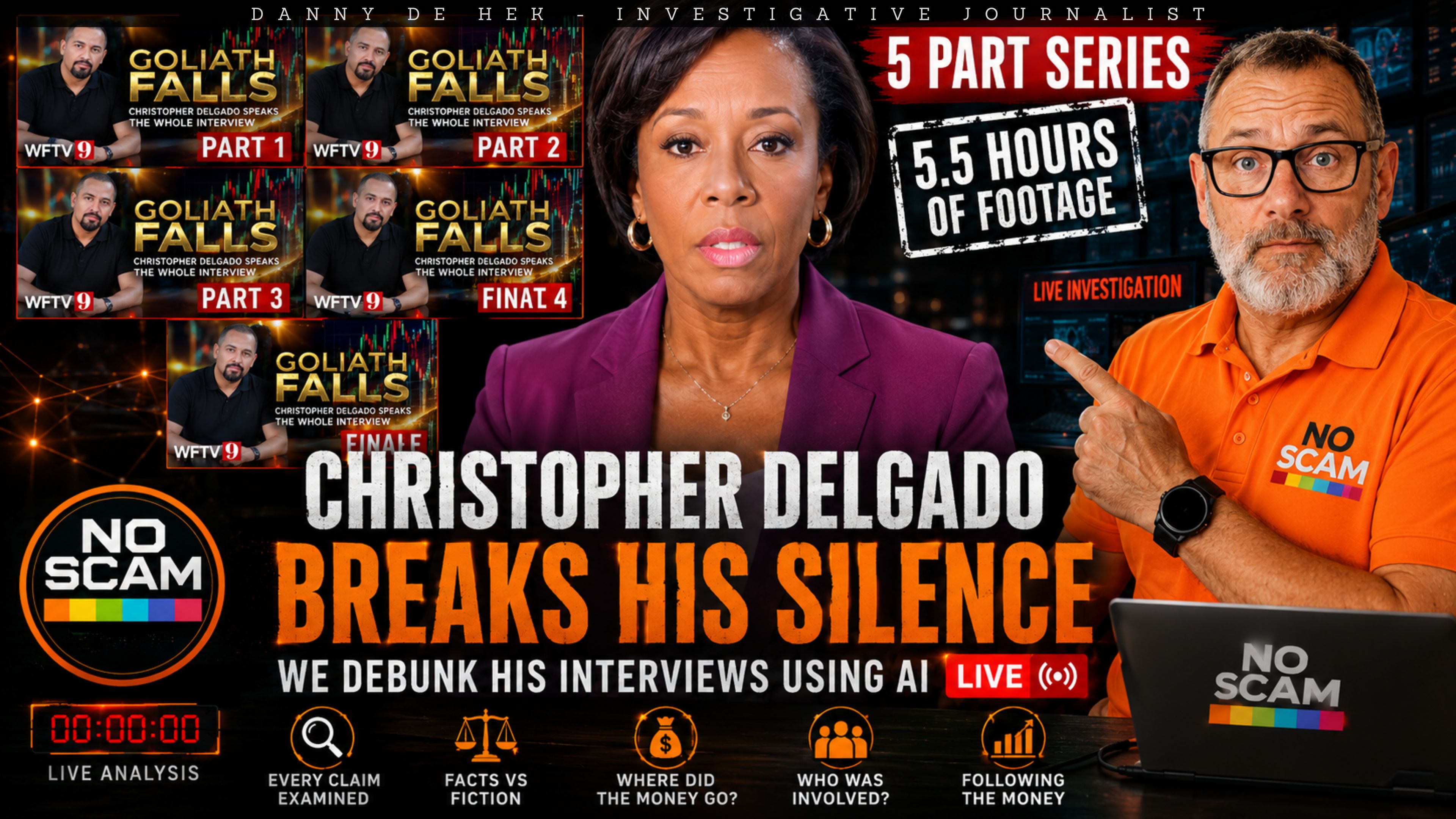
Christopher Delgado gave versions of that explanation himself. During his post-arrest Interviews with WFTV investigative reporter Daralene Jones, he described Goliath initially working with another operation known as MLP, or My Liquidity Partner, before attempting to develop its own liquidity-pool technology. He spoke about developers, trips to Dubai, beta testing and money being spent building products that he said would eventually allow Goliath to control the investment process itself.
But the new federal complaints cut directly through that explanation.
The SEC alleges Goliath did not invest any investor funds or crypto assets into any crypto asset liquidity pool. The CFTC similarly alleges the company misappropriated customer funds rather than using them for the crypto trading activity customers had been promised.
That is a crucial distinction.
Regulators aren’t alleging that Goliath successfully operated liquidity pools for several years before making disastrous investment decisions. Nor are they simply alleging that a genuine crypto strategy failed to produce the promised returns.
They are alleging that the investment activity presented to investors as the source of those returns wasn’t taking place as represented.
Delgado has subsequently described attempts to develop technology that he believed could rescue Goliath, even claiming that testing at one stage generated returns of 30% to 40%. But developing software is not the same thing as demonstrating that hundreds of millions of dollars of investor capital were actually deployed into operational liquidity pools generating the distributions investors were receiving.
That was always the question I wanted answered.
Where were the independently verifiable assets? Where were the transactions showing investor capital entering these liquidity pools? And where was the trading activity capable of consistently producing the returns being advertised?
Federal regulators are now offering their answer.
If the money wasn’t generating those returns through the investment strategy investors had been sold, then we need to look at what was actually generating the payments they received.
Where The Money Actually Went
Once the liquidity-pool story is stripped away, the next question is straightforward: what did regulators say happened to the money instead?
According to the SEC, approximately US$281 million was used to make purported monthly profit distributions to investors. In other words, the payments people were receiving were allegedly funded with money coming from other investors rather than profits generated by crypto trading.
That helps explain why Goliath could look legitimate for so long. Investors were receiving real money. They could show those payments to friends and family. Some reinvested. Others introduced new people. The payments themselves became evidence, in the minds of investors, that the underlying strategy must be working.
The SEC also alleges approximately US$53 million was used for Goliath’s business and operational expenses, including private flights, promotional events, office costs, charitable donations and credit-card spending. Separately, the SEC alleges Delgado misappropriated at least US$51 million for personal use.
The CFTC reaches some different figures, but describes the same overall pattern. It alleges at least approximately US$87 million was used to make payments to other customers and approximately US$48 million went towards Delgado’s personal spending.
I don’t think those figures should be mixed together as though the agencies are measuring exactly the same transactions. What matters is that both regulators describe investor money being used to sustain the operation rather than being deployed as represented.
And then there is the figure that changes the focus of the investigation.
The CFTC alleges approximately US$174 million was transferred to Goliath directors and staff, often as commissions for recruiting new customers.
That is more than a side issue.
If that figure is correct, it means a huge amount of customer money was flowing through the recruitment and staffing structure that helped Goliath grow. The next question is no longer simply how much Christopher Delgado spent.
It is who received that US$174 million, and what role they played in bringing new money into Goliath.
The US$174 Million Director And Staff Question
Of all the figures in the new CFTC complaint, US$174 million is the one that most dramatically broadens the Goliath story beyond Christopher Delgado.
The CFTC alleges approximately US$174 million of customer funds was transferred to Goliath directors and staff, often as commissions for recruiting new customers. That does not mean every person who received money knowingly participated in fraud, and it does not tell us that the entire amount went to a handful of senior figures. Individual payments, roles and knowledge still need to be established from the underlying records.
But the SEC independently describes a recruitment structure that helps explain how that money could have flowed.
According to its complaint, Directors of Partner Services acted as sales agents. They solicited investors, distributed Goliath marketing material and Joint Venture Agreements, helped with onboarding and facilitated the transfer of investor funds into the company. Their compensation was tied to the amount of capital they helped bring in.
That structure matters because trust was being transferred through personal relationships.
A prospective investor might not know Christopher Delgado personally, but they might know the doctor, business owner or friend introducing them to Goliath. If that person was already receiving regular distributions and appeared confident in the opportunity, the investment could feel substantially safer than it actually was.
Delgado’s own post-arrest interviews provide some context for how lucrative that network could become. He claimed Nick Petrillo had brought more than US$200 million into Goliath and hundreds of partners, and described Petrillo receiving an override across the fund that could amount to millions of dollars per month.
Those are Delgado’s claims, not independent findings by the SEC or CFTC, so they need to be treated accordingly. But they illustrate why following the commission trail is so important.
The useful questions are not simply whether someone received money from Goliath. They are:
How much did they receive? How much capital did they introduce? What were they telling investors? And what did they know as the company began to unravel?
That is where the US$174 million figure becomes more than a headline number.
It becomes a roadmap for the next stage of the investigation.
How Goliath Created The Appearance Of Success
Goliath Ventures did not rely on one source of credibility. It built an environment in which multiple signals of success reinforced one another.
There were the private flights, luxury vehicles, expensive events, impressive offices and charitable sponsorships. Investors could see money being spent at a scale that suggested the company was thriving. According to the SEC, however, approximately US$53 million of investor funds was used for business and operational expenses that included more than US$12.5 million on private flights, around US$21.5 million on promotional events and related travel, approximately US$3 million on office property and renovations, and about US$4 million in charitable donations.
The regulator’s allegation turns the image on its head: investor money was helping fund the very things that made Goliath look successful to investors.
Then there were the dashboards.
According to the SEC, investors were given access to an online portal showing account balances, transactions and purported investment performance. The agency alleges those metrics were fabricated. Investors could also see information presented as crypto holdings, wallet activity and liquidity-pool transactions.
That created another layer of reassurance.
An investor could receive a payment, log into a dashboard showing another profitable month, attend an elaborate event, and then hear from a trusted Director that everything was working as promised. Each piece appeared to confirm the others.
But none of those things independently proved that the underlying investment activity existed.
This is why lifestyle marketing and financial dashboards matter so much in cases like this. The illusion does not depend on one lie. It depends on creating enough apparent evidence that people stop questioning the machinery underneath it.
In Goliath’s case, federal regulators now allege that the lifestyle, the payments and the account information all helped create the appearance of a profitable investment operation.
The next question is what happened when that appearance finally became impossible to maintain.
When The Money Stopped — And The Explanations Began
By late 2025, the most important indicator of Goliath’s financial condition wasn’t a dashboard, a private jet or a presentation. Investors were no longer receiving distributions as expected.
What followed were explanations suggesting the disruption was temporary. Investors heard about banking and compliance issues and, eventually, a supposed third-party forensic audit that was delaying payouts.
The new regulatory complaints tell a very different story.
According to the SEC, by November 2025 Goliath could no longer raise new investor money quickly enough to continue paying existing investors. The CFTC alleges customers were subsequently told payments were delayed because of a forensic audit when, according to its complaint, no such audit was actually underway.
That distinction matters. An audit suggests money is being temporarily held while professionals verify accounts. It gives investors a reason to wait rather than panic, demand repayment or question whether their principal still exists.
I watched those explanations unfold while investigating Goliath, and at the time the central question was whether we were witnessing a temporary liquidity problem or something much more serious.
Christopher Delgado later provided his own account of what was happening. In his post-arrest interviews with Daralene Jones, he acknowledged Goliath continued accepting investor money after serious problems developed while management hoped its proposed investment technology could eventually rescue the business. When Jones challenged him about the source of money being used to pay investors and described it as “robbing Peter to pay Paul,” Delgado responded: “At this point? Yeah.”
That admission is particularly significant when placed beside what regulators now allege about the final months of Goliath.
By February 17, 2026, according to the CFTC complaint, Delgado told Goliath’s directors that the company was “ceasing all operations.”
The explanations had run out.
What investors had initially been presented with as delayed payments, banking problems and an audit is now described by federal regulators in much simpler terms: Goliath could no longer bring in enough new investor money to keep the system going.
When Goliath Tried To Silence My Investigation
There is one section of the CFTC complaint that hits considerably closer to home than everything else in this document.
On page 12, under the heading “Defendants Attempted to Cover Up Their Fraud by Making Further Misrepresentations,” the CFTC introduces somebody it identifies simply as “Journalist 1.”
That investigative journalist was me.
I began publicly investigating Goliath Ventures in 2025 and raising concerns about what I believed were the characteristics of a Ponzi scheme. I wasn’t doing that with the benefit of hindsight. Goliath hadn’t collapsed. Christopher Delgado hadn’t pleaded guilty. There wasn’t an SEC or CFTC complaint sitting in front of me explaining where regulators allege hundreds of millions of dollars had actually gone.
I was asking these questions while Goliath was still operating.
And Goliath came after me.
The CFTC records that on September 9, 2025, Goliath’s attorneys sent me a Cease-and-Desist Letter threatening defamation proceedings. According to the regulator’s complaint, that letter declared that “Goliath is and has always been a legitimate company, and not a Ponzi scheme.”
The letter went further. According to the CFTC, it asserted that Goliath and Delgado had complied with applicable laws and denied that money coming from new investors was being used to pay existing investors.
Thirteen days later, on September 22, 2025, Goliath followed through on the Threat and Sued me for Defamation.
The lawsuit again denied that Goliath was operating as a Ponzi scheme. It defended the company’s guarantee of investor principal as being supported by legitimate business practices and fidelity bond coverage.
Now look at what the CFTC alleges immediately afterwards.
“Defendants knew the foregoing statements in the cease-and-desist letter and complaint were false when made.”
That sentence fundamentally changes the significance of what happened to me.
This is no longer simply my recollection of being threatened and sued by a company I was investigating. A United States federal regulator has now placed the cease-and-desist letter and lawsuit inside a section of its complaint specifically titled “Defendants Attempted to Cover Up Their Fraud by Making Further Misrepresentations.”
That distinction matters.
The CFTC alleges Goliath deployed no customer funds into the liquidity pools customers had been promised, used approximately US$87 million in customer funds to make payments to other customers, transferred approximately US$174 million to directors and staff, often as recruitment commissions, and that Delgado misappropriated approximately US$48 million for his personal use.
Yet while I was publicly questioning what was happening, the response wasn’t independently verifiable evidence showing hundreds of millions of dollars deployed into cryptocurrency liquidity pools.
It was a legal threat.
Then it was a lawsuit.
And according to the CFTC, the representations used to support that response were false when they were made.
The timing makes this even more significant. The CFTC alleges approximately US$838,000 traced from customer deposits was used to purchase a yacht in September 2025 — the same month Goliath sent the cease-and-desist letter and filed its lawsuit against me.
Within weeks, distributions to investors were becoming delayed.
By November, customers were being told about a third-party forensic audit. The CFTC now alleges no such audit was underway and that Goliath did not have sufficient funds to continue making the payments customers were expecting.
I don’t include this because being sued somehow proves everything I said about Goliath was correct. Evidence does that. Nor does it mean every allegation I have made about every individual associated with Goliath has somehow been proven. Individual responsibility still requires individual evidence.
But on the central question of whether Goliath Ventures was operating as a Ponzi scheme, the landscape has changed dramatically.
I spent months investigating Goliath while being told publicly and through lawyers that what I was saying was wrong. I was sued for describing something as a Ponzi scheme that the Commodity Futures Trading Commission now expressly alleges was a Ponzi scheme.
And buried on page 12 of its federal complaint is now part of the history of how this investigation unfolded.
“Journalist 1” was me.
Who Else Could Be Held Accountable?
Christopher Delgado has already pleaded guilty to conspiracy to commit wire fraud, wire fraud and money laundering, but his guilty plea does not answer every question about responsibility for what happened at Goliath Ventures.
The new SEC and CFTC actions currently name Goliath Ventures and Delgado. They do not establish that every Director, employee or recruiter who received money committed fraud. Some may have genuinely believed the investment was legitimate and may themselves have suffered substantial losses when Goliath collapsed.
But the deeper someone was involved in the operation, the more important the evidence surrounding their conduct becomes.
The CFTC complaint gives that question new significance because it alleges approximately US$174 million in customer funds was transferred to Goliath Directors and staff, often as commissions for recruiting customers. Elsewhere, the complaint specifically identifies payments to Goliath personnel who successfully recruited customers as one of the ways customer funds were allegedly misappropriated.
And the CFTC is not merely asking the court to look at Christopher Delgado’s personal spending.
Among the remedies sought, the Commission asks for disgorgement of benefits derived directly or indirectly from the alleged violations, including “salaries, commissions, loans, fees, revenues, and trading profits.” Significantly, its requested relief also refers to third-party transferees and/or successors, while seeking an accounting of funds received and paid in connection with the operation.
That makes following the commission trail particularly important.
Receiving a large commission does not, by itself, prove someone knew they were participating in fraud. The more important questions are what that person knew, when they knew it, what they told investors, and whether their conduct changed as problems inside Goliath became apparent.
Internal communications, meetings, payment records, recruitment activity and conversations with investors could potentially help establish those distinctions.
Delgado himself has already pointed fingers.
During his post-arrest interview with Daralene Jones, Delgado claimed decisions about continuing Goliath involved other senior people and stated: “It was myself, Nick, and Matt Burks. We all knew what was going on.”
That is Delgado’s allegation. It is not proof of wrongdoing by Nick Petrillo or Matt Burks, and neither man’s responsibility should be determined simply because Delgado named them. But it is precisely the type of statement investigators can test against bank records, internal communications, testimony and the extraordinary amounts of money regulators now say moved through Goliath’s recruitment structure.
There is another reason this question has become more significant to me personally.
The CFTC now alleges that when I was publicly calling Goliath a Ponzi scheme in September 2025, the company responded with a cease-and-desist letter and then a defamation lawsuit containing representations the defendants knew were false when made.
That raises a broader question about knowledge throughout the organisation.
Who knew the liquidity pools weren’t operating as represented? Who knew where investor distributions were actually coming from? Who knew about the company’s financial condition when payments began slowing? And who continued reassuring or recruiting investors despite having access to information those investors did not?
Those questions cannot be answered simply by putting everyone associated with Goliath into the same category. They have to be answered person by person and transaction by transaction.
Meanwhile, Goliath’s bankruptcy proceedings continue, assets are being identified and sold, and transactions may face further scrutiny as professionals attempt to recover money for creditors and investors. The SEC is seeking disgorgement and other relief, while the CFTC is seeking restitution, disgorgement, civil monetary penalties, trading and registration bans, and a permanent injunction.
Delgado’s criminal sentencing also remains ahead.
So despite everything that has happened, this investigation is far from finished. We now know considerably more about the scale of Goliath, how regulators allege the money moved, how the appearance of legitimacy was maintained — and even how the company responded when its legitimacy was publicly challenged.
What remains unanswered is how far responsibility extends beyond Christopher Delgado.
That is where I believe the next chapter of the Goliath Ventures investigation lies. Not in another photograph of a Lamborghini or another story about a yacht, but in the financial records showing who received the money, what they did to earn it, what they knew, and when they knew it.
Christopher Delgado has admitted his role.
Now the US$174 million money trail may tell us who else has questions to answer.
Disclaimer: How This Investigation Was Conducted
This investigation relies entirely on OSINT — Open Source Intelligence — meaning every claim made here is based on publicly available records, archived web pages, corporate filings, domain data, social media activity, and open blockchain transactions. No private data, hacking, or unlawful access methods were used. OSINT is a powerful and ethical tool for exposing scams without violating privacy laws or overstepping legal boundaries.
About the Author
I’m DANNY DE HEK, a New Zealand–based YouTuber, investigative journalist, and OSINT researcher. I name and shame individuals promoting or marketing fraudulent schemes through my YOUTUBE CHANNEL. Every video I produce exposes the people behind scams, Ponzi schemes, and MLM frauds — holding them accountable in public.
My PODCAST is an extension of that work. It’s distributed across 18 major platforms — including Apple Podcasts, Spotify, Amazon Music, YouTube, and iHeartRadio — so when scammers try to hide, my content follows them everywhere. If you prefer listening to my investigations instead of watching, you’ll find them on every major podcast service.
You can WORK WITH ME for dedicated access to my time and investigative services — including private consultations, scam-risk reviews, sponsored investigations, support sessions, livestream scam breakdowns, and interviews. I’m also available for SPEAKING ENGAGEMENTS, where I share first-hand experience from years of exposing large-scale fraud, investigating scams, and supporting victims.
“Stop losing your future to financial parasites. Subscribe. Expose. Protect.”
My work exposing crypto fraud has been featured in:
- Coffeezilla 2026): Featured in the investigation exposing the alleged $328M Goliath Ventures Ponzi scheme
- Bloomberg Documentary (2025): A 20-minute exposé on Ponzi schemes and crypto card fraud
- News.com.au (2025): Profiled as one of the leading scam-busters in Australasia
- OpIndia (2025): Cited for uncovering Pakistani software houses linked to drug trafficking, visa scams, and global financial fraud
- The Press / Stuff.co.nz (2023): Successfully defeated $3.85M gag lawsuit; court ruled it was a vexatious attempt to silence whistleblowing
- The Guardian Australia (2023): National warning on crypto MLMs affecting Aussie families
- ABC News Australia (2023): Investigation into Blockchain Global and its collapse
- The New York Times (2022): A full two-page feature on dismantling HyperVerse and its global network
- Radio New Zealand (2022): “The Kiwi YouTuber Taking Down Crypto Scammers From His Christchurch Home”
- Otago Daily Times (2022): A profile on my investigative work and the impact of crypto fraud in New Zealand


Leave A Comment