


“The most dangerous scams are the ones wrapped in technology people don’t fully understand.”
For years, I’ve watched scammers evolve. The language changes. The branding improves. The websites become slicker.
But underneath it all, the same patterns keep appearing: promises of passive income, recruitment incentives disguised as “community growth,” complicated token systems nobody can independently verify, and endless claims about revolutionary technology that somehow always requires new people putting money in.
 That brings me to NodeLink.
At first glance, NodeLink presents itself as a futuristic decentralized infrastructure project — a “people-powered” network where ordinary households can supposedly monetize their unused internet capacity. The pitch sounds modern and technical. They talk about AI, VPNs, distributed infrastructure, decentralized systems, smart-home integration, Bitcoin hashing, and “community-powered” digital services. The presentation is polished. The language is carefully crafted. And for many people, especially those already interested in crypto or DePIN projects, it probably feels believable.
But once you dig deeper into the compensation plans, token mechanics, legal documents, and reward structures, a very different picture begins to emerge.
What NodeLink appears to be building is not simply a decentralized infrastructure project. It appears to be a highly structured recruitment-driven ecosystem involving locked tokens, internal points systems, participation units, multi-level commissions, referral bonuses, rank advancement, and long-term withdrawal restrictions — all wrapped inside infrastructure terminology designed to make the model sound legitimate and innovative.
And that’s where the real red flags begin.
The Zoom Meeting That Raised More Questions Than Answers
As part of this investigation, we attended one of the NodeLink Zoom meetings being promoted online by Craig Trewavis.
Naturally, we came prepared with questions.
Not emotional questions. Not trolling. Not disruption for the sake of disruption. We asked the exact kinds of questions any serious investor or regulator would want answered before putting money into something like this:
- Where does the revenue actually come from?
- Who are the real customers?
- Why are rewards tied to recruitment?
- What independently audited infrastructure exists?
- Who is behind the company?
- How sustainable are the token economics?
Instead of directly addressing those questions, Craig repeatedly deflected and told us to come back later to another evening meeting where supposedly “everything would be explained.”
That response itself is revealing.
Because legitimate infrastructure companies should be able to clearly explain:
- their revenue model,
- their commercial clients,
- their technology stack,
- and their compensation structure
without needing people to sit through multiple recruitment presentations first.
One thing I’ve learned over years of investigating these opportunities is this: when simple questions consistently receive delayed answers, scripted responses, or emotional redirection, it usually means the underlying economics become uncomfortable once exposed to scrutiny.
And importantly, I want to be fair here.
I am not accusing Craig Trewavis of creating NodeLink. At this stage, he appears to be a promoter presenting the opportunity to others. But promoters still carry responsibility when encouraging people into systems involving:
- locked funds,
- passive reward structures,
- recruitment mechanics,
- and speculative token ecosystems.
Especially when ordinary people may not fully understand the risks.
The “Unused Internet” Story Sounds Clever — But The Numbers Don’t Add Up
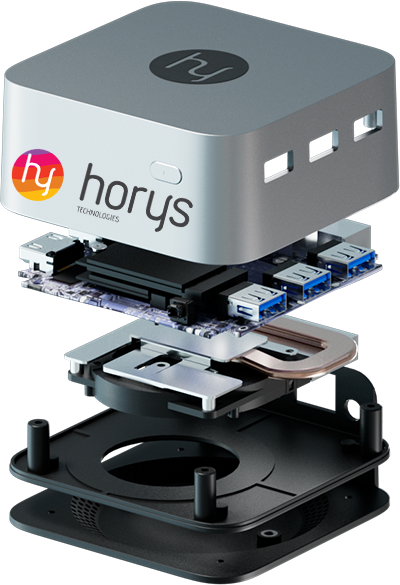
The core marketing pitch behind NodeLink is simple: install a small device called the Nx1 Home Station, connect it to your home internet, and supposedly help power a decentralized infrastructure network. In return, users receive “daily rewards” through Participation Units.
The company repeatedly claims that households have large amounts of unused internet capacity sitting idle and that NodeLink can somehow convert this unused bandwidth into revenue-generating infrastructure. The language sounds believable because most people already understand they rarely use 100% of their internet connection all day long.
But NodeLink never clearly explains the actual commercial demand behind this infrastructure.
Who is paying for the bandwidth?
Where are the audited contracts?
Which enterprise customers are purchasing these services?
How much independently verifiable revenue exists outside the NodeLink ecosystem itself?
Those answers are either vague or missing entirely.
Instead, the company leans heavily on futuristic language about AI workloads, decentralized systems, future integrations, edge computing, privacy tools, and infrastructure “for the next generation of the internet.”
That distinction matters because there is a huge difference between:
a functioning infrastructure company with audited commercial demand — and a tokenized ecosystem built around future promises.
At the moment, NodeLink appears heavily dependent on participants buying machines, activating Participation Units, and recruiting additional users into the system.
That is a completely different business model.
The Compensation Plan Looks More Like MLM Than Infrastructure
“The technology gets the attention. The compensation plan reveals the real business model.”
This is where things become difficult to ignore.
 As I dug deeper into NodeLink, I eventually located an internal Compensation System PDF that appears to explain how the ecosystem is actually designed to function behind the marketing language. What stood out immediately was the sheer amount of detail dedicated to recruitment structures, participation scaling, matching bonuses, downline activity, and reward distribution systems.
The public-facing branding focuses heavily on decentralised infrastructure, passive participation, AI security tools, Bitcoin hash discovery, VPN services, and the futuristic Nx1 device sitting quietly inside your home. But the compensation material paints a very different picture. The document repeatedly refers to “community participation,” “direct bonuses,” “PowerUp bonuses,” “matching bonuses,” and role qualification systems based on organisational growth.
One section explains that infrastructure rewards increase when participants personally sponsor five active participants. Another defines “active participants” as people who either own a machine or purchase Participation Units. That distinction matters because it shows the system is not solely dependent on operating hardware infrastructure. People can participate financially without even owning the machine being promoted as central to the ecosystem.
The deeper I read into the compensation document, the harder it became to ignore the familiar MLM mechanics underneath the technology narrative. Rank progression, referral percentages, organisational volume requirements, line qualifications, matching bonuses, and locked token rewards are all clearly structured into the ecosystem.
The system includes direct referral bonuses, ongoing commissions, matching rewards, organisational structures, rank qualifications, and leadership-style advancement systems. The moment you see downlines, matching bonuses, qualification ranks, organisational legs, and recruitment-based advancement, you are no longer looking at a simple infrastructure-sharing platform.
You are looking at a structured recruitment compensation model.
One of the biggest red flags is that users unlock the highest reward tier by owning an Nx1 device and recruiting five active participants. That is critically important because infrastructure performance should logically depend on bandwidth contribution, uptime, compute performance, network demand, or customer usage — not recruitment.
Changing the language from “community growth” instead of “recruitment” does not fundamentally change the mechanics underneath.
The Daily Rewards Raise Serious Questions
The system promises daily rewards tied to Participation Units.
Each Participation Unit costs $25, and the company openly displays reward estimators projecting potential daily, monthly, and annual returns depending on how many units a participant activates. On the surface, the numbers may not appear dramatic. But once you start multiplying those obligations across hundreds of units and thousands of participants, the scale of the financial liability grows extremely quickly.
And that leads directly to the most important unanswered question in the entire ecosystem:
Where is the independently verifiable external revenue supporting these payouts?
Because if the majority of incoming money is being generated through:
- machine purchases,
- Participation Unit activations,
- locked token deposits,
- and continuous onboarding of new participants,
then the economic structure starts looking dangerously circular.
NodeLink repeatedly states that rewards are “not guaranteed,” but disclaimers alone do not remove the underlying concerns. In fact, one of the most revealing aspects of the project is the constant contradiction between the legal language and the marketing behaviour surrounding it.
On one hand, the company insists:
“This is not an investment.”
But on the other hand, the ecosystem is filled with:
- projected earnings,
- participation incentives,
- referral rewards,
- matching bonuses,
- and structured compensation systems tied to growth and recruitment.
That contradiction matters.
Because the company appears to spend enormous effort distancing itself legally from investment terminology while simultaneously promoting what many ordinary people will clearly interpret as a passive income opportunity.
And when a project begins heavily emphasising daily rewards, long-term earning potential, locked token growth, and recruitment-driven progression, people should stop focusing on the futuristic marketing narrative and start examining the actual source of the money flowing through the system.
Locked Tokens And Controlled Withdrawals Create Another Layer Of Risk
One of the strongest warning signs inside the NodeLink ecosystem is the internal token structure and the amount of control the platform appears to maintain over liquidity, withdrawals, and reward access.
The system revolves around:
- NLK tokens
- USDN
- USDN-W
- internal utility balances,
- reward lockups,
- and delayed release mechanisms tied to participation activity.
At first glance, these structures are presented as part of a sophisticated long-term ecosystem designed to support stability and future growth. But once you start reading the compensation documents carefully, the picture becomes much more concerning.
The documents describe portions of rewards being locked away for years before participants can fully access them. Other sections reference:
- three-year token locks,
- 90-day vesting periods,
- internal conversion systems,
- deposit fees,
- and restricted utility balances tied directly to ecosystem participation.
That matters because many crypto-based schemes maintain the illusion of sustainability by restricting liquidity.
If participants cannot freely withdraw funds, it becomes significantly harder for outsiders to determine the true financial condition of the ecosystem. A platform can appear stable far longer when large portions of the balances remain locked internally instead of being exposed to open market pressure.
And once you introduce:
- internal stablecoins,
- delayed vesting systems,
- locked participation rewards,
- artificial liquidity controls,
- and withdrawal restrictions,
…it becomes increasingly difficult to distinguish genuine economic strength from engineered scarcity.
This is one of the reasons experienced investigators pay extremely close attention to withdrawal mechanics inside crypto ecosystems. The moment a platform begins heavily controlling when, how, and under what conditions participants can access value, the risk profile changes dramatically.
Because at that point, participants are no longer simply holding an asset.
They are relying on the platform itself to eventually honour future liquidity and redemption promises under conditions entirely controlled by the ecosystem operators.
The Technology Narrative Creates Emotional Cover
One reason projects like NodeLink attract strong supporters is because the story itself sounds exciting.
The company talks about building infrastructure that is supposedly “too distributed to fail.” It promotes a future where ordinary people reclaim power from corporations, banks, and governments through decentralised technology. The messaging is carefully built around ideas like freedom, ownership, empowerment, privacy, and participation in the future internet economy.
And psychologically, that framing is extremely powerful.
Because once people emotionally connect to the mission, skepticism often starts disappearing. Participants stop seeing themselves as customers entering a risky financial ecosystem and instead begin viewing themselves as part of a movement fighting against outdated systems and centralised control.
That shift matters.
Because once belief becomes ideological, criticism becomes much easier to dismiss as:
- ignorance,
- anti-crypto thinking,
- fear of innovation,
- or attacks from “the old system.”
I’ve seen this exact pattern repeatedly across crypto MLMs, passive-income ecosystems, and decentralised finance projects over the years. The technology narrative becomes the emotional shield protecting the compensation structure underneath.
And the more futuristic the language becomes — AI infrastructure, decentralised compute, digital sovereignty, community-owned networks, unstoppable ecosystems — the easier it becomes for ordinary people to overlook the actual economics driving the platform.
Eventually, the conversation stops revolving around:
- audited revenue,
- commercial demand,
- sustainable business activity,
- and external customers,
…and starts revolving around belief.
Belief in the vision.
Belief in the future.
Belief that early participants are “getting positioned” before mass adoption arrives.
That emotional momentum is incredibly powerful inside crypto communities because people do not want to feel like they are missing the next technological revolution.
But throughout all of these investigations, I keep coming back to the same question:
Where does the money actually come from?
Because no amount of futuristic branding, decentralisation rhetoric, or emotional storytelling changes the basic economic reality underneath the system.
The “All-In-One” Ecosystem Raises Even More Questions
NodeLink also claims the Nx1 device replaces thousands of dollars worth of subscriptions through bundled services supposedly included with participation.
The company promotes:
- encrypted browsing,
- AI-powered security tools,
- phishing detection,
- ad blocking,
- family protection tools,
- virtual payment cards,
- decentralized storage,
- secure routing,
- and future smart-home integrations.
One of the most eye-catching claims is the so-called Hash Discovery Engine, where the Nx1 supposedly contributes SHA-256 computations to the Bitcoin network. If a valid Bitcoin block is discovered, the reward goes directly to the participant’s wallet.
Technically speaking, this is possible.
But context matters.
Modern Bitcoin mining is dominated by enormous industrial ASIC mining farms operating with staggering amounts of computational power. A tiny low-power consumer device has an astronomically small chance of discovering a Bitcoin block.
The company does acknowledge the odds are “low,” but the feature functions more like a psychological marketing hook than a realistic mining opportunity.
It taps directly into the same emotional trigger used across countless speculative crypto projects:
“What if I get lucky?”
The same concerns apply to many of the promised future services. Cybersecurity infrastructure, payment systems, AI filtering tools, decentralized routing networks, and fintech ecosystems require enormous operational resources behind the scenes.
Yet much of NodeLink’s ecosystem still appears heavily future-focused, with repeated references to services “rolling out in 2026” or arriving in “future phases.”
That distinction matters because future roadmap promises are not evidence of present viability.
The Real Risk Here
I want to be clear: I am not claiming NodeLink is definitively a scam.
At this stage, there are still unanswered questions.
But there are also undeniable patterns that experienced investigators should recognize immediately:
- passive reward systems,
- recruitment incentives,
- locked-token mechanics,
- referral structures,
- organizational ranks,
- delayed withdrawals,
- internal utility balances,
- and highly emotional future-tech marketing.
The real danger is that ordinary people may emotionally buy into the dream long before the underlying economics are proven sustainable.
Especially once recruitment accelerates.
Because once friends, family members, Telegram groups, influencers, and community leaders begin promoting these systems emotionally, skepticism tends to disappear. People stop asking hard questions and start focusing on how quickly they can “position themselves” before wider adoption arrives.
I’ve seen this pattern too many times before.
They collapse under the weight of unrealistic economics, recruitment dependency, and unsustainable reward obligations long before the futuristic vision ever becomes reality.
And right now, the deeper I dig into NodeLink’s compensation plans, internal token systems, reward structures, recruitment mechanics, and evasive responses from promoters when difficult questions are asked, the more this looks less like a breakthrough in decentralized infrastructure — and more like another highly engineered ecosystem where the story may ultimately prove far more valuable than the actual technology underneath.
Here is a new section ready to paste into the existing blog.
BehindMLM Connects NodeLink To Charbel Zalaquett And Earlier Crypto Schemes
“A new name does not erase the history of the people standing behind it.”
 After publishing my investigation, Oz from BehindMLM completed his own Independent Review of NodeLink. His findings add several important pieces to the picture, particularly around the company’s ownership, the hardware supply chain, and the history of the people now presenting NodeLink as a new infrastructure opportunity.
BehindMLM identified Charbel Zalaquett as NodeLink’s founder, citing an April 2026 press release and Zalaquett’s own social-media profile. The public NodeLink website does not prominently disclose its ownership or executive team, making this discovery especially significant. Oz also traced Zalaquett’s promotional history through OneCoin, WeWe Global, The Blockchain Era, XERA Pro, and Homnifi. In those earlier schemes, Zalaquett was variously presented as a country manager, ambassador, independent promoter, and later Head of Operations.
That history does not automatically prove NodeLink is fraudulent, but it cannot reasonably be dismissed as irrelevant. WeWe Global repeatedly collapsed and reappeared under new names, while many of the same promoters continued moving through each reboot. NodeLink now appears to retain the same familiar ingredients: internal tokens, passive daily returns, recruitment-based rewards, rank structures, matching bonuses, and futuristic technology claims used to justify the flow of new participant money.
BehindMLM’s analysis also strips away much of the mystery surrounding the Nx1 Home Station. Rather than evidence of some revolutionary proprietary machine, Oz found that the device appears to be a rebadged mini PC of the kind already sold through ordinary hardware suppliers. One comparable Firebat model was listed online for approximately US$276. NodeLink’s own materials show relatively modest specifications, while the marketing presents the box as capable of supporting Bitcoin hashing, secure connectivity, AI tools, storage, digital payments, and future computing services.
The hardware may run NodeLink software, but that does not prove the software is producing commercially valuable infrastructure. A small computer connected to a central dashboard can easily display activity, rewards, token balances, and simulated network statistics. What remains missing is independently verifiable evidence showing that outside companies are paying meaningful sums to use these household devices.
Oz also examined the websites used to distribute the machines. NodeLink tells participants they can purchase through HMall, but the HMall involved is not the established Korean retail group. It is a recently registered website created shortly after NodeLink’s own domain. The site directs fulfilment communications through HMall and Horystech, a hardware company that sells mini PCs and appears connected to the supply of the Nx1 devices. BehindMLM notes that Horystech presents BVI, Hong Kong, and Delaware details, while its website defaults to the UAE dirham, raising further questions about the commercial relationships and Dubai connections behind the operation.
The compensation model identified by BehindMLM closely matches the concerns already documented in my own investigation. Participants can purchase $25 unit positions, earn daily token returns, increase those returns by recruiting five additional participants, and qualify for commissions across a five-level unilevel structure. The plan includes direct commissions, residual commissions, matching bonuses, ROI matches, rank-based daily caps, and a bonus pool funded from company-wide activity.
Most importantly, BehindMLM found no identifiable external source of revenue capable of supporting the promised returns. NodeLink says outside corporations will eventually pay to use the network, but the publicly available evidence does not establish who those customers are, what they are buying, how much they are paying, or what proportion of participant rewards comes from genuine commercial activity.
Oz’s conclusion is considerably stronger than mine: he describes NodeLink as an MLM crypto Ponzi in which newly invested funds are recycled through internal NLK and USDN tokens. He also raises potential securities and banking concerns, arguing that NodeLink has not shown registration of its passive-return offering with financial regulators and that PayLink is presented as a banking-style service without clear licensing information.
My position remains evidence-driven. NodeLink and its promoters can answer these concerns by publishing independently verifiable customer contracts, audited revenue figures, regulatory registrations, token-reserve evidence, hardware performance data, and proof that withdrawals are funded by genuine external demand rather than continuing participant purchases.
Until that evidence appears, the growing list of historical connections, internal-token mechanics, recruitment rewards, generic hardware, opaque suppliers, and unverifiable revenue claims makes NodeLink increasingly difficult to defend as nothing more than an innocent technology startup.
Tip of the hat to Oz for independently examining the compensation model and uncovering the connections surrounding Charbel Zalaquett, Horystech, HMall, and the earlier WeWe Global network.
Disclaimer: How This Investigation Was Conducted
This investigation relies entirely on OSINT — Open Source Intelligence — meaning every claim made here is based on publicly available records, archived web pages, corporate filings, domain data, social media activity, and open blockchain transactions. No private data, hacking, or unlawful access methods were used. OSINT is a powerful and ethical tool for exposing scams without violating privacy laws or overstepping legal boundaries.
About the Author
I’m DANNY DE HEK, a New Zealand–based YouTuber, investigative journalist, and OSINT researcher. I name and shame individuals promoting or marketing fraudulent schemes through my YOUTUBE CHANNEL. Every video I produce exposes the people behind scams, Ponzi schemes, and MLM frauds — holding them accountable in public.
My PODCAST is an extension of that work. It’s distributed across 18 major platforms — including Apple Podcasts, Spotify, Amazon Music, YouTube, and iHeartRadio — so when scammers try to hide, my content follows them everywhere. If you prefer listening to my investigations instead of watching, you’ll find them on every major podcast service.
You can WORK WITH ME for dedicated access to my time and investigative services — including private consultations, scam-risk reviews, sponsored investigations, support sessions, livestream scam breakdowns, and interviews. I’m also available for SPEAKING ENGAGEMENTS, where I share first-hand experience from years of exposing large-scale fraud, investigating scams, and supporting victims.
“Stop losing your future to financial parasites. Subscribe. Expose. Protect.”
My work exposing crypto fraud has been featured in:
- Coffeezilla 2026): Featured in the investigation exposing the alleged $328M Goliath Ventures Ponzi scheme
- Bloomberg Documentary (2025): A 20-minute exposé on Ponzi schemes and crypto card fraud
- News.com.au (2025): Profiled as one of the leading scam-busters in Australasia
- OpIndia (2025): Cited for uncovering Pakistani software houses linked to drug trafficking, visa scams, and global financial fraud
- The Press / Stuff.co.nz (2023): Successfully defeated $3.85M gag lawsuit; court ruled it was a vexatious attempt to silence whistleblowing
- The Guardian Australia (2023): National warning on crypto MLMs affecting Aussie families
- ABC News Australia (2023): Investigation into Blockchain Global and its collapse
- The New York Times (2022): A full two-page feature on dismantling HyperVerse and its global network
- Radio New Zealand (2022): “The Kiwi YouTuber Taking Down Crypto Scammers From His Christchurch Home”
- Otago Daily Times (2022): A profile on my investigative work and the impact of crypto fraud in New Zealand






Leave A Comment