



“Trust me, the AI is doing the trading.” That was the message investors kept hearing. What happened when someone stopped listening to the marketing and started reading the blockchain instead tells a very different story.
When I published my first investigation into AURUM Foundation, Aurum Neobank and its so-called AI trading ecosystem in May 2026, I believed I had documented enough evidence to justify serious concern.

The company was already attracting regulatory attention around the world, promoters were making extraordinary claims about automated wealth generation, and investors were being encouraged to believe they had discovered the future of finance. Before I published my first investigation, I even received an unsolicited US$1,000 Ko-fi donation from someone asking me to stop covering AURUM. I immediately refunded the money. My investigations are not for sale.
I assumed that would be the end of the story. Instead, it marked the beginning of a much larger investigation. Since then, financial regulators in multiple jurisdictions have issued further warnings, prosecutors in Poland have been asked to investigate alleged banking offences connected to the company’s Neobank branding, AURUM has rebranded much of its ecosystem under the NEYRO name, and new promoters continue encouraging people to believe they are participating in a revolutionary AI-powered financial platform.
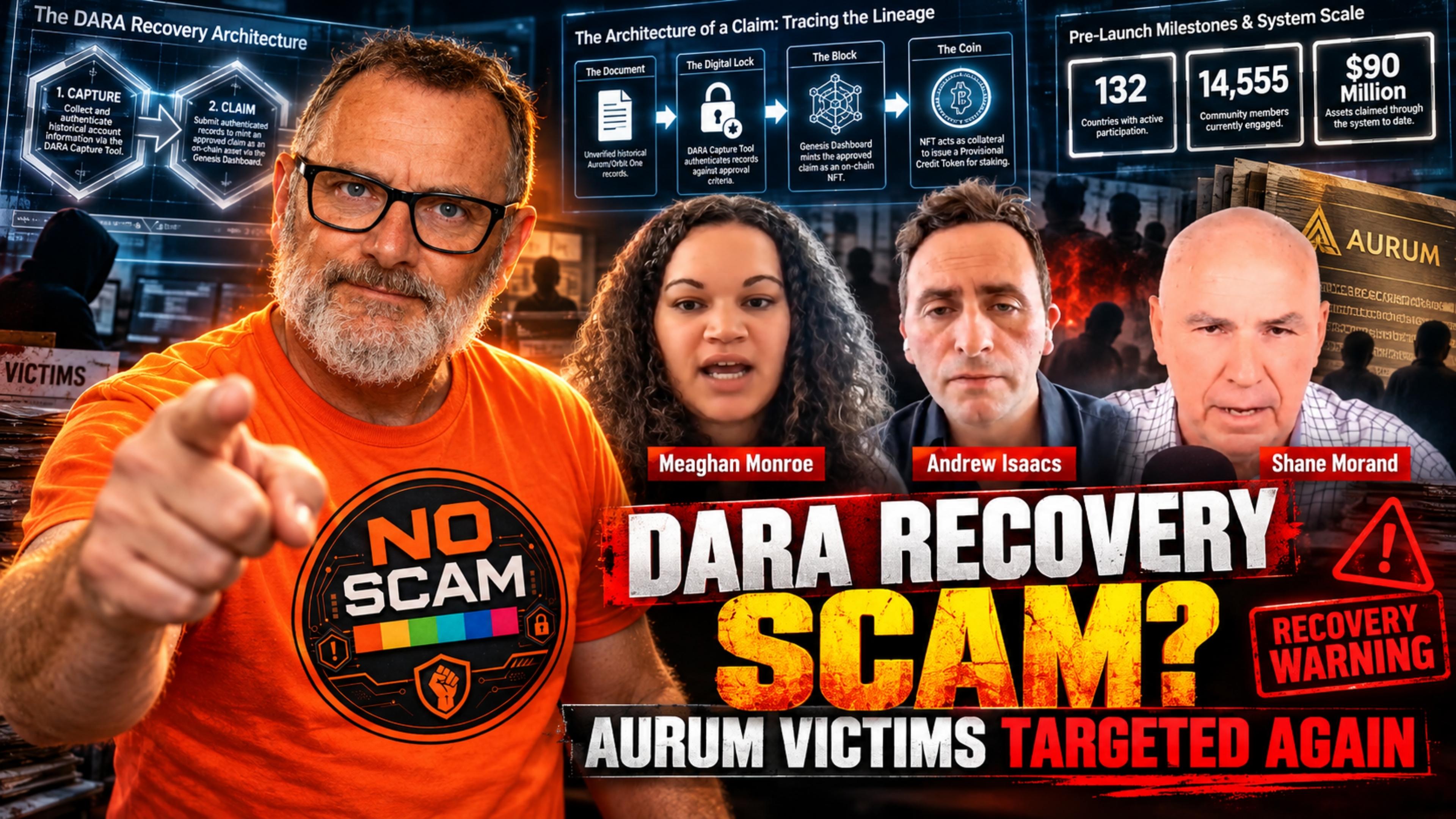
Then I was contacted by someone known to me only as CrYptO G, a member of the Avenger Anti-Fraud Alliance (AAA). Rather than analysing marketing videos or compensation plans, CrYptO G did something far more difficult. He followed the blockchain. He examined the smart contracts, traced wallet activity across multiple networks, analysed transaction flows worth tens of millions of dollars, and compared what the code actually does with what AURUM tells investors it does. His findings became the catalyst for reopening this investigation.
If CrYptO G‘s analysis is correct, this is no longer simply a story about questionable marketing claims or another referral-driven crypto opportunity. It raises a much more fundamental question: what if the AI trading bot at the centre of AURUM’s entire business model isn’t trading at all?
Why I Reopened The Investigation
After publishing my Original Investigation, I expected AURUM Foundation to respond with evidence. If the company genuinely operated the sophisticated AI trading ecosystem it claimed, this was its opportunity to produce audited trading records, licensing documentation, proof of reserves, or independently verifiable evidence showing how investor funds generated the advertised returns. Instead, the story moved in a very different direction. Regulators across multiple jurisdictions continued issuing warnings, new promotional campaigns emerged under the NEYRO brand, and the marketing became even more ambitious. Rather than answering the growing list of questions, the company appeared to be expanding its ecosystem while asking investors to place even more trust in claims that remained largely unverified.
At the same time, I continued hearing from people on both sides of the story. Some contacted me after losing confidence in the project. Others shared promotional material, internal presentations and recruiting videos. One person even granted me access to their own AURUM dashboard so I could independently examine how the platform presented balances, returns and user activity. That access allowed me to document the system from an investor’s perspective without relying solely on marketing screenshots circulated online. Every new piece of information was carefully compared against previous claims, regulatory findings and publicly available blockchain data.
 The turning point came when CrYptO G, working with the Avenger Anti-Fraud Alliance (AAA), approached me with an extensive Blockchain Forensic Investigation. Unlike most critics, he wasn’t analysing presentations or debating compensation plans. He was reading the smart contracts themselves, tracing wallet movements across multiple blockchains, examining transaction histories, and documenting how funds flowed through the system. His report wasn’t based on opinion or speculation. It was built from verifiable on-chain evidence that anyone with the necessary technical knowledge can independently review. If those findings withstand scrutiny, they challenge one of AURUM Foundation’s most fundamental claims: that investor funds are being managed by sophisticated AI-powered trading bots operating in the cryptocurrency markets.
That discovery transformed this from an update into a completely new investigation. The regulatory warnings remain important, the promoters remain accountable for the claims they continue making, and the growing list of public complaints deserves careful examination. But this time, the investigation begins somewhere much deeper. Before looking at the people promoting AURUM Foundation, we first need to examine the technology they insist is generating the returns. Because if the blockchain tells a different story from the marketing, everything built on top of those claims deserves much closer scrutiny.
Meeting CrYptO G
 One of the realities of investigative journalism is that important leads often arrive quietly. They don’t come through press releases or carefully managed interviews. They come from people who have spent weeks or months following a trail because something simply didn’t add up. That was exactly what happened when I was introduced to CrYptO G, an independent blockchain investigator and member of the Avenger Anti-Fraud Alliance (AAA). Unlike many people who contact me with suspicions or personal experiences, he arrived with something far more substantial: a comprehensive forensic report built around verifiable blockchain data, smart contract analysis, transaction histories, wallet tracing and technical evidence that could be independently examined.
As I worked through the report, it quickly became obvious that this wasn’t another collection of screenshots or anonymous allegations. CrYptO G had traced activity across both the BNB Smart Chain and TRON, identified multiple smart contracts associated with the AURUM ecosystem, mapped the relationships between wallet addresses, documented fund movements worth tens of millions of dollars and preserved the supporting transaction hashes and blockchain records. Rather than asking me to simply trust his conclusions, he provided the evidence so I could follow his methodology and understand how each conclusion had been reached. Where possible, every claim could be checked against publicly available blockchain explorers.
What impressed me most was that CrYptO G wasn’t trying to prove AURUM was a scam. He approached the investigation like a forensic accountant approaches company books. He started with the claims AURUM makes publicly, then asked a simple question: does the blockchain support those claims? If AURUM’s AI trading bots genuinely analyse markets, execute trades and generate profits for investors, there should be evidence of that activity somewhere within the underlying infrastructure. Instead of beginning with assumptions, he began with the code, the contracts and the movement of funds.
Before publishing anything based on his work, I spent considerable time reviewing the report, asking questions, requesting clarification and challenging sections that needed further explanation. I also shared the findings with members of the Avenger Anti-Fraud Alliance (AAA) so they could independently review the material. This investigation is therefore not based on a single anonymous tip or one person’s opinion. It is based on a growing body of technical evidence that deserves serious public scrutiny. In the sections that follow, I’ll walk through that evidence step by step, allowing readers to see exactly why CrYptO G‘s analysis became the catalyst for reopening this investigation.
Following The Blockchain
“Extraordinary claims require extraordinary evidence.” — Carl Sagan
That quote came to mind repeatedly as I worked through CrYptO G‘s report. AURUM Foundation isn’t claiming to run an ordinary investment platform. It tells the public that sophisticated artificial intelligence is analysing global cryptocurrency markets, executing trades around the clock, managing liquidity, reducing risk and generating consistent returns. Those are extraordinary claims. If they are true, there should be equally extraordinary evidence to support them.
CrYptO G didn’t begin by asking whether AURUM looked legitimate. He started with a far simpler question: what does the blockchain show? Unlike a website, a webinar or a glossy presentation, public blockchains record transactions that can be independently verified. Wallet addresses can be traced. Smart contracts can be examined. Transaction histories can be followed. Marketing claims, on the other hand, can be rewritten overnight.
Rather than relying on screenshots or dashboard balances, CrYptO G assembled a forensic investigation using publicly verifiable blockchain data. His work included:
- Smart contract analysis across both the BNB Smart Chain and TRON.
- Wallet tracing to identify how investor funds moved through the ecosystem.
- Transaction analysis covering tens of millions of dollars in cryptocurrency movements.
- Cross-chain mapping linking contracts, administrators and funding sources.
- Independent verification using public blockchain explorers rather than private company data.
That distinction is critical. This investigation does not depend on trusting AURUM Foundation, trusting CrYptO G, or trusting me. The evidence can be checked by anyone with the technical knowledge to inspect the same contracts and transactions. Blockchain technology is often promoted as transparent. In this case, that transparency became one of the most valuable investigative tools available.
As I worked through the report, one finding stood out above everything else. If CrYptO G‘s analysis is correct, the blockchain does not show an AI trading engine buying and selling assets on behalf of investors. Instead, it appears to show something very different. Before looking at the millions of dollars moving between wallets, we first need to understand the smart contracts sitting at the heart of the entire AURUM and NEYRO ecosystem. Those contracts tell a story that is difficult to reconcile with the marketing promises investors have been hearing.
The Code Doesn’t Trade
One of the most common arguments made by AURUM Foundation supporters is that the technology is simply too complex for outsiders to understand. Investors are encouraged to trust the developers, trust the leadership and trust the AI. But computers don’t operate on trust. They operate on code. If an artificial intelligence is genuinely executing trades, managing risk and generating profits, there should be evidence of that functionality within the smart contracts that underpin the platform.
CrYptO G began by examining the contract that AURUM publicly associates with its AI trading bot. Rather than looking for marketing language, he looked for the functions that actually control how funds move through the blockchain. His objective was straightforward: identify where investor deposits go, determine who controls those funds, and establish whether the contract contains any mechanism capable of carrying out automated trading.
“Show me the trading functions.”
That was effectively the question driving the entire analysis.
According to CrYptO G‘s report, the answer was unexpected.
Instead of finding code that interacted with cryptocurrency exchanges to execute trades on behalf of investors, he concluded that the contract primarily performs a much simpler task: accepting deposits and directing funds into liquidity pools. He found no identifiable trading logic that would support AURUM’s public claims of AI-driven market activity. While the contract contains administrative functions allowing authorised parties to manage assets, the report argues it does not contain the sophisticated trading mechanisms investors are repeatedly told are generating their daily returns.
If that assessment is correct, the implications are significant.
AURUM’s public narrative:
AI analyses the market, executes profitable trades and shares those profits with participants.
CrYptO Gs blockchain analysis:
The examined smart contract contains no observable trading logic consistent with those public claims.
That doesn’t, by itself, prove fraud. Smart contracts can interact with off-chain systems, and there may be components that are not publicly visible. However, it does create a question that deserves a clear answer from AURUM Foundation:
If the AI trading takes place somewhere else, where is it?
That is not a rhetorical question. It is one that should be answered with evidence rather than marketing. Investors deserve to know which exchanges are being used, how trades are executed, where the audited trading history can be independently verified, and how the returns displayed in their dashboards are actually generated.
As I continued reviewing CrYptO G‘s report, the questions became even more difficult. The absence of visible trading logic was only the beginning. The next stage of the investigation followed the money itself, tracing tens of millions of dollars as they moved from investor deposits through a network of wallets, revealing patterns that demand much closer scrutiny.
Following The Money
Finding no obvious trading logic in the smart contract was a significant discovery, but it didn’t answer the most important question: where did the money actually go? A smart contract is only one piece of the puzzle. The blockchain also records every deposit, every transfer and every withdrawal. Unlike promotional videos or dashboard balances, those transactions cannot simply be edited after the fact. They leave a permanent trail.
CrYptO G followed that trail.
Using publicly available blockchain explorers and transaction data, he mapped the movement of funds through the AURUM ecosystem. Rather than looking at a handful of isolated transactions, he analysed the broader flow of capital, identifying the wallets receiving investor deposits, the addresses controlling the contracts and the destinations where the cryptocurrency ultimately moved.
His report highlights several findings that warrant closer examination:
- Approximately US$31.7 million was reportedly received by one key address over a period of just 17 days.
- Those funds were collected through more than 120 incoming transactions before being redistributed.
- Roughly US$30.5 million was subsequently transferred out across hundreds of separate wallet addresses.
- The report identifies common funding sources linking multiple contracts within the AURUM and NEYRO ecosystem.
Those figures, if independently verified, raise obvious questions. Large volumes of money moving through blockchain wallets are not, in themselves, evidence of wrongdoing. Legitimate businesses process substantial transactions every day. The critical question is what economic activity those transactions represent.
If investors are being told their deposits are actively traded by artificial intelligence, the blockchain should reveal evidence consistent with that explanation. If, instead, funds are primarily being collected, redistributed or pooled without observable trading activity, investors deserve to understand exactly how the advertised returns are being generated.
This is where the investigation becomes increasingly difficult for AURUM Foundation to dismiss. Marketing claims can be challenged as opinion. Testimonials can be dismissed as anecdotal. But blockchain transactions exist independently of both supporters and critics. They provide a transparent ledger of where funds moved, when they moved and which wallets were involved.
The next question was equally important: who controlled those wallets, and how closely were they connected to the contracts investors were told were operating autonomous AI trading systems?
Evidence Snapshot
After reviewing CrYptO G‘s forensic report, several findings immediately stood out. Individually, they raise important questions. Taken together, they present a picture that appears difficult to reconcile with AURUM Foundation’s public marketing.
CrYptO G’s key observations include:
- No identifiable AI trading logic within the smart contract examined.
- Investor deposits flowing into liquidity pools, rather than showing evidence of automated market trading.
- One wallet receiving approximately US$31.7 million over a 17-day period.
- More than 120 inbound transactions feeding that address.
- Approximately US$30.5 million redistributed to hundreds of other wallets.
- Common funding sources linking multiple contracts across the AURUM and NEYRO ecosystem.
- Administrative controls that appear inconsistent with claims of a fully autonomous, non-custodial AI trading system.
None of these observations, in isolation, prove criminal conduct. Blockchain analysis must always be interpreted carefully, and companies should be given an opportunity to explain technical findings that appear inconsistent with their public statements. However, they do establish something that cannot be ignored: the blockchain deserves to be part of the conversation.
For years, the discussion around AURUM has largely revolved around promotional webinars, recruitment events, referral commissions and testimonials from enthusiastic members. Those sources tell us what people were encouraged to believe. The blockchain tells us what actually happened on-chain.
That distinction is what makes this investigation different.
From this point forward, the focus shifts away from marketing material and onto evidence that can be independently examined. The obvious next question is whether AURUM’s public statements align with what the blockchain records. If they do, the company should be able to demonstrate that clearly. If they don’t, investors deserve to know why.
Marketing Claims Versus Blockchain Evidence
Throughout my investigation, I watched presentations, reviewed promotional material, examined websites and listened to the people recruiting investors into AURUM Foundation. The message was remarkably consistent. Members weren’t simply told they were buying cryptocurrency or participating in a referral programme. They were told they were accessing a sophisticated AI-powered trading ecosystem capable of generating returns that ordinary investors could never achieve on their own.
The marketing repeatedly promoted concepts such as:
| AURUM’s Public Claims | Questions Raised By CrYptO G’s Analysis |
|---|---|
| AI-powered cryptocurrency trading | Where is the observable trading activity? |
| Automated profit generation | Which transactions demonstrate those profits being created? |
| Non-custodial system | Why do administrative controls appear to exist within the contracts? |
| Transparent blockchain technology | Why doesn’t the smart contract examined contain identifiable trading logic? |
| Daily returns generated by AI | What verifiable evidence links those returns to actual market trades? |
However, this is precisely where transparency becomes so important. Companies asking people to entrust them with their money should expect their claims to be examined. If an organisation attributes investor returns to artificial intelligence making profitable trades around the clock, it is reasonable to expect those claims to be supported by auditable evidence, not simply repeated in webinars, promotional videos and recruitment presentations.
As I continued reviewing CrYptO G‘s report, another pattern began to emerge. The blockchain didn’t just reveal where funds were moving. It also began to expose how different parts of the AURUM ecosystem appeared to be connected, raising further questions about the relationship between the wallets, the smart contracts and the people promoting the opportunity.
The Sales Machine Never Stopped
One of the most striking discoveries during this investigation wasn’t found on the blockchain. It was found on social media.
While CrYptO G was tracing wallet addresses and analysing smart contracts, an entirely different operation continued in plain sight. Recruiters were publishing videos celebrating daily earnings, hosting online presentations, encouraging new sign-ups and reassuring existing members that AURUM Foundation was stronger than ever. Even as regulators in multiple countries began issuing warnings, the promotional machine barely missed a beat.
The message rarely changed.
“The AI is working.”
“We’re building the future of banking.”
“This is just the beginning.”
Behind those simple slogans sat an increasingly sophisticated recruitment campaign spread across YouTube, LinkedIn, Telegram, Facebook, Zoom meetings and private messaging groups. Rather than focusing on technical explanations of how the AI supposedly traded, the emphasis shifted towards lifestyle, community and fear of missing out. Prospective investors were encouraged to look at dashboard balances, success stories and referral opportunities instead of asking difficult questions about how the returns were actually being generated.
That strategy is not unique to AURUM. I’ve seen similar patterns across hundreds of investment schemes over the years. When a product becomes difficult to explain, attention often shifts towards the people promoting it rather than the underlying business itself. The conversation changes from “How does this work?” to “Look how successful our members are.”
As this investigation progressed, I began compiling a list of individuals who continued promoting AURUM Foundation and, later, the NEYRO rebrand. Some presented themselves as educators. Others described themselves as business mentors, financial coaches or community leaders. Many insisted they were simply sharing an opportunity they believed in.
That may well be true.
However, once regulators begin publishing warnings and serious questions emerge about the underlying technology, continuing to recruit new participants carries greater responsibility. At that point, promoters are no longer introducing people to an unknown opportunity. They are introducing them to an opportunity that has already attracted public scrutiny.
The remainder of this investigation examines many of those individuals, the claims they made, and the evidence available at the time they chose to continue promoting AURUM Foundation. Some have remained silent when asked questions. Others have doubled down. A few have quietly shifted their focus to NEYRO, presenting it as the next evolution of the same ecosystem.
Whether they realised it or not, they also became part of this story.
The Regulators Begin To Take Notice
For years, AURUM Foundation presented itself as a revolutionary financial ecosystem built around artificial intelligence, digital banking and cryptocurrency trading. Supporters pointed to growing membership numbers, international events and expanding product offerings as evidence that the company was on the path to becoming a global financial institution.
Regulators saw something very different.
One after another, government agencies responsible for protecting investors began publishing warnings about AURUM Foundation, its associated websites and its promotional activities. Although each regulator used its own legislative framework and terminology, a common theme emerged: AURUM was offering or promoting financial products without the authorisations those jurisdictions expected.
The timeline below illustrates how concerns spread across multiple countries.
| Date | Regulator | Action Taken |
|---|---|---|
| 18 July 2025 | Bank of Russia | Added AURUM Foundation to its warning list, identifying signs commonly associated with a financial pyramid. |
| 22 January 2026 | Securities and Exchange Commission (Nigeria) | Warned that the AURUM BOT was not registered and displayed characteristics commonly associated with Ponzi-style operations. |
| 14 May 2026 | Financial Markets Authority (New Zealand) | Issued a public warning after AURUM was promoted to New Zealand investors. |
| 2026 | Additional regulators | Authorities in countries including Belgium, France, Greece, Hong Kong, Poland and Australia also published warnings or took regulatory action relating to AURUM Foundation or associated entities. |
This investigation examines many of those regulatory actions in greater detail. Some focus on unlicensed financial services. Others question the company’s banking representations. Several identify characteristics commonly associated with pyramid or Ponzi-style schemes, while others refer matters for further investigation.
Taken individually, each warning deserves careful consideration. Viewed collectively, they raise a much larger question.
How many independent regulators need to express concern before promoters stop telling people everything is fine?
Russia Fires The First Warning Shot
The first major warning didn’t come from a blogger, a disgruntled investor or a competitor.
It came from a government regulator.
On 18 July 2025, the Bank of Russia added AURUM Foundation to its public warning list. The entry identified the organisation as displaying signs of a financial pyramid, placing it alongside other entities the regulator believed warranted caution. While AURUM supporters were celebrating international expansion and promoting the platform as the future of AI-powered finance, one of the world’s largest financial regulators was telling consumers to exercise extreme care.
That warning became even more significant a few months later.
Rather than disappearing from the regulator’s radar, the entry was updated on 7 October 2025, suggesting the concerns had not been resolved. For me, that was an important development. Regulators don’t typically revisit warning lists without reason. It indicated that AURUM Foundation remained a company worthy of ongoing attention.
Bank of Russia
Initial warning: 18 July 2025
Updated: 7 October 2025
Reason: Identified as displaying signs commonly associated with a financial pyramid.
Supporters often dismiss individual regulatory actions by claiming governments simply “don’t understand crypto.” I’ve heard that argument countless times over the years. The problem is that it becomes increasingly difficult to maintain when multiple independent regulators, operating under different legal systems and investigating different evidence, begin reaching similar conclusions.
The Russian warning wasn’t the end of the story.
It was the beginning.
Over the months that followed, authorities in other parts of the world also started asking difficult questions about AURUM Foundation’s activities. Some focused on its investment representations. Others questioned its banking claims. Several warned consumers that the company was not authorised to provide the financial services it was advertising.
The pattern was beginning to emerge, and each new warning added another piece to the puzzle.
Nigeria Raises The Alarm
By the start of 2026, AURUM Foundation had continued expanding its international reach. Promoters were actively recruiting new members, the AI trading narrative remained central to the company’s marketing, and investors were being encouraged to believe they were joining a revolutionary financial ecosystem. Then another regulator stepped in.
On 22 January 2026, Nigeria’s Securities and Exchange Commission (SEC) issued a public warning concerning the AURUM BOT. Unlike commentary from critics or investigative journalists, this warning came from the government agency responsible for overseeing Nigeria’s capital markets and protecting investors.
The SEC’s warning wasn’t vague.
It stated that the AURUM BOT was not registered with the Commission and warned the public that the operation displayed characteristics commonly associated with a Ponzi scheme.
Nigeria Securities and Exchange Commission
Warning issued: 22 January 2026
Finding: AURUM BOT was not registered with the SEC and exhibited characteristics associated with a Ponzi-style investment operation.
For anyone already following the investigation, the Nigerian warning was significant because it echoed concerns that had already been raised elsewhere. Once again, regulators weren’t criticising the quality of the software or debating whether artificial intelligence might outperform human traders. They were focusing on a far more fundamental issue: people were being invited to participate in what appeared to be an investment opportunity without the regulatory authorisation expected for that type of activity.
As I compared the SEC’s warning with CrYptO G‘s blockchain analysis, another question emerged.
If the company’s AI trading model genuinely existed and consistently generated the returns being advertised, why were independent regulators focusing on investor protection rather than celebrating a breakthrough in financial technology?
That’s a question AURUM Foundation has yet to answer convincingly.
By now, the pattern was becoming difficult to ignore. The warning from Russia could perhaps be dismissed as an isolated event. Nigeria made that explanation far less convincing. And as the months progressed, additional regulators across Europe, Asia and Oceania would begin reaching remarkably similar conclusions.
New Zealand Brings The Warning Home
On 14 May 2026, the investigation reached my own backyard when New Zealand’s Financial Markets Authority published a caution about AURUM Foundation.
The FMA confirmed that AURUM was being promoted to New Zealand consumers through social media and personal networks. That detail matters. This was not simply an overseas website that a few New Zealanders had stumbled across by accident. The regulator was aware of active promotion taking place within local communities, using the same relationship-based recruitment methods I had already been documenting.
The warning identified two AURUM domains:
- aurum.foundation
- aurumfoundation.io
The FMA also referred directly to warnings already issued overseas concerning AURUM Foundation and its alleged AI trading services. In other words, New Zealand’s regulator was not examining the platform in isolation. It was recognising an international pattern that had already begun in Russia and Nigeria.
“We recommend caution when dealing with Aurum Foundation.”
AURUM supporters later tried to minimise the warning by arguing that it was merely a technical issue involving registration. That interpretation leaves out the wider context. The FMA specifically drew attention to overseas warnings concerning pyramid-type characteristics and AI trading services, while acknowledging that the opportunity was being promoted directly to New Zealand consumers.
That distinction is important. A company registration somewhere overseas does not automatically authorise a business to offer financial services in New Zealand. Nor does incorporation prove that an AI trading system exists, that returns are generated through real market activity, or that investor funds are protected.
For me, the warning had another significance. I was no longer investigating an opportunity operating somewhere beyond New Zealand’s borders. AURUM’s promoters had brought it directly into local networks, and our own financial regulator was now telling the public to proceed with caution.
The regulatory pressure was no longer distant.
It had arrived at home.
Europe Joins The Investigation
By mid-2026, it was no longer possible to dismiss the regulatory concerns surrounding AURUM Foundation as isolated incidents. Authorities from different parts of the world, operating under different legal systems and applying different financial laws, were all beginning to reach similar conclusions. While each regulator focused on its own jurisdiction, a consistent pattern was emerging: AURUM was promoting financial products and services without the authorisations those regulators expected.
Instead of repeating the same warning in every country, each authority added another layer to the picture.
| Country | Regulator | Key Concern |
|---|---|---|
| Belgium | Financial Services and Markets Authority (FSMA) | Warned AURUM was operating without the required MiCA authorisation. |
| France | Autorité des Marchés Financiers (AMF) | Added AURUM websites to its public blacklist of unauthorised financial service providers. |
| Greece | Hellenic Capital Market Commission | Published a warning regarding AURUM’s activities. |
| Hong Kong | Securities and Futures Commission (SFC) | Listed AURUM as a suspicious virtual asset trading platform. |
| Poland | Polish Financial Supervision Authority (KNF) | Referred matters relating to AURUM NeoBank for further criminal investigation. |
| Australia | Australian Securities and Investments Commission (ASIC) | Issued public warnings concerning AURUM’s activities and associated websites. |
Reading them together is something else entirely.
The terminology varies from country to country. Some regulators focus on unauthorised financial services. Others refer to virtual asset trading, investment products, banking representations, MiCA compliance, or potential criminal offences. That is exactly what you would expect when different agencies apply different legislation.
What is remarkably consistent, however, is that none of these regulators endorsed AURUM’s claims. None suggested investors could rely on the platform’s AI trading system. None confirmed its banking representations. Instead, they issued cautions, blacklisted websites, questioned authorisation, or referred matters for further investigation.
By this point, the investigation had moved well beyond online debate.
The concerns had become international.
The obvious question then became: how did AURUM continue attracting new investors while regulators around the world were issuing increasingly serious warnings?
That answer lies not in the blockchain, but in the people who continued promoting the opportunity.
The People Selling The Dream
One of the biggest misconceptions about opportunities like AURUM Foundation is that people join because they’ve read the smart contracts or independently analysed the blockchain.
They don’t.
Most people join because someone they know and trust introduces them to the opportunity.
That might be a friend.
A family member.
A church acquaintance.
A respected business owner.
A social media influencer.
Or someone presenting themselves as a successful entrepreneur who appears to have already achieved the lifestyle many people aspire to.
That’s how trust is transferred.
Very few presentations begin by explaining liquidity pools, smart contracts or blockchain architecture. Instead, they begin with emotion. The audience is shown financial freedom, passive income, early retirement and the promise that artificial intelligence has finally made consistent wealth available to ordinary people.
Once that emotional connection has been established, the technical questions tend to disappear.
A Pattern I’ve Seen Before
Over the years I’ve investigated hundreds of investment schemes, and although the products constantly change, the recruitment strategy rarely does.
The language evolves.
The technology evolves.
The buzzwords evolve.
But the sales psychology remains remarkably consistent.
People are encouraged to believe they have discovered something exclusive before the rest of the world catches on.
Questions become negativity.
Scepticism becomes fear.
Independent verification becomes unnecessary because someone else claims to have already “done the research.”
That pattern was evident throughout AURUM’s promotional material.
As this investigation progressed, I began documenting the individuals publicly promoting AURUM Foundation and, more recently, NEYRO. Some hosted webinars. Others produced YouTube videos, appeared on podcasts, organised Zoom meetings or built communities across Telegram, Facebook and LinkedIn. Many described themselves as educators rather than salespeople, despite actively encouraging people to join the platform through their referral links.
This section is not about attacking people for holding an opinion.
It is about accountability.
When regulators across multiple countries have already issued public warnings, and serious technical questions have been raised about the underlying business model, anyone continuing to recruit new investors should reasonably expect their public claims to be examined.
The individuals featured in the following sections have all chosen to promote AURUM or NEYRO publicly. Their own videos, presentations, social media posts and marketing material form part of the evidence examined throughout this investigation.
Building Trust Before Asking For Money
One of the most revealing parts of this investigation wasn’t found in the blockchain or the regulatory warnings. It came from sitting through AURUM’s presentations, watching countless promotional videos and observing how the opportunity was introduced to new prospects.
Very little time was spent explaining how the AI supposedly generated profits.
A great deal of time was spent explaining why people should trust the people presenting it.
The emphasis wasn’t on audited trading performance or independently verified financial statements. Instead, presenters highlighted community, leadership, testimonials, international events, lifestyle, personal transformation and the idea that members were participating in something much bigger than a simple investment platform.
That approach is remarkably effective because it changes the conversation.
Instead of asking:
- Where are the audited trading results?
- Who regulates these financial products?
- Can the AI’s performance be independently verified?
Prospective members begin asking:
- How do I get started?
- Which package should I buy?
- Who introduced you to this opportunity?
It’s a subtle but important shift. The focus moves away from evidence and towards emotion.
The Illusion Of Credibility
Throughout my investigation I found repeated references to well-known organisations, technologies and financial concepts that, at first glance, appeared to strengthen AURUM’s credibility.
Promotional material referred to:
- Artificial intelligence
- Blockchain transparency
- Digital banking
- International licences
- Forbes
- Binance
- Cointelegraph
- Global expansion
- Hundreds of thousands of community members
None of those references automatically prove legitimacy.
Equally, none automatically prove misconduct.
The important question is whether those references accurately reflect the underlying business.
That’s why CrYptO G‘s blockchain analysis is so important.
Instead of relying on branding or reputation, he examined what could actually be verified.
That’s a lesson investors should remember long after this investigation is over.
A professional website can be built in weeks.
A global conference can be organised.
A polished presenter can attract thousands of followers.
But the blockchain doesn’t care about marketing.
It simply records what happened.
That is why the next stage of this investigation focuses on the individuals who chose to publicly promote AURUM Foundation and, later, NEYRO. Their own words, videos and presentations provide an opportunity to compare what investors were told with what the evidence now appears to show.
The Blockchain Doesn’t Care About Marketing
One lesson I’ve learned after investigating hundreds of investment schemes is that every company has a story.
Some tell you they’re building the future of banking.
Others claim they’ve developed revolutionary artificial intelligence, proprietary trading algorithms or secret investment strategies capable of outperforming the market.
The stories are always different.
The evidence is what matters.
That is why CrYptO G‘s report became such an important part of this investigation. It shifted the discussion away from presentations, testimonials and promotional videos and back to something far more objective: the blockchain itself.
Unlike a website, the blockchain cannot quietly remove a claim after it has been challenged. It cannot edit yesterday’s transactions or rewrite the movement of funds. Every deposit, transfer and interaction with a smart contract leaves a permanent record that anyone can independently examine. That transparency is one of cryptocurrency’s greatest strengths, and in this case it became one of the investigation’s most valuable witnesses.
As I worked through the evidence with CrYptO G, I found myself asking the same question repeatedly.
If this platform is genuinely powered by AI trading, where is the evidence of that trading?
It wasn’t a hostile question.
It wasn’t a rhetorical question.
It was the obvious question.
Every new contract we examined, every wallet we traced and every transaction we followed brought us back to the same point. Instead of finding clear evidence that sophisticated artificial intelligence was actively buying and selling digital assets on behalf of investors, we found ourselves documenting a series of observations that appeared increasingly difficult to reconcile with the public marketing.
That doesn’t mean every question has been answered.
It means the burden of explanation now shifts.
When a company asks people to trust an AI trading system with their money, and independent blockchain analysis appears inconsistent with those claims, investors deserve more than slogans. They deserve evidence that can withstand independent scrutiny.
The next section examines the smart contracts themselves and the specific functions CrYptO G identified during his forensic analysis. Rather than relying on broad conclusions, we’ll look at what the code actually appears to do—and, just as importantly, what it does not appear to do.
Inside The Smart Contracts
This is where the investigation had to slow down.
Promotional videos can be watched in minutes. A blockchain transaction can be followed with a block explorer. Smart contracts are different. They require patience, technical knowledge and a willingness to separate what the code actually does from what people claim it does.
CrYptO G examined the contracts associated with the AURUM ecosystem looking for something very specific: the mechanism responsible for the advertised AI trading activity.
If investor funds were genuinely being deployed through an automated trading strategy, there should be some identifiable pathway connecting deposits to that activity. That might involve interactions with exchanges, decentralised trading protocols, liquidity pools, external contracts, automated execution functions or other on-chain behaviour consistent with active trading.
According to CrYptO G’s analysis, that evidence was not apparent.
What he identified instead were functions associated with receiving funds, managing liquidity and retaining administrative control over parts of the system.
That distinction matters.
A contract moving tokens into a liquidity pool is not the same as an AI executing a trading strategy. A contract redistributing funds is not proof that external profits were generated. An automated function is not automatically an artificial intelligence system.
The word “automated” is frequently used in cryptocurrency marketing because it sounds technical and sophisticated. But many smart contracts are automated. They follow coded instructions whenever specific conditions are met.
That alone does not make them intelligent.
It does not prove they analyse market data.
It does not prove they make trading decisions.
It does not prove they generate profits.
What CrYptO G Was Looking For
The forensic review focused on several straightforward questions:
- Where does investor money enter the system?
- Which contracts receive or control those funds?
- What happens to the assets after they arrive?
- Are there identifiable interactions consistent with active trading?
- Which functions can administrators change or control?
- Can the advertised returns be connected to independently verifiable trading revenue?
The most important finding was not the discovery of a hidden line of malicious code.
It was the apparent absence of the code and activity needed to support the central marketing claim.
That is an important difference.
CrYptO G was not claiming that every component of AURUM’s infrastructure had been identified or that off-chain activity was impossible. A company could argue that some operations occur through private systems, centralised exchanges or infrastructure that cannot be fully observed through a public blockchain.
But that explanation creates another problem.
AURUM’s promoters repeatedly leaned on blockchain transparency as part of the platform’s credibility. If the blockchain is used to reassure investors, then it is reasonable for investigators to ask what the blockchain actually proves.
So far, the public evidence appears capable of showing deposits, transfers, liquidity movements and administrative functions.
What it does not appear to provide is a clear, independently verifiable record of the AI trading operation supposedly generating the returns.
The Burden Of Proof
This investigation is not asking AURUM to reveal every trade secret or publish proprietary source code.
The standard is much simpler.
Show that the trading exists.
Provide independently verifiable trading records.
Identify the exchanges or protocols where the activity occurs.
Explain how the profits are generated.
Publish an audit that connects investor deposits, genuine external trading revenue and member returns.
Until that evidence is produced, the public is being asked to accept one of AURUM’s most important claims largely on trust.
And after examining the contracts, the wallets and the movement of funds, trust was no longer enough.
The next step was to follow the money beyond the contract itself and examine where tens of millions of dollars appeared to travel after entering the system.
Following The Money
If the smart contracts raised questions, the movement of funds raised even more.
CrYptO G‘s analysis didn’t stop at examining the code. The next step was to follow the flow of cryptocurrency across the blockchain and determine what happened after investors deposited their money.
Unlike traditional banking, public blockchains allow anyone to trace transactions between wallets. Every transfer is recorded, timestamped and permanently preserved. While a wallet address doesn’t automatically identify its owner, the movement of funds can still reveal patterns that deserve closer examination.
During the period analysed, one of the primary wallets associated with the ecosystem received approximately US$31.7 million through more than 120 inbound transactions. According to CrYptO G‘s report, approximately US$30.5 million was subsequently redistributed across a network of connected wallets and contracts.
Those figures are significant.
By themselves, however, they do not prove fraud, profitability or the existence of genuine trading activity.
They simply establish one undeniable fact.
Large amounts of investor capital were moving through the system.
That naturally leads to the next question.
What economic activity generated the returns being promised to members?
If the platform’s public claims are accurate, investigators would expect to find evidence capable of linking investor deposits to profitable external trading activity. Whether those trades occurred on centralised exchanges, decentralised protocols or through another mechanism, there should ultimately be a trail demonstrating how profits were created before they were distributed.
According to the blockchain analysis, that connection was not readily apparent.
Instead, CrYptO G documented a complex network of wallet movements, liquidity interactions and administrative activity that appeared considerably easier to observe than any independently verifiable AI trading operation.
That distinction is critical.
Moving funds between wallets is not the same as generating investment returns.
Redistributing cryptocurrency is not evidence that profits were earned from successful market trades.
And large transaction volumes, impressive though they may appear, do not explain where the money actually came from.
Throughout this investigation I kept returning to a simple principle that has guided much of my work over the years.
Follow the money.
Marketing tells you what a company wants you to believe.
The blockchain tells you where the money went.
Those two stories should support one another.
When they don’t, investigators have an obligation to keep asking questions.
The next stage of CrYptO G’s forensic review moved beyond wallet activity and into something even more revealing: the internal architecture of the platform itself, including administrative controls, backend behaviour and technical observations that ordinary investors would never see from their dashboard alone.
Looking Beyond The Dashboard
For most investors, the dashboard is where the story begins and ends.
It displays balances, daily rewards, account growth and reassuring statistics designed to create confidence that everything is operating exactly as promised. As long as the numbers continue to increase, few people stop to ask how those figures are actually being generated.
Investigators have to ask a different question.
What sits behind the dashboard?
CrYptO G‘s forensic analysis went beyond the public interface and examined technical behaviour that ordinary members would never normally see. While the average user only interacts with colourful graphs and account balances, the underlying systems reveal how information is processed, where permissions exist and how the platform itself appears to operate.
One of the more interesting aspects of the investigation involved analysing backend behaviour and internal data structures. Without diving into unnecessary technical jargon, the findings suggested that some of what investors see on their screen should not automatically be interpreted as proof of genuine trading activity occurring in real time.
That distinction is important.
A dashboard can display almost anything its developers choose to display.
It can calculate projected returns.
It can estimate rewards.
It can update balances according to predetermined rules.
None of those functions, by themselves, prove that external profits have actually been generated.
Throughout the review, CrYptO G identified technical observations that warranted further scrutiny, including administrative controls and backend behaviour that raised additional questions about how information was being presented to users. These findings do not, on their own, establish wrongdoing. However, they reinforce a recurring theme that has emerged throughout this investigation.
The public-facing experience and the independently verifiable blockchain evidence do not always appear to tell the same story.
That is precisely why transparency matters.
If investor returns are genuinely being generated through sophisticated AI trading, there should be evidence capable of demonstrating that relationship independently of the dashboard itself. Investors should not be expected to rely solely on numbers displayed inside a members’ portal when objective verification ought to be possible.
By this stage of the investigation, the pattern had become increasingly difficult to ignore.
The marketing promised artificial intelligence.
The dashboard displayed consistent growth.
The blockchain showed the movement of funds.
Yet the crucial link connecting those three elements remained frustratingly absent.
It was time to step away from the technology and examine another equally important part of the story: the people who continued promoting the opportunity while these questions remained unanswered.
The People Behind The Promotion
Technology may attract attention, but people build trust.
Every investment opportunity, no matter how sophisticated its marketing, ultimately depends on individuals who are willing to stand in front of an audience and say, “I believe in this.” They host webinars, upload videos, answer questions in Telegram groups, share screenshots of growing balances and reassure hesitant newcomers that the opportunity is genuine.
Throughout this investigation I reviewed presentations, social media posts, promotional videos and recruitment material from numerous individuals associated with AURUM Foundation and, more recently, NEYRO.
The names were different.
The countries were different.
The languages were different.
But the message remained remarkably consistent.
Members were told that artificial intelligence was generating reliable returns. They were encouraged to focus on the future rather than the critics. Regulatory concerns were often dismissed as misunderstandings, while blockchain technology was presented as proof that everything was transparent.
Those representations deserve scrutiny because many prospective investors do not conduct their own technical analysis. They rely on the confidence and credibility of the person introducing them to the opportunity.
That places a significant responsibility on every promoter.
Whether someone recruits one investor or one thousand, the same fundamental questions apply.
What due diligence did they perform before recommending the platform?
Did they independently verify the AI trading claims?
Were they aware of the regulatory warnings issued in multiple jurisdictions?
Have they reviewed the blockchain analysis, or are they simply repeating information supplied by the company?
These are not unreasonable questions.
They are the same questions that any responsible financial adviser, business owner or community leader should expect when encouraging others to commit their money.
It is also important to distinguish between different types of participants. Some people may have joined in good faith, genuinely believing the claims they were repeating. Others may have earned commissions or other incentives by recruiting new members. Their motivations may differ, but the importance of verifying the facts remains the same.
This investigation is not about publicly shaming people for making a mistake.
It is about accountability.
When extraordinary claims are made about AI-powered trading, passive income and financial freedom, those making the claims should be prepared to explain the evidence upon which those claims are based.
The following profiles examine some of the most prominent public promoters, the statements they have made, and how those statements compare with the evidence uncovered during this investigation.
What Has Changed Since My First Investigation?
When I published my first investigation into AURUM Foundation, the focus was on the company’s public claims, its compensation model and the growing number of regulatory warnings emerging from around the world. Those issues remain relevant today, but they are no longer the biggest story.
What has changed is the evidence.
This investigation introduced an entirely new dimension through CrYptO G‘s independent blockchain forensic analysis. Instead of relying solely on promotional videos, webinars and marketing presentations, we were able to examine the smart contracts, trace the movement of funds and compare the technical evidence with the claims being made to investors.
The findings raised important questions.
If AI trading is responsible for generating member returns, where is the independently verifiable evidence of that activity?
If blockchain transparency is one of the platform’s strengths, why does the publicly observable activity appear to tell a different story from the one presented in promotional material?
These are not historical questions.
They are questions that matter today for anyone considering joining AURUM Foundation or its successor branding, NEYRO.
Since the publication of my original investigation, the project has continued to evolve. New branding has appeared, new promotional material has been released and recruitment efforts have continued. At the same time, the regulatory concerns have not disappeared, and the technical questions raised by CrYptO G‘s analysis remain unanswered.
That is why this article should not be viewed as a replacement for my original investigation.
It is the next chapter.
The first investigation examined what the company said.
This investigation examined what the blockchain appears to show.
Together, they provide a far more complete picture than either could have achieved on its own.
The Investigation Continues
This investigation does not end with this article.
If anything, it marks the beginning of a much larger conversation.
The questions raised throughout this investigation deserve answers, not because I am asking them, but because thousands of people around the world are being encouraged to place their trust and their money into a platform built around extraordinary claims.
Extraordinary claims require extraordinary evidence.
During the course of this investigation I examined the company’s public marketing, reviewed promotional material, monitored webinars, documented regulatory warnings from multiple jurisdictions and worked alongside CrYptO G to better understand the blockchain evidence.
Some questions were answered.
Many were not.
The blockchain analysis presented observations that appear difficult to reconcile with the repeated claims of AI-powered trading. Regulatory authorities in multiple countries have issued warnings about the project. Public promoters have continued recruiting while these questions remained unresolved.
None of those facts, in isolation, tell the whole story.
Together, however, they create a picture that every prospective investor deserves to examine carefully before making a financial decision.
If AURUM Foundation, NEYRO or anyone associated with the project wishes to publicly address the specific issues raised in this investigation, I remain prepared to review any verifiable evidence with an open mind. That includes audited trading records, independent technical reports or any documentation capable of explaining the discrepancies identified throughout this investigation.
Likewise, if former insiders, developers, promoters or investors have additional information they believe is relevant, my door remains open.
Every investigation is built on evidence.
As new evidence emerges, investigations evolve.
This article is not intended to have the final word.
It is intended to encourage critical thinking, promote transparency and remind investors that trust should never replace due diligence.
The blockchain records will remain.
The regulatory warnings will remain.
The public statements will remain.
Time will ultimately determine which claims withstand independent scrutiny.
Until then, the investigation continues.
Breaking Development: AURUM Reports “Security Incident” As User Complaints Mount
Update: Since publishing this investigation, events surrounding AURUM Foundation have escalated rapidly.
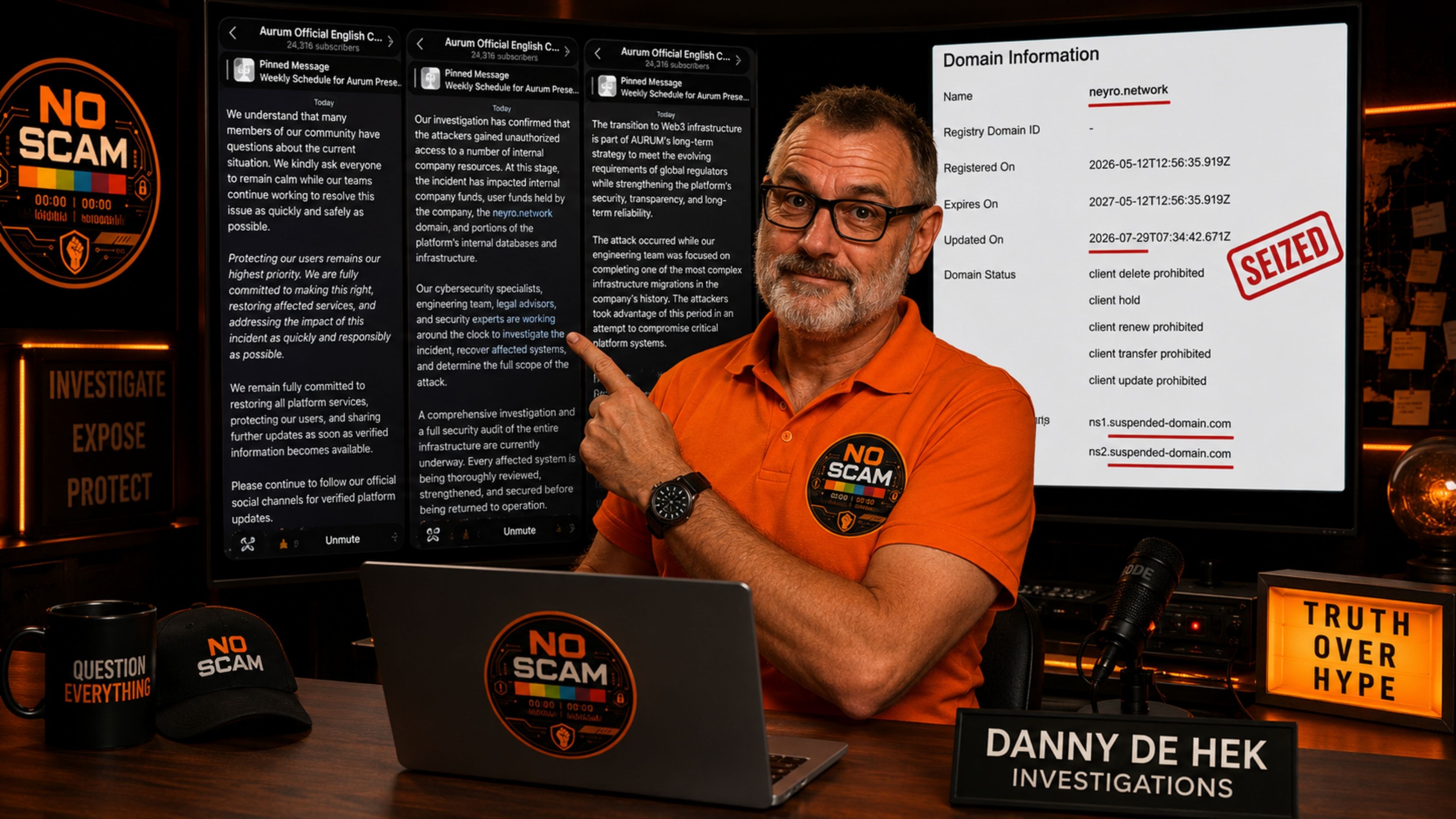
AURUM has publicly claimed it suffered a major cybersecurity incident, stating that attackers gained unauthorised access to internal company resources, user funds held by the company, the neyro.network domain and parts of its infrastructure. According to announcements posted in its official Telegram channels, the company says it has isolated affected systems, launched a security audit and is working to restore services.
At the same time, I have begun receiving reports from community members claiming they have lost access to their funds.
One individual from the United States, who asked to remain anonymous, contacted me to report that their smart contract-linked wallet had been drained during the incident. They believe many other users have also been affected and only discovered my investigation after losing their investment. They have offered to assist with further evidence as my investigation continues.
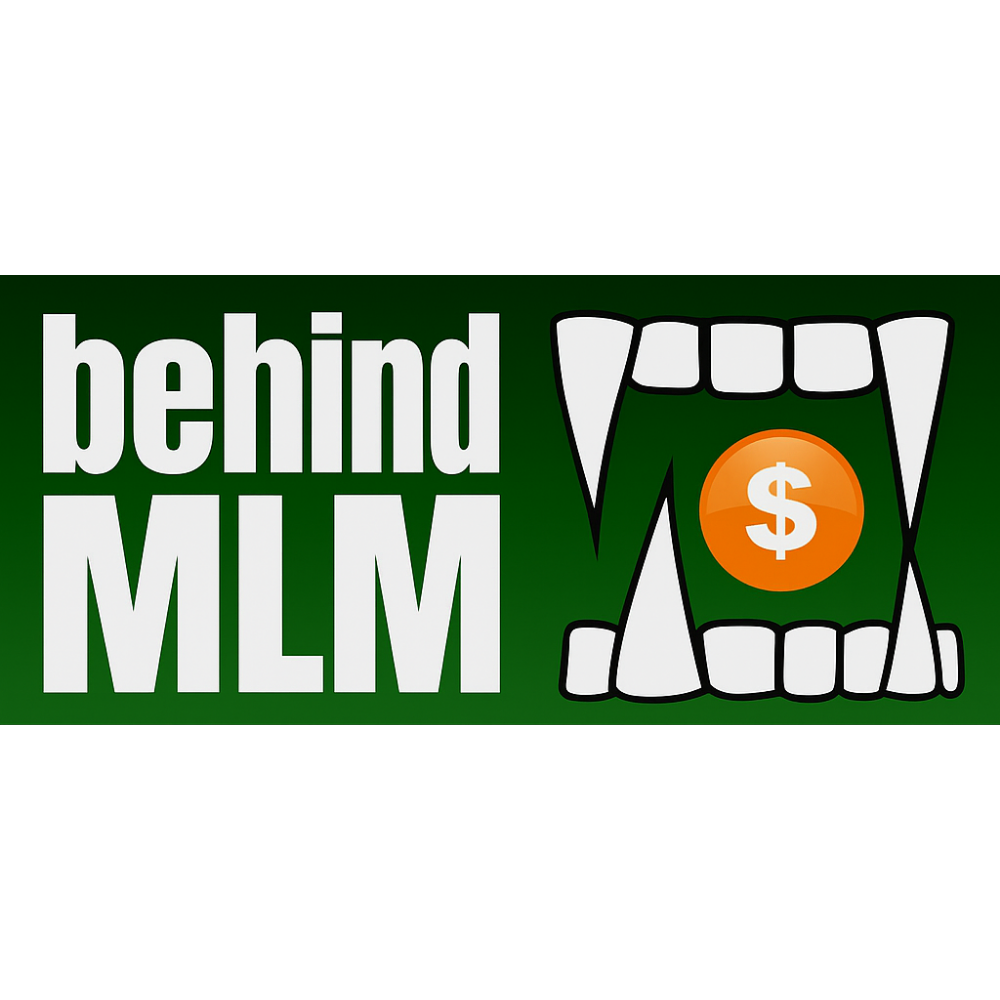 Adding another significant development, Oz from BehindMLM has now published his own Review of the Collapse. Tip of the hat to Oz from BehindMLM for identifying several important developments, including the apparent seizure of the neyro.network domain by its registrar on 29 July 2026. WHOIS records show the domain was updated that day before entering a client hold status with name servers pointing to ns1.suspended-domain.com and ns2.suspended-domain.com, indicating the domain had been suspended rather than operating normally.
Oz also documented a timeline showing withdrawal delays beginning several days before AURUM announced the alleged security breach. According to his reporting, withdrawals were first delayed during what AURUM described as a migration to its new Web3 infrastructure before later being suspended entirely ahead of the company’s announcement that it had been hacked.
At this stage, the cause of users’ losses has not been independently established. Whether the result of an external compromise, actions by those controlling the platform or another explanation remains a matter requiring further evidence. However, the combination of withdrawal delays, reports from affected users, the suspension of the neyro.network domain and AURUM’s own public statements represents a significant development in this ongoing investigation.
If you have invested in AURUM Foundation or NEYRO, or have evidence that may assist this investigation, I encourage you to contact me through the investigation page. Every piece of verifiable information helps build a clearer picture of what has occurred.
Disclaimer: How This Investigation Was Conducted
This investigation relies entirely on OSINT — Open Source Intelligence — meaning every claim made here is based on publicly available records, archived web pages, corporate filings, domain data, social media activity, and open blockchain transactions. No private data, hacking, or unlawful access methods were used. OSINT is a powerful and ethical tool for exposing scams without violating privacy laws or overstepping legal boundaries.
About the Author
I’m DANNY DE HEK, a New Zealand–based YouTuber, investigative journalist, and OSINT researcher. I name and shame individuals promoting or marketing fraudulent schemes through my YOUTUBE CHANNEL. Every video I produce exposes the people behind scams, Ponzi schemes, and MLM frauds — holding them accountable in public.
My PODCAST is an extension of that work. It’s distributed across 18 major platforms — including Apple Podcasts, Spotify, Amazon Music, YouTube, and iHeartRadio — so when scammers try to hide, my content follows them everywhere. If you prefer listening to my investigations instead of watching, you’ll find them on every major podcast service.
You can WORK WITH ME for dedicated access to my time and investigative services — including private consultations, scam-risk reviews, sponsored investigations, support sessions, livestream scam breakdowns, and interviews. I’m also available for SPEAKING ENGAGEMENTS, where I share first-hand experience from years of exposing large-scale fraud, investigating scams, and supporting victims.
“Stop losing your future to financial parasites. Subscribe. Expose. Protect.”
My work exposing crypto fraud has been featured in:
- Coffeezilla 2026): Featured in the investigation exposing the alleged $328M Goliath Ventures Ponzi scheme
- Bloomberg Documentary (2025): A 20-minute exposé on Ponzi schemes and crypto card fraud
- News.com.au (2025): Profiled as one of the leading scam-busters in Australasia
- OpIndia (2025): Cited for uncovering Pakistani software houses linked to drug trafficking, visa scams, and global financial fraud
- The Press / Stuff.co.nz (2023): Successfully defeated $3.85M gag lawsuit; court ruled it was a vexatious attempt to silence whistleblowing
- The Guardian Australia (2023): National warning on crypto MLMs affecting Aussie families
- ABC News Australia (2023): Investigation into Blockchain Global and its collapse
- The New York Times (2022): A full two-page feature on dismantling HyperVerse and its global network
- Radio New Zealand (2022): “The Kiwi YouTuber Taking Down Crypto Scammers From His Christchurch Home”
- Otago Daily Times (2022): A profile on my investigative work and the impact of crypto fraud in New Zealand




Leave A Comment