



“I wanted to share something that’s been a real blessing for my family.”
That’s how this begins.
Not with a disclaimer. Not with risk. Not with transparency.
With trust.
Over the past few weeks, I’ve been collecting screenshots, testimonies, internal recordings, marketing funnels, and website data connected to a woman named Lee Meadows, who has been actively promoting BG Wealth Sharing — a scheme I’ve already documented as a copy-paste trading operation driven by recruitment and sustained by illusionary returns.
What I’ve uncovered is not a misunderstanding, and it’s not a one-off lapse in judgment. It is a consistent pattern of behaviour, supported by infrastructure, reinforced through messaging, and executed through a recruitment pipeline that has been deliberately built and actively maintained.
This isn’t speculation.
This isn’t opinion.
This is evidence.
Building Trust Before Selling the Dream
Before BG Wealth Sharing ever appears, there is already a foundation of trust in place.
Lee Meadows is not new to this space. Her background in Kangen water (Enagic) places her firmly within the multi-level marketing ecosystem, where success is built not on product value alone, but on relationships, identity, and community influence. These systems reward individuals who can build trust at scale and convert that trust into participation.
Her public image reflects this clearly. The messaging is consistent: “blessed,” “community,” “helping others,” “financial freedom.” These are not random descriptors. They are deliberate positioning tools, particularly effective within faith-based or values-driven communities where credibility is often assumed rather than questioned.
This matters, because people don’t join financial schemes based on spreadsheets or audits.
They join because someone they trust tells them it’s safe.
By the time BG Wealth Sharing is introduced, the audience isn’t cold. They’re already engaged, already receptive, and already aligned with the person presenting it. That’s what lowers the barrier to entry. That’s what removes friction. And that’s what makes everything that follows more effective.
The Switch: From Lifestyle to “AI Wealth”
Once that trust is established, the messaging begins to shift.
The conversation moves away from lifestyle and into financial opportunity, framed through language that is both modern and deliberately vague:
- “AI strategy”
- “2 minutes a day”
- “$100K every month”
- “All you need is your phone”
These are not just ambitious claims — they are consistent markers of high-risk, unsustainable financial models. The promise is simple: minimal effort, maximum return, delivered through a system that appears structured, but is never meaningfully explained.
Accompanying these claims are visual proofs — screenshots of withdrawals, staged success imagery, and lifestyle-driven graphics designed to reinforce the narrative. Large USDT figures are presented as evidence of success, yet there is no independent verification, no transactional transparency, and no way to confirm whether these figures reflect real withdrawals or simply internal ledger movements.
This is where perception begins to overtake reality.
The appearance of success becomes more important than the mechanism behind it.
The Website That Funnels Everything
At a certain point, this moves beyond casual promotion.
Lee Meadows created a dedicated website:
bgabundantaiblessings.com
This is not a passive link. It is a structured recruitment funnel, designed to guide visitors from curiosity to commitment.
Visitors are taken through a carefully staged journey:
- A personal endorsement framed as a “blessing”
- A video explanation positioned as clarity
- A call to action encouraging further engagement
- Access to training materials and onboarding pathways
The site presents itself as an educational platform, but the core messaging centres around a specific financial promise: 1.3% daily compounding.
This is where the illusion begins to break down.
At 1.3% daily, compounding over time produces astronomical returns. Figures displayed on the site show relatively small investments growing into six- and seven-figure sums within months. This is not aggressive growth — it is mathematically unsustainable in any legitimate financial environment.
At the same time, the site includes standard disclaimers:
- “Investment involves risk”
- “No guarantees”
- “You may lose all your capital”
This contradiction is not accidental. It allows the operator to promote certainty while legally framing uncertainty, creating a dual narrative that protects the promoter while persuading the participant.
The Illusion of Legitimacy
To reinforce credibility, the website presents a series of documents positioned as official proof:
- “U.S. Securities and Exchange Commission” certificates
- Company registration records
- Share certificates
- Investment guarantee letters
At first glance, these documents appear authoritative. They use formal language, official seals, and structured formatting designed to mimic legitimate filings.
But when examined critically, they raise immediate concerns.
Regulatory bodies like the SEC do not issue decorative certificates of this nature. Genuine filings are publicly accessible, independently verifiable, and consistent in structure. These documents, by contrast, vary in presentation, lack traceable references, and rely heavily on visual authority rather than verifiable substance.
The so-called “investment guarantee letter” is particularly problematic. It claims that losses will be covered and profitability ensured — statements that would require a level of financial backing and regulatory approval that is not evidenced anywhere within the operation.
These documents do not establish legitimacy.
They simulate it.
The Real Business Model: Recruitment
If there is one piece of information that clarifies everything, it is the compensation structure.
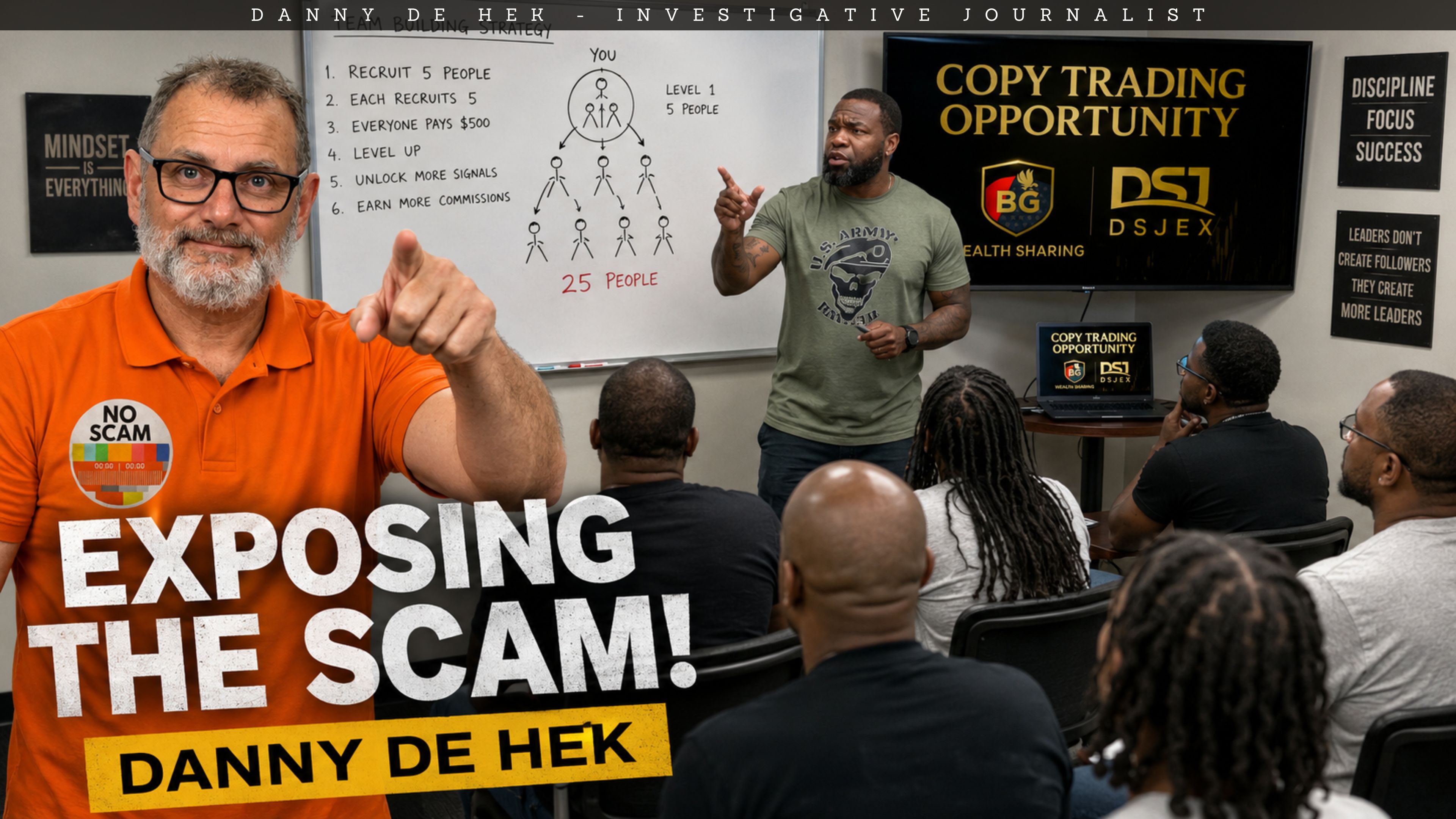
The materials associated with BG Wealth Sharing outline a multi-level system built around:
- Level-based progression (Level 1 to Level 12)
- Team size requirements for advancement
- Percentage-based earnings from downline activity
- Promotion bonuses tied to recruitment milestones
Income is not tied to trading performance. It is tied to how many people you bring in and how much they deposit.
This is a critical distinction.
Because it means the system relies on a continuous flow of new participants. Without that flow, the structure cannot sustain itself. The trading component becomes secondary — or, in some cases, purely symbolic.
This also explains the consistent emphasis on:
- Recruitment events
- Social media promotion
- Community engagement
- Team expansion
Everything feeds into the same outcome:
growth of the network.
Cash Handling Allegation and Account Funding Concerns
One of the more serious claims I’ve received comes from an individual in the United States, Fabrienne Kunishige, who attended a presentation hosted by Lee Meadows. According to her account, this was not simply a case of being referred to a website or guided through a standard sign-up process. Instead, she describes a situation where money was handed over directly.
Fabrienne reports that she gave $2,500 in cash, along with an additional 3% fee, to Lee Meadows. She states that shortly after, her account was created and funded on her behalf. This is not how legitimate investment platforms typically operate. Under normal circumstances, there is a clear, traceable process where individuals deposit funds directly into their own accounts through regulated and auditable channels.
The claim doesn’t stop there. She also states that her husband, Darryl, provided $4,000 in cash plus a 3% fee, followed by another $1,500 with the same fee structure. The reported investment date for these transactions is 7 February 2026. If accurate, this suggests a repeated pattern of direct cash collection, rather than a one-off situation or misunderstanding.
What makes this particularly important is not just the amounts involved, but the mechanism being described. If individuals are handing over cash to a promoter who then facilitates account funding, it raises immediate questions about control of funds, transparency, and record-keeping. Where is that money actually going? Who is executing the transactions? And are participants fully aware of how their funds are being handled?
At this stage, this remains an unverified allegation, and it would be irresponsible to present it as established fact without further corroboration. However, it aligns with other statements suggesting that significant amounts of money were being moved through personal channels, rather than standardised systems. If additional reports surface showing the same pattern, this moves from a single claim to something far more systemic.
This is not, on its own, proof of wrongdoing. But it is a serious red flag, and one that warrants further investigation — particularly given the broader context of recruitment, account funding, and the structure of the BG Wealth Sharing operation.
Managing the Fallout
When systems like this begin to show strain, the messaging changes again.
In a recorded internal call, Lee Meadows shifted her position. She presented herself not as a leader, but as a participant, emphasising that she was “no different” from others and that she, too, was affected by the situation. The tone becomes softer, more reflective, and more aligned with the audience — a subtle repositioning that reduces perceived authority while preserving influence.
At the same time, she continued to guide the group, offering interpretations of events, suggesting possible outcomes, and encouraging patience. The language becomes careful — measured in a way that distances her from direct responsibility, while still shaping how others respond. This is not a withdrawal from leadership. It is a reframing of it.
This is a pattern I’ve seen repeatedly.
When confidence in the system begins to erode, leadership often transitions into damage control mode. The goal is not necessarily to resolve the issue, but to stabilise the group, prevent panic, and maintain cohesion long enough to delay collapse. Uncertainty is managed, not eliminated. Questions are acknowledged, but rarely answered directly.
It’s not about clarity.
It’s about control of the narrative.
Why People Believe This Is Real
From the outside, it’s easy to question how systems like this continue to attract participants.
But when you break it down, the structure is highly effective by design.
It combines:
- Pre-existing trust networks
- Emotionally driven messaging
- Visual proof of success
- Structured systems (signals, schedules, dashboards)
- Community reinforcement
Each layer strengthens the next, creating a system where belief is built gradually rather than forced.
Participants are not making isolated decisions. They are operating within a social environment where trust is already established, where success appears visible, and where doubt is slowly reduced through repetition, validation, and shared experience. When everyone around you appears to be benefiting, the pressure to question the system becomes harder to sustain.
This is what makes it persuasive.
It doesn’t rely on a single convincing argument. It relies on multiple reinforcing signals that collectively create the impression of legitimacy. Over time, skepticism is replaced with familiarity, and familiarity begins to feel like proof.
That’s what makes it difficult to challenge from within.
The Structure Behind the Illusion
What I’ve documented here is not a single issue, but a consistent pattern across multiple layers:
- Established MLM background
- Funnel-based recruitment systems
- High-yield financial claims
- Misleading or unverifiable documentation
- Recruitment-driven compensation structure
- Allegations of direct cash handling
- Narrative control during periods of uncertainty
Individually, each of these elements raises questions.
Together, they form a cohesive operational model — one that relies not on transparency, but on perception, trust, and continuous recruitment.
This is not about reacting emotionally.
It’s about recognising patterns.
Because once you understand how these systems are built, you start to see them everywhere.
Disclaimer: How This Investigation Was Conducted
This investigation relies entirely on OSINT — Open Source Intelligence — meaning every claim made here is based on publicly available records, archived web pages, corporate filings, domain data, social media activity, and open blockchain transactions. No private data, hacking, or unlawful access methods were used. OSINT is a powerful and ethical tool for exposing scams without violating privacy laws or overstepping legal boundaries.
About the Author
I’m DANNY DE HEK, a New Zealand–based YouTuber, investigative journalist, and OSINT researcher. I name and shame individuals promoting or marketing fraudulent schemes through my YOUTUBE CHANNEL. Every video I produce exposes the people behind scams, Ponzi schemes, and MLM frauds — holding them accountable in public.
My PODCAST is an extension of that work. It’s distributed across 18 major platforms — including Apple Podcasts, Spotify, Amazon Music, YouTube, and iHeartRadio — so when scammers try to hide, my content follows them everywhere. If you prefer listening to my investigations instead of watching, you’ll find them on every major podcast service.
You can BOOK ME for private consultations or SPEAKING ENGAGEMENTS, where I share first-hand experience from years of exposing large-scale fraud and helping victims recover.
“Stop losing your future to financial parasites. Subscribe. Expose. Protect.”
My work exposing crypto fraud has been featured in:
- Coffeezilla (2026): Featured in the investigation exposing the alleged $328M Goliath Ventures Ponzi scheme
- Bloomberg Documentary (2025): A 20-minute exposé on Ponzi schemes and crypto card fraud
- News.com.au (2025): Profiled as one of the leading scam-busters in Australasia
- OpIndia (2025): Cited for uncovering Pakistani software houses linked to drug trafficking, visa scams, and global financial fraud
- The Press / Stuff.co.nz (2023): Successfully defeated $3.85M gag lawsuit; court ruled it was a vexatious attempt to silence whistleblowing
- The Guardian Australia (2023): National warning on crypto MLMs affecting Aussie families
- ABC News Australia (2023): Investigation into Blockchain Global and its collapse
- The New York Times (2022): A full two-page feature on dismantling HyperVerse and its global network
- Radio New Zealand (2022): “The Kiwi YouTuber Taking Down Crypto Scammers From His Christchurch Home”
- Otago Daily Times (2022): A profile on my investigative work and the impact of crypto fraud in New Zealand

Leave A Comment