


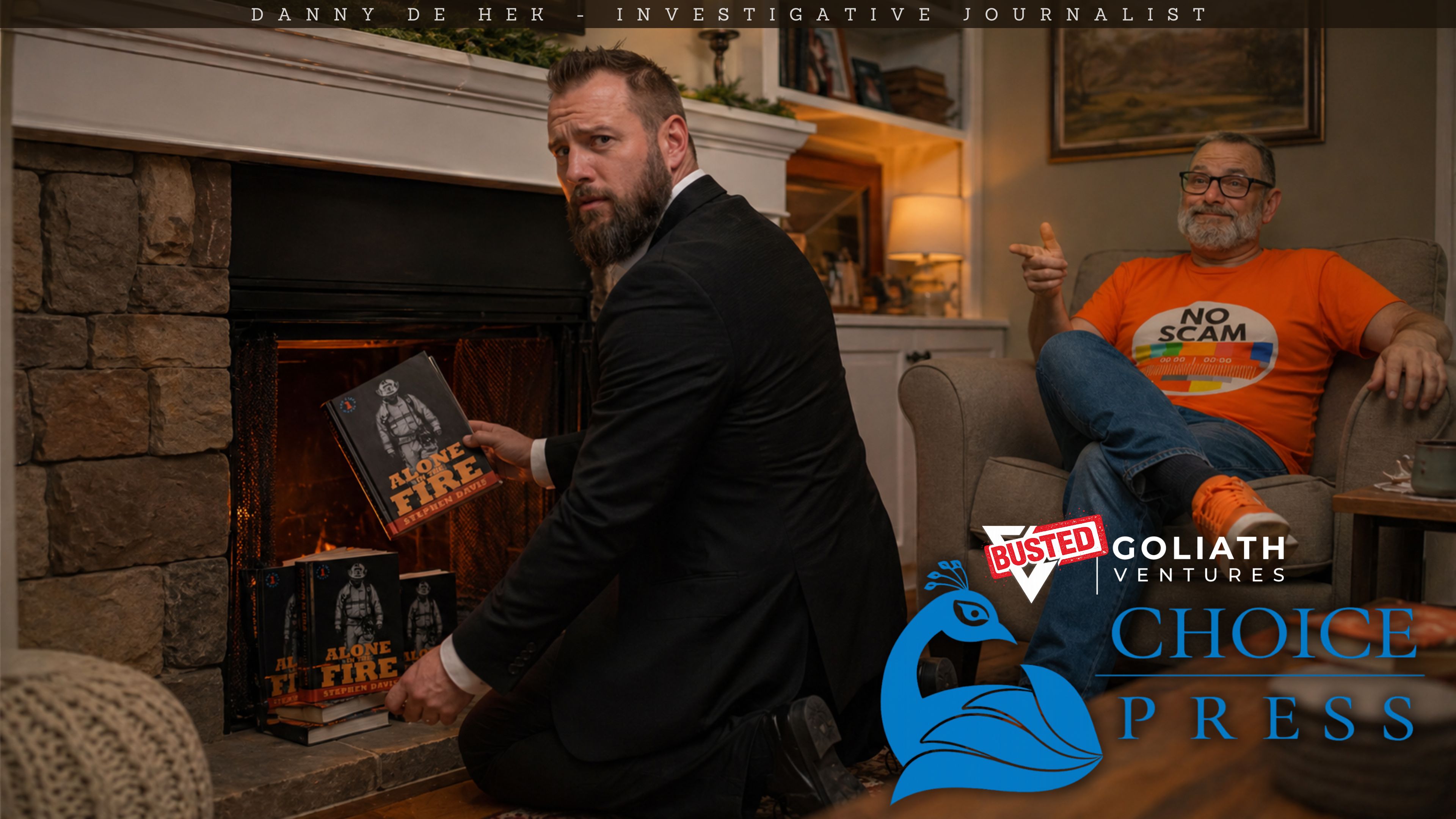
“When the story doesn’t match the paperwork, follow the paperwork.”
There’s a carefully constructed narrative circulating about Stephen Davis — a former fire chief who stepped away from public service and reinvented himself as an entrepreneur, mentor, and leader.
On the surface, it’s a compelling story. It speaks to discipline, resilience, and legacy. The kind of story that earns trust quickly, especially from people who recognise the weight of a uniform and the responsibility that comes with it.
But over time, I’ve learned that credibility is often the first layer of protection in schemes like this. Not proof. Not transparency. Just perception. And when you start putting that perception side-by-side with documented timelines, private communications, and legal correspondence, the gap between the story and the reality can become impossible to ignore.
 This investigation is not built on speculation. It’s grounded in contemporaneous records, legal documents, a detailed chronology of events, and a first-hand Statement submitted for publication. What it reveals is not just a business dispute or a personal fallout — but a pattern of behaviour that sits uncomfortably close to something much bigger: the collapse of GOLIATH VENTURES INC, a company now at the centre of a federal fraud case.
What follows is the documented story behind that connection.
The business behind the image
To understand what happened here, you have to separate the public persona from the paper trail.
On September 3, 2024, Choice Press LLC was formed in Wyoming. The structure was clear: Stephen Davis held a 60% ownership stake, while his business partner, Joseph Lawrence, held 40%. Davis contributed $50,000 in initial capital and positioned the company as something more than just a commercial venture — describing it as a legacy project that would eventually be handed over once certain milestones were achieved.
At face value, this looks like a standard entrepreneurial partnership. But even in the early documentation, there are subtle signals worth paying attention to. Control remained firmly with Davis. Compensation structures were defined early, then later revisited. And while the business was presented outwardly as a collaborative venture, internally the balance of power was never in question.
Over the following months, the company operated, grew, and took on clients. Payments were made. Agreements were formed. But beneath that surface, tensions began to build — not just around money, but around decision-making, transparency, and direction. What started as a partnership began to show signs of strain.
And then, in late 2025, a second layer of risk entered the picture.
The Goliath connection that changes everything
In November 2025, public reporting identified Stephen Davis as being connected to GOLIATH VENTURES INC, a company that was already drawing scrutiny for its investment model. That alone should have triggered serious questions — not just externally, but internally within any business tied to his name.
When those questions were raised directly, the response was immediate and dismissive.
“You’re good dude. It’s all bs.”
That message wasn’t part of a public statement. It wasn’t a carefully worded response vetted by legal counsel. It was a private reassurance given in direct response to legitimate concerns. At the same time, there were discussions about “getting ahead of it” by contacting media outlets, including Business Insider.
That combination matters.
Because when you see:
- Private dismissal of serious allegations
- Simultaneous efforts to shape the public narrative
you’re no longer looking at transparency. You’re looking at control of perception.
And that pattern — managing the story instead of addressing the substance — is something I’ve seen repeatedly in high-risk investment schemes.
When the private story starts to break
By December 2025, the tone behind the scenes had shifted.
In a documented discussion, Stephen Davis acknowledged significant personal financial exposure tied to Goliath Ventures. This wasn’t vague concern — it was specific. He described potential losses including a property in Germany valued at approximately $500,000 and another in Dubai worth around $150,000. More importantly, he characterised Goliath as a company that had scaled rapidly into a billion-dollar operation without the infrastructure required to support investor withdrawals.
That detail is critical.
Because at the exact same time these admissions were being made privately, the public-facing narrative remained polished and intact. The image of stability, leadership, and success continued to be promoted — even as the underlying structure was being described internally as unable to function properly.
That disconnect is not accidental. It’s structural.
In schemes like this, the external narrative must remain strong for as long as possible, because confidence is what keeps the system alive. Once confidence breaks, everything else follows.
The moment that raises ethical red flags
One of the most concerning moments in this entire timeline doesn’t come from a legal document or a financial disclosure. It comes from a recorded sales call.
During that call, a prospective client — described as financially vulnerable, supporting a family on a modest income — was asked about his financial position. The conversation then pivoted by Davis to a suggestion: leveraging home equity to fund publishing services.
This wasn’t a hypothetical discussion about financial literacy. It was a real-time interaction with a real person in a vulnerable position.
That moment matters because it speaks directly to judgement and boundaries.
It also wasn’t ignored internally. It was raised as a formal moral concern shortly after the call. And when you place that incident alongside involvement in a high-risk investment operation, it begins to form a broader picture — not of a single poor decision, but of a pattern where risk is shifted onto others while control remains centralised.
The collapse becomes public
On February 24, 2026, the situation moved from concern to confirmation.
The U.S. Department of Justice arrested Goliath Ventures CEO Christopher Delgado on charges of wire fraud and money laundering, alleging a $328 million Ponzi scheme. This was not speculation. It was federal action backed by formal charges.
At that point, the implications of any connection to Goliath became unavoidable.
Clients began distancing themselves. Contracts were terminated. Concerns that had previously been internal were now being acted on externally. Some individuals explicitly cited the Goliath exposure as the reason for stepping away from business relationships connected to Davis.
At the same time, the internal business dispute within Choice Press escalated into formal legal conflict. Demand letters were issued. Allegations were made. Access to records, control of accounts, and ownership rights all became points of contention.
And when you read those legal demands alongside the broader timeline, a more complex question begins to emerge:
Was this about protecting a business — or protecting a position within it?
The legal posture versus the documented timeline
The formal demand letter issued on behalf of Stephen Davis presents a clear legal argument: that his business partner breached fiduciary duties, interfered with company relationships, and misused company assets. It demands full access to records, disclosure of competing activity, and cooperation under threat of further legal action.
On its own, that’s not unusual. Business disputes often escalate into legal positioning.
But when you place that letter alongside the documented chronology — the private admissions, the Goliath connection, the client departures, and the recorded interactions — it becomes harder to view the situation in isolation.
Because the timeline shows:
- A business already under pressure
- A partner raising ethical concerns
- External exposure tied to a federal investigation
- And a rapid shift toward legal control and narrative framing
That doesn’t prove intent. But it does highlight a pattern of escalation that aligns with pressure, not stability.
Why people believed in this
One of the most important questions in any investigation like this is simple:
Why did people trust it?
The answer here isn’t complicated. It’s human.
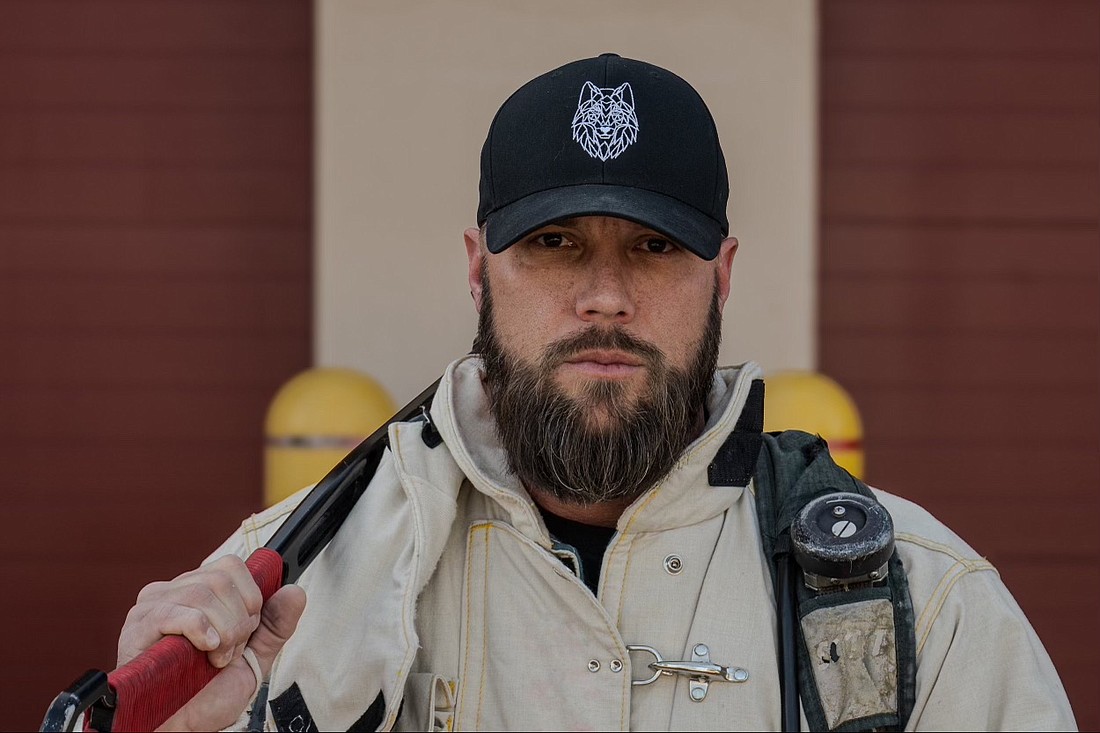
Stephen Davis wasn’t an anonymous promoter. He wasn’t a faceless online figure. He was a fire chief. A leader. Someone who had spent years in a role built on trust, responsibility, and service. That kind of background carries weight — especially within close-knit communities like firefighting networks.
When someone like that presents an opportunity, people don’t approach it with the same scepticism they would apply to a stranger. They assume due diligence has already been done. They assume integrity.
And that’s exactly what makes situations like this so dangerous.
Because when trust is borrowed from a past identity and applied to a completely different context, it lowers the guard of everyone involved.
The human cost behind the documents
Behind every timeline, every document, and every legal exchange, there are real people dealing with the consequences.
Families who invested based on trust.
Individuals who committed savings, equity, or retirement funds.
People who believed they were being guided by someone they respected.
The statement submitted for publication makes that impact clear. It describes not just financial loss, but the emotional weight of watching someone you trusted become unrecognisable in their actions. It documents the moment where personal loyalty collided with professional reality — and the cost of that collision.
That’s the part that doesn’t appear in sponsored articles or polished profiles.
But it’s the part that matters most.
A direct message to Stephen Davis
Stephen, this is where the story doesn’t have to end the way these stories usually do.
You’re not an anonymous name buried in a blockchain wallet. You’re not a distant promoter operating behind layers of distance. You were inside this. You were part of the structure, the communication, the decisions, and the relationships that built trust around it.
That matters.
Because it means you have something that most people don’t: first-hand knowledge of how this actually worked.
Right now, you have a choice.
You can continue down the same path — managing perception, disputing narratives, and relying on legal positioning to contain the situation.
Or you can step forward and do something that actually aligns with the role you built your reputation on.
Tell the truth.
Become a whistleblower.
Because if there’s one consistent pattern in every case I’ve investigated, it’s this:
The people who come forward early don’t just protect themselves — they help stop the damage before it spreads further.
The fire is already burning.
The only question now is whether you’re going to run toward it — or stand back and watch it consume everything around you.
Disclaimer: How This Investigation Was Conducted
This investigation relies entirely on OSINT — Open Source Intelligence — meaning every claim made here is based on publicly available records, archived web pages, corporate filings, domain data, social media activity, and open blockchain transactions. No private data, hacking, or unlawful access methods were used. OSINT is a powerful and ethical tool for exposing scams without violating privacy laws or overstepping legal boundaries.
About the Author
I’m DANNY DE HEK, a New Zealand–based YouTuber, investigative journalist, and OSINT researcher. I name and shame individuals promoting or marketing fraudulent schemes through my YOUTUBE CHANNEL. Every video I produce exposes the people behind scams, Ponzi schemes, and MLM frauds — holding them accountable in public.
My PODCAST is an extension of that work. It’s distributed across 18 major platforms — including Apple Podcasts, Spotify, Amazon Music, YouTube, and iHeartRadio — so when scammers try to hide, my content follows them everywhere. If you prefer listening to my investigations instead of watching, you’ll find them on every major podcast service.
You can WORK WITH ME for dedicated access to my time and investigative services — including private consultations, scam-risk reviews, sponsored investigations, support sessions, livestream scam breakdowns, and interviews. I’m also available for SPEAKING ENGAGEMENTS, where I share first-hand experience from years of exposing large-scale fraud, investigating scams, and supporting victims.
“Stop losing your future to financial parasites. Subscribe. Expose. Protect.”
My work exposing crypto fraud has been featured in:
- Coffeezilla (2026): Featured in the investigation exposing the alleged $328M Goliath Ventures Ponzi scheme
- Bloomberg Documentary (2025): A 20-minute exposé on Ponzi schemes and crypto card fraud
- News.com.au (2025): Profiled as one of the leading scam-busters in Australasia
- OpIndia (2025): Cited for uncovering Pakistani software houses linked to drug trafficking, visa scams, and global financial fraud
- The Press / Stuff.co.nz (2023): Successfully defeated $3.85M gag lawsuit; court ruled it was a vexatious attempt to silence whistleblowing
- The Guardian Australia (2023): National warning on crypto MLMs affecting Aussie families
- ABC News Australia (2023): Investigation into Blockchain Global and its collapse
- The New York Times (2022): A full two-page feature on dismantling HyperVerse and its global network
- Radio New Zealand (2022): “The Kiwi YouTuber Taking Down Crypto Scammers From His Christchurch Home”
- Otago Daily Times (2022): A profile on my investigative work and the impact of crypto fraud in New Zealand



Leave A Comment