


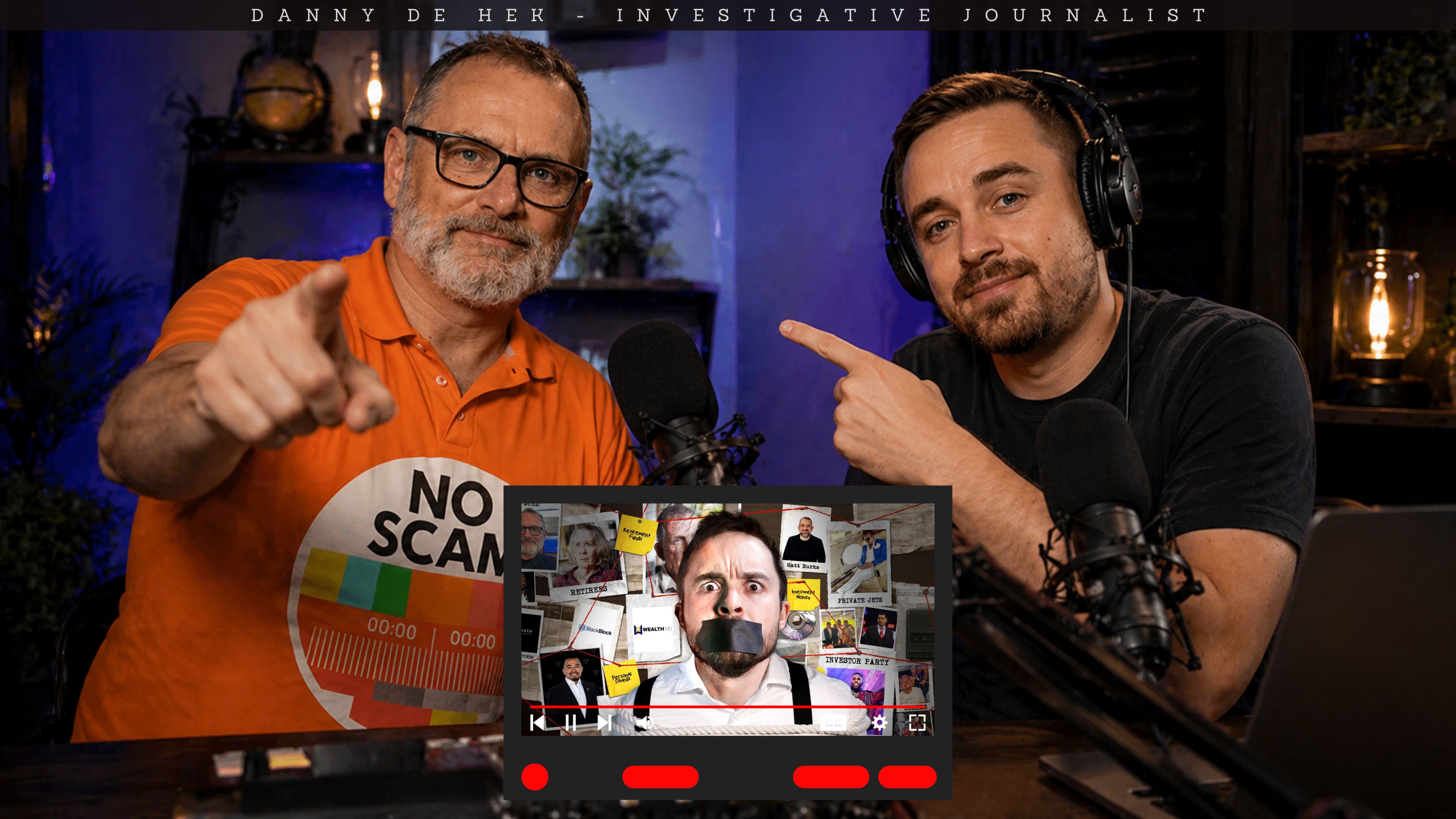
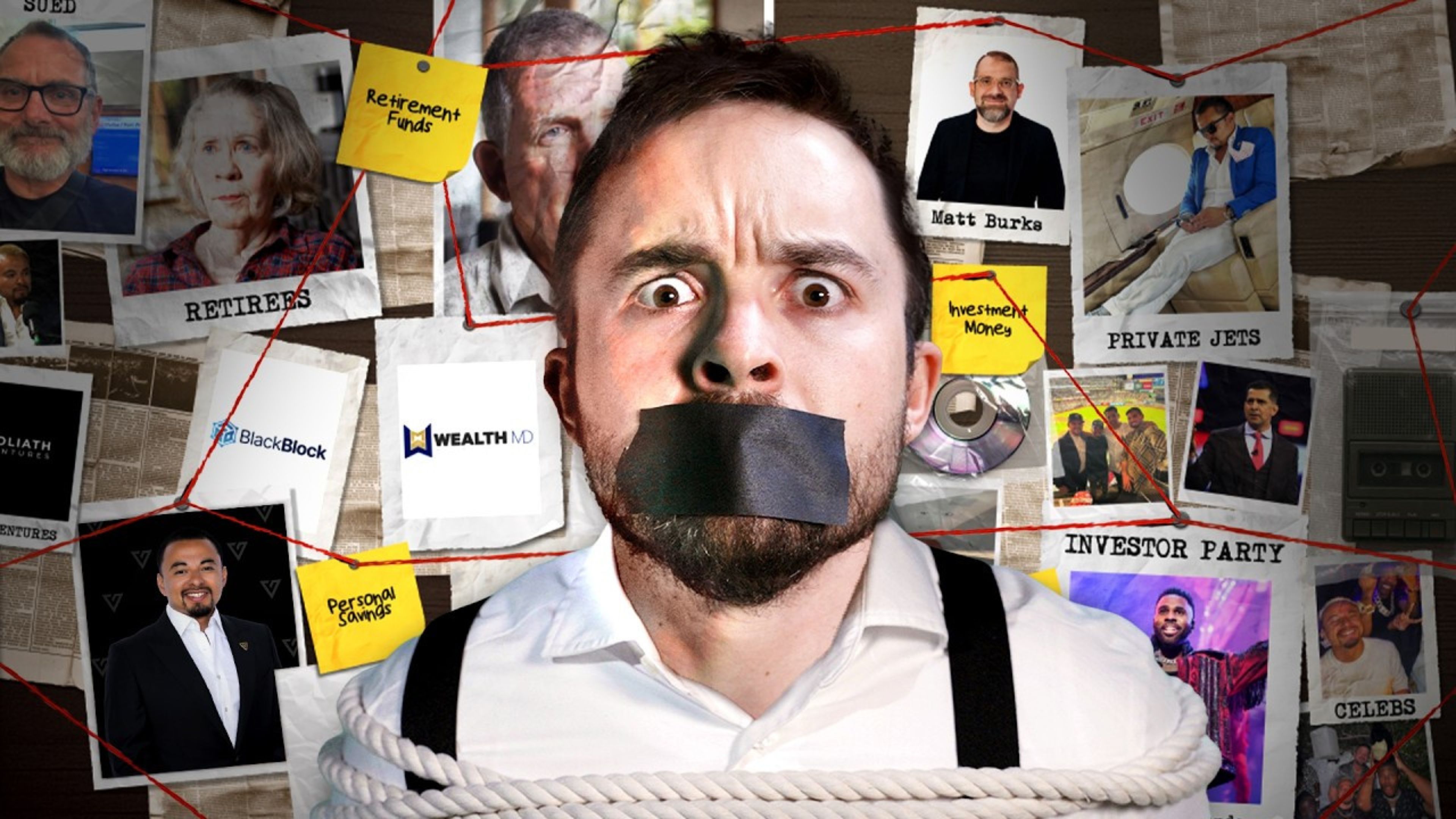
“You don’t get the story by waiting for a court filing — you get it by knocking on doors before anyone else realises there’s a story.”
I’ve been sitting on this for a while now, and it’s something that’s been bothering me more with every passing month.
Not just because of what’s happened with Goliath Ventures Inc, but because of what it’s exposed about the current state of journalism — how stories are chosen, how risk is managed, and how truth is often delayed until it becomes legally safe to repeat.
I’ve just come back from the United States. I was on the ground in Orlando, not reacting to a headline, but chasing a story before it became one. This wasn’t speculation — it was months of work going back to 1 September 2025, building a timeline, identifying patterns, speaking to people inside the operation, and documenting behaviour that didn’t align with what was being promised. I wasn’t sitting behind a desk waiting for confirmation. I was actively collecting it.
While I was there, I did what journalists are supposed to do. I picked up the phone. I rang TV stations. I contacted newspapers. I sat down face-to-face with reporters and walked them through everything — documents, names, timelines, inconsistencies, and the structure behind the operation. I gave them the full picture, not just a headline, but the groundwork that would allow them to verify it themselves.
And the response was almost identical every time.
They wanted a court filing.
Not leads. Not evidence. Not patterns. Not the perspective of someone who had spent months inside the story. They wanted something already stamped, filed, and safe to repeat — something they could point to if the story came back at them legally. They weren’t looking to uncover the truth — they were waiting for permission to report it.
That’s when it really hit me.
We’re not looking at the same kind of journalism anymore.
The Goliath I went up against
When I first started digging into Goliath Ventures Inc, it wasn’t a headline. It wasn’t even public in the way most scams are. There were no obvious ads, no aggressive marketing campaigns, no mass recruitment funnels flooding social media. Instead, it moved quietly — through introductions, referrals, and trust networks. People bringing in people they knew. That’s how it spreads, and that’s why it takes longer to surface.
There’s a pattern to this kind of operation. It doesn’t rely on convincing strangers — it relies on leveraging existing trust. By the time someone is introduced, the credibility has already been transferred. You’re not evaluating the company objectively. You’re trusting the person who vouched for it. That layer of separation makes it much harder to challenge, and even harder for people inside to step back and question what they’re part of.
What stood out early for me was the disconnect between what was being claimed and what was actually possible. The returns being discussed didn’t align with anything I’d seen in legitimate liquidity pool activity. That’s not a matter of opinion — it’s a matter of understanding how those systems work. At the same time, the messaging inside the network was tightly controlled. Questions weren’t encouraged, and when they did surface, they didn’t gain traction. That combination — unrealistic returns paired with controlled communication — is something I’ve learned not to ignore.
Once I started publishing those concerns, the response was immediate.
I contacted organisations connected to the company. I put my concerns in writing. I made it very clear where I stood and why. This wasn’t vague commentary — it was based on patterns, behaviour, and inconsistencies that didn’t hold up under scrutiny.
The following day, they filed a lawsuit against me in the United States.
I’m based in New Zealand. That context matters. The lawsuit wasn’t about correcting facts or engaging with the claims being made — it was about creating pressure and testing whether I would back down.
I didn’t.
If anything, it confirmed I was exactly where I needed to be — asking questions that someone didn’t want answered publicly.
Boots on the ground — not behind a desk
Instead of pulling back, I doubled down. I got on a plane and went to the United States. If this was going to be reported properly, I wasn’t going to do it from a distance. I wanted to put the information directly in front of the people whose job it is to investigate and publish it — not filtered through emails or second-hand summaries, but face-to-face.
I walked into newsrooms. I sat across from journalists. I laid everything out — documents, timelines, patterns, inconsistencies, and the structure behind the operation. This wasn’t theory. It was months of work, built piece by piece, showing how the story held together. I even sat down for a full, hour-long on-camera interview with a local TV station in Orlando. They asked the right questions. They understood the mechanics. There was no confusion about what was being presented.
But understanding something and reporting it are two very different things.
When it came time to publish?
Silence.
Then everything changed the moment Christopher Delgado handed himself in. As soon as there was a federal hook — a charge, a filing, something official — the story appeared everywhere. Headlines. Coverage. Breaking news. The same outlets that had the information earlier now had something they could safely reference.
And with that shift, the narrative reset.
Not one mention of the person who had been chasing the story for months. Not one mention of the whistleblower they had already sat across from. The groundwork disappeared, replaced by what could now be confirmed through official channels.
That’s not a complaint.
That’s an observation.
Because what it shows is a fundamental shift in how stories are built. Not from the ground up — through investigation, verification, and risk — but from the top down. Wait for the filing. Then report the filing.
That’s the model.
That’s not investigation.
That’s documentation.
What independent journalism actually looks like
While all of that was happening, something else was unfolding behind the scenes — and this is where the contrast becomes clear. Not everyone waits for permission. Not everyone needs a court filing to start asking questions. Some people still approach a story the way it used to be done — start with the evidence, and follow it wherever it leads.
I had already been corresponding with Coffeezilla, a YouTuber and cryptocurrency investigator known for exposing scams, about Goliath Ventures Inc before I travelled to the United States. That trip wasn’t public. It was a quiet, deliberate move to continue the investigation on the ground, without drawing attention to what I was doing or where I was going.
While I was there, I let him know I was in the country and would be moving around for a few days. I suggested that on the way home, I could adjust my flights and stop in to see him so we could go through everything face-to-face. He told me he was also looking into Goliath, and saw the value in sitting down properly. He covered the connecting flight to Houston and offered to take care of accommodation so we could make it happen.
What followed wasn’t a quick interview or a surface-level conversation.
We spent the day together.
We went for a walk. We sat down and broke bread. I met his family. And then we got to work — going through the investigation in detail inside his studio. There was no performance to it. No theatrics. Just two people focused on the same objective — understanding whether the story being told matched the evidence behind it.
The level of information shared that day was world-class.
Not because it was sensational, but because it was structured, verifiable, and consistent. The kind of material that doesn’t fall apart when you test it — it becomes clearer. That’s what happens when you move beyond assumptions and actually work through the data.
We didn’t rely on summaries or second-hand interpretations. We went through raw material — transactions, wallet flows, contract structures, timelines, and patterns of behaviour. The underlying mechanics that most people never see, but that tell you everything once you know what to look for.
That’s where the difference is made.
Because once you move past the surface-level claims and start following the money, the story either supports itself — or it doesn’t. In this case, it didn’t.
Steve did what any proper investigator should do — he verified everything independently. He didn’t rely on my conclusions. He didn’t take anything at face value. He traced it himself, step by step, until the data told its own story.
And what came out of that process wasn’t opinion.
It wasn’t speculation.
It was a clear, evidence-backed conclusion:
There was no meaningful trading activity supporting the returns being promised.
What we were looking at was new investor money being used to pay earlier investors. Not as a side effect. Not as a temporary imbalance. But as a core part of how the system operated.
That’s the mechanism.
That’s the illusion.
That’s the scam.
Steve has now released his full investigation to his Patreon audience, where he breaks this process down in detail and shows exactly how the evidence was verified:
patreon.com/posts/investigating-157001610
When that video goes public, people will be able to see the full picture for themselves — not just the conclusion, but how you actually get there when you’re willing to do the work.
The Avenger who helped connect the dots
There’s something else that needs to be said here — because if you look at this as a one-man investigation, you’re missing how these cases actually come together.
This wasn’t just me.
Behind every investigation I do, there are people — quiet, often anonymous individuals — who step forward because something doesn’t sit right with them. They’re not looking for attention. Most of them don’t want their names anywhere near the story. But they’ve seen enough to know something’s wrong, and they’re willing to share what they have. I call them Avengers — not because it sounds good, but because that’s exactly what they do.
They step in when something doesn’t add up.
And that matters, because these schemes rely on silence just as much as they rely on money.
In the case of Goliath Ventures Inc, one Avenger played a critical role. They weren’t sitting there with a complete picture. None of us were. What they had were fragments — bits of information that, on their own, didn’t look like much. But when you start aligning those fragments with everything else — timelines, names, movements, transactions — the gaps begin to close.
That’s when patterns emerge.
And patterns are what expose these operations.
Because scams like this don’t fall apart from one big mistake. They fall apart when too many small inconsistencies start pointing in the same direction. That’s what we were seeing here. Not one “gotcha” moment, but a growing body of information that didn’t match the story being sold to investors.
That’s how this work is actually done.
Not through a single breakthrough.
But through consistent, methodical pressure on the truth.
We’ve now built a database of over 300 individuals connected in some way to this operation. That doesn’t mean they’re all guilty of anything — far from it. Some are victims. Some are promoters. Some are simply connected through proximity. But what it does show is the scale of the network and how far it reached.
And more importantly, it shows how something like this grows.
Not overnight. Not through mass advertising.
But through layers of trust, connection, and gradual expansion, until it becomes big enough that people assume it must be legitimate — simply because of how many others are involved.
The rise of “safe journalism”
I asked Grok a simple question: what’s happening to journalism?
The answer wasn’t surprising — but it was telling.
What we’re seeing now is often referred to as “churnalism” — where stories are built from press releases, official statements, and court filings, rather than original investigation. That’s not speculation. It’s been studied, documented, and quietly accepted across the industry. A significant portion of modern news content isn’t independently produced — it’s repackaged from pre-approved sources.
And once you see it, you can’t unsee it.
A pattern starts to form:
- Court case gets filed → headlines appear
- Police statement issued → story written
- Press release published → article follows
Everything flows from something that’s already been formalised, already been documented, already been made “safe.”
But that raises a more important question.
Where’s the part where someone knocks on the door before all that happens?
Where’s the uncomfortable questioning that doesn’t come with legal protection?
Where’s the moment where a journalist risks getting it wrong in order to get closer to what’s actually true?
Because that’s where real reporting lives.
Let’s be clear about what I experienced with Goliath Ventures Inc. The hesitation from media outlets wasn’t because they didn’t understand the information I was presenting. It wasn’t because the patterns weren’t obvious, or the concerns weren’t valid.
It was because there was no legal shield yet.
No filing. No charge. No official document they could point to if the story came back at them. Without that, the risk sat entirely with the journalist — and most weren’t willing to take it.
That’s the trade-off we’re now seeing play out in real time.
Safety over truth.
And when that becomes the standard, the consequence is predictable.
Stories don’t break when the evidence is there.
They break when it’s already too late.
The cost of doing it the hard way
People often ask me why I do this.
It’s not a simple answer, because the reality is — this kind of work comes with a cost that most people never see. I’ve been sued, threatened, and put under legal pressure across multiple jurisdictions. Not because I’ve fabricated anything, but because asking the wrong questions in the right place tends to attract attention from people who would rather those questions disappeared.
And that’s the part that doesn’t get talked about enough.
It’s not just online comments or empty threats. I’ve had private investigators turning up at my home, knocking on my door, trying to engage me directly. I’ve had pressure applied in ways that are designed to make you think twice — not about whether you’re right, but about whether it’s worth continuing.
At one point, that pressure became very direct.
I was offered $150,000 to take my content down.
That wasn’t a rumour. That wasn’t second-hand information. That was put in front of me as a solution to a “problem” I had created by speaking publicly.
The condition?
It had to be off the record.
And that detail matters more than anything else.
Because if what I was saying wasn’t true, there’s a very straightforward response available to anyone with the resources Goliath Ventures had. You challenge it publicly. You present your evidence. You correct the record. You dismantle the claims in the open where everyone can see it.
That never happened.
Instead, the approach was to remove the information, not address it.
And that tells you everything you need to know about where the real risk sat — not with me, but with the narrative they were trying to protect.
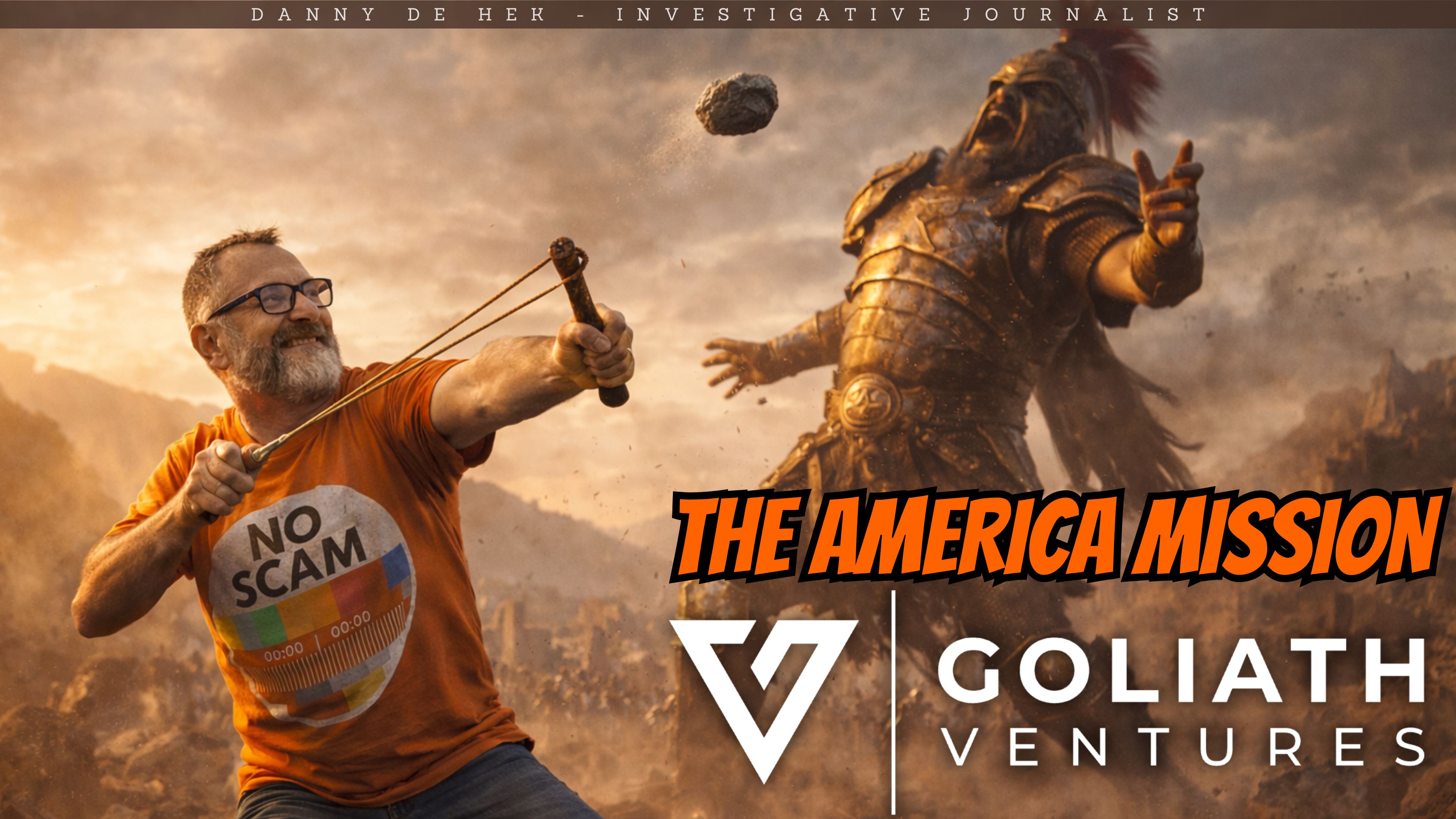
A modern David and Goliath story
I’ve described this as a David and Goliath story, and I don’t use that lightly.
On one side, you’ve got a well-funded operation projecting legitimacy at every level — private jets, luxury events, high-end venues, political donations, and carefully curated public appearances. It’s not just about wealth. It’s about creating the perception of credibility, because once people believe something is legitimate, they stop questioning how it actually works.
That’s part of the illusion.
Because from the outside, it looks successful. It looks established. It looks like something that must have been vetted simply because of the scale and the people involved. That’s how trust is manufactured — not through transparency, but through optics and association.
On the other side, you’ve got someone sitting in Christchurch, New Zealand, working through fragments of information. Messages. Documents. Conversations with people who aren’t always sure what they’re looking at themselves. No legal team. No newsroom backing. No institutional protection. Just a process of slowly building a picture from what doesn’t make sense.
That’s the reality of how these investigations start.
Not with certainty.
But with inconsistencies that don’t go away.
And from there, it becomes a matter of persistence. Following leads. Testing claims. Speaking to people who are often reluctant to come forward. Separating what’s being said publicly from what’s actually happening behind the scenes. It’s not quick, and it’s not clean — but over time, the pattern becomes difficult to ignore.
Eventually, the story reaches a point where it can’t stay contained.
Now Christopher Delgado has been charged in connection with what is alleged to be a $328 million Ponzi scheme.
That outcome didn’t begin with a court filing.
It began with questions that didn’t have comfortable answers, and a willingness to keep asking them until the narrative broke down.
For journalists who want to do the work
I’ve been thinking about this a lot over the past few weeks — especially after sitting across from reporters, answering questions, and then watching the story get published without any of the groundwork that actually uncovered it. That gap between what was known privately and what was reported publicly is where this whole issue sits.
So let’s remove the excuse.
 If you’re a journalist and you’ve read this far, and you’re genuinely interested in covering what happened with Goliath Ventures Inc, I’ve put together a Full Press Release that lays out the timeline, key players, and core findings from the investigation. Not as a finished piece, not as something to repeat — but as a structured entry point into the work that’s already been done.
Because that’s what journalism used to be.
You take the information, you verify it independently, you challenge it, you speak to the people involved, and you build something original from it. You don’t wait for the outcome — you help uncover it. That part seems to have been replaced with something far more cautious, and far less effective.
The material I’ve put together reflects how this investigation actually unfolded:
- A clear timeline from 1 September 2025, showing how the story developed before it became public
- Details of the lawsuit filed against me, including the timing and context behind it
- Independent verification, including blockchain analysis that challenges the core claims being made
- Context around the $328 million case now before the courts, and how it reached that point
- Direct contact points and supporting material for anyone willing to go further
It’s not a shortcut.
It’s a starting point.
If you’re serious about reporting this story properly, everything you need to begin is there. The next step — the part that defines whether something is journalism or just repetition — comes down to whether you’re willing to pick it apart, test it, and follow it through yourself.
The rest comes down to whether you’re willing to do the work.
So what happened to journalism?
That’s the question I keep coming back to.
Not because I think I’m the only one doing this — I’m not. There are still good journalists out there, people who care about getting it right and are willing to put the time in. But what I’ve seen over the past few months is a system that has shifted its priorities. It’s slower to act, quicker to protect itself, and increasingly reliant on what’s already been made official before it’s willing to engage.
And that shift has consequences.
Because when journalism waits, scams don’t.
They move fast. They evolve. They rely on trust, momentum, and the assumption that no one is going to challenge them publicly until it’s already too late. By the time a court filing exists, the damage has already been done. The money has moved. The victims are already dealing with the fallout.
That delay creates a gap.
A gap where bad actors operate without scrutiny.
A gap where people are brought in through trust, not evidence.
A gap where the story exists in plain sight — but no one wants to touch it until there’s something official to point at.
That’s the environment we’re now working in.
And that’s where independent investigators step in.
Not because it’s easy. Not because it’s safe. But because someone has to be willing to ask the questions before there’s a legal framework to hide behind. Someone has to be prepared to follow the evidence when it’s still incomplete, to test claims when they’re still being made, and to speak up when the narrative doesn’t hold together.
That’s what this case has reinforced for me.
Because this didn’t start with a charge. It didn’t start with a filing. It didn’t start with a headline.
It started with patterns that didn’t make sense, and a decision not to ignore them.
And if there’s one thing this whole situation has made clear, it’s this:
Waiting for the paperwork means you’re already too late.
Disclaimer: How This Investigation Was Conducted
This investigation relies entirely on OSINT — Open Source Intelligence — meaning every claim made here is based on publicly available records, archived web pages, corporate filings, domain data, social media activity, and open blockchain transactions. No private data, hacking, or unlawful access methods were used. OSINT is a powerful and ethical tool for exposing scams without violating privacy laws or overstepping legal boundaries.
About the Author
I’m DANNY DE HEK, a New Zealand–based YouTuber, investigative journalist, and OSINT researcher. I name and shame individuals promoting or marketing fraudulent schemes through my YOUTUBE CHANNEL. Every video I produce exposes the people behind scams, Ponzi schemes, and MLM frauds — holding them accountable in public.
My PODCAST is an extension of that work. It’s distributed across 18 major platforms — including Apple Podcasts, Spotify, Amazon Music, YouTube, and iHeartRadio — so when scammers try to hide, my content follows them everywhere. If you prefer listening to my investigations instead of watching, you’ll find them on every major podcast service.
You can BOOK ME for private consultations or SPEAKING ENGAGEMENTS, where I share first-hand experience from years of exposing large-scale fraud and helping victims recover.
“Stop losing your future to financial parasites. Subscribe. Expose. Protect.”
My work exposing crypto fraud has been featured in:
- Coffeezilla (2026): Featured in the investigation exposing the alleged $328M Goliath Ventures Ponzi scheme
- Bloomberg Documentary (2025): A 20-minute exposé on Ponzi schemes and crypto card fraud
- News.com.au (2025): Profiled as one of the leading scam-busters in Australasia
- OpIndia (2025): Cited for uncovering Pakistani software houses linked to drug trafficking, visa scams, and global financial fraud
- The Press / Stuff.co.nz (2023): Successfully defeated $3.85M gag lawsuit; court ruled it was a vexatious attempt to silence whistleblowing
- The Guardian Australia (2023): National warning on crypto MLMs affecting Aussie families
- ABC News Australia (2023): Investigation into Blockchain Global and its collapse
- The New York Times (2022): A full two-page feature on dismantling HyperVerse and its global network
- Radio New Zealand (2022): “The Kiwi YouTuber Taking Down Crypto Scammers From His Christchurch Home”
- Otago Daily Times (2022): A profile on my investigative work and the impact of crypto fraud in New Zealand


Leave A Comment