


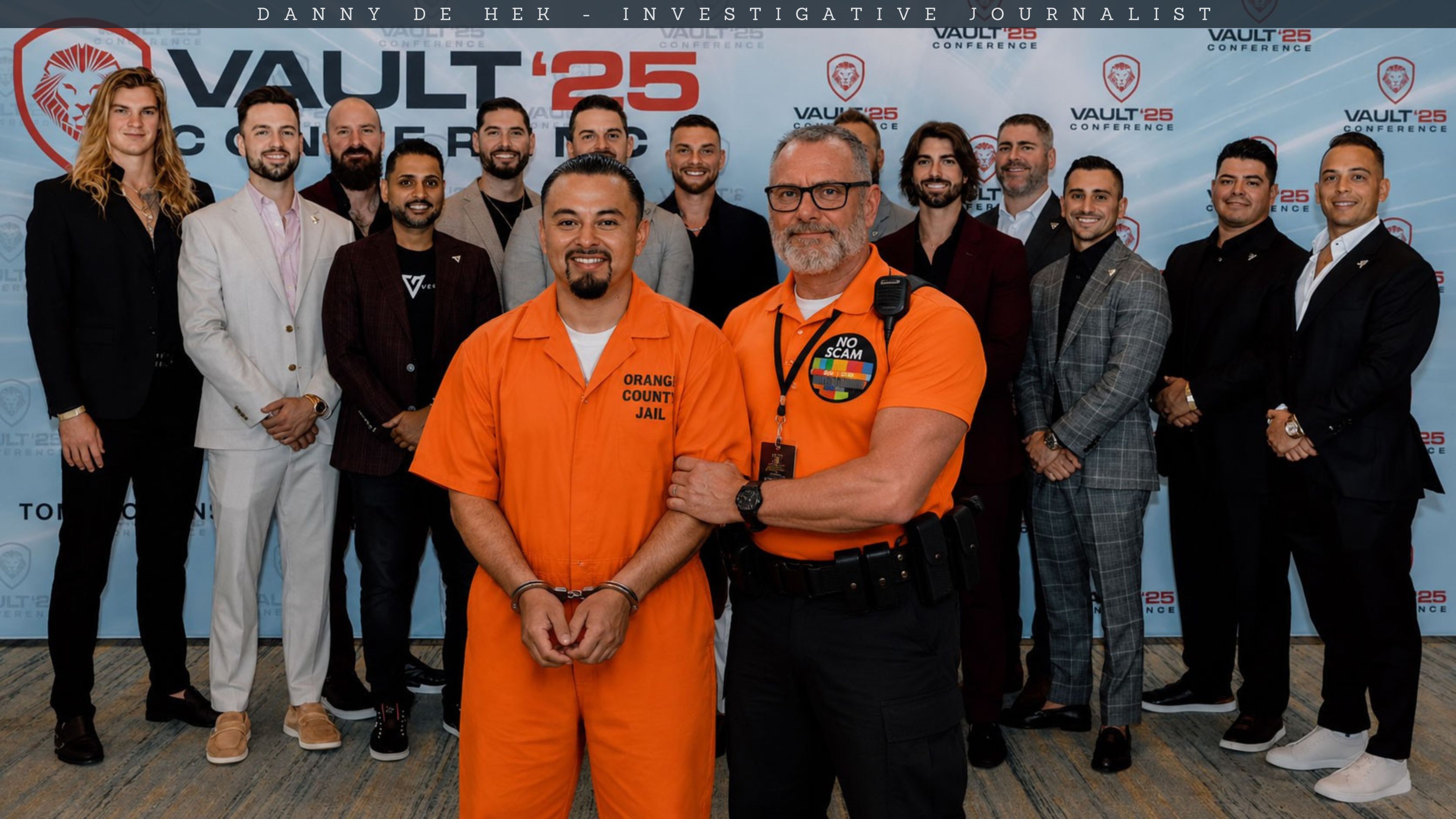
“A guilty plea doesn’t end an investigation. Sometimes it’s the moment the investigation becomes even more important.”
When I first started investigating Goliath Ventures, I wasn’t trying to prove it was a Ponzi scheme. I was trying to answer a much simpler question: where was investors’ money actually going?
What followed was months of reviewing investor presentations, bankruptcy filings, court records, internal communications and testimony from victims who had trusted the company with their savings. The deeper I dug, the more difficult it became to reconcile the polished public image of Goliath Ventures with the evidence emerging behind the scenes.
Then came the moment many people had been waiting for.
 Christopher Delgado, the founder and CEO of Goliath Ventures, has now pleaded guilty in the United States to conspiracy to commit wire fraud, wire fraud, and money laundering. Before entering his guilty plea, federal prosecutors formally charged him by filing a legal document known as an Information. I’ve included the Federal Information (Charging Document) in this article so you can read exactly what prosecutors alleged before Christopher Delgado admitted guilt.
I’ve also included Christopher Delgado’s Plea Agreement, which records, in his own words and under oath, what he has now admitted, the obligations he has accepted and why I believe this marks the beginning of a new phase in the federal investigation.
This isn’t another history lesson about Goliath Ventures. I’ve already written extensively about how the company was promoted, the promises made to investors and the warning signs that many people didn’t recognise until it was too late.
This article is about something far more important.
What exactly did Christopher Delgado admit?
Why did he choose to plead guilty?
What does his agreement to cooperate mean for the federal investigation?
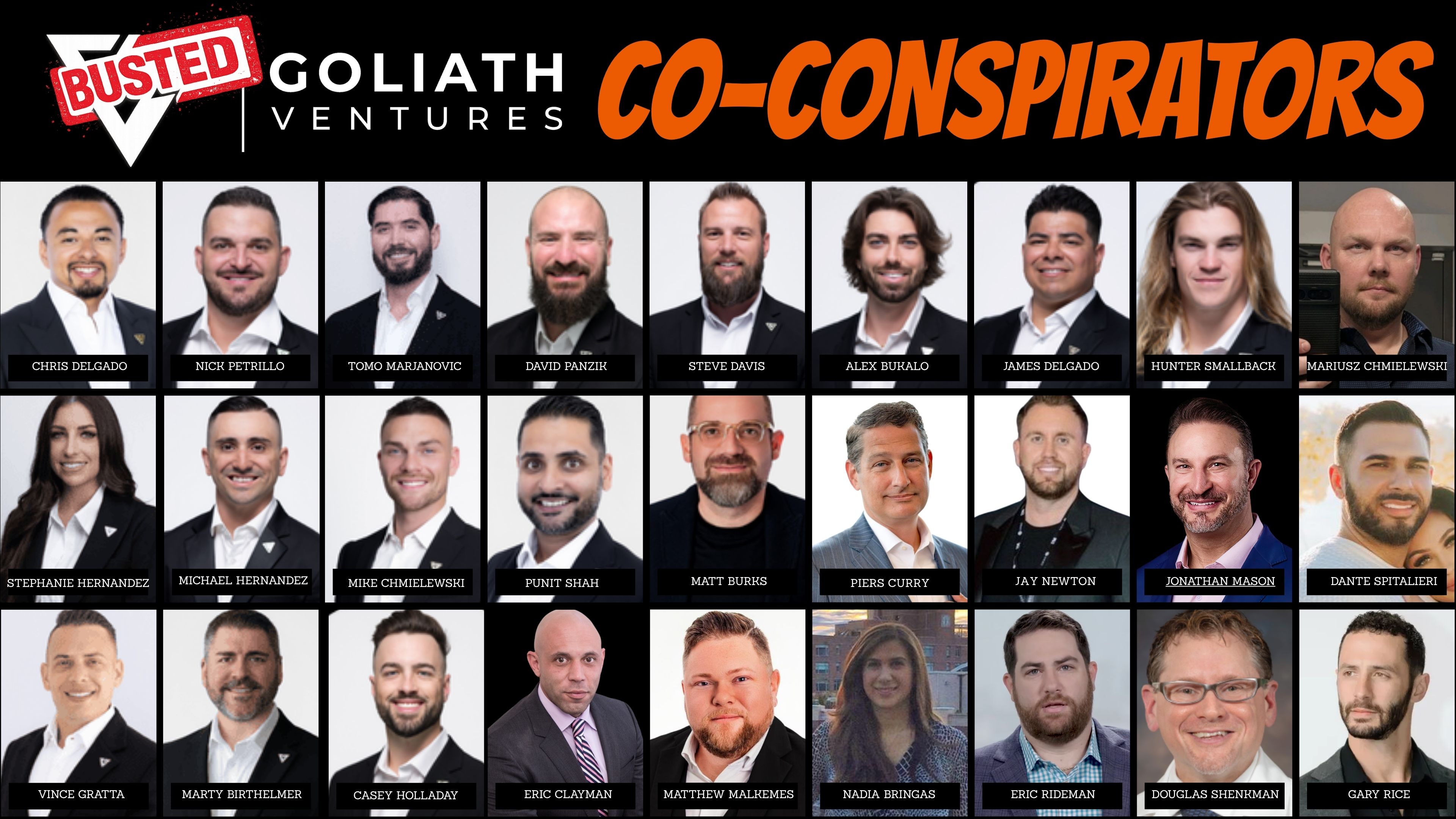
And what does all of this mean for the victims—and for the people prosecutors repeatedly describe as co-conspirators?
After reading both court documents and comparing them with everything I’ve uncovered over the past several months, I don’t believe Christopher Delgado’s guilty plea marks the end of the Goliath Ventures investigation.
I believe it’s the point where the investigation enters an entirely new phase.
NOTICE OF HEARING as to Christopher Alexander Delgado: Guilty Plea Hearing set for 6/30/2026 at 09:30 AM in Orlando Courtroom 4 D before Magistrate Judge Nathan W. Hill. (JOR)
How We Got Here
When I published my first investigation into Goliath Ventures back in September 2025, the company was presenting itself as a sophisticated cryptocurrency investment business, telling people their funds were being deployed into decentralised finance (DeFi) liquidity pools capable of producing consistent monthly returns while protecting their capital. On the surface, everything looked convincing. But as I began examining the evidence more closely, one simple question kept coming back to me: where was investors’ money actually going?
There were luxury homes, exotic cars, private jets, political connections and charitable donations. It was exactly the kind of image many investors associate with a successful business. But the more presentations I watched, the more contracts I reviewed and the more victims I spoke with, the harder it became to reconcile that polished public image with the evidence I was uncovering.
As the investigation gathered momentum, a pattern began to emerge.
More victims came forward.
More internal documents surfaced.
Bankruptcy filings exposed new information.
A Receiver was appointed.
Federal investigators stepped in.
Civil forfeiture proceedings followed.
Each development answered some questions, but it also raised new ones. The biggest of them all was whether Christopher Delgado would continue denying responsibility or whether federal prosecutors would eventually prove their case in court.
On 23 June 2026, we finally had our answer. Christopher Delgado signed a 56-page federal plea agreement, admitting his role as the organiser and leader of the conspiracy. For victims, this wasn’t simply another court filing. It was the first time the founder of Goliath Ventures admitted under oath to the criminal conduct that had been at the centre of this investigation for months.
Christopher Delgado Has Now Admitted The Fraud
The guilty plea itself is only a few words. The 56-page plea agreement tells a much bigger story.
As I worked through the document, one thing became immediately clear. Christopher Delgado wasn’t admitting to making poor business decisions or acknowledging that Goliath Ventures had simply failed. He admitted to committing three serious federal offences: conspiracy to commit wire fraud, wire fraud, and money laundering. More importantly, he admitted that he was the organiser and leader of a conspiracy involving at least five participants. That’s a significant admission because it confirms the government’s case has never been about one individual acting alone.
For months, many supporters argued that Goliath Ventures had been misunderstood, that the cryptocurrency markets had turned against the business, or that regulators had acted too aggressively. Those arguments become much harder to sustain when the founder himself admits, under oath, that he led the conspiracy described by federal prosecutors. This is no longer simply a disagreement between critics and promoters, nor is it just the government’s version of events. These are Christopher Delgado’s own admissions contained within a signed federal court document.
It’s also worth understanding what this guilty plea doesn’t do. It doesn’t identify every person who may have been involved. It doesn’t explain where every dollar ultimately went. It doesn’t guarantee victims will recover their losses, and it doesn’t bring the wider investigation to an end. What it does do is remove one of the biggest uncertainties hanging over this case. The founder of Goliath Ventures has now accepted criminal responsibility, allowing federal investigators to focus their attention on the next stage of the investigation rather than proving whether the fraud occurred in the first place.
Why Christopher Delgado Didn’t Go To Trial
One question that will inevitably be asked is why Christopher Delgado chose to plead guilty instead of taking his chances before a jury. The simple answer is that we don’t know exactly what discussions took place between his legal team and federal prosecutors. Those conversations happen behind closed doors. What we do know is what the plea agreement tells us.
By pleading guilty, Delgado accepted responsibility for the offences, avoided what could have been a lengthy and expensive federal trial, and placed himself in a position where the court may consider his acceptance of responsibility and any meaningful cooperation when it eventually determines his sentence. None of that guarantees a lighter sentence, but it does explain why plea agreements are so common in complex financial crime cases. They allow prosecutors to secure convictions while continuing to investigate the wider conspiracy.
For me, the timing is just as interesting as the decision itself. The federal Information was filed, the plea agreement quickly followed, and the court moved rapidly towards a plea hearing. Whether those discussions had been taking place for weeks or months beforehand we simply don’t know, but the sequence of events suggests this wasn’t a last-minute change of heart. It appears to have been part of a much broader strategy that now allows investigators to focus less on proving Christopher Delgado’s guilt and more on where the investigation goes next.
Why This Plea Deal Changes Everything
When the indictment was unsealed, it was obvious the government believed it had built a strong case against Christopher Delgado. What wasn’t obvious was whether he would fight the allegations all the way to trial or decide that cooperating with federal prosecutors was in his best interests. The answer arrived just two days later when he signed the plea agreement. That decision didn’t simply change his future—it changed the direction of the entire investigation.
The guilty plea is the headline. The cooperation agreement is the real story.
Most people naturally focus on the words “pleads guilty.” I found myself focusing on everything that came after those words. The agreement doesn’t simply require Delgado to admit his crimes. It requires him to help the government understand the full extent of what happened.
Under the agreement, Christopher Delgado has committed to:
- Answer investigators’ questions truthfully.
- Provide documents, records and other evidence.
- Identify assets under his control or knowledge.
- Participate in interviews whenever requested.
- Testify before a grand jury or at future trials if required.
Those aren’t optional conditions. They’re ongoing legal obligations. If Delgado fails to cooperate, lies to investigators or deliberately withholds information, he risks losing many of the benefits negotiated as part of the plea agreement. That’s one of the reasons these agreements are such powerful tools for federal prosecutors—they don’t just secure a conviction, they help investigators build the next stage of their case.
As I finished reading this section of the plea agreement, one thought kept coming back to me.
This investigation is no longer about proving Christopher Delgado’s guilt.
It’s about discovering everything—and everyone—that sat behind Goliath Ventures.
Why Federal Prosecutors Offered A Plea Agreement
One question that naturally follows a guilty plea is why federal prosecutors would negotiate with someone they allege orchestrated a fraud involving hundreds of millions of dollars. To many people, it can seem counterintuitive. If the government believes it has a strong case, why not simply take that person to trial?
The answer is that a plea agreement isn’t a reward. It’s an investigative tool.
By pleading guilty, Christopher Delgado has saved the government the time, cost and uncertainty of a lengthy trial. More importantly, he has agreed to provide something prosecutors often value just as highly as a conviction—cooperation. Under the agreement, Delgado must answer questions truthfully, provide documents and evidence, identify assets, participate in interviews and testify whenever required. If he fails to meet those obligations or deliberately misleads investigators, the government has options available to respond accordingly under the terms of the agreement.
That’s one of the reasons I keep coming back to the word co-conspirators. The plea agreement doesn’t simply close the book on Christopher Delgado. It gives federal investigators an opportunity to better understand how Goliath Ventures operated behind the scenes, how investor funds moved through the business and whether others knowingly participated in the conspiracy. Whether that ultimately leads to further charges remains to be seen, but it’s difficult to ignore the direction this investigation now appears to be taking.
For victims, the value of a plea agreement shouldn’t be measured solely by the sentence Christopher Delgado eventually receives. Its real value may lie in the evidence it helps uncover. If his cooperation leads to additional assets being recovered or other participants being held accountable, this agreement could prove to be one of the most significant developments in the entire Goliath Ventures investigation.
What Christopher Delgado Has Agreed To
One mistake I think many people will make is assuming Christopher Delgado’s only obligation was to plead guilty. In reality, the plea agreement reads more like a contract between Delgado and the United States Government. In exchange for certain concessions, he has accepted a series of legal obligations that will remain in place long after the plea hearing has finished.
Some of the most significant commitments include:
- Paying at least US$250 million in restitution.
- Forfeiting luxury assets that prosecutors allege were purchased with the proceeds of the fraud.
- Providing a complete financial disclosure of his assets and liabilities.
- Cooperating fully with the government’s continuing investigation.
- Giving truthful evidence whenever federal prosecutors require it.
One figure immediately caught my attention. The plea agreement refers to at least US$250 million in restitution, yet prosecutors have alleged that Goliath Ventures accepted more than US$400 million from approximately 2,000 investors. That naturally raises another question.
Where is the remaining money?
The plea agreement doesn’t answer that question, but it does provide a clue. If Christopher Delgado fulfils his obligation to cooperate, prosecutors may be able to identify additional assets, trace funds that have not yet been recovered and, where the evidence supports it, pursue other people who participated in the conspiracy. For victims hoping to recover as much as possible, that may ultimately prove far more important than the guilty plea itself.
The Assets Tell Their Own Story
One section of the plea agreement reads less like a legal document and more like the inventory from an auction house. As I worked through the forfeiture schedule, it became increasingly clear that prosecutors weren’t just identifying property—they were telling the story of where they believe investor money ended up. Every house, every luxury vehicle and every high-value item listed in the agreement forms part of that story.
Among the assets identified are multiple Florida properties, an $8.5 million home in Windermere, Lamborghinis, Rolls-Royces, Bentleys, luxury watches from brands including Rolex and Audemars Piguet, Hermès Birkin handbags, Louis Vuitton luggage, jewellery and cryptocurrency holdings. It paints a picture that is a world away from the investment strategy many victims believed they were funding.
The forfeiture schedule isn’t there to impress the court. It’s there to recover as much value as possible for victims.
One allegation in particular stood out. According to the charging document, an investor wired US$500,000 into a Goliath Ventures account on or about 3 September 2025. Within days, prosecutors allege criminally derived funds were used in the purchase of the $8.5 million Windermere property. Whether every allegation is ultimately accepted by the court is a matter for the legal process, but examples like this help explain why prosecutors have targeted specific assets rather than simply seeking a financial judgment.
For many victims, these luxury assets represent more than symbols of wealth. They represent the best opportunity to recover at least some of what was lost. That is why the forfeiture process is likely to become just as important as the sentencing itself in the months ahead.
The Cryptocurrency Trail Doesn’t End Here
One part of the plea agreement that many people will probably skim over is the section dealing with cryptocurrency. I think that would be a mistake. While most of the attention has understandably focused on the luxury homes, supercars and designer goods listed for forfeiture, federal prosecutors also identified cryptocurrency that Christopher Delgado agreed to surrender, including approximately 2.12 ETH, more than 77 million MEE (Medieval Empires) tokens, and approximately 8,709 USDC. That immediately tells us investigators weren’t simply following traditional financial records—they were also tracing digital assets, something that has become increasingly important in complex cryptocurrency fraud investigations.
Interestingly, the plea agreement only published a truncated wallet address. Since then, the full wallet has been identified, providing investigators, victims and blockchain researchers with another piece of evidence that can be examined independently. One of the reasons I’ve spent so many years investigating cryptocurrency schemes is because blockchains are transparent by design. Unlike private bank records, every transaction is permanently recorded on a public ledger. That means anyone can review the movement of funds, identify interacting wallets and sometimes uncover connections that investigators may already be following or that haven’t yet been made public.
Wallet Address
0xDecE5569d3cf17168AE9F5cFB387fB7CD3299CA7
If you’re experienced in blockchain analysis, you may wish to monitor this wallet across multiple networks.
- Ethereum: etherscan.io/address/0xdece5569d3cf17168ae9f5cfb387fb7cd3299ca7
- Polygon: polygonscan.com/address/0xdece5569d3cf17168ae9f5cfb387fb7cd3299ca7
- BNB Smart Chain (BSC): bscscan.com/address/0xdece5569d3cf17168ae9f5cfb387fb7cd3299ca7
The MEE (Medieval Empires) tokens are held on the Polygon network. If additional transactions, linked wallets or relevant on-chain activity are identified, they should always be assessed carefully and alongside the court documents. Blockchain data is an incredibly powerful investigative tool, but like every other piece of evidence, it needs to be supported by facts rather than speculation.
Why So Many Legal Cases Are Running At The Same Time
One question I’ve been asked repeatedly is why there seem to be so many different court cases connected to Goliath Ventures. It’s a fair question because, at first glance, it can look like everyone is doing the same job. In reality, each legal proceeding has a completely different purpose, and understanding the distinction helps explain why justice in cases like this often takes years rather than months.
Christopher Delgado’s guilty plea is part of the federal criminal case, which is primarily concerned with determining criminal responsibility and imposing an appropriate sentence. Running alongside that is the civil forfeiture case, where the government is seeking ownership of assets it believes were purchased with the proceeds of fraud. At the same time, the Chapter 11 bankruptcy and the work of the Receiver are focused on identifying, preserving and ultimately distributing assets for the benefit of creditors and victims. Separate from all of that are the various civil proceedings, including class actions brought by investors seeking compensation for their losses.
Because these cases all have different objectives, they don’t necessarily move together. A delay in one court doesn’t mean the others have stopped. In fact, it’s quite common for information uncovered in one proceeding to assist another. Documents produced in the bankruptcy can become relevant in the criminal case. Assets identified during the civil forfeiture proceedings may ultimately benefit victims through the receivership. Witnesses who cooperate with federal prosecutors may also become important in civil litigation.
That’s why I continue telling victims to follow every part of this investigation rather than focusing on a single courtroom. The guilty plea is undoubtedly one of the biggest developments we’ve seen so far, but it’s only one piece of a much larger legal process that is still unfolding. Understanding how those different pieces fit together makes it much easier to see where the investigation is heading next.
Why The Word “Co-Conspirators” Matters
One word appears repeatedly throughout both the Information and the plea agreement.
Co-conspirators.
That isn’t accidental, and I don’t believe it’s simply legal wording. Federal prosecutors choose their language carefully, particularly in complex financial crime cases. Every time I saw that word, it reinforced the impression that investigators were looking well beyond Christopher Delgado himself.
It’s important not to jump to conclusions. The plea agreement does not accuse every promoter, employee or investor of committing a crime. Everyone is entitled to due process, and every case must be assessed on its own evidence. But what the agreement does confirm is that Christopher Delgado has accepted an ongoing obligation to assist investigators as they examine the wider conspiracy.
That means prosecutors now have something they didn’t have before.
Not just bank records.
Not just emails.
Not just blockchain transactions.
They now have the cooperation of the man who admitted organising and leading the scheme.
Whether that cooperation ultimately results in additional prosecutions remains to be seen, but I think it’s one of the biggest reasons victims should continue following this case. The investigation hasn’t narrowed because Christopher Delgado pleaded guilty.
It has broadened.
The coming months are likely to reveal whether federal prosecutors believe the evidence supports action against anyone else connected to Goliath Ventures. Until then, it’s important to separate evidence from speculation and allow the investigation to follow the facts wherever they lead.
Can Victims Actually Get Their Money Back?
This is the question I’ve been asked more than any other since Goliath Ventures collapsed.
Unfortunately, a guilty plea doesn’t automatically mean victims get their money back.
The criminal case is only one part of a much larger legal process. Running alongside it are the civil forfeiture proceedings, the Chapter 11 bankruptcy, the work of the court-appointed Receiver, and ongoing civil litigation. Each process has a different purpose, which is why they don’t always move at the same speed.
To put it simply:
- The criminal case is about holding Christopher Delgado accountable.
- The forfeiture proceedings are about recovering assets the government believes were purchased with fraud proceeds.
- The Receiver is working to identify, preserve and ultimately distribute assets to victims.
- The bankruptcy proceedings deal with the company’s remaining assets and creditor claims.
This also helps explain one of the biggest questions raised by the plea agreement. Delgado has agreed to pay at least US$250 million in restitution, yet investigators believe the scheme accepted more than US$400 million from investors. That doesn’t necessarily mean victims have lost their chance of recovering the difference. It means the investigation into additional assets and potential co-conspirators is still continuing, and that’s one of the reasons Delgado’s cooperation may prove so important.
For victims, patience is going to be essential. Asset recovery in cases like this rarely happens quickly. Properties need to be sold, ownership disputes resolved, cryptocurrency traced and competing legal claims determined before distributions can begin. It’s a process measured in months and, quite often, years rather than weeks.
The guilty plea is a major milestone.
Recovering money is the next challenge.
What Happens Next In The Federal Case
Although Christopher Delgado has signed the plea agreement, there are still several important steps before this chapter of the case comes to an end. The court must first decide whether to formally accept the plea. Assuming it does, the next stage is the preparation of a Presentence Investigation Report (PSR), a detailed report that helps the judge determine an appropriate sentence based on the offences, the financial losses, the impact on victims and Delgado’s level of cooperation.
One aspect of the sentencing process that is often overlooked is the opportunity for victims to be heard. Victim impact statements can play an important role by explaining how the fraud affected families financially, emotionally and personally. Throughout my investigation I’ve spoken with people who lost retirement savings, life savings and, in some cases, lifelong friendships. Those stories deserve to be part of the court record because fraud isn’t measured only in dollars—it changes lives.
Another issue I’ll be watching closely is whether federal prosecutors later ask the court to recognise the value of Delgado’s cooperation. Pleading guilty is one thing. Providing substantial assistance is another. If his information leads to additional asset recovery or helps investigators build cases against others, prosecutors may ask the court to take that cooperation into account during sentencing. If it doesn’t, the agreement makes it clear that cooperation isn’t simply assumed—it has to be earned.
For now, there are still far more questions than answers. We don’t yet know the full extent of Christopher Delgado’s cooperation, what information he has already provided behind closed doors, or where that information may ultimately lead. Those answers will emerge over time, and I’ll continue following every court filing, hearing and development as this case progresses.
The Investigation Is Far From Over
When I started investigating Goliath Ventures, I had no idea it would lead to bankruptcy proceedings, a federal Receiver, civil forfeiture actions and, ultimately, Christopher Delgado standing before the United States Government admitting his role in the fraud. Like every investigation I undertake, I simply followed the evidence. Every court filing answered one question while raising several more.
Today, one of the biggest questions has finally been answered.
Christopher Delgado has pleaded guilty.
But if there’s one thing I’ve learned from investigating hundreds of investment scams over the years, it’s that a guilty plea rarely marks the end of the story. More often than not, it’s the point where investigators begin uncovering what was happening behind the scenes all along.
That’s why I believe the cooperation provisions contained in this plea agreement deserve just as much attention as the guilty plea itself. If Christopher Delgado honours his agreement, federal prosecutors may gain valuable insight into how Goliath Ventures really operated, where additional assets may be located and whether other individuals knowingly participated in the conspiracy. Those answers won’t appear overnight, but they could shape the next stage of this investigation.
There are still important questions that remain unanswered.
- Will additional people be charged?
- Can more of the missing money be recovered?
- Will victims receive meaningful restitution?
- What evidence will Delgado now provide to investigators?
Those questions can only be answered through evidence, not speculation.
As always, I’ll continue reviewing the court filings, following the legal proceedings and speaking with victims as new information becomes available. The guilty plea is an important milestone, but the search for accountability doesn’t end here.
For many victims, justice won’t be measured by Christopher Delgado’s sentence alone. It will be measured by how much of the truth is uncovered, how many people are ultimately held accountable, and how much money finds its way back to the people who lost it.
Read The Court Documents Yourself
One thing I’ve always encouraged people to do is read the source documents. Don’t rely solely on headlines, social media posts or even my reporting. Court filings provide an opportunity to see exactly what federal prosecutors have alleged and, in this case, exactly what Christopher Delgado has admitted under oath.
I’ve embedded both documents below so you can read them for yourself:
If you’ve been following the Goliath Ventures story from the beginning, I encourage you to take the time to work through both documents. Together they explain not only how prosecutors say the scheme operated, but also what Christopher Delgado has now admitted and the obligations he has accepted as part of his cooperation agreement. Whether you’re a victim, a journalist, a regulator or simply someone trying to understand this case, there’s no substitute for reading the evidence firsthand.
As this investigation continues to unfold, I’ll keep doing what I’ve done from the very beginning—reviewing the documents, comparing them with earlier evidence, speaking with victims and reporting developments as they happen. The story of Goliath Ventures didn’t end with this guilty plea, and I don’t believe we’ve heard the last chapter just yet.
What Victims Should Be Doing Now
While the legal process continues, there are several practical steps victims can take to protect their interests. If you invested in Goliath Ventures, now isn’t the time to put your paperwork away and hope someone else will deal with it. Keep copies of your investment records, payment confirmations, cryptocurrency transaction histories, emails and any correspondence you’ve had with Goliath Ventures or its promoters. Documents that seem insignificant today may become important later.
It’s also essential to keep your contact details up to date with the Receiver and ensure you’ve lodged your Proof of Claim before the applicable deadline. The criminal proceedings, civil forfeiture case, bankruptcy and receivership are all moving independently, so following only one part of the process can mean missing important developments in another.
Finally, if you have information that may assist investigators, don’t assume someone else has already provided it. Every document, transaction record, wallet address, email or message may help build a clearer picture of how Goliath Ventures operated. Throughout this investigation I’ve seen countless examples where one seemingly minor piece of evidence helped explain a much larger part of the story. That’s why I continue encouraging victims to come forward and share what they know.
The Federal Investigation Is Only Just Beginning
Christopher Delgado has now admitted his role in one of the largest alleged cryptocurrency investment frauds to come before a federal court in recent years. For many victims, that’s an important milestone, but it isn’t the outcome they’ve been waiting for. What they want is accountability, the recovery of as many assets as possible and answers to the questions that still remain.
Over the coming months, attention will shift away from whether Christopher Delgado committed these crimes and towards the wider investigation. Federal prosecutors now have a cooperating defendant, the Receiver continues tracing assets, civil forfeiture proceedings remain active and victims are still coming forward with information. Those separate pieces now have the potential to come together in ways they couldn’t before the guilty plea.
If there’s one lesson I’ve learnt from investigating these types of schemes, it’s that the biggest developments often happen after the first guilty plea. Documents are produced, financial records are analysed, witnesses begin talking and investigators gain a much clearer understanding of how an operation really functioned behind closed doors.
I’ll continue following every court filing, every hearing and every significant development as this case unfolds. If more charges are laid, if additional assets are recovered or if new evidence emerges, I’ll report it.
For now, Christopher Delgado has admitted his crimes.
The next chapter belongs to the federal investigators.
Disclaimer: How This Investigation Was Conducted
This investigation relies entirely on OSINT — Open Source Intelligence — meaning every claim made here is based on publicly available records, archived web pages, corporate filings, domain data, social media activity, and open blockchain transactions. No private data, hacking, or unlawful access methods were used. OSINT is a powerful and ethical tool for exposing scams without violating privacy laws or overstepping legal boundaries.
About the Author
I’m DANNY DE HEK, a New Zealand–based YouTuber, investigative journalist, and OSINT researcher. I name and shame individuals promoting or marketing fraudulent schemes through my YOUTUBE CHANNEL. Every video I produce exposes the people behind scams, Ponzi schemes, and MLM frauds — holding them accountable in public.
My PODCAST is an extension of that work. It’s distributed across 18 major platforms — including Apple Podcasts, Spotify, Amazon Music, YouTube, and iHeartRadio — so when scammers try to hide, my content follows them everywhere. If you prefer listening to my investigations instead of watching, you’ll find them on every major podcast service.
You can BOOK ME for private consultations or SPEAKING ENGAGEMENTS, where I share first-hand experience from years of exposing large-scale fraud and helping victims recover.
“Stop losing your future to financial parasites. Subscribe. Expose. Protect.”
My work exposing crypto fraud has been featured in:
- Coffeezilla 2026): Featured in the investigation exposing the alleged $328M Goliath Ventures Ponzi scheme
- Bloomberg Documentary (2025): A 20-minute exposé on Ponzi schemes and crypto card fraud
- News.com.au (2025): Profiled as one of the leading scam-busters in Australasia
- OpIndia (2025): Cited for uncovering Pakistani software houses linked to drug trafficking, visa scams, and global financial fraud
- The Press / Stuff.co.nz (2023): Successfully defeated $3.85M gag lawsuit; court ruled it was a vexatious attempt to silence whistleblowing
- The Guardian Australia (2023): National warning on crypto MLMs affecting Aussie families
- ABC News Australia (2023): Investigation into Blockchain Global and its collapse
- The New York Times (2022): A full two-page feature on dismantling HyperVerse and its global network
- Radio New Zealand (2022): “The Kiwi YouTuber Taking Down Crypto Scammers From His Christchurch Home”
- Otago Daily Times (2022): A profile on my investigative work and the impact of crypto fraud in New Zealand

Leave A Comment