


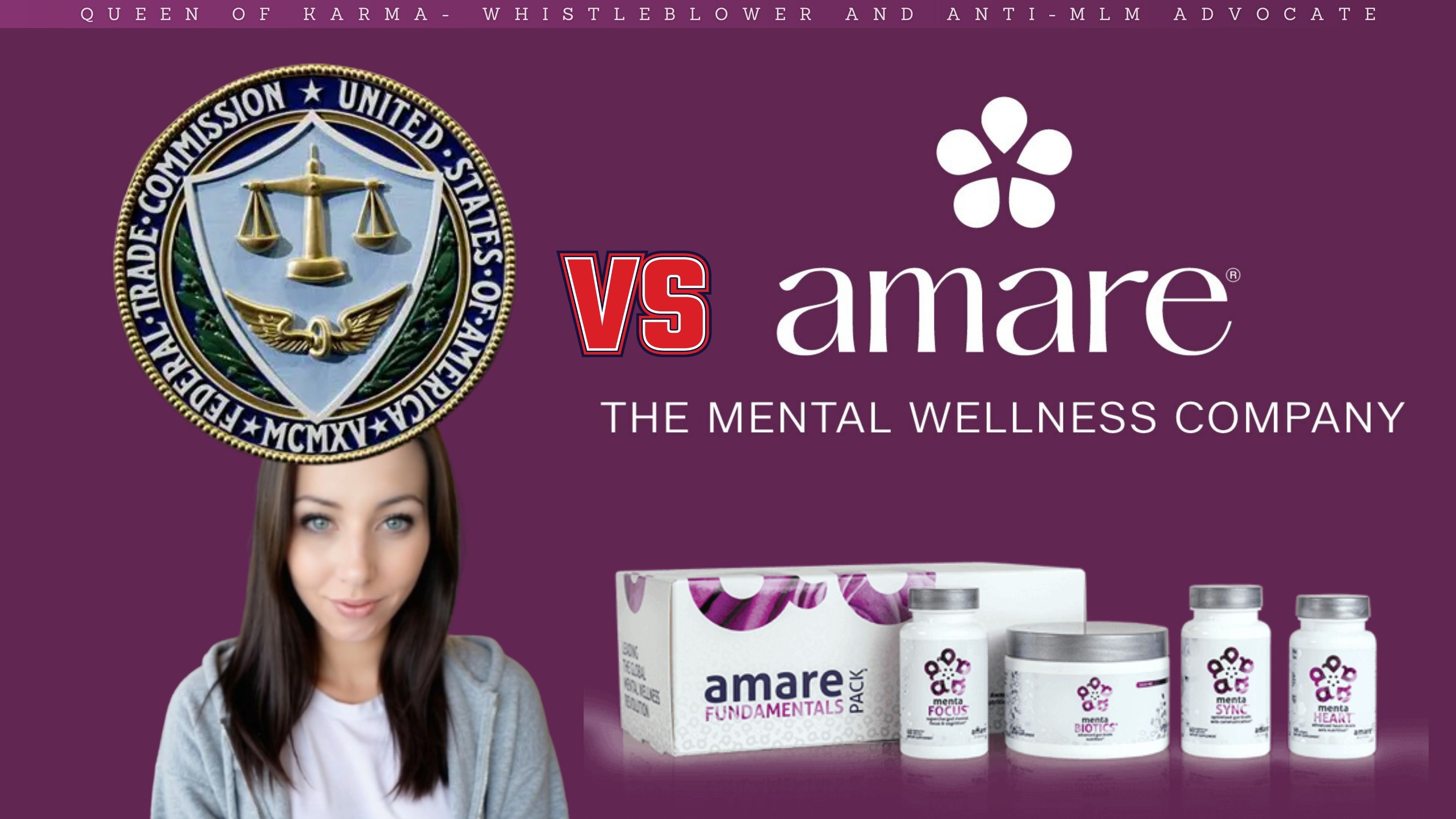
This isn’t just another warning letter.
This isn’t a routine compliance check.
This is the FTC telling a wellness MLM: “We already told you to stop. You didn’t. Now we’re escalating.”
And for anyone who has watched the rise of pseudo-scientific supplement empires, this moment feels both inevitable and overdue.
The Wellness-MLM Formula: Hope, Science-Flavored Marketing, and Vulnerability
Amare Global’s entire identity is built on the idea that mental health can be “optimized” through proprietary supplement stacks. Their messaging leans heavily on:
- the gut-brain axis
- neurotransmitter balancing
- “natural alternatives” to mental-health interventions
- lifestyle coaching framed as scientific expertise
- emotional storytelling from distributors
This is the same formula used by countless wellness-MLMs:
- Identify a vulnerable population
- Offer a “natural,” “holistic,” or “scientific” solution
- Use community pressure to reinforce belief
- Blur the line between supplements and medical treatment
- Recruit distributors who repeat the claims
The problem is simple: When you make claims that sound like medical advice, you enter the territory of federal regulation.
And Amare has been here before.
The FTC’s Contempt Motion: What It Actually Means
A contempt motion is one of the strongest tools the FTC can use short of filing a brand-new lawsuit. It means:
Amare was already under federal order.
The FTC believes Amare violated that order.
The agency is asking the court to enforce consequences.
This is not speculation.
This is not rumor.
This is a formal allegation that Amare continued making deceptive or substantiated claims after being told to stop.
In regulatory terms, contempt is serious.
It signals that the FTC believes:
- Amare ignored compliance requirements
- Amare continued improper health claims
- Amare misled consumers and distributors
- Amare violated the terms of a previous settlement or judgment
This is the kind of escalation that can lead to:
- additional penalties
- stricter restrictions
- forced changes to business practices
- increased oversight
- or, in extreme cases, injunctions that cripple the company’s operations
The wellness-MLM world should be paying attention.
Why The FTC Is Targeting Amare’s Claims
Amare’s marketing has always walked a dangerous line. Their products are framed as:
- mood-supporting
- stress-reducing
- focus-enhancing
- gut-balancing
- mental-health optimizing
But the company has not produced the level of clinical evidence required to make these claims legally. Instead, they rely on:
- vague references to “science”
- cherry-picked studies
- anecdotal distributor testimonials
- pseudo-scientific explanations of the gut-brain axis
This is exactly the kind of behavior the FTC has been cracking down on — especially when companies target people struggling with mental health.
The FTC’s position is clear: If you make health claims, you need real evidence. If you don’t have it, you can’t say it. And if you’ve already been told to stop, you definitely can’t continue.
The Legal Mechanics: What a Contempt Motion Actually Does
To understand the gravity of this moment, it’s important to understand what a contempt motion triggers.
When the FTC files for contempt, they are asking the court to:
- Confirm that the company violated a previous order
- Impose consequences for that violation
- Potentially expand the scope of restrictions
- Potentially impose monetary penalties
- Potentially require additional compliance measures
This is not a new lawsuit — it’s an enforcement actions tied to an existing one.
It means the FTC believes Amare’s behavior wasn’t just non-compliant — it was defiant.
Why This Matters for Consumers and Distributors
Amare’s entire business model relies on the idea that their products can influence mental health. That’s a powerful claim — and a dangerous one when misused.
Here’s why the FTC’s action matters:
- Mental health is not a marketing tool
People struggling with anxiety, depression, burnout, or chronic stress are vulnerable. Companies cannot exploit that vulnerability with unproven supplements. - “Natural” does not mean safe or effective
Amare’s branding leans heavily on the idea that natural equals better. The FTC has repeatedly warned companies not to use this framing to bypass evidence requirements. - Distributors are not medical professionals
Yet many are encouraged to speak like they are — using scripts, testimonials, and pseudo-science to sell products. - Consumers deserve real information, not emotional manipulation
Amare’s marketing often blurs the line between wellness and medical treatment, creating confusion and false hope. - This case sets a precedent
If the court sides with the FTC, it sends a message to the entire wellness-MLM industry: You cannot hide behind branding. You cannot hide behind community. You cannot hide behind gut-health.
The Broader Pattern: Wellness-MLMs and Regulatory Evasion
Amare is not the first wellness-MLM to face regulatory scrutiny — and it won’t be the last. The industry has a long history of:
- exaggerated health claims
- unproven supplement stacks
- influencer-style recruitment
- emotional manipulation
- pseudo-scientific marketing
- blurred lines between coaching and medical advice
The FTC’s contempt motion is part of a larger trend: regulators are no longer tolerating companies that use “wellness” as a shield for deceptive practices.
This is the same pattern we’ve seen with:
- doTERRA
- Young Living
- Plexus
- Arbonne
- Thrive
- Modere
- and countless others
Amare simply pushed too far — and got caught.
What Happens Next
The court will review the FTC’s motion and determine whether Amare violated the previous order. If the court agrees, Amare could face:
- additional penalties
- expanded restrictions
- forced changes to marketing practices
- increased monitoring
- or more severe consequences depending on the severity of the violations
This is not a small procedural step.
This is a turning point.
The Wellness-MLM Reckoning
Amare Global built its brand on the promise of mental wellness — a promise that requires responsibility, evidence, and ethical marketing. Instead, the company leaned on pseudo-science, emotional vulnerability, and distributor-driven claims that blurred the line between supplement and treatment.
The FTC’s contempt motion is not just a legal filing.
It’s a statement.
A statement that says: You cannot exploit mental health for profit. You cannot ignore federal orders. You cannot hide behind “wellness” when your claims cross into medical territory.
This case is far from over, but one thing is clear: The era of wellness-MLMs operating without consequences is ending — and Amare Global is now at the center of that reckoning.
By Beth Gibbons (Queen of Karma)
Beth Gibbons, known publicly as Queen of Karma, is a whistleblower and anti-MLM advocate who shares her personal experiences of being manipulated and financially harmed by multi-level marketing schemes. She writes and speaks candidly about the emotional and psychological toll these so-called “business opportunities” take on vulnerable individuals, especially women. Beth positions herself as a survivor-turned-activist, exposing MLMs as commercial cults and highlighting the cult-like tactics used to recruit, control, and silence members.
She has contributed blogs and participated in video interviews under the name Queen of Karma, often blending personal storytelling with direct confrontation of scammy business models. Her work aligns closely with scam awareness efforts, and she’s part of a growing community of voices pushing back against MLM exploitation, gaslighting, and financial abuse.


Leave A Comment