


“If your clients are confident that their business is legitimate, they should have no difficulty demonstrating transparency through audited financials, regulatory compliance and clear evidence of lawful operations.”
I wrote those words to Florida attorney Oliver Birman on September 9, 2025, in response to a Cease-and-desist Letter sent on behalf of GOLIATH VENTURES and Christopher Delgado.
At the time, GOLIATH was presenting itself as a successful cryptocurrency investment company headquartered in Orlando, Florida. Investors were told their funds were being deployed into sophisticated cryptocurrency strategies capable of generating consistent returns while protecting capital. The company projected an image of success through luxury vehicles, high-profile events, charitable donations, celebrity associations and political connections.
Like many of the schemes I have investigated over the years, the marketing was polished, the promises were compelling and the supporters were enthusiastic.
The problem was that the deeper I looked, the more questions emerged.
I reviewed presentations, investor communications, public statements and information provided by sources connected to the company. When GOLIATH’S lawyers demanded that I retract my reporting and stop publishing further material, I Responded by asking questions of my own.
Those questions were never meaningfully answered.
Instead, GOLIATH VENTURES and its lawyers chose to sue me.
The Investigation That Triggered The Lawsuit
When I began reporting on GOLIATH VENTURES in September 2025, I was not searching for a fight.
I was doing what I have done for years.
I was examining claims.
I reviewed investor contracts, presentations, newsletters, promotional videos and public statements. I spoke with investors, communicated with whistleblowers and followed leads from insiders who were increasingly concerned about what they were witnessing. As I compared public representations against available evidence, a series of important questions began to emerge.
How were investor returns actually being generated?
What independent verification existed?
What regulatory oversight applied?
What evidence supported the claims being made to prospective investors?
These are precisely the types of questions that investigators, journalists, regulators and prudent investors should be asking whenever large sums of money are being solicited from the public.
By early September 2025, those questions had attracted the attention of attorneys acting on behalf of GOLIATH VENTURES and Christopher Delgado. Instead of receiving answers, I received a cease-and-desist letter demanding that I retract my reporting and stop publishing further material.
And that is where this story takes a very different turn.
Enter The Lawyers
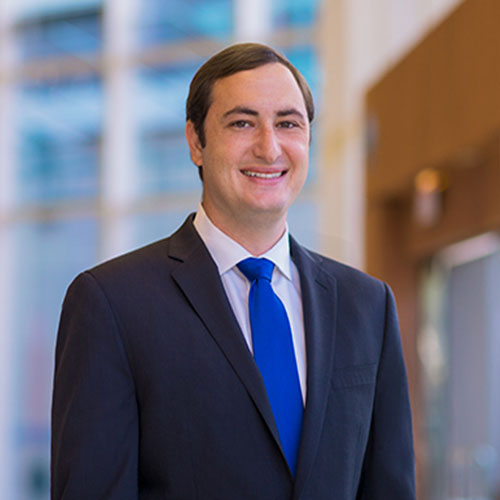
On September 22, 2025, GOLIATH VENTURES filed a Lawsuit against me in Orange County, Florida. The litigation was handled by PERLMAN, BAJANDAS, YEVOLI & ALBRIGHT, P.L., with attorneys including Oliver Birman and David Robbins acting on behalf of GOLIATH.
The lawsuit accused me of defamation and tortious interference.
According to court filings, GOLIATH claimed my reporting was false, malicious and responsible for causing extraordinary financial damage. The company alleged that my reporting caused investors to withdraw hundreds of millions of dollars and damaged its business relationships and reputation.
The lawyers also represented to the court that Christopher Delgado possessed detailed knowledge of GOLIATH’S operations, compliance procedures, investment activities, liquidity pool provisioning and business model.
At the time, those representations were being advanced in a Florida courtroom while I sat in Christchurch, New Zealand, defending myself against litigation initiated on the other side of the world.
The Questions They Did Not Answer
The questions themselves were straightforward.
I challenged the firm’s assertions regarding investor solicitations, securities compliance, regulatory oversight, audits and licensing. I questioned how a company that repeatedly described itself as a private venture could simultaneously have large numbers of investors. I asked what independent audits existed, what regulatory exemptions were being relied upon and whether the firm was aware of law-enforcement interest in GOLIATH and Christopher Delgado.
Those questions went to the heart of the concerns I was investigating.
If GOLIATH’S business model was legitimate, there should have been clear and verifiable answers.
Those answers never came.
Instead, the matter escalated into litigation.
Looking back today, that sequence of events is one of the reasons I believe the conduct surrounding this lawsuit deserves closer examination.
A Settlement Proposal That Raised Even More Questions
One of the most extraordinary documents I received came shortly after the lawsuit began.
 In October 2025, the firm sent Correspondence outlining what GOLIATH required in order to resolve the litigation. Among other things, the proposal demanded that I identify my sources, produce communications and documentation relating to those sources, remove my reporting and publicly apologise.
The proposed apology was particularly remarkable.
It required me to publicly state that I had no evidence GOLIATH was operating a Ponzi scheme, that I had been misled by others and that the information provided to me was false.
The proposal also contemplated a non-disparagement agreement backed by a US$5 million consent judgment if breached.
At the time, I refused.
As an investigator, I could not honestly make statements that I did not believe were supported by the evidence available to me.
Discovery Took An Unexpected Direction
As the litigation progressed, the focus increasingly shifted away from whether GOLIATH VENTURES was operating as represented and toward understanding how I conducted my investigation.
Court filings reveal that attorneys acting for GOLIATH sought discovery not only from me but also from third parties including OpenAI and X AI. The subpoenas requested subscriber information, IP addresses and records relating to searches, questions and conversations concerning Christopher Delgado, GOLIATH VENTURES, BlackBlock, Wealth MD and even potential federal investigations.
For me, those requests highlighted an interesting contrast.
From the beginning, my investigation had focused on questions surrounding GOLIATH’S operations, investor funds, audits, compliance claims and the representations being made to the public. Yet as the litigation advanced, significant effort appeared to be directed toward identifying my sources, examining my research methods and understanding how information had been gathered.
That distinction matters.
Journalists, whistleblowers and investigators often rely on confidential sources, independent research and the ability to ask difficult questions without fear that every conversation, lead or line of inquiry will become the subject of litigation. While discovery is a normal part of legal proceedings, the breadth of some of these requests raised questions about whether the focus had shifted from addressing the substance of my reporting to examining the mechanics of how the reporting was produced.
Meanwhile, many of the questions that had triggered the investigation in the first place remained unanswered.
Then The Entire Story Changed
By 2026, the landscape had changed completely.
Federal authorities accused Christopher Delgado and GOLIATH VENTURES of operating what has been described as a massive cryptocurrency Ponzi scheme. Criminal proceedings followed, a receiver was appointed, bankruptcy proceedings commenced and asset forfeiture actions were launched.
The same company whose lawyers had accused me of publishing false allegations was now at the centre of federal investigations, bankruptcy proceedings and multiple court-supervised actions.
Perhaps the most significant development came from the court-appointed receiver. After conducting his own investigation, the receiver reported finding meaningful evidence that a Ponzi scheme had been perpetrated through the company by at least one senior insider.
That finding did not automatically validate every statement I had made throughout my investigation, nor did it establish liability against anyone associated with the lawsuit. What it did do, however, was fundamentally change the context in which the litigation must now be viewed.
When GOLIATH’S lawyers filed suit against me, they argued that my reporting was false and damaging. By 2026, the underlying business had collapsed, federal authorities had intervened and many of the same issues that triggered my reporting were being examined by government agencies, bankruptcy professionals and court-appointed investigators.
At that point, the story was no longer simply about what I had reported.
It had become a question of what the lawyers knew, what they were told and what steps they took before advancing those claims through the courts.
The Question I Cannot Ignore
This article is not about determining Christopher Delgado’s guilt or innocence. The criminal courts, bankruptcy court and court-appointed receiver are already dealing with those issues.
My focus is different.
After reviewing the lawsuit, the settlement demands, the discovery requests, the subpoenas, the subsequent collapse of GOLIATH VENTURES and the findings that emerged afterwards, I am left with a question that I cannot ignore.
What level of investigation and due diligence should be expected before lawyers accuse an investigator of fabricating claims, acting with malice and causing hundreds of millions of dollars in damages?
That question becomes even more significant when the company at the centre of the litigation later becomes the subject of criminal allegations, bankruptcy proceedings, receivership findings and federal asset recovery efforts.
I am not suggesting answers.
I am asking questions.
The same thing I have been doing since the day I started investigating GOLIATH VENTURES.
The difference now is that the questions are no longer focused solely on the company.
They are focused on the litigation itself and the conduct surrounding it.
And I believe those questions deserve independent legal scrutiny.
Why A Washington Lawyer Reached Out
One of the more unexpected developments in this story had nothing to do with GOLIATH VENTURES, Christopher Delgado or the bankruptcy proceedings.
It started with an email.
In March 2026, I was contacted by Amos N. Jones, a Washington DC attorney, former journalist and First Amendment professor. Jones had never heard of me, had no connection to the investigation and, by his own account, had never even heard of Christopher Delgado before reading media coverage surrounding the collapse of GOLIATH VENTURES.
What caught his attention was not the underlying investment opportunity.
It was the lawsuit.
After reviewing the public record, Jones became interested in the fact that a company now facing criminal allegations, bankruptcy proceedings and receivership findings had previously sued one of its most vocal critics. The more he reviewed the timeline, the more he believed the circumstances surrounding the litigation warranted independent legal examination.
Over the following fourteen weeks, Jones monitored developments, reviewed filings and attempted to identify Florida counsel willing to evaluate the matter. Although he ultimately concluded that he could not personally pursue the case without Florida co-counsel, he encouraged me to continue searching for an attorney willing to review the evidence independently.
That recommendation is one of the reasons this article exists.
Not because Amos Jones told me I had a case.
But because an experienced lawyer with no prior involvement in this story looked at what happened and concluded that the questions surrounding the litigation deserved to be examined.
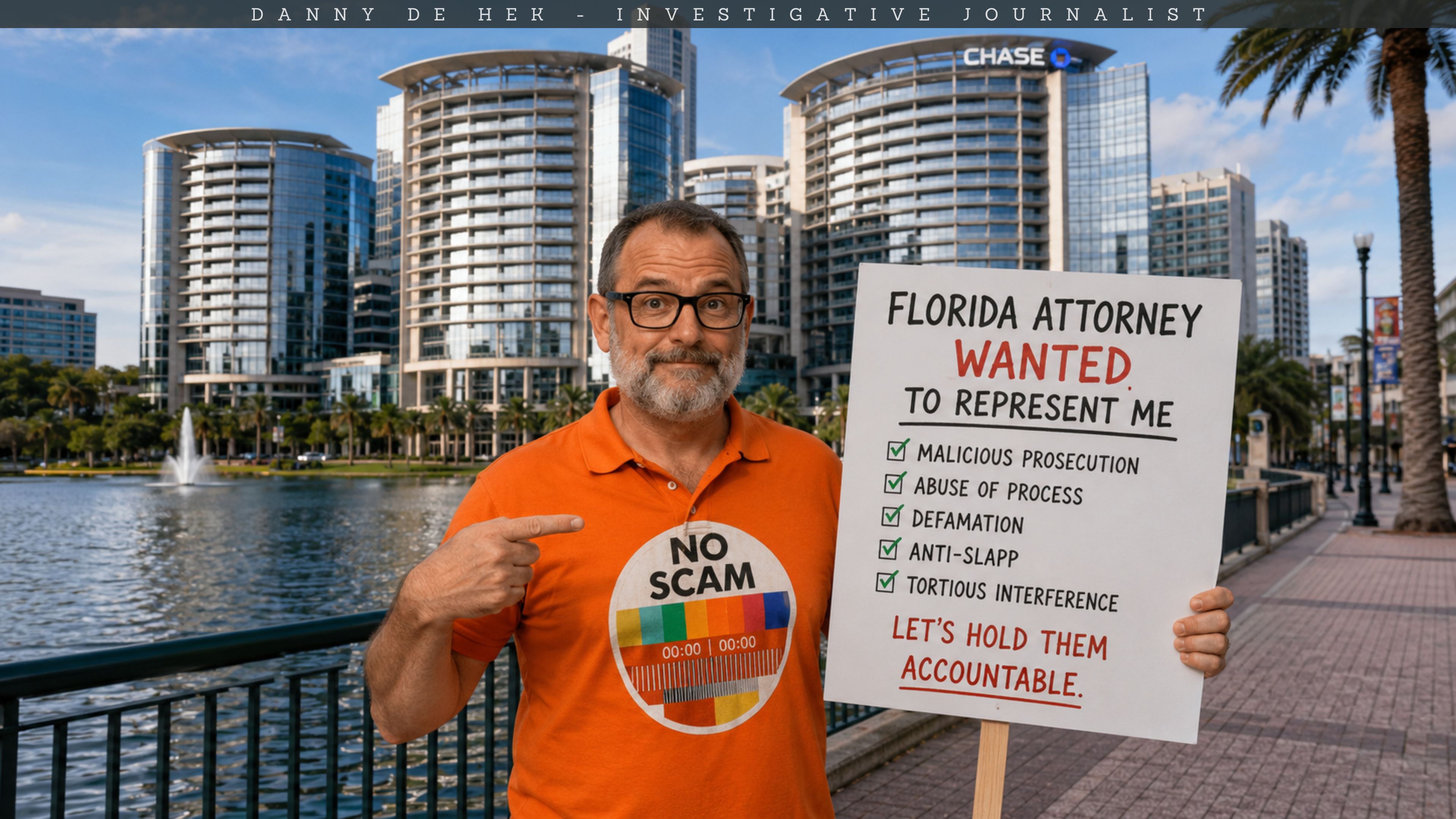
My Request To Florida Attorneys
I am not looking for a lawyer to sue GOLIATH VENTURES.
GOLIATH VENTURES is in bankruptcy.
That is not where my focus lies.
I am looking for experienced Florida counsel willing to independently review the conduct surrounding the litigation itself.
The evidence includes the cease-and-desist correspondence, the lawsuit, settlement communications, discovery requests, subpoenas, court filings, bankruptcy proceedings, receivership findings, criminal allegations and the extensive body of evidence that emerged after the lawsuit was filed.
I am particularly interested in speaking with attorneys experienced in malicious prosecution, abuse of process, First Amendment litigation, anti-SLAPP matters, defamation defence and litigation misconduct.
After everything that has happened, one question continues to stand out.
What level of investigation and due diligence should be expected before lawyers attempt to silence an investigator who was warning the public about a company that later became the subject of criminal allegations, bankruptcy proceedings and receivership findings?
I believe that question deserves an answer.
If you are a Florida attorney willing to review the evidence independently, I would welcome the conversation.
Disclaimer: How This Investigation Was Conducted
This investigation relies entirely on OSINT — Open Source Intelligence — meaning every claim made here is based on publicly available records, archived web pages, corporate filings, domain data, social media activity, and open blockchain transactions. No private data, hacking, or unlawful access methods were used. OSINT is a powerful and ethical tool for exposing scams without violating privacy laws or overstepping legal boundaries.
About the Author
I’m DANNY DE HEK, a New Zealand–based YouTuber, investigative journalist, and OSINT researcher. I name and shame individuals promoting or marketing fraudulent schemes through my YOUTUBE CHANNEL. Every video I produce exposes the people behind scams, Ponzi schemes, and MLM frauds — holding them accountable in public.
My PODCAST is an extension of that work. It’s distributed across 18 major platforms — including Apple Podcasts, Spotify, Amazon Music, YouTube, and iHeartRadio — so when scammers try to hide, my content follows them everywhere. If you prefer listening to my investigations instead of watching, you’ll find them on every major podcast service.
You can BOOK ME for private consultations or SPEAKING ENGAGEMENTS, where I share first-hand experience from years of exposing large-scale fraud and helping victims recover.
“Stop losing your future to financial parasites. Subscribe. Expose. Protect.”
My work exposing crypto fraud has been featured in:
- Coffeezilla 2026): Featured in the investigation exposing the alleged $328M Goliath Ventures Ponzi scheme
- Bloomberg Documentary (2025): A 20-minute exposé on Ponzi schemes and crypto card fraud
- News.com.au (2025): Profiled as one of the leading scam-busters in Australasia
- OpIndia (2025): Cited for uncovering Pakistani software houses linked to drug trafficking, visa scams, and global financial fraud
- The Press / Stuff.co.nz (2023): Successfully defeated $3.85M gag lawsuit; court ruled it was a vexatious attempt to silence whistleblowing
- The Guardian Australia (2023): National warning on crypto MLMs affecting Aussie families
- ABC News Australia (2023): Investigation into Blockchain Global and its collapse
- The New York Times (2022): A full two-page feature on dismantling HyperVerse and its global network
- Radio New Zealand (2022): “The Kiwi YouTuber Taking Down Crypto Scammers From His Christchurch Home”
- Otago Daily Times (2022): A profile on my investigative work and the impact of crypto fraud in New Zealand

Leave A Comment