



For nearly five decades, Forever Living Products sold the dream of “financial freedom” through aloe vera drinks, bee-based supplements, and a recruitment-driven compensation plan. But in 2026, the company abruptly terminated its US MLM opportunity, joining a growing list of multi-level marketing dinosaurs retreating from the very business model they once insisted was “perfectly legal” and “life-changing.”
The truth is simpler: MLMs are collapsing under their own weight — and Forever Living is just the latest example.
What Forever Living Products Actually Is
Founded in 1978 in Tempe, Arizona, Forever Living built its empire not on aloe vera, but on the MLM recruitment machine. The company claimed millions of distributors worldwide, but like most MLMs, the vast majority earned little to nothing.
Forever Living’s product line includes:
- Aloe vera drinks
- Nutritional supplements
- Skincare and beauty products
- Bee-derived products
- Personal care items
The products were always secondary. The real engine was the promise: “Join, recruit, build your downline, and you too can live the Forever lifestyle.”
Except — as with every MLM — almost nobody did.
The Founder: Rex Maughan
Rex G. Maughan (1936-2021) was the charismatic businessman behind Forever Living. He founded the company in 1978 and grew it into a global operation. Maughan was also a major real estate investor and philanthropist.
He passed away on July 17, 2021, at the age of 84. Leadership passed to his son, Gregg Maughan, who now serves as President and CEO. Under his leadership, Forever Living has faced increasing regulatory pressure and declining distributor participation — culminating in the 2026 shutdown of its US MLM operations.
Classic MLM, Classic Problems
Forever Living operated on the standard MLM blueprint:
- Recruit people
- Encourage them to buy inventory
- Push them to recruit more people
- Promise “unlimited income potential”
- Reward the top 1% with bonuses funded by the losses of everyone below
This structure has been criticized for decades as functionally indistinguishable from a pyramid scheme, especially when retail sales are overshadowed by recruitment incentives.
Forever Living was no exception.
Legal and Regulatory Issues
Forever Living has been on regulators’ radar for years.
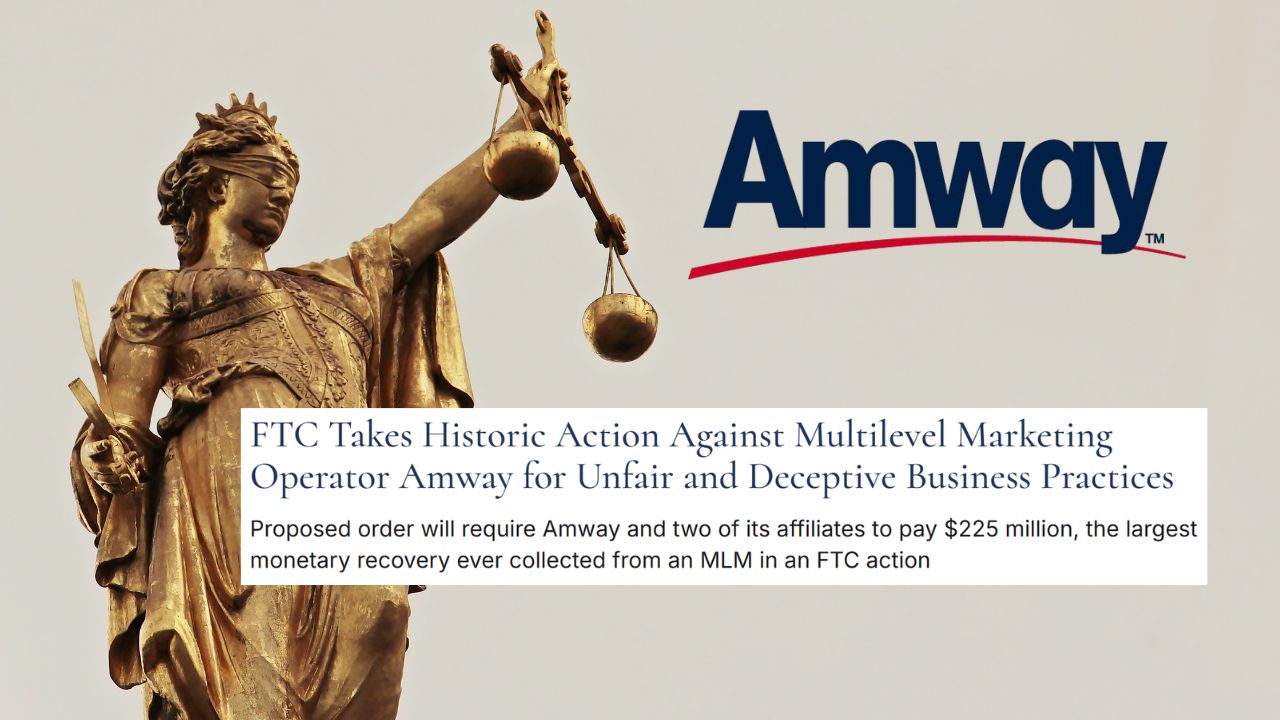
In the 1990s Japanese authorities penalized Forever Living’s Japan division for concealing billions of yen in income.
The company has repeatedly been cited for deceptive marketing:
- The FTC sent Forever Living a notice in 2021 regarding misleading income claims.
- Truth in Advertising (TINA.org) documented thousands of illegal income claims made by distributors.
- Forever Living quietly scrubbed social media posts after being confronted with evidence.
BehindMLM and other watchdogs flagged Forever Living’s autoship-driven recruitment model, a hallmark of pyramid schemes.
In short, Forever Living spent decades walking the razor’s edge of legality and regulators finally caught up.
The 2026 Shutdown
In May 2026, Forever Living abruptly announced it was ending its MLM operations in the United States. No more:
- Downlines
- Recruitment incentives
- Distributor advancement
- MLM-style bonuses
The company cited “regulatory challenges,” which is MLM speak for: “We can’t run this business legally anymore.”
Forever Living continues to sell products, but the US MLM model is dead. This is not a coincidence. This is a pattern.
Just Another Domino
Forever Living’s collapse is part of a massive industry-wide shift.
Several major MLM companies have abandoned the MLM model including:
- Beachbody (BODi) dropped MLM entirely in 2024
- Pure Romance shut down its MLM arm
- SimplyFun, 4Life, and BELLAME moved toward affiliate-style structures
- Countless smaller MLMs have quietly folded
But why are MLMs failing?
- Regulatory pressure — especially around income claims and recruitment-based pay.
- FTC’s proposed Earnings Claim Rule — requiring proof for all income claims.
- Social media transparency — people now openly share their MLM losses.
- Affiliate marketing dominance — influencers outperform MLM reps without paying fees or buying inventory.
- Shrinking recruitment pool — fewer people are willing to join MLMs.
MLMs are being forced to evolve or die.
What Forever Living’s Collapse Means for the Industry
Forever Living’s retreat from the US is not an isolated event. It’s a symptom of a failing business model.
The future of MLM is clear:
- Less recruitment
- More retail
- More affiliate-style programs
- Less hype
- More regulation
- Fewer victims
MLMs are being dragged, kicking and screaming, into becoming normal retail companies, because the recruitment-driven model simply cannot survive modern scrutiny.
Forever Living’s shutdown is just another crack in the MLM façade. And there will be more.
By Beth Gibbons (Queen of Karma)
Beth Gibbons, known publicly as Queen of Karma, is a whistleblower and anti-MLM advocate who shares her personal experiences of being manipulated and financially harmed by multi-level marketing schemes. She writes and speaks candidly about the emotional and psychological toll these so-called “business opportunities” take on vulnerable individuals, especially women. Beth positions herself as a survivor-turned-activist, exposing MLMs as commercial cults and highlighting the cult-like tactics used to recruit, control, and silence members.
She has contributed blogs and participated in video interviews under the name Queen of Karma, often blending personal storytelling with direct confrontation of scammy business models. Her work aligns closely with scam awareness efforts, and she’s part of a growing community of voices pushing back against MLM exploitation, gaslighting, and financial abuse.



Leave A Comment