


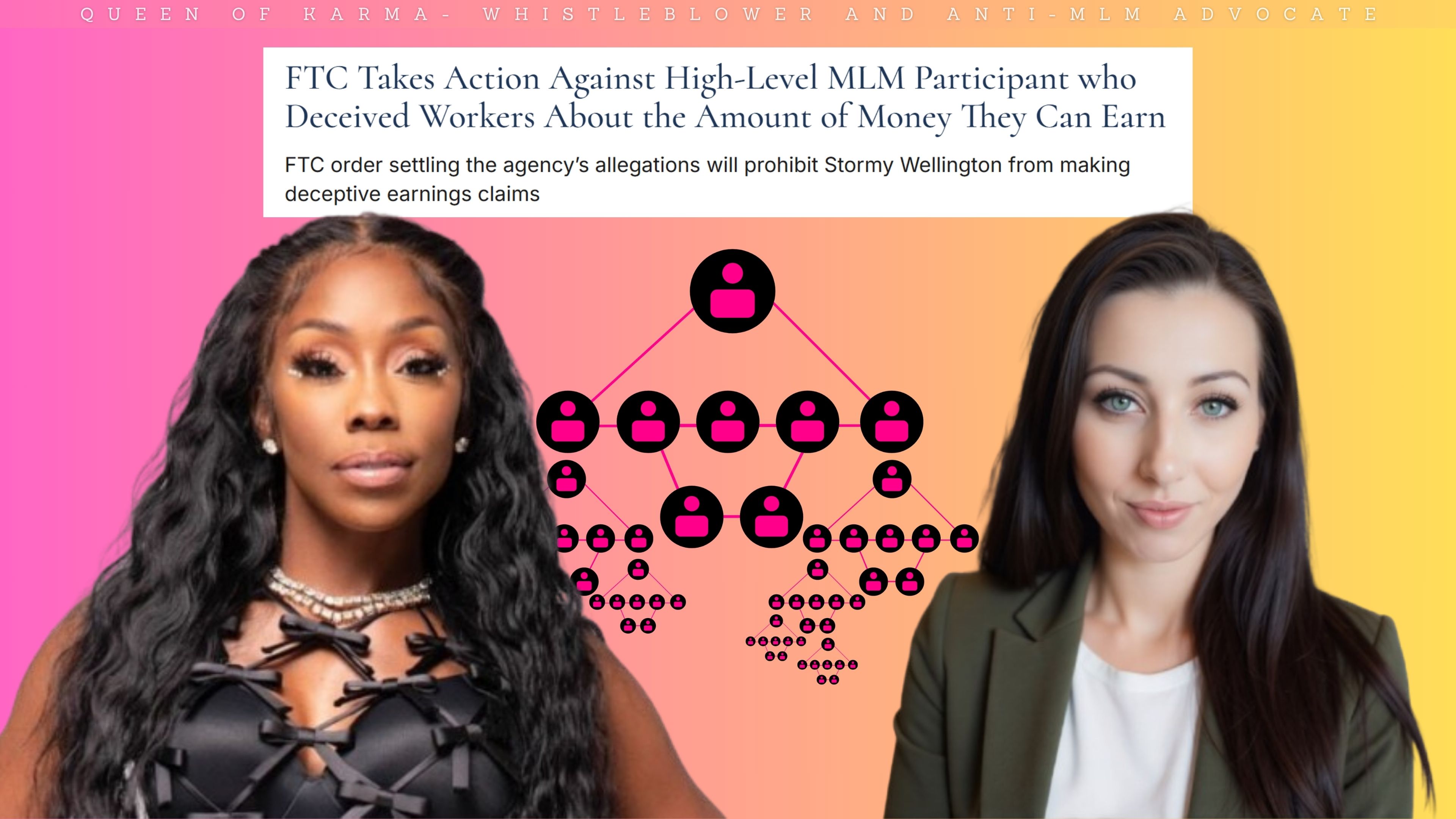
Stormy Wellington — known to her followers as Coach Stormy — has long been one of the most recognizable and controversial figures in the multilevel marketing world. She build a public persona around wealth, empowerment, and “boss-up” culture, but federal regulators say her success story is built on deceptive income claims and recruitment-driven marketing that misled thousands of people.
This investigation examines who she is, where she came from, how she rose to MLM stardom, and why the Federal Trade Commission ultimately stepped in.
Who Is Stormy Wellington?
Stormy Wellington was born on February 21, 1980, in New York City. Her childhood was marked by instability, poverty, and trauma. She grew up in foster care, experienced long periods without her mother (who was frequently incarcerated) and was raised largely by siblings and family friends.
She spent parts of her childhood in New York, San Francisco, and eventually Miami, Florida, where she would later build her public persona.
Her education ended early. She dropped out of high school in ninth grade, a decision shaped by family instability and financial pressure.
By age 13, she was working as a Stripper to support herself and her family, and she became involved in drug dealing and street-level hustling — experiences she later reframed as part of her “rags-to-riches” narrative.
Her early life was undeniably difficult, and she has repeatedly emphasized that she “rose from the mud” which is a phrase she uses in her branding and coaching programs.
From Survival to Entrepreneurship
Wellington eventually left stripping and opened a small boutique, a turning point she credits with shifting her mindset toward entrepreneurship.
She later entered the direct sales and network marketing industry, where she found the financial success and public visibility that would define her career. She became known for her high-energy coaching style, luxury lifestyle branding, and aggressive recruitment messaging.
In 2017, she founded Girl Hold My Hand Inc., a women’s coaching and personal development organization. She also authored several self-help books, including The Quiet Storm and 9 Laws of Success.
The Rise to “#1 Female Network Marketer”
Wellington spent ten years at Total Life Changes (TLC), a wellness-product MLM. She rose to the rank of Grand Ambassador, one of the highest positions in the company.
During this period, she become known for bold income promises, such as:
“I will help 1000 families make 5-7 figures in the next 90 days to 12 months!”
Her success in TLC led to her being ranked as the #1 Female Network Marketer in the World by Business For Home.
In August 2025, she left TLC and joined Farmasi, another MLM in the beauty and wellness sector. There, she continued making extreme income claims, including:
“No less than six figures — repeat that to me. No less than six figures.”
“I will make 60 new millionaires in 2026.”
These statements would later become central to the FTC’s enforcement action.
The Reality Behind the Claims
The FTC compared Wellington’s promises to the companies’ own income disclosures and the numbers tell a very different story.
Total Life Changes (TLC):
- 76.8% of active participants earned zero compensation in 2023.
- Only 0.4% earned more than $5,000 in an entire year.
Farmasi:
- Fewer than 1% of participants earned six-figure income.
- No rank earned enough to reach $1 million per year, despite Wellington’s claims.
These figures directly contradict that lifestyle Wellington promoted and the earnings she told recruits they could expect.
The FTC Crackdown
In April 2026, the Federal Trade Commission announced a major enforcement action against Stormy Wellington for deceptive earnings claims used to recruit workers into TLC and Farmasi.
The FTC’s order:
- Permanently bans her from making unsubstantial income claims
- Prohibits her from using luxury imagery to imply typical earnings
- Requires her to maintain written evidence for any future income statements
- Forces her to notify her entire downline about the injunction
This case is significant because it targets an individual recruiter, not just the MLM company — a major shift in regulatory strategy.
The FTC stated that misleading workers about income potential is illegal, regardless of whether the claims come from a company or a top-earning distributor.
Stormy Wellington’s Public Persona vs. Regulatory Reality
Wellington has built a massive online following as:
- A motivational speaker
- A “millionaire mentor”
- A manifestation and mindset coach
- A top female network marketer
Her branding emphasizes luxury, spirituality, and empowerment, but regulators say her success stories and promises did not match the financial outcomes of the people she recruited.
Her story highlights a systemic issue in MLMs: The top earners often profit from recruitment, not product sales and the vast majority of participants lose money.
What Stormy Wellington’s Case Means for the MLM Industry
Stormy Wellington’s life story is undeniably dramatic — from foster care and poverty to becoming one of the most visible MLM leaders in the world. But her FTC case reveals the darker side of the industry she represents.
Her downfall sends a clear message: If you mislead people about income potential, you can be held personally accountable.
For consumers, this case is a reminder to question every income claim, every luxury-lifestyle pitch, and every “ground floor opportunity” that sounds too good to be true.
For the MLM industry, it marks a turning point — one where regulators are no longer focusing solely on companies, but on the individuals who promote them.
By Beth Gibbons (Queen of Karma)
Beth Gibbons, known publicly as Queen of Karma, is a whistleblower and anti-MLM advocate who shares her personal experiences of being manipulated and financially harmed by multi-level marketing schemes. She writes and speaks candidly about the emotional and psychological toll these so-called “business opportunities” take on vulnerable individuals, especially women. Beth positions herself as a survivor-turned-activist, exposing MLMs as commercial cults and highlighting the cult-like tactics used to recruit, control, and silence members.
She has contributed blogs and participated in video interviews under the name Queen of Karma, often blending personal storytelling with direct confrontation of scammy business models. Her work aligns closely with scam awareness efforts, and she’s part of a growing community of voices pushing back against MLM exploitation, gaslighting, and financial abuse.


Leave A Comment