


“Todd Burkhalter built a massive Ponzi scheme on lies, exploiting trust to steal hundreds of millions of dollars from more than 2,000 victims while funding an extravagant lifestyle.” — Paul Brown, Special Agent in Charge, FBI Atlanta.
Todd Burkhalter is not someone I need to accuse of running a Ponzi scheme. That question has already been answered.
On August 14, 2026, the founder and CEO of Drive Planning LLC was sentenced to 20 years in federal prison — the maximum allowed by law — after orchestrating a Ponzi scheme that took approximately $380 million from more than 2,000 investors. He was also ordered to pay $233,777,763.82 in restitution. (Department of Justice)
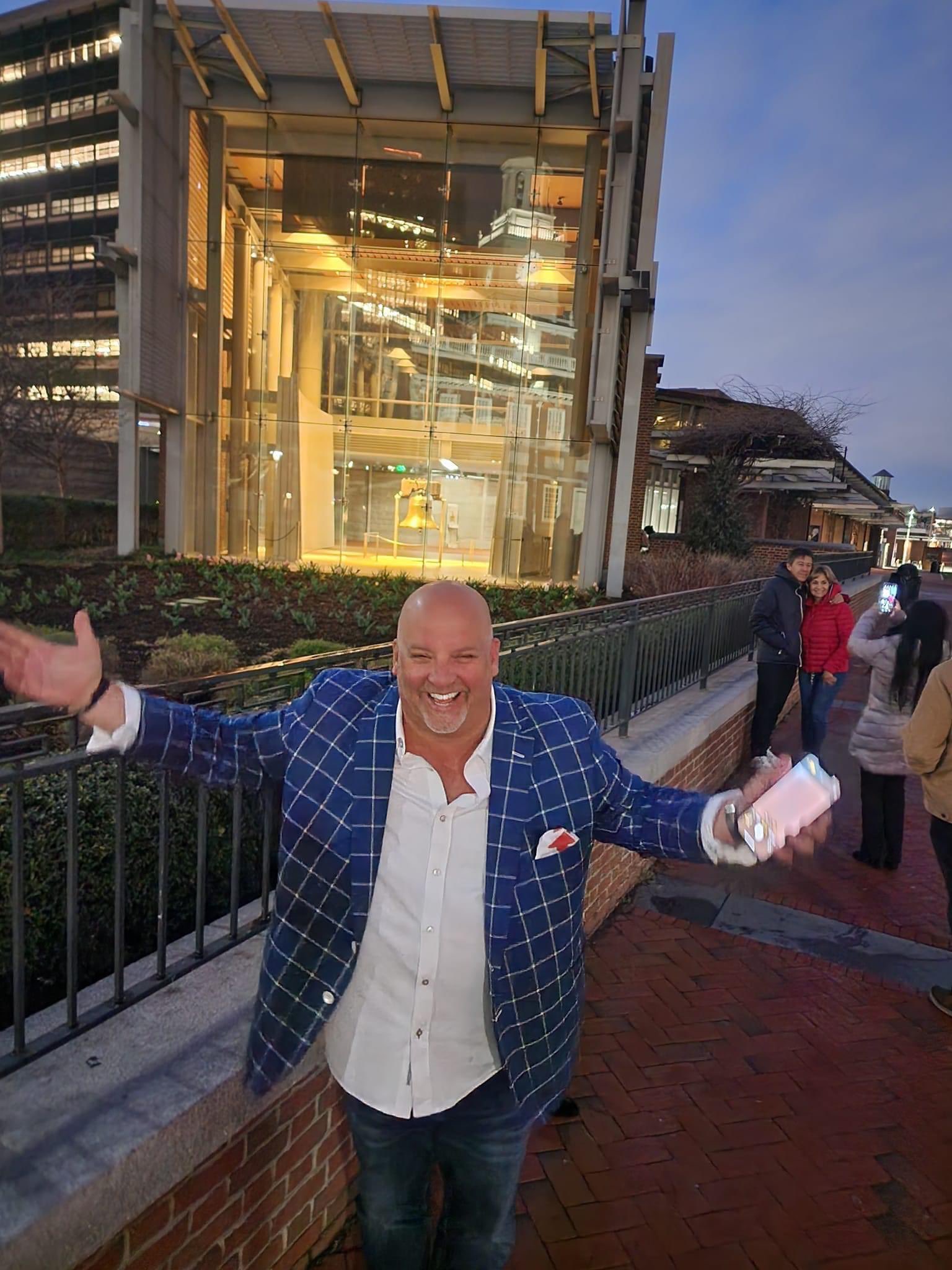
What interests me is what happened before the handcuffs, guilty plea and prison sentence.
I have investigated enough investment schemes to recognise how powerful the appearance of success can be. People rarely hand over their retirement savings because somebody introduces themselves as a fraudster. They invest because they are shown something that appears credible: professional branding, impressive offices, confident financial language, successful people, apparent investment returns and, increasingly, a lifestyle that seems to provide visible proof that the system works.
Burkhalter had plenty of that.
Before his downfall, he presented himself as a financial strategist, entrepreneur, investor and author. He founded Drive Planning and published a book called Bullet Proof Your Finances: Confidence In Creating Financial Security. In a 2020 interview, Burkhalter said he had spent more than 20 years helping people achieve their hopes and dreams and described Drive Planning as a business designed to help clients achieve a more holistic form of success. Promotional material surrounding his book described him as someone who had helped thousands of clients create the financial life they desired.
The branding reinforced that message.
“Keep More. Make More. Live More.”
It sounds almost harmless now. But when you follow the money, those words take on an entirely different meaning.
Federal prosecutors say Burkhalter used investor money to fund an extraordinary personal lifestyle: approximately $2 million toward a yacht, $2.1 million toward a luxury condominium in Cabo San Lucas, around $800,000 on luxury vehicles, millions on luxury travel and private jets, and approximately $320,000 on clothing, jewellery and beauty treatments.
The yacht is particularly difficult to ignore.
 The SEC traced investor money into the purchase of a yacht originally called Stillwater. Purchase documents showed that although Drive Planning provided the payment, the company would hold no ownership interest in it. Burkhalter renamed the yacht “Live More.”
That detail almost tells the story by itself.
But this investigation isn’t really about a yacht. It isn’t about expensive cars, private jets or laughing at the extravagant spending of a man who is now going to prison.
It is about understanding how the illusion worked.
Drive Planning wasn’t selling some obscure cryptocurrency token or anonymous online trading bot. Investors were being offered what appeared to be sophisticated investment opportunities involving real estate bridge loans and tax liens. They were told their investments could produce substantial returns and, critically, that their money was protected by collateral. Prosecutors later established that some of the properties appearing on Drive Planning’s collateral sheets didn’t even exist.
There is another reason this case is particularly relevant to the work I do.
I have been closely following the federal prosecution surrounding Goliath Ventures Inc and Christopher Delgado. Delgado has pleaded guilty and is awaiting sentencing, and understandably many of the people affected by Goliath want to know what sentence he will receive.
Todd Burkhalter’s case cannot answer that question.
The two criminal cases involve different defendants, different charges, different statutory limits and different sentencing circumstances. Burkhalter’s 20-year sentence should not be treated as a benchmark for Delgado, and comparing the headline dollar amounts of two Ponzi schemes is not a reliable way to predict a federal sentence.
What the Drive Planning case can provide is something much more useful.
It gives us a completed example of how an enormous investment fraud was constructed, how credibility was manufactured, how investors were persuaded to part with their money, how other executives became criminally accountable for their own conduct, how federal investigators dismantled the operation and what happened when the man at the centre finally stood before a judge.
So I went backwards through the Burkhalter story — past the prison sentence, past the guilty plea, past the SEC intervention and back to the period when Drive Planning still appeared successful.
Because if we want to understand how people lose hundreds of millions of dollars to schemes like this, the most useful place to look isn’t at what the fraudster looked like when everything collapsed.
It is what he looked like when everybody still believed him.
Who Was Todd Burkhalter?
To understand why people trusted Todd Burkhalter with their money, you have to look at the man investors were introduced to before anyone was calling him the mastermind of a Ponzi scheme.
Burkhalter wasn’t presenting himself as some anonymous internet trader operating behind a Telegram username. He was the founder and CEO of Drive Planning LLC, a Georgia-based financial advisory business, and had spent years building the public image of an experienced financial professional. In a 2020 interview with VoyageATL, Burkhalter said he had been helping people achieve their “hopes and dreams” for more than 20 years. He explained that Drive Planning had evolved beyond simply helping people accumulate wealth and was instead designed to help clients achieve what he described as a more holistic form of success.
That positioning matters because trust was fundamental to what came next.
Burkhalter wasn’t merely selling an investment. He was selling financial competence. A 2020 promotional release for his book described him as a financial strategist, entrepreneur, investor and author, as well as a Certified Senior Advisor who had helped thousands of clients during a 23-year career. Drive Planning itself was promoted as an innovative financial firm with operations around Metro Atlanta and St. Petersburg, Florida.
Then there was the book.
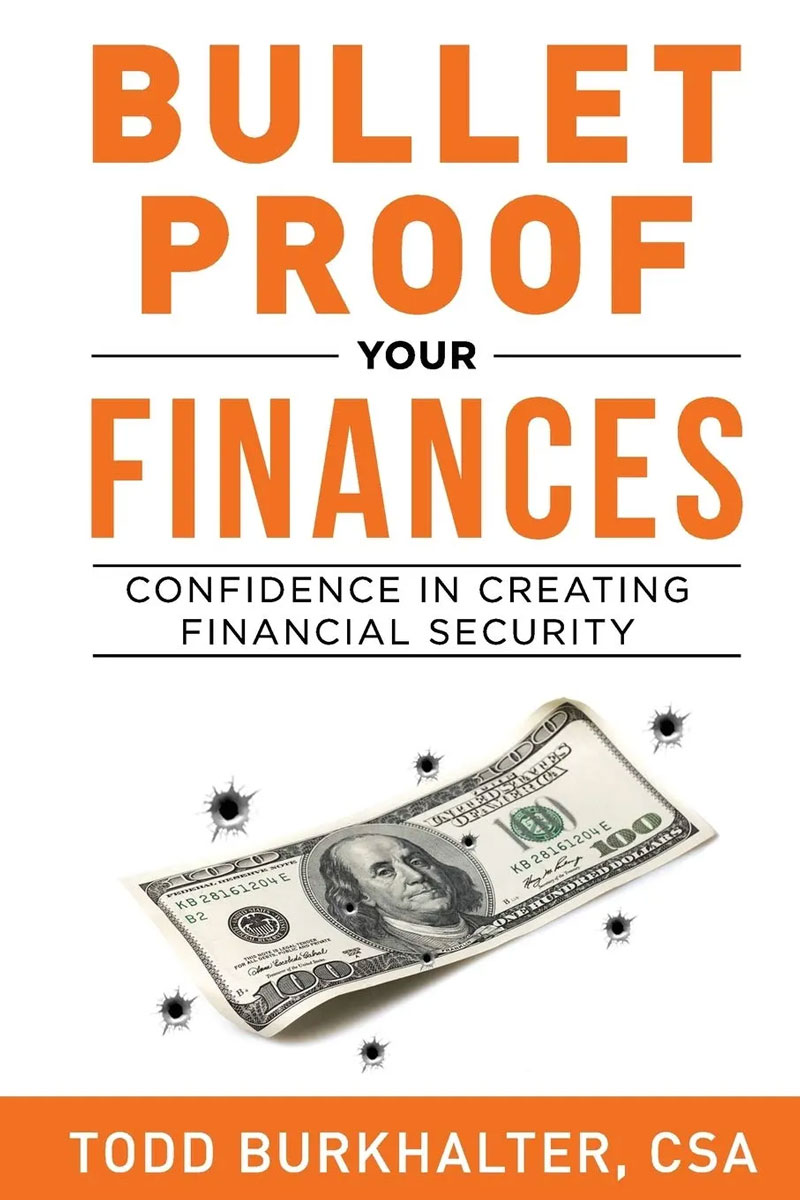
Bullet Proof Your Finances: Confidence in Creating Financial Security arrived in 2020, the same year prosecutors say Burkhalter’s Ponzi scheme began. Burkhalter promoted the book as a response to the financial uncertainty created by the COVID-19 pandemic, and promotional material announced that it had reached #1 in Amazon’s Education New Releases category.
Think about what that combination would have looked like to an ordinary investor.
Here was a man with decades of claimed financial experience, his own financial advisory company, a published book about financial security and a polished public story about helping people build better lives. This wasn’t the stereotypical image many people have in their minds when they imagine the person behind a Ponzi scheme.
And that’s precisely why this case is educational.
When the SEC eventually moved against Drive Planning in August 2024, it described Burkhalter very differently. Regulators identified him as the founder and CEO of a business they alleged had raised more than $300 million for purported real-estate investments while using incoming investor money to make Ponzi-like payments and finance Burkhalter’s lifestyle. A federal court froze assets, imposed preliminary injunctive relief and appointed a receiver over Drive Planning.
Burkhalter would later plead guilty to wire fraud, and federal prosecutors put the final scale considerably higher: approximately $380 million from more than 2,000 investors.
There are two versions of Todd Burkhalter in this story.
There is the man investors could research online: financial strategist, entrepreneur, author, CEO and someone apparently devoted to helping other people achieve financial security.
And then there is the Todd Burkhalter revealed by the federal investigation.
The important question isn’t simply how different those two versions were.
It’s how the first version helped make the second one possible.
The Investment Pitch

By the time Todd Burkhalter began raising money through Drive Planning’s investment programmes, he wasn’t asking investors to trust a stranger. He had spent years talking publicly about financial planning, retirement, taxation, real estate and wealth creation. His YouTube Channel, which dates back to 2009, contains videos with titles including Creating Financial Clarity, Exploring Tax Free Investing, Create Income from Real Estate with Little to No Money and, more recently, “Drive Planning — Bringing the strategies of the wealthy to your life!”
That history matters because the investment Burkhalter was about to sell sounded remarkably conventional compared with many of the schemes I investigate. There was no mysterious cryptocurrency algorithm or supposedly revolutionary trading bot.
The story was real estate.
One of Drive Planning’s principal offerings was called the Real Estate Acceleration Loan, or REAL. According to federal prosecutors, investors were told their money would be used to make short-term bridge loans to property developers who needed capital to finish existing developments or begin new ones. Drive Planning would supposedly earn money from those loans and pass substantial returns back to investors.
The promised return should immediately get anyone’s attention.
Investors were promised 10% every three months.
That works out to an extraordinary return even before considering compounding. More importantly, prosecutors say Drive Planning represented those returns as guaranteed. Investors were also told that REAL was fully collateralised by real estate, creating the impression that even though the return was unusually high, there were tangible assets sitting behind their money.
That combination is extremely powerful psychologically. A high return by itself can look risky. Add words such as real estate, bridge lending, collateral and guaranteed, and suddenly an extraordinary return can be made to sound like a sophisticated financial strategy ordinary investors have simply never been shown before.
Drive Planning eventually offered another opportunity called the Cash Out Real Estate Fund, or CORE Fund. This time the investment story involved tax liens. Marketing materials described an opportunity to generate “100% Passive Income from Tax Liens,” with investors promised 10% every six months or approximately 22% annually for up to three years. Prosecutors say investors were told the money would be pooled, protected by the government and fully collateralised.
Again, look at the language being used.
These weren’t being presented as speculative bets where investors were warned they might make 20% one year and lose money the next. The sales proposition combined exceptional returns with repeated assurances of protection and security.
Burkhalter’s existing public persona helped reinforce that proposition. His old YouTube catalogue shows him discussing retirement planning, real-estate investing, tax strategies and financial models years before REAL existed. One video uploaded approximately six years ago was titled “GET YOUR RETIREMENT NOW!” and ran for more than 46 minutes.
I wouldn’t suggest that video itself was promoting the later Ponzi scheme without examining every statement made in it. Its existence does, however, help demonstrate the financial world Burkhalter had positioned himself within long before investors encountered REAL and CORE.
That distinction is important.
A Ponzi scheme doesn’t necessarily arrive labelled as an exciting new investment nobody has ever heard of. Sometimes it is wrapped around concepts people already recognise and trust.
Real estate exists. Bridge lending exists. Tax liens exist. Collateralised lending exists.
The question was whether Drive Planning was actually doing what investors were being told it was doing.
Federal investigators eventually answered that question.
And the answer was devastating.
What Was Really Happening With The Money
The promise behind REAL was easy enough to understand: investors supplied the capital, Drive Planning supposedly loaned that money to real-estate developers, and the developers paid enough for Drive Planning to deliver those remarkable returns.
But according to federal prosecutors, none of the REAL investment money was used to make the bridge loans investors had been told were generating their returns. Instead, Drive Planning operated REAL as a Ponzi scheme, using money from new investors to make payments to earlier investors while diverting millions elsewhere.
What makes this case particularly important is how early that behaviour began.
Prosecutors say Drive Planning received its first REAL investment — $50,000 — in September 2020. At least $21,000 of that first investment was immediately used to repay an earlier Drive Planning investor. At least another $80,000 of investor money collected during those early months went toward Burkhalter’s ex-wife’s attorneys and recreational-vehicle expenses.
That timeline removes one of the explanations we sometimes hear after an investment business collapses: that there was once a legitimate operation which encountered financial problems and eventually resorted to using new money to keep itself alive.
REAL appears to have been fraudulent from the beginning.
The supposed protection behind the investment was equally troubling. Investors were told REAL was fully collateralised by real estate. Prosecutors say Burkhalter directed Drive Planning employees to prepare fraudulent collateral sheets containing fictitious property valuations. In some instances, the properties supposedly securing investors’ money did not even exist.
This is where the mechanics of the fraud become worth understanding.
If an investor questions a 10% return every three months, telling them the investment is backed by real estate can provide reassurance. A collateral sheet filled with properties and valuations creates something tangible for the investor to look at. It can transform an extraordinary promise into something that appears documented and measurable.
But documentation is only as valuable as the information behind it.
The CORE Fund followed a similar pattern. Drive Planning represented that investor money would be placed into a tax-lien fund capable of producing those substantial passive returns. Federal prosecutors say that after approximately December 9, 2022, Drive Planning stopped investing any CORE money into the fund at all. Yet the company continued accepting money from people who believed they were investing in CORE, collecting at least another $4.1 million.
Meanwhile, the appearance that the investments were working had to be maintained.
That is the engine inside every Ponzi scheme. Early investors receive payments. Those payments appear to validate the opportunity. Investors tell other people. Some reinvest. Others increase their positions. The business grows, and every successful payment makes the underlying story appear more credible.
But those payments don’t prove that profits exist.
In Drive Planning’s case, federal investigators ultimately established that the promised investment activity behind REAL simply wasn’t taking place. The money moving back to investors was not evidence that Burkhalter had discovered an extraordinary real-estate strategy.
It was evidence that more investor money was still coming in.
How Investors Were Encouraged To Find The Money
One of the most disturbing parts of the Drive Planning story isn’t simply how much people invested. It is where some of that money came from.
Federal prosecutors say Burkhalter and Drive Planning encouraged prospective investors to use money from retirement accounts, savings, lines of credit and even funds intended for their children’s college education. Burkhalter also encouraged victims to take early distributions from retirement accounts and to borrow significant amounts of money at high interest rates so they could participate in the investment.
That changes the consequences of a failed investment dramatically.
If somebody invests $100,000 they already own and loses it, the financial damage is devastating. But if somebody borrows $100,000 to invest, the investment can disappear while the debt remains. Interest continues accumulating. Monthly repayments continue arriving. The investor hasn’t simply lost their capital; they can be left paying for money that was handed to a fraudster years earlier.
The guaranteed-return narrative made that proposition particularly dangerous. An investor being promised 10% every three months might look at the interest rate on a loan, home-equity line or other source of borrowing and convince themselves there is a profitable gap between what the money costs to borrow and what Drive Planning supposedly guarantees in return.
On paper, it can look like leverage.
Inside a Ponzi scheme, it becomes leverage against the victim.
Burkhalter’s own public history makes this aspect of the case especially interesting. Years before the collapse of Drive Planning, his YouTube channel was already filled with discussions about retirement, real estate and financial strategy. One of the longest videos still visible on the channel is the 46-minute presentation titled “GET YOUR RETIREMENT NOW!” Another discusses creating income from real estate with little or no money.
I am not suggesting those older videos were themselves part of the later fraud. Their dates predate the REAL programme, and their contents need to be judged on what Burkhalter actually said at the time. But they help demonstrate something important: retirement planning, accessing capital, real estate and wealth creation were already part of the financial language surrounding Burkhalter and Drive Planning.
By the time REAL was being offered, investors weren’t necessarily being introduced to these concepts for the first time.
And there was another factor working in Drive Planning’s favour: people were apparently getting paid.
A retirement withdrawal that initially feels frightening becomes easier to justify when another investor says they received their promised quarterly return. Borrowing money can begin to seem rational when somebody you trust appears to have successfully done the same thing. Every payment generated by the Ponzi scheme could therefore do more than satisfy an existing investor — it could help validate the decision of the next one.
This is why I pay particular attention whenever an investment promoter starts discussing ways prospective investors can “find the money.”
A legitimate investment should stand or fall on its own merits. The moment the conversation shifts from “Is this investment appropriate for you?” to “How much can you access from your retirement account, your savings, your property or your available credit?”, the risk has fundamentally changed.
In the Drive Planning case, some investors weren’t merely being encouraged to invest.
They were being encouraged to rearrange their financial lives to do it.
Building A $380 Million Sales Machine
Todd Burkhalter could not have raised approximately $380 million from more than 2,000 investors by himself. Behind Drive Planning was something much more powerful than one charismatic financial adviser: a network of sales agents who were financially rewarded for bringing investor money into REAL.
The SEC’s complaint provides an unusually clear look at how that system worked. Drive Planning paid its sales agents a 4% commission on every REAL investment they sold. Importantly, that commission also applied when an existing investor chose to roll their money into another 90-day investment. So a $100,000 REAL investment could generate a $4,000 sales commission, while $1 million in sales could generate $40,000.
And Drive Planning didn’t simply pay commissions. According to the SEC, it conducted frequent training seminars for its sales force and created exclusive incentive clubs for its highest performers.
To qualify for the President’s Club, an agent needed to sell $2.5 million of Drive Planning products, including REAL. Sell $4.5 million and they could qualify for the Chairman’s Council. Membership came with all-expenses-paid trips for two to destinations including Toronto, Cabo San Lucas and the Greek Isles.
Now the lifestyle marketing begins to make more sense.
The luxury surrounding Drive Planning wasn’t confined to Todd Burkhalter’s personal social-media photographs. Success was being incorporated into the sales culture itself. Sell enough investment products and there were exclusive clubs and international trips waiting for you. Meanwhile, prospective investors were encountering representatives operating inside a business that appeared successful, organised and confident enough to reward its best performers with luxury travel.
There is an important distinction here. Being paid a commission does not automatically mean a salesperson knows they are selling a fraudulent investment. In fact, the SEC alleged that while Drive Planning regularly trained its agents, it did not directly disclose to all of them that the company lacked a profit-generating enterprise sufficient to meet its obligations to REAL investors and its sales force.
That matters when considering accountability. Some agents may themselves have believed the story they were selling. Others may have invested their own money. What we can establish from the federal record is that the compensation structure gave agents a substantial financial incentive to keep money flowing into REAL.
And the machine became enormous.
By early May 2024, the SEC said Drive Planning had more than 100 sales agents, and applications to invest were exceeding $1 million per day. By then, the operation had developed momentum that Todd Burkhalter’s relatively tiny public social-media following simply doesn’t explain. His YouTube channel currently shows only 37 subscribers and a few thousand lifetime views, yet the financial network surrounding Drive Planning ultimately reached thousands of investors.
That is another useful warning sign when investigating schemes like this. The person at the top doesn’t necessarily need millions of social-media followers when they have an incentivised network carrying the message for them.
The sales operation also continued remarkably late into the SEC investigation. On June 10, 2024, Drive Planning represented to the SEC that it would stop accepting new REAL investments, stop paying amounts due to REAL investors and stop paying sales commissions. According to the SEC’s complaint, a sales commission was nevertheless paid on June 21.
Then, on July 23, Burkhalter allegedly emailed Drive Planning’s sales agents about the SEC “review” of REAL. The SEC accused him of suggesting that investor payments could be made in a timely manner were it not for that regulatory review, when regulators alleged that any continuation of those payments would necessarily have required the Ponzi scheme to continue.
By this stage, the structure becomes much easier to see.
New investors supplied the money. Existing investors received apparent returns. Sales agents received commissions. Successful agents were rewarded. Those payments and rewards helped reinforce the appearance that Drive Planning was prospering.
The entire system depended on one thing continuing to happen: more money coming through the door.
Keep More. Make More. Live More.
Drive Planning had a phrase that captured the world Todd Burkhalter was selling: “Keep More. Make More. Live More.”
By itself, lifestyle marketing proves nothing. Successful businesspeople own expensive vehicles, travel internationally and buy beautiful homes every day. I don’t investigate somebody because they have a yacht or post photographs from a luxury holiday. The question that matters is much simpler: where did the money come from?
In Burkhalter’s case, federal investigators eventually answered that question.

According to the Department of Justice, investor money was used to fund approximately $2 million toward the purchase of a yacht, $2.1 million toward a luxury condominium in Cabo San Lucas, around $800,000 on luxury vehicles, millions of dollars on luxury travel including chartered private jets, and approximately $320,000 on clothing, jewellery and beauty treatments. Among the vehicles specifically identified by prosecutors was a 2020 Prevost Marathon motorcoach, along with two 2024 Land Rovers.
That motorcoach caught my attention because when I started going through Burkhalter’s social-media history, the travelling lifestyle was clearly visible. There are photographs of Todd, his wife Jacqueline and the life surrounding Drive Planning. What might once have looked like evidence of a financially successful entrepreneur becomes considerably more significant once federal investigators trace investor money into the luxury vehicles supporting that lifestyle.
The yacht tells the story even more clearly.
The SEC traced a $3.1 million payment from Drive Planning to MarineMax on October 20, 2023, for a yacht then called Stillwater. According to the SEC complaint, at least $2 million of that payment came from investor funds. Purchase documents obtained by investigators stated that the yacht would be titled in Burkhalter’s name and that although Drive Planning was providing the money, the company would “hold no claim or interest” in the vessel.
Burkhalter renamed it.
Live More.
It is difficult to imagine a better physical representation of the illusion surrounding Drive Planning. Investors were being sold an organisation whose philosophy encouraged people to keep more, make more and live more, while the SEC says investor money helped purchase a multimillion-dollar yacht carrying those same words.
But the lifestyle extended beyond Burkhalter personally.
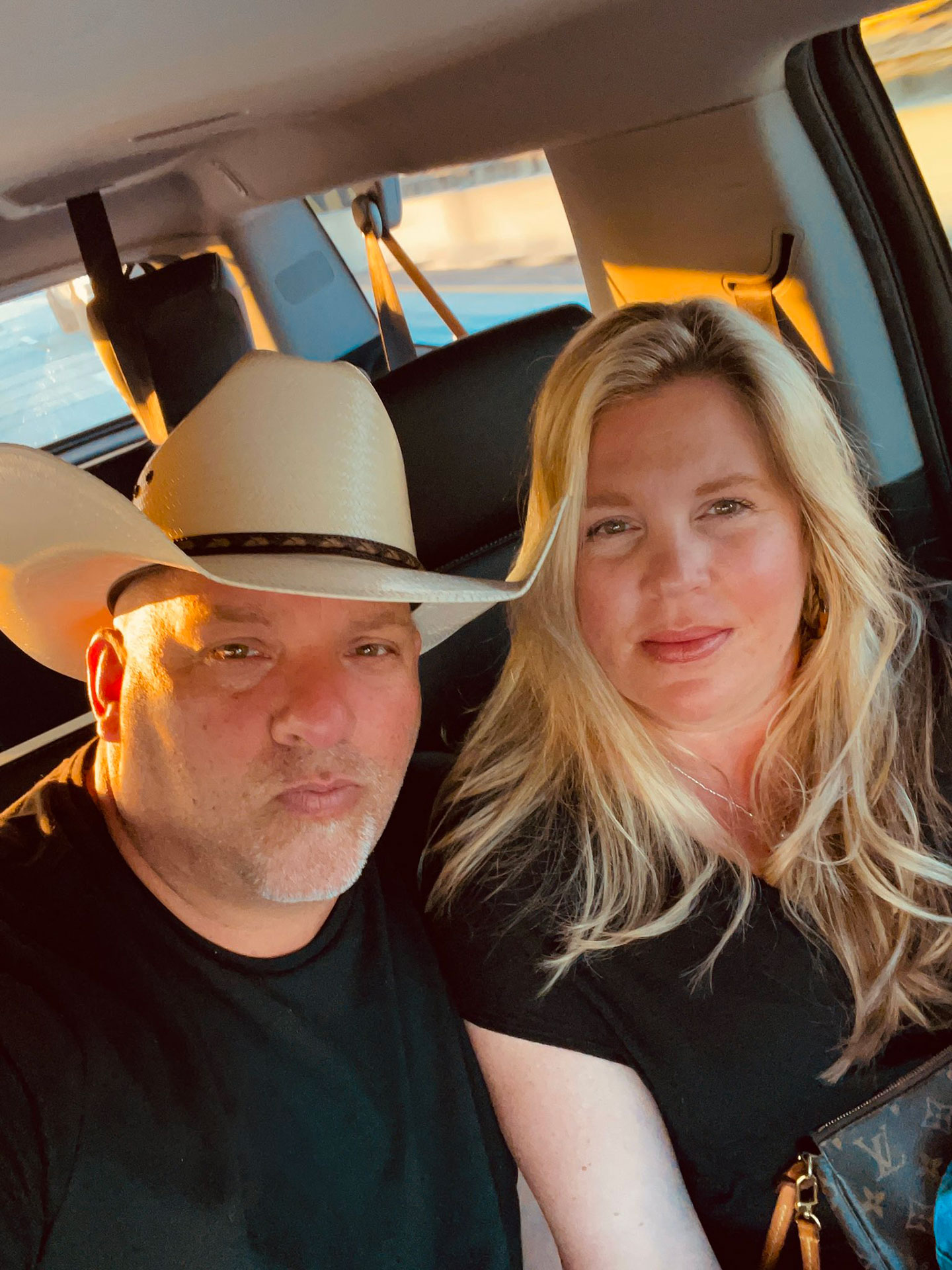
The SEC’s civil complaint named Jacqueline Burkhalter, Todd’s wife, as a relief defendant, together with The Burkhalter Ranch Corporation, Drive Properties LLC, TBR Supply House Inc. and Drive Gulfport Properties LLC. The SEC sought recovery of what it alleged were ill-gotten gains received by these relief defendants.
That terminology needs to be understood correctly. Jacqueline Burkhalter was not charged in Todd’s federal criminal prosecution, and naming somebody as a relief defendant in an SEC action is not the same as accusing that person of operating the fraud. I have seen plenty of photographs of Jacqueline while researching Todd’s social-media history, but appearing alongside your spouse in photographs or enjoying a shared lifestyle does not establish knowledge of a Ponzi scheme.
What the court records do establish is that Jacqueline had connections to several entities that became relevant to the SEC’s efforts to recover assets. The SEC complaint identified her as CFO and Corporate Secretary of The Burkhalter Ranch, and associated her in various management or corporate capacities with other relief-defendant entities. The federal court subsequently placed recoverable assets connected with the defendants and relief defendants under the authority of the receiver.
This distinction matters because there is a temptation after a Ponzi scheme collapses to look at everyone photographed beside the perpetrator and assume they must have known what was happening.
Evidence has to come before association.
The evidence against Todd Burkhalter, however, is no longer ambiguous. He pleaded guilty to wire fraud. Prosecutors established that investor money was being diverted into personal expenditure while the supposed investment activity generating those extraordinary returns wasn’t occurring as represented.
And this is why lifestyle marketing deserves scrutiny whenever it becomes part of an investment pitch.
The yacht doesn’t prove the investment works.
The Land Rovers don’t prove the investment works.
The luxury motorcoach doesn’t prove the investment works.
Private jets, Cabo holidays, beautiful properties and photographs of a successful family don’t prove the investment works either.
They prove only that somebody had access to enough money to pay for those things.
In this case, federal investigators followed the money backwards. What investors may once have interpreted as evidence that Todd Burkhalter knew how to create wealth became evidence of something entirely different.
The lifestyle wasn’t proof of the investment’s success. Investor money was helping pay for the lifestyle.
Buying Credibility
There is another layer to the Drive Planning story that deserves attention because it demonstrates how easily borrowed credibility can influence the way investors perceive an opportunity.
Drive Planning wasn’t operating entirely inside its own financial bubble. Its branding appeared alongside organisations people already knew and trusted. In 2024, the company paid $400,000 to the Tampa Bay Rays under a marketing agreement that provided advertising and promotional rights. Todd Burkhalter proudly posted photographs from Tropicana Field showing Drive Planning advertising around the stadium, including highly visible signage behind home plate.
Think about what that looks like to an investor watching from the outside.
This isn’t some anonymous investment operation advertising from a spare bedroom. Drive Planning is behind home plate at a Major League Baseball game. The company logo appears in the same environment as established national brands. Television cameras repeatedly capture it. Clients can be entertained around professional sport. Everything about that association creates familiarity.
But familiarity is not due diligence.
There is no evidence that the Tampa Bay Rays were endorsing REAL, verifying Drive Planning’s investment activities or telling anyone that Todd Burkhalter’s financial products were legitimate. Drive Planning bought advertising. That distinction is critical. A legitimate organisation accepting advertising or sponsorship money from a company does not mean it has audited that company’s investment operation.
What happened after Drive Planning collapsed illustrates the point perfectly. The court-appointed receiver discovered the $400,000 payment and pursued recovery. The Rays ultimately returned $200,000, representing the portion for which marketing services had not been provided. The other $200,000 related to advertising that had already been delivered.
Professional baseball wasn’t the only sport carrying the Drive Planning name.

In February 2023, Sarah Fisher Hartman Racing announced Drive Planning as the primary sponsor of its USF2000 programme, with young driver Elliot Cox competing in the Drive Planning-branded No. 67 car. Burkhalter appeared directly in the announcement, saying the company was excited about the partnership and talking about Drive Planning’s values and its focus on success.
The relationship continued. In March 2024 — while the Ponzi scheme was still operating — the racing team announced an expanded Drive Planning sponsorship for the 2024 season, covering programmes in USF2000 and the 500 Sprint Car Tour. Burkhalter again provided the public-facing quote, describing Drive Planning as excited to enter another year of racing.
Once again, none of this means the racing team knew what was happening behind Drive Planning. There is no evidence before me to suggest that.
What it demonstrates is something far more useful for investors to understand.
Fraudsters can purchase proximity to legitimacy.
They can buy stadium advertising. They can sponsor racing cars. They can appear at prestigious events. They can pay for corporate hospitality. They can publish books, speak at conferences and surround themselves with successful people and respected organisations.
And every photograph generated by those relationships can later become marketing material.
This is why I never regard somebody standing beside a celebrity, athlete, politician or respected businessperson as evidence that an investment is legitimate. Nor does a company logo appearing inside a major sporting venue tell me anything about what is happening inside that company’s bank accounts.
Drive Planning could put its name behind home plate.
It could put its logo on a racing car.
Todd Burkhalter could stand beside all the visual evidence of a successful financial organisation.
What none of those things could prove was that the real-estate investments supposedly generating investors’ returns actually existed as represented.
That required following the money.
And when federal investigators finally did that, the credibility Drive Planning had spent years constructing began to collapse.
When The Illusion Collapsed
By March 2024, while Drive Planning was still bringing in enormous amounts of investor money, the Securities and Exchange Commission had started investigating.
That should have been the beginning of the end. Instead, according to federal prosecutors, Burkhalter and others continued soliciting tens of millions of dollars for REAL and the CORE Fund even after the SEC investigation was underway.
The timing matters because Drive Planning was still presenting itself publicly as a successful financial organisation. Its sales network was operating, investors were still being recruited and, as we have already seen, the company’s sports sponsorships and lifestyle imagery continued creating an outward appearance of prosperity.
Behind the scenes, however, the SEC was beginning to pull the operation apart.
On June 10, 2024, Drive Planning represented to regulators that it would stop accepting new REAL investments, stop making payments to REAL investors and stop paying sales commissions. Yet the SEC later alleged that a commission payment was made as late as June 21. By July, Burkhalter was communicating with Drive Planning’s sales force about the SEC’s examination of REAL, while the fundamental problem remained unchanged: according to regulators, the returns investors had been receiving depended upon money arriving from other investors.
Then the door finally closed.
On August 13, 2024, the SEC filed its federal civil action against Drive Planning and Russell Todd Burkhalter. The court immediately granted extraordinary emergency relief, including an asset freeze and the appointment of a receiver, Kenneth Murena, whose job was effectively to take control of the financial wreckage, preserve assets and determine what could ultimately be recovered for investors.
The following day, the SEC publicly announced what it believed it had uncovered: a $300 million real-estate Ponzi scheme affecting more than 2,000 investors. At that stage, $300 million was the regulator’s estimate based on the evidence available in its civil investigation. The criminal investigation would later put the amount at approximately $380 million.
The SEC’s allegations stripped away almost every layer of the story investors had been sold.
The supposedly guaranteed returns weren’t being generated by successful real-estate bridge lending. New investor money was being used to make payments to existing investors. Investor funds had been diverted toward Burkhalter’s lifestyle. The SEC alleged that Drive Planning had raised hundreds of millions of dollars while lacking the legitimate profit-generating operation necessary to meet the enormous obligations it had created.
And the asset freeze reached further than Drive Planning itself.
The SEC named Jacqueline Burkhalter, The Burkhalter Ranch Corporation, Drive Properties LLC, TBR Supply House Inc. and Drive Gulfport Properties LLC as relief defendants. The court’s receivership order authorised the receiver to pursue and preserve assets attributable to investor funds, including recoverable assets connected with those relief defendants.
Again, that does not mean every relief defendant was accused of participating in the securities fraud. The distinction matters. The SEC was following assets and attempting to recover property it alleged had been acquired or funded through money flowing out of Drive Planning.
This is where a Ponzi scheme looks completely different depending on which side of the collapse you are standing.
Before August 2024, investors could see financial professionals, collateral sheets, quarterly payments, sporting sponsorships, luxury travel, successful salespeople and a founder apparently living the philosophy his company promoted.
After August 2024, a federal receiver was looking at many of those same things and asking an entirely different question:
How much of it was purchased with investors’ money, and how much could be recovered?
The marketing story was over.
Now investigators were following the money.
Guilty Plea And 20 Years In Federal Prison
By the time Todd Burkhalter stood before the federal court, this was no longer an SEC allegation about what might have happened inside Drive Planning.
Burkhalter admitted it.
On January 21, 2026, he pleaded guilty to wire fraud for masterminding the Drive Planning Ponzi scheme. The Department of Justice said the operation had defrauded more than 2,000 investors out of approximately $380 million between September 2020 and June 2024.
His plea agreement contained an important detail. The government had conditionally agreed to recommend a sentence of 17½ years in federal prison. But that recommendation was never binding on the judge. Federal sentencing remained in the hands of U.S. District Judge Tiffany R. Johnson, who could consider the sentencing guidelines, Burkhalter’s conduct, the scale of the losses and the impact on his victims.
On August 14, 2026, Burkhalter discovered what that distinction meant.
Judge Johnson sentenced him to 20 years in federal prison — the statutory maximum for the wire-fraud charge. He was also sentenced to three years of supervised release and ordered to pay $233,777,763.82 in restitution.
The government had conditionally agreed to recommend 17½ years.
The judge gave him 20.
That outcome matters because Burkhalter had accepted responsibility by pleading guilty and had entered into a plea agreement containing a sentencing recommendation below the statutory maximum. Even with that agreement in place, the court ultimately imposed the maximum prison term available for the offence to which he pleaded guilty.
For victims, of course, a prison sentence doesn’t rebuild a retirement account.
It doesn’t remove debts somebody took on because they were persuaded to borrow money to invest. It doesn’t recreate a child’s college fund or return the years an older investor may need to work because their savings disappeared.
Restitution orders matter, but an order requiring someone to repay hundreds of millions of dollars is very different from hundreds of millions of dollars actually being available to return. That is why the receivership and recovery of assets remain so important to the people Burkhalter defrauded.
There is, however, something significant about seeing this case reach sentencing.
Four years earlier, investors were being promised 10% every three months, backed by supposedly secure real estate. Todd Burkhalter was travelling, buying luxury assets and promoting a philosophy built around keeping more, making more and living more.
By August 2026, the REAL programme had been exposed as a Ponzi scheme, assets were being pursued through the receivership, and Burkhalter was facing the consequences of what he had built.
Twenty years in federal prison.
But Burkhalter wasn’t the only person inside Drive Planning who would be held criminally accountable.
And what happened to two other senior executives provides another important lesson about how federal prosecutors pursue the people surrounding a massive fraud.
Accountability Didn’t Stop With Burkhalter
Todd Burkhalter was the architect of the Drive Planning Ponzi scheme, but he was not the only person inside the organisation who ended up in federal prison.
That distinction is particularly important in a fraud of this size because once a Ponzi scheme collapses, attention naturally turns to the people surrounding the person at the top. Investors start asking about executives, salespeople, promoters and others who helped the business operate. But criminal responsibility does not arise simply because somebody worked for a fraudulent company or appeared alongside its founder.
In the Drive Planning case, federal prosecutors pursued evidence of what particular individuals actually did.

Former Drive Planning Chief Operating Officer David Bradford pleaded guilty to conspiracy to commit wire fraud for his role in the CORE Fund scheme. Prosecutors said Bradford helped create marketing materials used by Drive Planning’s sales agents to promote the tax-lien investment while investors were falsely being told their money was pooled, government-protected and fully collateralised.
Bradford was sentenced to four years and three months in federal prison, followed by three years of supervised release, and ordered to pay $4,297,878.16 in restitution.
Former Chief Administrative Officer Julie Edwards was also prosecuted, but for different conduct.
Edwards pleaded guilty to laundering proceeds of the Ponzi scheme. She was sentenced to two years in federal prison, followed by three years of supervised release, and ordered to pay $630,000 in restitution.
The differences between those sentences tell us something important.
Burkhalter received 20 years for masterminding the overall fraud. Bradford received 51 months for conspiracy to commit wire fraud relating to CORE. Edwards received 24 months for laundering proceeds.
Different conduct. Different charges. Different sentences.
Federal investigators didn’t simply prosecute everyone who worked for Drive Planning, and everyone who was prosecuted didn’t receive the same punishment. The evidence against each individual mattered.
That is an important lesson whenever a large Ponzi scheme collapses. Photographs with the founder, impressive job titles, commissions, attendance at events or association with the company may raise legitimate questions, but association alone does not establish criminal responsibility.
Prosecutors have to establish what somebody actually did, what they knew, what representations they made, what financial transactions they participated in and whether the available evidence supports criminal charges.
The Drive Planning prosecutions demonstrate that accountability can extend beyond the architect of a Ponzi scheme — but it follows the evidence, not simply the organisational chart.
There is another detail worth understanding about the sentences.
Burkhalter, Bradford and Edwards will serve their federal prison sentences without the possibility of parole. Federal parole has been abolished for these offences. That does not necessarily mean every day of the imposed sentence will be spent physically in prison, because federal law provides limited mechanisms through which eligible prisoners may earn credits or reductions, but there is no traditional parole board that can simply release them early.
For investors watching from the outside, the outcome therefore provides a much broader picture of accountability than Burkhalter’s 20-year sentence alone.
The man at the top went to prison.
So did two senior executives whose own conduct resulted in separate federal convictions.
And that becomes particularly relevant when looking at another massive fraud investigation where victims continue asking who else, if anyone, could ultimately face consequences.
Goliath Ventures.
Why Todd Burkhalter’s 20-Year Sentence Doesn’t Predict Christopher Delgado’s
When Todd Burkhalter received 20 years in Federal Prison, I immediately thought about another case I have spent considerably more time investigating: Christopher Delgado and Goliath Ventures Inc.
I also know what many Goliath investors will naturally ask.
If Todd Burkhalter received 20 years for a $380 million Ponzi scheme, what does that mean for Christopher Delgado?
The responsible answer is: Burkhalter’s sentence does not provide a reliable prediction of Delgado’s sentence.
There are certainly similarities in the underlying patterns. Both cases involve enormous investment frauds, hundreds of millions of dollars, representations about how investor money was supposedly being used, payments that helped maintain the appearance of a functioning investment operation, and allegations or admissions involving investor funds being diverted away from their represented purpose.
Those similarities make the cases useful to examine together from an investor-education perspective.
They do not make the criminal cases sentencing equivalents.
Burkhalter pleaded guilty to one count of wire fraud in connection with the Drive Planning scheme, which federal prosecutors said took approximately $380 million from more than 2,000 investors. That offence carried a statutory maximum sentence of 20 years. His plea agreement contained a conditional government recommendation of 17½ years, but the recommendation did not bind the court.
On August 14, 2026, U.S. District Judge Tiffany R. Johnson sentenced Burkhalter to 20 years — the statutory maximum available for the offence to which he pleaded guilty. He was also ordered to serve three years of supervised release and pay more than $233 million in restitution.
Christopher Delgado’s criminal case has a materially different structure.
Delgado pleaded guilty to conspiracy to commit wire fraud, wire fraud and money laundering in connection with Goliath Ventures. The two fraud offences each carry maximum sentences of 20 years, while the money-laundering offence carries a maximum of 10 years. Collectively, that creates a statutory maximum exposure of 50 years.
But this is where I want to be particularly careful.
Fifty years is not a prediction of Delgado’s sentence.
Nor does Burkhalter receiving 20 years establish some kind of sentencing benchmark that Delgado must now meet or exceed.
Federal sentencing does not work by comparing the headline dollar amount of one Ponzi scheme with another and assigning a corresponding number of years in prison. The court dealing with Delgado must sentence Delgado for Delgado’s conduct, under the statutes, sentencing framework and circumstances applicable to his case.
That can involve the offences of conviction, applicable Sentencing Guidelines calculations, loss and victim findings, criminal history, acceptance of responsibility, the terms of the plea agreement, cooperation where applicable, arguments from prosecutors and the defence, victim impact information and the broader statutory sentencing factors considered by the judge.
Even the headline numbers require care. Different federal proceedings can measure money differently — amounts raised, investor losses, customer contributions, restitution, proceeds and forfeiture are not necessarily interchangeable figures. Comparing two cases simply because both involve hundreds of millions of dollars can therefore create a false sense of mathematical precision.
The comparison is useful for understanding patterns of investment fraud. It is not useful as a sentencing calculator.
That distinction will become particularly important after Delgado is sentenced.
If Delgado receives less than 20 years, that would not automatically mean the court considered his conduct less serious than Burkhalter’s. If he receives 20 years, it would not mean the two cases were considered equivalent. And if he receives more than 20 years, it would not mean the judge simply looked at Burkhalter’s sentence and increased it because Delgado pleaded guilty to additional offences.
These are separate defendants, prosecuted in separate cases, before different federal judges, involving different charges and sentencing records.
The Drive Planning case also demonstrates why the focus should not be exclusively on the person at the top. Burkhalter received 20 years, but David Bradford and Julie Edwards were separately prosecuted and imprisoned for their own conduct. Their sentences were very different because their conduct, charges and roles were different.
That does not tell us whether anybody else associated with Goliath Ventures will be charged. It would be irresponsible to make that prediction. What it does demonstrate is the principle that federal accountability can extend beyond the architect of a fraud when prosecutors have evidence supporting charges against other participants.
What Burkhalter’s case demonstrates about Delgado’s eventual sentence is something narrower.
A defendant can plead guilty, avoid trial, have the government conditionally recommend a sentence below the statutory maximum — and still ultimately receive the maximum prison sentence available for the offence of conviction.
For investors following the Goliath case, that is worth understanding. But it should not be transformed into a prediction about what U.S. District Judge Gregory A. Presnell will do when Delgado appears for sentencing.
Delgado is currently scheduled to be sentenced on October 21, 2026, at 9:00 a.m. in Orlando.
Until that hearing takes place, nobody outside the court can responsibly tell victims whether the sentence will be 10 years, 20 years, 30 years, or something else entirely.
There will undoubtedly be speculation.
I would rather stick to the evidence.
Todd Burkhalter received 20 years. Christopher Delgado’s sentence has yet to be decided — and his case must ultimately stand on its own.
The Warning Signs Were There Before The Handcuffs
It is easy to identify a Ponzi scheme after the SEC has frozen the assets, a federal receiver has taken control, executives have pleaded guilty and the man at the centre of it has been sentenced to 20 years in prison.
The useful question is harder: what could an investor have noticed before any of that happened?
Drive Planning gives us an unusually good case study because many of the warning signs weren’t hidden deep inside bank records. Some were sitting directly inside the investment proposition. REAL was marketed as a safe, low-risk investment requiring a minimum $20,000 investment while guaranteeing 10% every 90 days. Investors were told their money would finance bridge loans to real-estate developers and that those loans were fully collateralised by real estate and other assets.
That combination should trigger questions immediately.
High returns normally require investors to accept higher risk. When somebody offers an unusually high return while simultaneously telling you the investment is safe, guaranteed and protected by tangible assets, those assurances shouldn’t make you ask fewer questions. They should make you ask more.
Where are the loans? Who are the developers? What properties secure them? Who independently valued those properties? Where are the registered security interests? What happens if a developer defaults? And, most importantly, what independent evidence exists that the activity supposedly generating the return is actually taking place?
In Burkhalter’s case, prosecutors eventually established that REAL was operated as a Ponzi scheme from its inception. The first $50,000 REAL investment arrived in September 2020, and at least $21,000 was used to repay an earlier Drive Planning investor. Some collateral sheets contained fictitious valuations, and some properties supposedly protecting investors didn’t even exist. (Department of Justice)
Then there was the sales structure.
Drive Planning agents received 4% commissions on REAL investments, including money investors rolled into new 90-day terms. Agents reaching $2.5 million in sales could qualify for the President’s Club; $4.5 million could earn entry into the Chairman’s Council. Those programmes included all-expenses-paid trips for two to destinations such as Toronto, Cabo San Lucas and the Greek Isles. (SEC)
Again, commissions don’t automatically make an investment fraudulent, and they don’t establish that every salesperson knows something is wrong.
But investors should always know how the person recommending an investment gets paid.
If somebody earns thousands of dollars when you invest — and can earn additional rewards by selling millions more — that financial incentive belongs in your due diligence. Their enthusiasm may be genuine, but it is not independent evidence that the investment works.
Another warning sign was the encouragement to find increasingly aggressive ways to participate. Federal prosecutors say victims were encouraged to use savings, retirement accounts, lines of credit and money intended for children’s college funds, while Burkhalter encouraged some people to take early retirement distributions and borrow substantial amounts at high interest rates.
This is one of the lessons from this case I would want every prospective investor to remember.
Never confuse somebody helping you access money with somebody proving their investment deserves your money.
And then there was everything investors could see around Todd Burkhalter: the successful company, sporting sponsorships, luxury travel, Land Rovers, the Prevost motorcoach, Cabo, private jets and ultimately a yacht called Live More.
Those things can be incredibly persuasive because human beings naturally look for evidence that the person giving financial advice has achieved the success they are selling.
But wealth on display is not an audited financial statement.
A Major League Baseball advertisement isn’t regulatory approval. A racing sponsorship isn’t due diligence. A published financial book doesn’t verify an investment. A luxury motorcoach doesn’t prove profits. And a multimillion-dollar yacht certainly doesn’t demonstrate that the business supposedly paying for it is profitable.
Burkhalter’s case showed why that distinction matters.
The receiver is still working through the consequences today. The official receivership says total investor losses far exceed the value of assets recovered to date, and in July 2026 the receiver asked the court to approve final claim determinations and a plan for an initial distribution to eligible claimants.
So the story doesn’t really end with Todd Burkhalter receiving 20 years.
It ends with thousands of people trying to recover whatever remains after believing a story that, at the time, came wrapped in financial expertise, real estate, collateral, successful salespeople and visible wealth.
I have investigated hundreds of schemes, and the packaging changes constantly. Sometimes it is cryptocurrency. Sometimes artificial intelligence. Sometimes foreign exchange trading. Sometimes real estate.
The underlying questions don’t change.
Where is the money going? What independently verifies the returns? Who controls the funds? How are the promoters being compensated? What evidence exists beyond documents supplied by the people selling the investment? And if the person promoting it appears extraordinarily wealthy, can you independently establish where that wealth actually came from?
Todd Burkhalter spent years presenting a philosophy built around three promises:
Keep More. Make More. Live More.
More than 2,000 investors ultimately learned one of the most expensive lessons in financial fraud.
Never use the promoter’s lifestyle as proof that the investment works.
Disclaimer: How This Investigation Was Conducted
This investigation relies entirely on OSINT — Open Source Intelligence — meaning every claim made here is based on publicly available records, archived web pages, corporate filings, domain data, social media activity, and open blockchain transactions. No private data, hacking, or unlawful access methods were used. OSINT is a powerful and ethical tool for exposing scams without violating privacy laws or overstepping legal boundaries.
About the Author
I’m DANNY DE HEK, a New Zealand–based YouTuber, investigative journalist, and OSINT researcher. I name and shame individuals promoting or marketing fraudulent schemes through my YOUTUBE CHANNEL. Every video I produce exposes the people behind scams, Ponzi schemes, and MLM frauds — holding them accountable in public.
My PODCAST is an extension of that work. It’s distributed across 18 major platforms — including Apple Podcasts, Spotify, Amazon Music, YouTube, and iHeartRadio — so when scammers try to hide, my content follows them everywhere. If you prefer listening to my investigations instead of watching, you’ll find them on every major podcast service.
You can WORK WITH ME for dedicated access to my time and investigative services — including private consultations, scam-risk reviews, sponsored investigations, support sessions, livestream scam breakdowns, and interviews. I’m also available for SPEAKING ENGAGEMENTS, where I share first-hand experience from years of exposing large-scale fraud, investigating scams, and supporting victims.
“Stop losing your future to financial parasites. Subscribe. Expose. Protect.”
My work exposing crypto fraud has been featured in:
- Coffeezilla 2026): Featured in the investigation exposing the alleged $328M Goliath Ventures Ponzi scheme
- Bloomberg Documentary (2025): A 20-minute exposé on Ponzi schemes and crypto card fraud
- News.com.au (2025): Profiled as one of the leading scam-busters in Australasia
- OpIndia (2025): Cited for uncovering Pakistani software houses linked to drug trafficking, visa scams, and global financial fraud
- The Press / Stuff.co.nz (2023): Successfully defeated $3.85M gag lawsuit; court ruled it was a vexatious attempt to silence whistleblowing
- The Guardian Australia (2023): National warning on crypto MLMs affecting Aussie families
- ABC News Australia (2023): Investigation into Blockchain Global and its collapse
- The New York Times (2022): A full two-page feature on dismantling HyperVerse and its global network
- Radio New Zealand (2022): “The Kiwi YouTuber Taking Down Crypto Scammers From His Christchurch Home”
- Otago Daily Times (2022): A profile on my investigative work and the impact of crypto fraud in New Zealand



Leave A Comment