


“Their money was being used to make distributions… we used it for corporate events… we used it for personal spend… we used their funds to keep the company going.” — Christopher Delgado, former CEO of GOLIATH VENTURES
For years I’ve investigated GOLIATH VENTURES, speaking with victims, reviewing court records, examining company documents, analysing cryptocurrency transactions and documenting what ultimately became one of the largest Ponzi schemes prosecuted in Central Florida.
Following Christopher Alexander Delgado’s guilty plea, WFTV investigative reporter Daralene Jones released more than five and a half hours of exclusive interviews recorded shortly after his arrest. Until now, very few people have watched the entire series from beginning to end. Most have only seen brief television segments or selected clips shared online.
This investigation is different.
Rather than reacting to headlines or isolated soundbites, I’m going to examine every interview, every transcript, and every significant admission Christopher makes. Along the way, we’ll identify every individual he names, reconstruct the timeline of events, follow the movement of investor funds, and compare his explanations with court records, victim testimony, regulatory actions, and the evidence gathered throughout my own investigation.
One of the most significant revelations comes when Christopher openly acknowledges that GOLIATH VENTURES never had its own investment product. Instead, the company relied on a white-label platform known as My Liquidity Partners (MLP)—something I documented long before these interviews were released. Even more remarkably, Christopher admits that investor money was used to pay distributions, fund company operations, cover personal spending, and finance extravagant corporate events, rather than generating genuine investment returns. Those admissions alone make these interviews an invaluable piece of evidence for understanding how the scheme operated behind the scenes.
Over the coming sections, we’ll slow everything down. Rather than rushing through more than 5½ hours of footage, we’ll examine it one section at a time, converting Christopher’s own words into a structured investigative record. Every important timestamp will be preserved, every person he identifies will be documented, every claim will be assessed against independently available evidence, and every contradiction will be highlighted where the facts warrant it. Where Christopher discusses other individuals, I’ll distinguish between his allegations, documented facts, and matters that remain unresolved, ensuring the investigation remains accurate and evidence-driven.
This isn’t intended to be a transcript, nor is it a reaction to a television interview. It’s a forensic examination of Christopher Delgado’s own account of how GOLIATH VENTURES was built, how it attracted more than a thousand victims, how hundreds of millions of dollars flowed through the company, and why the operation ultimately collapsed.
Each section below includes the original WFTV interview before my analysis begins, allowing you to watch Christopher’s words in full before reading the evidence-based breakdown that follows. By the time we’ve finished all five interviews, we’ll have transformed more than five and a half hours of footage into what I hope becomes one of the most comprehensive public analyses of the GOLIATH VENTURES Ponzi scheme ever published.
Editor’s Note (July 2026): At the time this investigation was written, WFTV had published a five-part interview with Christopher Delgado lasting approximately 5½ hours. Those interviews were reviewed in full and used as the basis for this analysis. Since publication, the videos have been removed from YouTube. This article remains as a documented analysis of Christopher Delgado’s statements while those interviews were publicly available.
Part 1: The CEO Opens Up
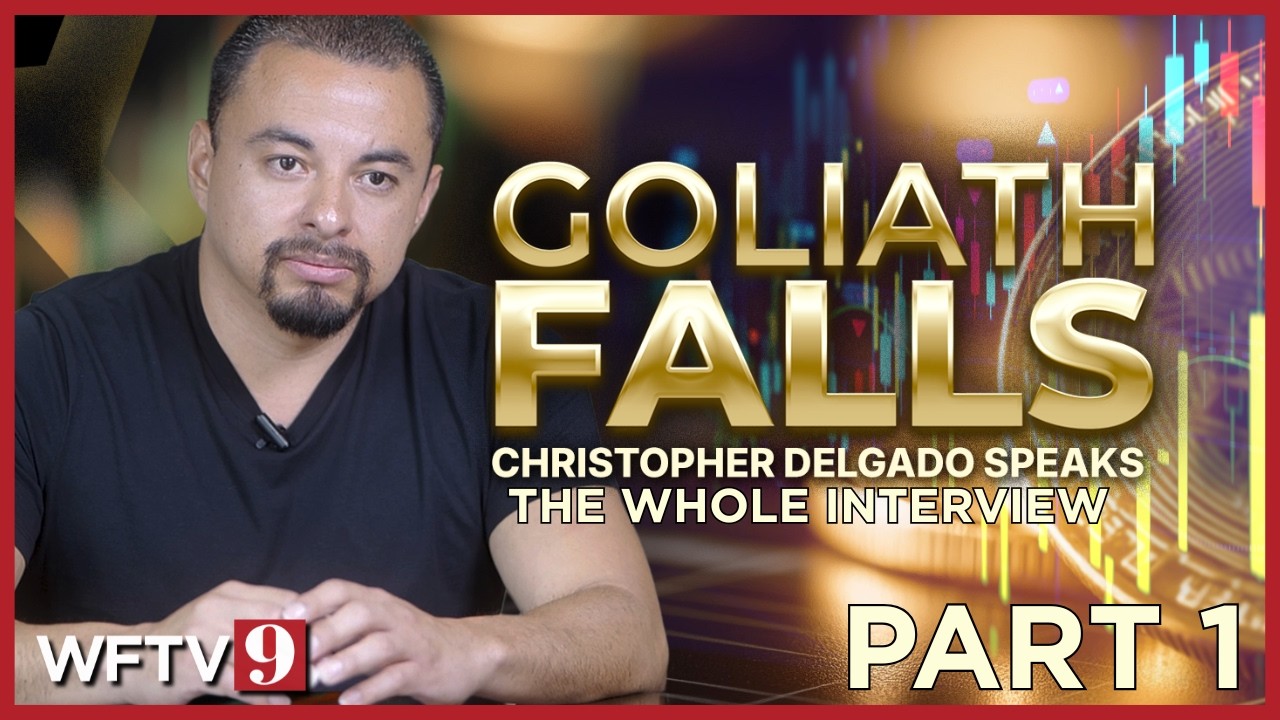
The first interview begins with an important introduction from WFTV investigative reporter Daralene Jones, who explains that these interviews were recorded over several weeks while Christopher Delgado was on home confinement following his arrest. She also reveals that, just days after WFTV aired its initial reporting, federal investigators subpoenaed the complete interview footage. Daralene makes it clear that Christopher names numerous individuals throughout the interviews, but because those claims had not been independently verified at the time, WFTV deliberately chose not to identify them in its broadcasts. That editorial decision reflects responsible journalism and provides important context before Christopher begins telling his version of events.

Rather than sitting in a television studio, Christopher invites Daralene into his Luxury Florida Home. As the cameras move through unfinished rooms filled with unopened furniture and partially completed renovations, Christopher explains that the remodelling came to an abrupt halt because GOLIATH VENTURES was “bleeding money.” He tells Daralene that he no longer had the funds to continue the renovations because investor payouts and outstanding company expenses had become overwhelming. He specifically mentions the company’s lavish Christmas celebration at the Fontainebleau Miami Beach, describing it as another significant financial burden that remained unpaid while the business struggled to stay afloat.
This opening immediately establishes a recurring theme that appears throughout the interviews. Christopher repeatedly describes a company suffering severe financial pressure while simultaneously maintaining an image of success through luxury events, expensive branding and an executive lifestyle designed to project confidence. That contrast between public perception and financial reality becomes one of the defining patterns running throughout the entire GOLIATH VENTURES story.
Christopher then explains how the company received its name. He says he wanted a brand that conveyed strength, dominance and invincibility, recalling the biblical story of Goliath as a figure people feared rather than challenged. Ironically, he recounts a conversation with his father, who warned him that Goliath ultimately fell. Looking back, Christopher reflects on how prophetic that warning became as regulators, investigators, journalists and victims gradually dismantled the company he believed had become untouchable.
As the conversation turns toward the structure of the business, Christopher begins distancing himself from several operational decisions. He describes how minimum investment thresholds, accredited investor requirements, and revised contracts were introduced as the company evolved, claiming these changes were necessary because activities were occurring outside his direct supervision. Those explanations become significant because they begin shifting responsibility toward other people inside the organisation, a pattern that continues throughout the remaining interviews.
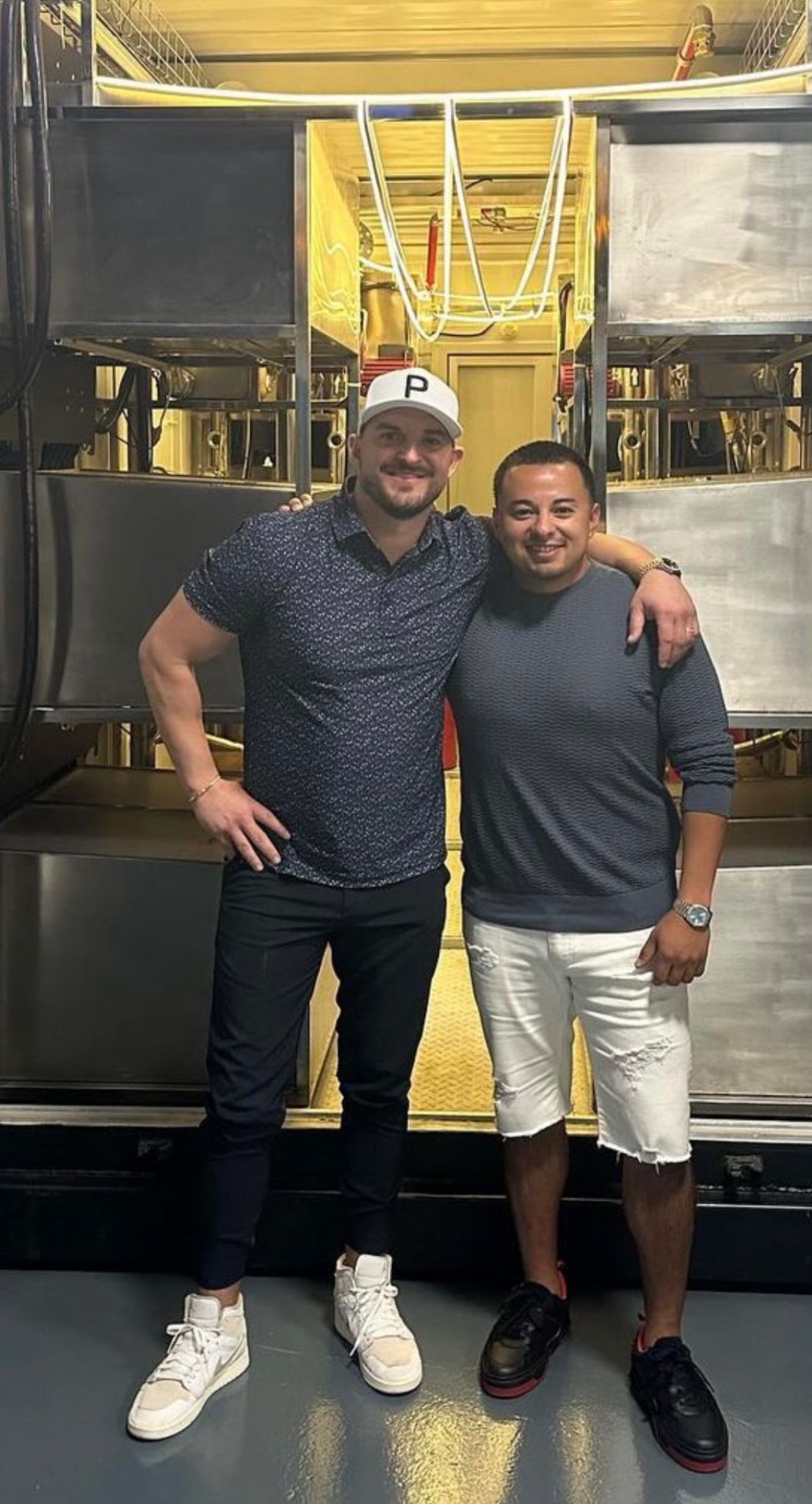
One of the earliest names introduced is Nick Petrillo, whom Christopher identifies as playing a central role in developing a process that allowed retirement funds to be invested into GOLIATH VENTURES. According to Christopher, investors could legally move money from retirement accounts, including 401(k) plans and pensions, into specially structured limited liability companies before the funds were transferred through Madison Trust and ultimately invested with GOLIATH VENTURES. Christopher repeatedly insists that the mechanism itself was legal, while emphasising that he was not the architect of the strategy and that these initiatives were being driven by others within the organisation.
Christopher also describes how the company’s network of approximately 12 to 13 directors expanded GOLIATH VENTURES far beyond his immediate circle. Friends introduced family members, colleagues recruited workmates, and eventually professionals including firefighters, police officers, teachers and nurses became investors. According to Christopher, these directors had strong financial incentives to bring additional capital into the company through override commissions, creating a recruitment culture that continually sought new investors.
As I listened to this section of the interview, one observation immediately stood out. Christopher spends considerable time explaining how money entered GOLIATH VENTURES, yet provides almost no detail about how that money was supposed to generate legitimate investment returns. Instead, the discussion focuses on attracting capital, moving retirement funds into the business and expanding the investor base. That distinction becomes increasingly important as the interviews progress and Christopher begins making admissions about where investor money was actually being spent.
Following The Money Begins
As the interview moves deeper into the financial mechanics of GOLIATH VENTURES, Christopher begins making some of the most significant admissions of the entire series. Rather than describing a profitable investment fund generating consistent external returns, he paints a picture of a company constantly balancing incoming investor money against mounting financial obligations. For anyone trying to understand how GOLIATH VENTURES ultimately collapsed, this section provides valuable insight into the mindset of the company’s leadership during its final months.
Christopher explains that after making what he describes as the last full investor distribution in October 2025, his attention shifted almost entirely towards securing two enormous investment commitments. One involved an existing investor who, according to Christopher, intended to move US$50 million of personal wealth into GOLIATH VENTURES. The second was an even larger institutional opportunity worth approximately US$200 million, which Christopher believed would fundamentally transform the business.
According to Christopher, these deals represented what he considered the company’s last opportunity to survive. He tells Daralene that if the US$200 million commitment had been completed, it would have attracted hundreds of millions of dollars more from institutional investors and allowed GOLIATH VENTURES to gradually move away from retail investors altogether. Looking back with the benefit of hindsight, this explanation reveals just how dependent the business had become on attracting increasingly larger sums of new capital rather than demonstrating a proven track record of sustainable investment performance.
Christopher also claims that GOLIATH VENTURES had established its own investment fund during late 2024, although he struggles to recall the exact timeline. He says the company slowly transferred money into that fund whenever cash flow permitted, explaining that if the business had “an extra million or two,” those funds would be moved into the investment structure. That statement raises an obvious question. If investor funds were supposedly being invested on behalf of clients from the beginning, why was the company only gradually funding its own investment vehicle using whatever money happened to be left over?
One of Christopher’s most revealing admissions follows shortly afterwards when he reflects on commission payments. He says that, in hindsight, he should have eliminated commissions during 2025, believing that decision might have saved the company. Instead, he explains that management continued paying commissions because they feared recruitment would stop if affiliates no longer had a financial incentive to bring new investors into GOLIATH VENTURES. That observation is particularly significant because it highlights how heavily the business relied on maintaining continuous investment inflows through its referral network.
Christopher then describes becoming suspicious that people inside the organisation were enriching themselves at the company’s expense. He says that by March or April 2025, he believed certain individuals were siphoning money from GOLIATH VENTURES while deliberately allowing Christopher himself to become the public face of the collapse. Throughout the interview he repeatedly suggests that others benefited financially while he would ultimately carry the blame. As the series progresses, Christopher names several individuals in support of that narrative. Those claims deserve careful examination alongside independently available evidence rather than being accepted at face value.
The interview then reaches one of its first major admissions regarding the company’s financial position. Christopher openly states that GOLIATH VENTURES became insolvent, explaining that by the time federal investigators became involved there was only around US$160,000 remaining in the company’s primary bank account. He also references additional funds held in Dubai, but the broader picture he presents is of a business that had exhausted almost all available liquidity despite having accepted hundreds of millions of dollars from investors.
Daralene then challenges Christopher on executive compensation, asking why senior figures within the company were receiving such extraordinary payments. Christopher responds that some of the lowest-paid senior members were earning approximately US$60,000 per month, while others were making substantially more. When asked why those salaries remained so high despite the investment fund not yet producing meaningful returns, Christopher attributes the compensation structure to the original business model inherited from My Liquidity Partners (MLP). According to him, GOLIATH VENTURES simply continued paying people the way they had become accustomed to being paid, even though the company had not established a sustainable source of genuine investment profits.
That explanation is one of the most important moments in the entire interview. Christopher effectively acknowledges that the compensation model survived even after the underlying business model no longer made economic sense. It reinforces a recurring pattern that will emerge repeatedly throughout these interviews: maintaining the appearance of success took priority over confronting the financial reality unfolding behind the scenes.
Luxury, Lifestyle And Investor Money
As Daralene walks through Christopher Delgado’s home, the interview shifts from abstract financial explanations into something far more tangible. The camera captures the physical evidence of the lifestyle surrounding GOLIATH VENTURES: luxury furniture, unfinished renovations, expensive artwork, designer goods, multiple garages, exotic cars and the kind of branding that helped create the illusion of unstoppable success.
Christopher describes an 11,000-square-foot home in an elite Florida community, explaining that people around him told him he needed to live there because he had become successful enough to belong in that environment. He admits the property cost approximately US$8.5 million and acknowledges that, looking back, part of him wishes he had continued renting because the company would still have had millions of dollars available. That statement matters because it shows how the lifestyle was not separate from the business. It became part of the business.
The same pattern appears when Daralene asks about the cars. Christopher discusses Rolls-Royces, an Escalade V and a highly customised Lamborghini. When asked directly how the Lamborghini was paid for, he answers plainly: “This car was paid for by Goliath.” That is one of the clearest admissions in the interview. Investor money was not simply being held, traded or carefully protected. It was funding the image of wealth that helped reinforce confidence in the company.
Christopher tries to explain this by describing the social pressure of wealthy circles. He says investors questioned why he was not flying private, why he did not own certain cars, why he did not live in the right community, and why he did not present himself in a way that matched the scale of the money being entrusted to him. In his telling, the luxury became a performance demanded by the environment around him. But from an investigative standpoint, the issue is not whether people expected him to look wealthy. The issue is that the performance was being funded by investor money while the investment engine itself was not producing the promised returns.
This is where the illusion becomes important. The cars, the mansion, the private flights, the watches, the parties and the charity events all created social proof. They made GOLIATH VENTURES look successful. They made Christopher look untouchable. They made investors believe they were dealing with someone who had already built extraordinary wealth. But according to his own admissions, the company was under severe financial pressure, relying on incoming funds, struggling with payouts and desperately trying to keep the machine alive.
That is the danger of lifestyle-driven fraud. The image does not merely decorate the scheme. The image becomes part of the mechanism.
Admissions That Change Everything
As the interview progresses, Daralene Jones begins asking the questions that go to the very heart of how GOLIATH VENTURES actually operated. Up until this point, Christopher Delgado has spoken about growth, branding, investor confidence and ambitious plans for the future. Now the conversation shifts to what was really happening with investor funds, and Christopher’s answers become some of the most significant admissions made anywhere in the five-part series.
Christopher explains that by October 2025 he already knew the company was in serious trouble. He says increasing criticism online triggered a wave of withdrawal requests from investors, forcing GOLIATH VENTURES to issue tens of millions of dollars in termination payments over a matter of weeks. According to Christopher, approximately US$70 million left the company during September and October 2025 as investors sought to recover their money. Whether those figures ultimately prove accurate or not, they illustrate the scale of the liquidity crisis confronting the business during its final months.
One of the most revealing exchanges comes when Daralene challenges Christopher about the company’s investment operations. She asks a straightforward question that every investor would expect to have a straightforward answer: if the company’s own investment fund was delayed, where was everyone else’s money?
Christopher’s response is remarkable.
He acknowledges that investor money was being used to make distributions. When pressed further, he admits that those funds were also used for corporate events, personal spending, and keeping the company operating. There is no complicated financial explanation, no reference to sophisticated trading strategies, and no discussion of profitable investments generating external revenue. Instead, Christopher openly describes a business using incoming investor funds to meet existing obligations while simultaneously funding its operations and executive lifestyle.
For anyone who has investigated Ponzi schemes, that admission immediately stands out. Throughout my own investigation into GOLIATH VENTURES, one recurring question kept surfacing: where were the genuine investment profits? Christopher’s explanation does little to answer that question. Instead, it reinforces what victims had feared for months—that investor capital was being recycled to sustain the operation while management searched for larger investors capable of keeping the business alive.
Christopher attempts to distinguish between intent and outcome. He repeatedly tells Daralene that GOLIATH VENTURES did not begin with the intention of becoming what it ultimately became. According to him, it started as friends and family investing alongside one another before growing far beyond anyone’s expectations. Whether readers accept that explanation is ultimately their own decision. What cannot be ignored are Christopher’s own admissions about how investor money was ultimately being used after the business began unravelling.
The interview also touches on something every victim will recognise: the failure to stop. Christopher admits that, looking back, the company should have ceased taking money much earlier. He specifically reflects on decisions made during 2025, acknowledging that continuing the operation only deepened the losses suffered by investors. That observation aligns with one of the most common characteristics seen in large-scale financial frauds. Once liquidity problems begin, operators often convince themselves that one more investor, one more deal, or one more breakthrough will solve everything. Instead, the financial hole simply becomes larger.
By this stage of the interview, a clearer picture is beginning to emerge. Christopher is no longer describing a thriving investment business. He is describing an organisation desperately trying to maintain appearances while searching for the capital needed to survive. As later interviews reveal, those efforts would ultimately fail, leaving more than 1,000 investors facing losses that federal prosecutors now estimate at at least US$250 million.
Responsibility, Restitution And The Human Cost
Towards the end of the first interview, Daralene Jones steers the conversation away from money and mechanics and focuses on something far more personal: the people whose lives were left in ruins. It’s a significant shift because, until this point, much of the discussion has centred on Christopher Delgado’s explanations for why GOLIATH VENTURES failed. Now, the focus turns to the victims.
Christopher accepts that, as Chief Executive Officer, the ultimate responsibility rested with him. Although he continues to describe mistakes made by others within the organisation and the pressures the company faced as it expanded, he repeatedly returns to one central point: he failed the people who trusted him. He expresses regret and apologises directly to investors, acknowledging that no explanation can undo the financial devastation experienced by hundreds of families.
When asked what became of the remaining assets, Christopher says he voluntarily disclosed his overseas bank accounts, cryptocurrency holdings and other property to the U.S. Department of Justice. He explains that investigators were told to take whatever could be recovered if it helped compensate victims. He estimates that several million dollars in assets had already been surrendered, while also recognising that this represented only a small fraction of the money investors ultimately lost.
Daralene then reads messages from victims whose lives had been turned upside down. One family had invested US$500,000, believing the monthly returns would support their retirement. Another had borrowed against the equity in their home. Others had transferred their retirement savings into GOLIATH VENTURES believing they had found a secure investment opportunity. Christopher’s response is emotional, but he acknowledges that an apology cannot restore lost homes, retirement savings or financial security.
Perhaps the most sobering moment comes when Daralene reveals that one victim had reportedly taken their own life following the collapse of GOLIATH VENTURES. Christopher says he was unaware of the death and appears visibly shaken. Whether or not he knew beforehand is almost secondary to the broader point. Financial fraud rarely ends when the money disappears. The consequences ripple through families, relationships, careers and communities, often for years after the headlines fade.
Christopher insists that making restitution has now become his life’s mission and says that, if given the opportunity following any prison sentence, he intends to dedicate himself to repaying victims. Whether that proves achievable remains to be seen. With federal prosecutors now identifying more than 1,000 known victims and losses of at least US$250 million, the scale of the financial harm presents an enormous challenge that extends well beyond any individual promise.
The first interview concludes by revealing two very different realities. On one hand, Christopher presents himself as an entrepreneur whose business spiralled beyond his control. On the other, his own admissions confirm that investor money funded distributions, corporate expenses, luxury purchases and personal spending while the promised investment model failed to generate the returns investors believed were being earned. That contradiction will remain at the centre of this investigation as we move into the remaining four interviews, where Christopher expands on the people involved, the decisions that were made behind closed doors, and the events that ultimately brought GOLIATH VENTURES crashing down.
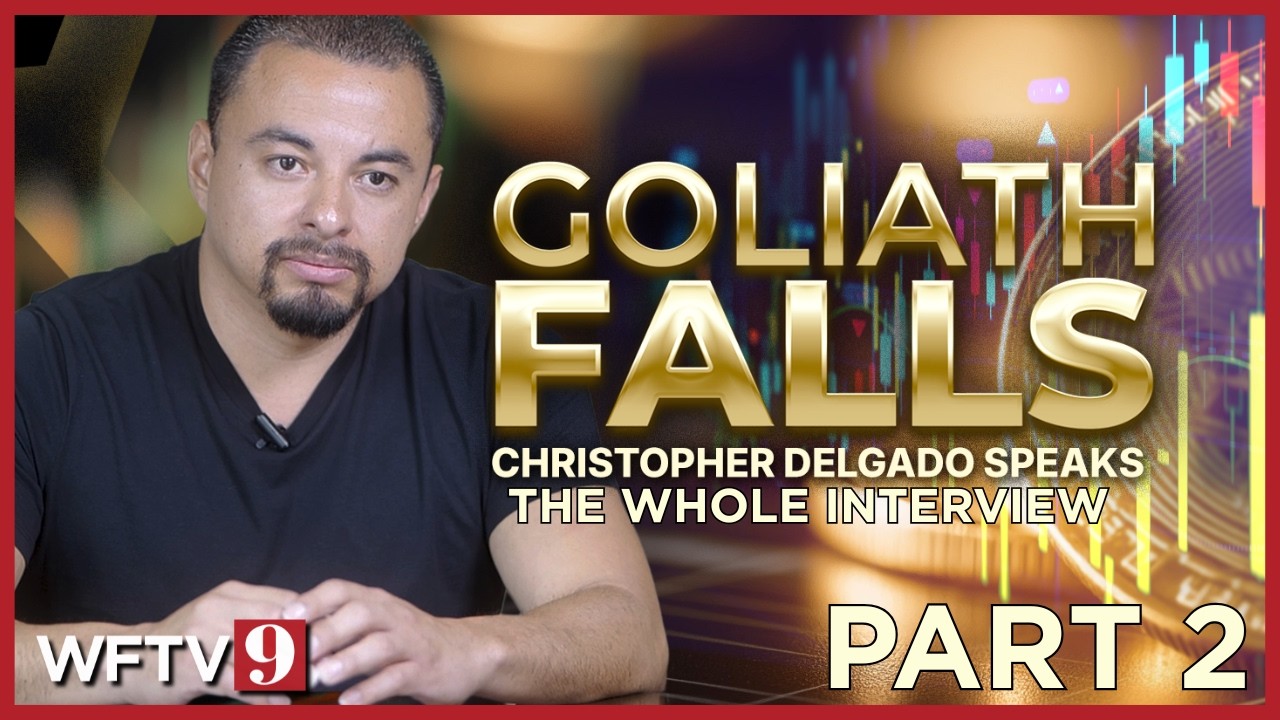
Part 2: The Dream, The Brand And The Beginning
If the first interview establishes how GOLIATH VENTURES collapsed, the second begins asking a different question: how did it become so successful in the first place? Rather than focusing on the final months of the company, Daralene Jones takes Christopher Delgado back to the beginning, exploring the events, relationships and decisions that transformed what he describes as a small investment opportunity among friends into a business that would ultimately attract more than 1,000 investors and at least US$250 million.
One of the recurring themes throughout this interview is Christopher’s desire to separate the original idea from what GOLIATH VENTURES eventually became. Time and again he describes an organisation that, in his view, drifted away from its original purpose as more money flowed into the business, more promoters became involved and increasingly ambitious expansion plans took shape. Whether that distinction withstands scrutiny is something we’ll continue examining as these interviews unfold, but it quickly becomes clear that Christopher wants viewers to believe there were effectively two versions of GOLIATH VENTURES—the company he says he intended to build, and the one that ultimately collapsed.
As we move through this second interview, I’ll again be paying close attention to the names Christopher introduces, the roles he attributes to them, and the decisions he claims were made by others rather than himself. Throughout Part 1 we saw a consistent pattern of Christopher accepting overall responsibility while simultaneously suggesting that key operational decisions were driven by trusted advisers, directors and senior members of his organisation. That pattern continues here, making it increasingly important to distinguish between Christopher’s own admissions, his personal recollections, and facts that can be independently verified through documents and other evidence.
This is also where the timeline begins to broaden. Rather than concentrating solely on the collapse, Christopher starts filling in the background that he believes explains how GOLIATH VENTURES grew so rapidly, why investors placed extraordinary trust in the company, and how the culture surrounding the business became just as valuable as the investment opportunity itself. As with the first interview, every significant claim deserves careful examination—not simply because Christopher is telling his story, but because his account can now be compared against the evidence gathered over the course of this investigation.
How GOLIATH Ventures Was Born
The second interview shifts away from the collapse of GOLIATH VENTURES and begins exploring its origins. Christopher Delgado describes a period in his life when he believed he had already achieved financial independence. After leaving Grant Cardone, he says he moved into international consulting, spending considerable time in Dubai and earning what he describes as extraordinary consulting fees. According to Christopher, there were days when he earned hundreds of thousands of dollars, allowing him to enjoy a lifestyle where work became optional rather than necessary.
Christopher paints a picture of someone who had already “made it.” Rather than searching for another business opportunity, he claims he simply wanted to spend more time with friends, travel together and enjoy life. That context becomes important because it forms the foundation of his argument that GOLIATH VENTURES did not begin as a calculated fraud, but as a venture that gradually evolved into something very different. Whether readers accept that explanation is another matter, but it is central to the narrative Christopher presents throughout these interviews.
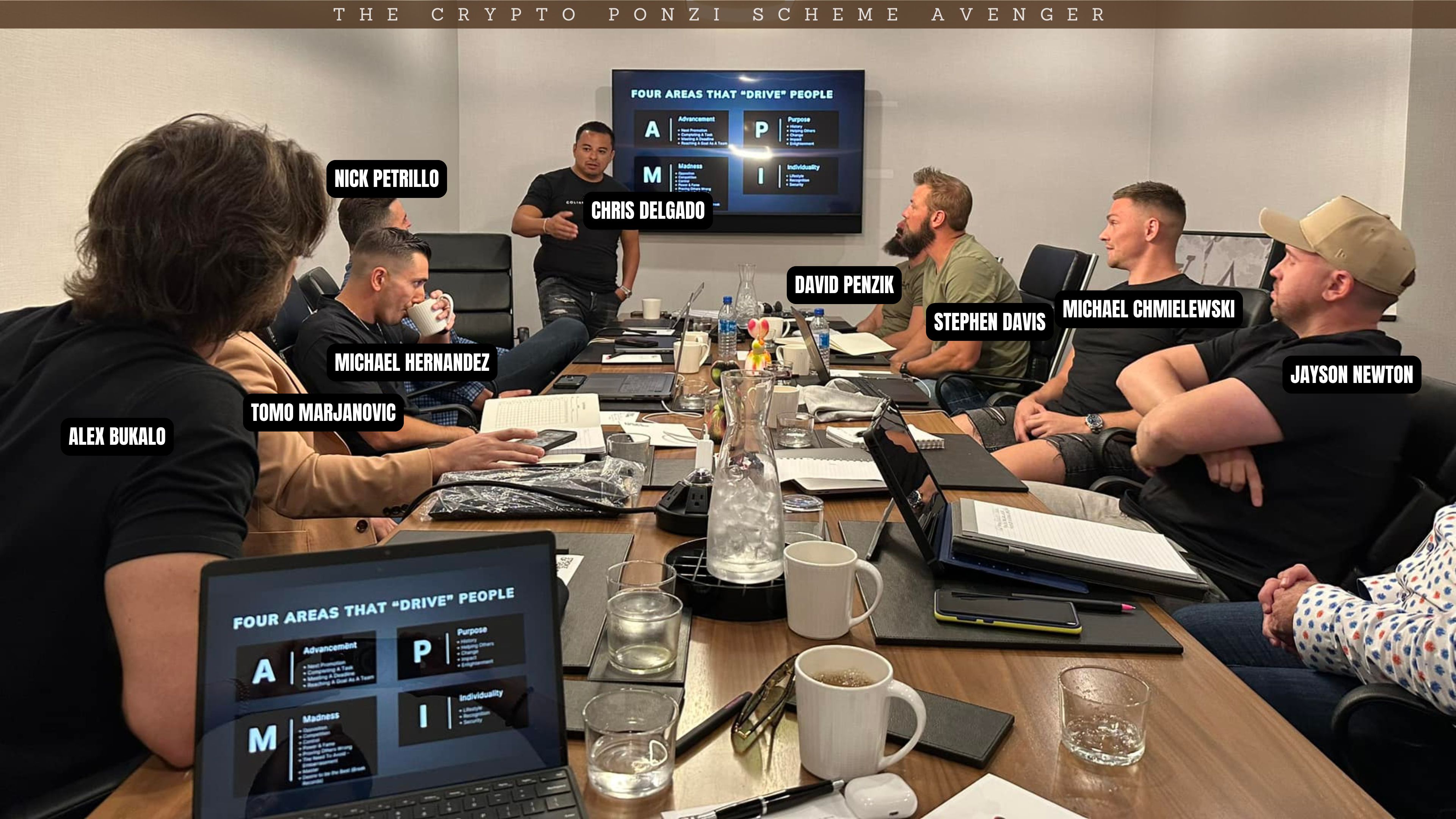
According to Christopher, the idea for GOLIATH VENTURES emerged during conversations with two close associates: Nick Petrillo and Jayson Newton, whom Christopher identifies as one of the company’s future sales leaders. Sitting together at AVA Mediterranean Restaurant in Winter Park, Florida, the three discussed the possibility of allowing friends and business associates to invest alongside them after Christopher experienced substantial success investing through My Liquidity Partners (MLP).
Christopher says he had already spent almost a year conducting due diligence on MLP, travelling repeatedly to Dubai, meeting its principals and risking his own money before ever introducing the opportunity to anyone else. Once his own investment began producing returns, Nick Petrillo reportedly wanted to receive referral commissions for introducing additional investors. Christopher says he agreed, insisting that, at the time, he viewed the arrangement as little more than friends sharing an opportunity rather than the beginnings of a large financial enterprise.
As more money flowed into the business, that informal arrangement quickly became something far more structured. Christopher explains that commission reports were divided between himself, Nick Petrillo and Jayson, with payments initially split equally before being adjusted according to who was generating the most business. He describes his own role almost as collecting a royalty because, in his words, the company was operating under his name, while Nick and Jayson were primarily responsible for attracting investors and building the organisation.
This section of the interview introduces an important pattern that continues throughout Christopher’s account. Time after time, he portrays himself as the public face of GOLIATH VENTURES while assigning significant operational responsibility to the people around him. Nick Petrillo is repeatedly described as the individual bringing doctors, medical professionals and high-net-worth contacts into the company, while Jayson is portrayed as driving sales and organisational growth. As these interviews continue, those distinctions become increasingly important because Christopher consistently argues that the business expanded far beyond what he originally envisioned, with key decisions increasingly influenced by those closest to him.
From Friends And Family To Millions
Christopher repeatedly returns to the same argument throughout the second interview: GOLIATH VENTURES began with what he describes as “pure intentions.” According to his account, there was no grand business plan, no sophisticated corporate structure and no ambition to build an investment empire. Instead, he says the original concept was simply to allow friends to invest alongside one another after his own success with MLP.
Christopher explains that before GOLIATH VENTURES existed, he was already receiving substantial referral commissions from introducing investors to My Liquidity Partners. He tells Daralene that those commissions alone were generating between US$50,000 and US$75,000 per month in passive income. He says he had travelled to Dubai, met the people behind MLP, invested his own money and spent almost a year satisfying himself that the opportunity was legitimate before recommending it to anyone else.
According to Christopher, everything changed when Nick Petrillo wanted to receive a share of the referral commissions generated by people he introduced. Christopher says he agreed because, at the time, he viewed it as little more than friends helping friends. Looking back, he insists he never saw those early conversations as the foundation of a company that would eventually attract hundreds of millions of dollars from investors.
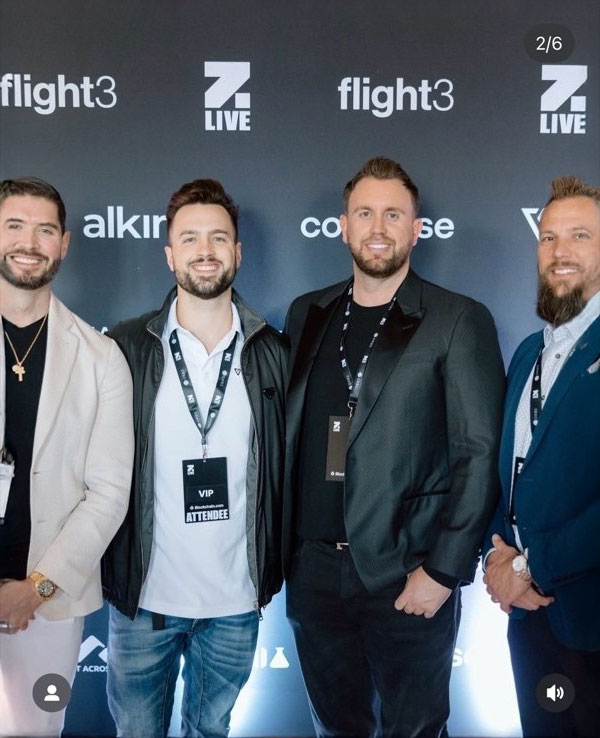
Christopher then describes what he considers the birth of GOLIATH VENTURES. He recalls meeting Nick Petrillo and Jayson Newton, whom he identifies as Jay, at AVA MediterrAegean Restaurant. According to Christopher, it was Nick and Jayson who proposed creating a business that would manage investments under the GOLIATH name. Nick, he says, believed he could bring in doctors and other high-net-worth contacts, while Jayson would focus on leading sales and expanding the organisation. Christopher portrays himself as agreeing to provide the brand while making one condition absolutely clear: he did not want to deal directly with investors.
That detail stands out because it contrasts sharply with the public image many investors came to know. Christopher says his only responsibility in those early days was calculating how referral commissions should be divided between himself, Nick Petrillo and Jayson Newton. Initially those commissions were split equally before being adjusted according to who was contributing the most business. Christopher describes his own share as being more like a royalty because the company was operating under his name rather than reflecting the work he says others were doing to recruit investors.
The pace of growth quickly exceeded everyone’s expectations. Christopher says the original goal was to finish the year managing around US$1 million in assets under management. Instead, within just a few months, investors had contributed more than US$5 million. He is careful to point out that this was not profit earned by the business but money entrusted to GOLIATH VENTURES by investors. Even so, he describes this early success as the moment he realised they had “something.”
Daralene then asks an obvious question that many readers will already be thinking. Did they have the licences required to manage investor money? Christopher responds by saying they continually sought legal advice and believed they were operating within an arrangement involving friends and family investing alongside one another. That explanation would eventually evolve into a much larger discussion about regulation, compliance and the legal structure underpinning GOLIATH VENTURES, but even at this early stage it becomes apparent that the business was expanding far faster than the informal concept Christopher says originally existed.
When Everything Started To Unravel
The second interview reaches a turning point when Christopher begins describing what he believes set GOLIATH VENTURES on the path towards collapse. According to his account, the catalyst was not an internal failure within GOLIATH itself, but the freezing of the My Liquidity Partners (MLP) platform upon which the company had built its entire business model. It is one of the most important sections of the interview because Christopher openly acknowledges that GOLIATH VENTURES did not have its own functioning investment product when the crisis began.
Christopher says he was told that MLP encountered problems because investor funds were allegedly being managed through personal cryptocurrency wallets rather than institutional accounts. According to the explanation he received, once those wallets exceeded approximately US$200 million, they came under scrutiny and were frozen by Binance while an audit was undertaken. Christopher is careful to say he cannot independently verify whether that explanation was true, admitting that even today he does not know whether My Liquidity Partners was a legitimate operation that encountered regulatory problems or a Ponzi scheme that ultimately collapsed under its own weight.
That uncertainty is significant because it highlights the level of dependence GOLIATH VENTURES had on a third-party platform. Christopher repeatedly describes MLP as the white-label product that underpinned the business during its early growth. When that product stopped functioning, GOLIATH VENTURES had no fully operational replacement ready to take its place.
Christopher explains that both he and Nick Petrillo were repeatedly assured their own proprietary investment product would soon be ready. Initially they were told it would launch in March 2023, giving them what they believed would be only a short period to bridge the gap while MLP remained frozen. Instead, those launch dates continued slipping. Month after month the promised product failed to materialise, leaving GOLIATH VENTURES accepting new investor money while waiting for an investment platform that, according to Christopher’s own account, simply wasn’t ready.
This is perhaps one of the most extraordinary admissions across the entire interview series. Christopher effectively acknowledges that the company continued raising millions of dollars from new investors despite not having its own operational investment product. Rather than stopping to reassess the business model, management continued moving forward in the belief that the delays were temporary and that everything would eventually fall into place.
Daralene then asks the obvious question: why not simply stop taking investor money?
Christopher’s answer provides a revealing insight into his mindset at the time. He says that, from the outside, stopping appears to be the logical decision, but insists the reality inside the business felt very different. According to him, he genuinely believed in the product they were trying to build, had already committed millions of dollars, and was surrounded by investors telling him how GOLIATH VENTURES had changed their lives. Shutting everything down would have meant accepting that the dream was over.
That explanation illustrates a recurring pattern seen in many large financial collapses. Operators often convince themselves that the next deal, the next product launch or the next influx of capital will solve the underlying problems. In Christopher’s telling, the continued acceptance of investor funds was no longer driven solely by profit, but by the belief that success was still just around the corner. The difficulty with that reasoning, however, is that every additional investor who joined during those delays increased the financial exposure of everyone already involved. As the promised product continued to be postponed, the gap between what investors believed existed and what was actually operating behind the scenes became progressively wider.
The White-Label Problem Nobody Knew About
One of the most significant revelations in the second interview is Christopher Delgado’s explanation of what happened when My Liquidity Partners (MLP) stopped functioning. This is not a minor detail buried within hours of footage. It goes directly to the heart of how GOLIATH VENTURES operated during its early growth and why investors deserve to understand exactly what they were investing in.
Christopher explains that GOLIATH VENTURES was effectively white-labelling the MLP investment product while simultaneously developing what he describes as its own proprietary fund. According to him, when MLP’s wallets were frozen in January 2023, management believed the disruption would only last a matter of weeks because their own investment product was expected to launch in March 2023. That timeline is crucial because it forms the basis of Christopher’s explanation for why the company continued accepting investor money.
Christopher says the explanation provided to GOLIATH VENTURES was that Binance had frozen MLP’s cryptocurrency wallets after they exceeded approximately US$200 million, allegedly because personal wallets were being used to manage institutional-scale funds. He claims that lawyers speaking with Binance and other parties confirmed substantial funds existed but remained frozen pending review. At the same time, Christopher openly concedes that he still cannot say with certainty whether My Liquidity Partners was a legitimate investment operation that encountered regulatory difficulties or a Ponzi scheme that collapsed under its own weight.
That admission is remarkable in itself. Here was the CEO of GOLIATH VENTURES acknowledging that the very platform underpinning his business may itself have been fraudulent, yet investors had continued placing millions of dollars into GOLIATH VENTURES while that uncertainty remained unresolved.
Christopher repeatedly emphasises that he and Nick Petrillo genuinely believed their own investment platform would soon replace the frozen white-label product. The problem, according to his account, was that every promised launch date slipped. What was initially expected to be a short delay became weeks, then months, while the company continued expanding at extraordinary speed.
Daralene Jones then asks what many readers will already be thinking.
Why didn’t you simply stop taking investor money?
Christopher’s response is perhaps one of the most revealing moments of the interview. Rather than saying the company was legally or contractually required to continue, he explains that they believed they had no choice. From his perspective, shutting the business down would have meant abandoning a project they were convinced would soon be operational. Looking back, he says it is easy for outsiders to argue that management should have stopped accepting new investors, but insists that people inside the company believed success was still within reach.
That answer deserves careful consideration because it highlights one of the recurring behavioural patterns seen in large-scale financial collapses. Operators frequently become convinced that the next breakthrough will solve the existing problems. A delayed product launch, a major institutional investor or an influx of fresh capital is viewed as the event that will rescue everyone already involved.
The difficulty, however, is that every new investor accepted during that period increased the company’s obligations while the underlying investment product remained unavailable. By Christopher’s own account, GOLIATH VENTURES continued growing at what he describes as “rocket ship” speed despite relying on a frozen white-label platform and a replacement product that simply wasn’t ready. That disconnect between what investors believed existed and what was actually operating behind the scenes is one of the most significant themes to emerge from these interviews, and it will continue resurfacing as Christopher expands on the decisions that ultimately led to the collapse of GOLIATH VENTURES.
The Moment Christopher Says He Should Have Stopped
As the second interview continues, Daralene Jones repeatedly asks Christopher Delgado the same fundamental question from different angles: if the investment product wasn’t ready, why didn’t you stop? It is one of the most important lines of questioning in the entire interview because Christopher is effectively being asked to explain why GOLIATH VENTURES continued accepting investor money while its own investment platform remained unfinished.
Christopher acknowledges that, looking back, stopping the business would have been the logical decision. He admits the proprietary fund kept missing one development milestone after another. First it was expected to launch in March 2023, then April, then June. When summer arrived in Dubai, key personnel reportedly left the country and the timetable slipped again until September. Meanwhile, GOLIATH VENTURES continued growing larger every month. Christopher openly accepts that new money continued flowing into the company despite there being no fully operational investment product.
Daralene presses him further, asking whether the decision to continue was driven by the lifestyle, the money, or a genuine belief that the business could still be rescued. Christopher rejects the suggestion that luxury motivated him at that stage. He says he was already financially successful before GOLIATH VENTURES existed, was living in what he describes as a modest home following his separation, and had already accumulated personal wealth through earlier ventures. Instead, he claims his motivation was an unwillingness to accept failure and a belief that the technology would eventually work as promised.
Whether readers find that explanation persuasive is ultimately up to them. What stands out to me is that good intentions cannot replace an operational investment product. By Christopher’s own account, the delays continued for months while new investors kept joining GOLIATH VENTURES. Every additional investment increased the company’s obligations, regardless of how confident management remained that the technology would eventually catch up.
Christopher then draws an interesting comparison with Bernie Madoff. He says that, in his view, Madoff’s operation ultimately collapsed because its overhead became unsustainable, not simply because markets turned against him. Christopher argues that GOLIATH VENTURES faced a similar problem, saying the company was paying too many people too much money, particularly through commissions and overrides. Looking back, he believes that by the time he attempted to reduce those payments, the organisation had grown too large and too many people had become financially dependent on the existing compensation model.
When I began my Ponzi scheme I believed it would end shortly and I would be able to extricate myself and my clients… Bernie Madoff
That comparison is striking because it comes directly from Christopher himself. Rather than distancing GOLIATH VENTURES from one of history’s most infamous Ponzi schemes, he identifies what he sees as a common operational weakness: an unsustainable cost structure fuelled by continual payouts. He also acknowledges that, despite holding the title of Chief Executive Officer, every attempt to reduce commissions or fundamentally change the business was met with resistance from people inside his own organisation.
This section reinforces a pattern that has emerged throughout the interviews. Christopher frequently accepts overall responsibility as CEO while simultaneously describing a business in which major decisions were heavily influenced by partners, directors and senior figures whose financial interests were tied to continued growth. As we move further into the series, he begins naming those individuals more directly and explaining the roles he believes they played in expanding GOLIATH VENTURES into a business handling hundreds of millions of dollars.
Charity, Status And The Orlando Machine
As Christopher continues explaining the rise of GOLIATH VENTURES, the interview moves beyond crypto, commissions and investment structures into something just as important: social credibility. GOLIATH did not grow on numbers alone. It grew because people saw Christopher Delgado surrounded by respected names, high-profile events, expensive venues, charitable causes and the kind of public visibility that made the company appear legitimate.
One of the central organisations Christopher discusses is Runway to Hope, a Central Florida charity supporting families affected by pediatric cancer. Christopher says his involvement began through friends whose child had cancer, and that the charity’s work resonated with him as a father. He describes wanting to become more involved, give generously and eventually position GOLIATH VENTURES as a major supporter within the community.
This matters because charitable giving can create a powerful halo effect. When a company gives large sums to respected causes, people often assume the money must be legitimate. They see the photos, the public acknowledgements, the sponsorships, the gala events and the wealthy people in the room. They assume due diligence has already been done by someone else. In reality, charity involvement can become one of the most effective ways for a fraudulent operation to buy trust, build influence and gain access to networks that would otherwise be difficult to penetrate.
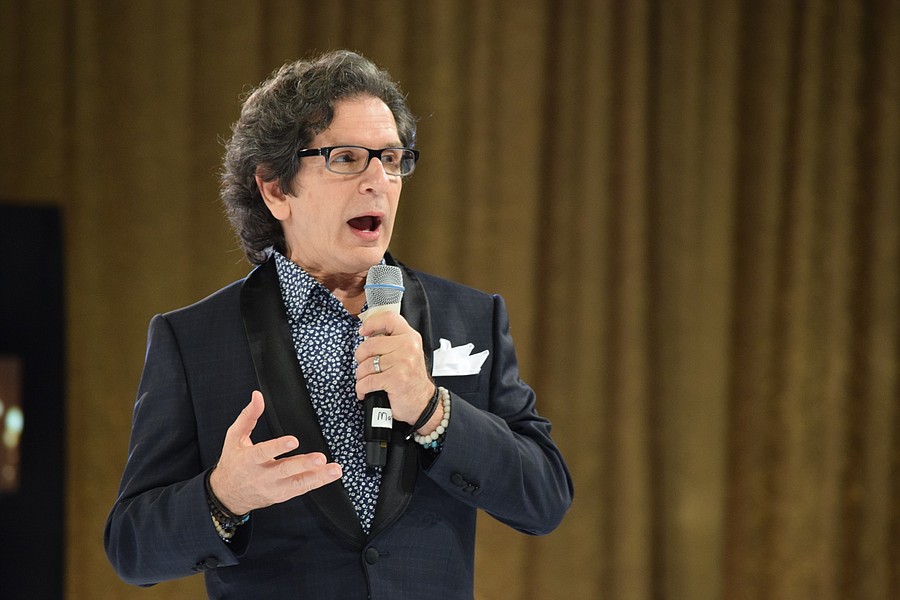
Christopher also discusses Mark NeJame, a well-known Orlando attorney, saying NeJame contacted him in January 2024 after hearing rumours that Christopher may have been under investigation. According to Christopher, that phone call made his heart sink. He frames the moment as the first time he realised powerful people in Orlando were talking about him, not just because of GOLIATH VENTURES, but because he had become the new centre of attention in certain wealthy social circles.
What stands out here is how Christopher describes the world around GOLIATH as a game of access, status and gatekeepers. He says he was getting close to wealthy families, charity circles and influential people without understanding the unwritten rules of how those circles operated. In his telling, he was not simply building a company; he was entering a social ecosystem where visibility, generosity and proximity to power mattered enormously.
That ecosystem helped GOLIATH VENTURES grow. Investors were not just looking at a spreadsheet. They were looking at the rooms Christopher entered, the people he stood beside, the charities that accepted his money and the lifestyle that surrounded him. The tragedy is that this public image appears to have been built while the underlying investment model was already under stress, the MLP white-label product had failed, and the company was still searching for a functioning way to generate the returns it had promised.
The more Christopher describes this period, the clearer the pattern becomes. GOLIATH VENTURES was not only selling an investment. It was selling belonging, status and proximity to success. That made the scheme far more persuasive than a simple crypto pitch. It became a social club, a business network and a public identity wrapped around an investment product that, by Christopher’s own admission, had still not been properly built.
When The Spotlight Turned Into Scrutiny
As the second interview draws towards its conclusion, the conversation shifts from the mechanics of GOLIATH VENTURES to the moment Christopher Delgado says he realised everything around him was beginning to change. Up until this point, he has described rapid growth, ambitious expansion plans and a belief that the company could still recover. Now, for the first time, he begins describing the point where public scrutiny started replacing public admiration.
Christopher reflects on decisions he wishes he had made much earlier. Looking back, he says that once My Liquidity Partners (MLP) froze, the company should have fundamentally restructured or even stopped altogether. Instead of carrying the existing business model forward year after year, he now believes GOLIATH VENTURES should have effectively started again from zero. According to Christopher, had management accepted the losses associated with MLP and ceased taking new investor money at that point, the legal and financial consequences may have been dramatically different. It is another moment where hindsight dominates the conversation, with Christopher acknowledging that the decisions made after the MLP failure only increased the company’s exposure.
The interview then turns to Christopher’s growing involvement with Runway to Hope, a respected Central Florida charity supporting children battling cancer and their families. He explains that friends whose child had received assistance through the charity introduced him to the organisation. Initially, he and those around him made relatively modest donations, but as GOLIATH VENTURES expanded, Christopher says his charitable giving became increasingly significant. By 2023, he wanted to become far more involved and even aspired to become the charity’s title sponsor, explaining that, as the father of three children, the cause deeply resonated with him.
From an investigative perspective, this is an important observation. Throughout history, many financial frauds have sought legitimacy through high-profile charitable work, sponsorships and community involvement. Supporting worthy causes is not, in itself, evidence of wrongdoing. However, public association with respected organisations often strengthens confidence in a business and can reassure prospective investors that they are dealing with successful, trustworthy people. In the case of GOLIATH VENTURES, Christopher’s increasing visibility within Orlando’s philanthropic community formed part of the broader image of success that surrounded the company.
Christopher then recounts receiving an unexpected telephone call from prominent Orlando attorney Mark NeJame in January 2024. Ironically, Christopher says he initially believed Mark was returning his efforts to become more involved with Runway to Hope. Instead, according to Christopher, the purpose of the call was very different. Mark reportedly told him he was hearing rumours around Orlando that Christopher and his business were under investigation. Christopher describes that moment as one where “my heart sunk,” realising for the first time that conversations about GOLIATH VENTURES were taking place far beyond his own organisation.
Christopher’s explanation of what followed provides a revealing glimpse into how he viewed himself during this period. Rather than focusing solely on the company, he describes becoming one of Orlando’s newest high-profile personalities. He talks about being young, wealthy, charismatic and increasingly recognised in influential social circles. Whether or not others shared that perception is ultimately beside the point. What matters is that Christopher believed his public profile had become inseparable from the GOLIATH VENTURES brand. Investors weren’t simply buying into an investment opportunity—they were buying into the success story embodied by its founder.
That illusion began to fracture on 3 September, when Christopher says he woke to around 100 text messages after the first major article about him and GOLIATH VENTURES was published. He describes the feeling as unsettling but admits he still believed the company could survive. Looking back now, that morning marks an important turning point in the story. The carefully constructed image of unstoppable success was beginning to give way to public questions, investigative reporting and the scrutiny that would eventually expose one of the largest Ponzi schemes in Central Florida.
Image Was Everything
As the second interview continues, Christopher Delgado offers an unusually candid insight into how status, appearance and perception became intertwined with the growth of GOLIATH VENTURES. Rather than describing luxury as a personal ambition from the outset, he portrays it as something he gradually adopted after entering circles where wealth was measured not just by success, but by the signals people projected to those around them.
Christopher says that when GOLIATH VENTURES first began attracting significant investors, he was perfectly content flying on commercial airlines and driving a Porsche Panamera. According to him, it wasn’t long before investors began commenting that the car looked like a “mom car” and questioning why someone managing substantial wealth wasn’t driving a Rolls-Royce. Similar conversations followed about designer watches, tailored suits and virtually every aspect of his appearance. Christopher describes these interactions as lessons in what he calls “the game” of wealth, where image carried almost as much weight as financial performance.
Looking back, Christopher claims he didn’t wake up one morning determined to buy luxury cars, expensive watches or a multi-million-dollar home. Instead, he says those purchases followed repeated suggestions from investors and influential people who believed someone managing hundreds of millions of dollars should project an image consistent with that responsibility. From his perspective, the luxury lifestyle evolved because the very people investing in GOLIATH VENTURES expected to see it.
Whether readers accept that explanation or not, it highlights an important feature of many large investment frauds. Image is rarely incidental. Luxury homes, exotic cars, designer clothing, exclusive events and high-profile social circles help create confidence. They reinforce the perception that the business is thriving and that its leaders have already achieved the success they promise to others. Investors often interpret those outward signs of wealth as evidence that the underlying investment strategy is working.
Christopher then recounts a charity auction that became another turning point in his understanding of Orlando’s wealthy social circles. During a fundraising event for Runway to Hope, he entered into what he believed was a friendly bidding competition with one of the city’s established philanthropists. Christopher says the bidding climbed into the hundreds of thousands of dollars, and he ultimately outbid the individual. At the time, he thought everyone would celebrate the additional money being raised for charity. Looking back, he believes he unknowingly embarrassed someone who occupied a respected position within Orlando’s philanthropic community.
Christopher repeatedly returns to the idea that he didn’t understand the unwritten rules governing wealth and influence. He says he grew up without family money, didn’t come from a trust fund, and had to learn the etiquette of affluent social circles as he went. He describes discovering that “money talks in silence,” explaining that true wealth was communicated through understated clothing, subtle behaviour and quiet confidence rather than obvious displays of success. He now believes his enthusiasm, competitiveness and willingness to outbid established benefactors created resentment among people who had long occupied those circles.
From an investigative perspective, this section is revealing for another reason. Christopher’s own account demonstrates how deeply GOLIATH VENTURES had become intertwined with social prestige. The company wasn’t simply attracting investors through marketing presentations or promised returns. It was embedding itself within charitable organisations, elite events and influential networks where personal reputation and public image could become powerful recruiting tools. Whether intentional or not, that visibility helped reinforce the perception that GOLIATH VENTURES was a thriving, respected enterprise at a time when, by Christopher’s own admission elsewhere in these interviews, its underlying investment model remained fundamentally dependent on a white-label product that had already failed.
Part 2 Observations
By the end of the second interview, a much clearer picture has emerged of how Christopher Delgado wants history to remember GOLIATH VENTURES. He does not describe a business that began as a deliberate Ponzi scheme. Instead, he presents a narrative of an ambitious company that grew too quickly, relied too heavily on My Liquidity Partners (MLP), paid excessive commissions, surrounded itself with the wrong people and failed to stop when the warning signs became impossible to ignore.
Whether that explanation is ultimately accepted is another matter.
Throughout this interview Christopher makes several significant admissions. He acknowledges that GOLIATH VENTURES relied on a white-label investment product, admits that the company’s own investment platform repeatedly failed to launch on time, accepts that commissions became unsustainable, and concedes that management should have fundamentally restructured or stopped taking new investor money much earlier. Perhaps most importantly, he openly admits that the company continued operating while searching for a solution that never arrived.
At the same time, another pattern becomes increasingly apparent. Christopher consistently portrays himself as someone who was misled, resisted or undermined by others. Throughout the interview he attributes major operational decisions to trusted business partners, senior directors, advisers and influential people around him. Those explanations may ultimately prove accurate, partially accurate or inaccurate, but they establish an important theme that continues throughout the remaining interviews. Christopher repeatedly accepts overall responsibility as Chief Executive Officer while simultaneously arguing that he was far from the only person directing the company behind the scenes.
From my perspective, one question remains largely unanswered after watching the first two interviews.
Where were the genuine investment profits?
Christopher spends considerable time discussing fundraising, commission structures, luxury branding, delayed technology, MLP, investor confidence and future plans. Yet very little time is devoted to demonstrating how GOLIATH VENTURES was consistently generating the returns promised to investors through legitimate external investment activity. That omission becomes even more significant when viewed alongside later court filings alleging that only a tiny fraction of investor funds ever reached genuine cryptocurrency liquidity pools, while the overwhelming majority was diverted elsewhere.
The second interview also reinforces another recurring observation. GOLIATH VENTURES wasn’t simply selling an investment opportunity. It was selling confidence. Confidence built through luxury homes, exotic cars, charitable donations, elite business organisations, expensive conferences, political connections and carefully cultivated social credibility. Those outward symbols of success encouraged investors to believe they were participating in something extraordinary. Christopher himself acknowledges that image became an increasingly important part of the business as it expanded.
As we move into Part 3, the interviews become noticeably more direct. Christopher begins identifying additional individuals, discussing internal conflicts in greater detail and explaining why he believes the collapse of GOLIATH VENTURES cannot be understood by looking at his actions alone. Those claims deserve careful scrutiny, particularly where they can be tested against documentary evidence, financial records and the testimony of victims whose lives were forever changed by one of the largest Ponzi schemes ever prosecuted in Central Florida.
Part 3: Inside The Inner Circle
The third interview marks a noticeable change in tone. During the first two instalments, Christopher Delgado spends much of his time explaining how GOLIATH VENTURES was founded, why he believed in My Liquidity Partners (MLP), and how the company expanded beyond what he originally intended. By Part 3, the conversation becomes considerably more personal. Christopher begins discussing relationships inside the company, internal disagreements and the individuals he believes exercised significant influence over GOLIATH VENTURES as it grew into a business handling hundreds of millions of dollars.
Rather than focusing solely on the mechanics of the investment operation, Christopher increasingly attempts to explain how decisions were made behind closed doors. He continues to accept that, as Chief Executive Officer, ultimate responsibility rested with him. At the same time, he argues that GOLIATH VENTURES had evolved into an organisation where senior directors, business partners and trusted advisers all played meaningful roles in shaping the company’s direction. Throughout this interview, those distinctions become increasingly important because Christopher repeatedly identifies individuals whom he says influenced major decisions while the company continued expanding.
One point is already becoming clear. These interviews are no longer simply about Christopher Delgado defending his own actions. They are becoming an account of who he believes helped build GOLIATH VENTURES, who benefited from its extraordinary growth, and who remained involved as the business moved ever closer to collapse. As always, those claims will need to be carefully assessed against documentary evidence, financial records and any future developments in the broader investigation.
The White-Label Strategy Finally Explained
One of the most valuable aspects of the third interview is that Daralene Jones slows the conversation down and asks Christopher Delgado to explain, in plain English, exactly how GOLIATH VENTURES was supposed to work. Rather than assuming viewers understand cryptocurrency terminology, she repeatedly asks Christopher to define concepts that many investors themselves may never have fully understood before handing over their money.
Christopher confirms something that has become one of the most important admissions in this entire interview series. GOLIATH VENTURES was originally white-labelling My Liquidity Partners (MLP). He explains that the original investor agreements were deliberately modelled on MLP’s documentation because GOLIATH was effectively rebranding another company’s investment product under its own name. Only later, when legal and regulatory concerns began surfacing, were those agreements reviewed by additional law firms and rewritten. According to Christopher, the company initially relied heavily on documentation that had already been created for MLP before attempting to build its own legal framework.
Daralene then asks Christopher to explain what My Liquidity Partners actually was. Christopher describes it as a cryptocurrency liquidity fund that had become enormously popular within Dubai’s crypto community. He says many well-known crypto personalities were invested in MLP, creating what he repeatedly calls a “golden stamp of approval.” In his view, the widespread participation of recognised figures convinced him that MLP was legitimate, even though he now acknowledges there were always rumours circulating that it may have been a Ponzi scheme after its operations froze.
To her credit, Daralene continues pressing for clarity. She asks Christopher to explain cryptocurrency liquidity pools in terms that an ordinary investor could understand. Christopher says he first encountered the concept while consulting for prominent crypto businesses in Dubai. He noticed that many wealthy crypto entrepreneurs held large amounts of Bitcoin, Ethereum and other digital assets without selling them, yet somehow continued funding staff, businesses and luxury lifestyles. Curious how that was possible, he says he was introduced to decentralised finance, or DeFi, where investors provide liquidity to cryptocurrency trading pools and receive a share of transaction fees generated by the network.
Christopher uses a banking analogy to simplify the concept. Just as a bank charges fees for transferring money between accounts, he says decentralised liquidity pools generate fees whenever cryptocurrency is exchanged. Investors who supply liquidity receive a portion of those fees. At least in theory, this is a genuine financial mechanism and one that exists throughout decentralised finance. The important question, however, has never been whether liquidity pools are real. The question is whether GOLIATH VENTURES actually invested investor money into those pools in the way investors believed.
The interview then reaches another critical admission. Christopher explains that the long-term objective was never to remain dependent on My Liquidity Partners. Instead, GOLIATH VENTURES planned to build its own proprietary liquidity platform, gradually transferring investor funds away from the white-label product and into infrastructure the company controlled itself. According to Christopher, that platform eventually became operational—but only two and a half years later, long after GOLIATH VENTURES had already collapsed. He describes pouring millions of dollars into software development while repeatedly being assured by developers that launch was only weeks away. Each promised deadline came and went, yet management continued believing success was just around the corner.

Christopher identifies two of the principal developers as Junaid Dar and Dariusz Kowalczyk, whom he says were based in Dubai. According to his account, he met Junaid Dar while consulting for one of Dubai’s largest crypto influencers, where Junaid Dar served as Chief Operating Officer. Both men were reportedly investors in MLP themselves, and Christopher says they believed they possessed the technical expertise needed to build GOLIATH VENTURES’ replacement platform. Whether those expectations were realistic is another matter entirely, but Christopher presents them as the architects of the technology he believed would ultimately replace the failed white-label model.
Perhaps the clearest explanation comes when Daralene asks Christopher what he actually means by “white labelling.” Christopher compares it to taking an existing product, placing your own branding on it, and presenting it as your own offering. In the case of GOLIATH VENTURES, he explains that investors saw the GOLIATH brand, while their money was ultimately being directed into My Liquidity Partners behind the scenes. That simple explanation may be one of the most revealing moments in the entire interview because it confirms, in Christopher’s own words, that GOLIATH VENTURES initially relied on another company’s investment product rather than one it had built itself.
The Commission Machine
As Part 3 continues, the interview moves beyond technology and into the compensation model that helped fuel GOLIATH VENTURES’ extraordinary growth. This is one of the most revealing sections in the entire interview because Christopher Delgado begins explaining not just how investors were recruited, but how senior insiders were rewarded for bringing in more money.
Christopher focuses much of this discussion on Nick Petrillo, describing him as one of the company’s most influential business partners. According to Christopher, Nick wasn’t simply earning commissions on investors he personally introduced. Instead, he says Nick received an override across the entire fund, allowing him to benefit from investment activity throughout the organisation. Christopher estimates those payments reached approximately US$4 million per month, explaining that Nick was receiving between 1% and 2% on a fund managing roughly US$300 million. Those figures, if accurate, illustrate the extraordinary sums flowing through GOLIATH VENTURES during its peak.
Daralene then asks an obvious question.
How did Nick attract so much money?
Christopher says many high-net-worth investors, particularly medical professionals, were offered what he repeatedly describes as “sweetheart deals.” Rather than receiving the standard returns available to ordinary investors, Christopher alleges that selected doctors were promised enhanced returns of 7%, 8% or even 8.5%, while also receiving additional incentives for introducing colleagues into the fund. According to Christopher, those doctors would then recruit fellow practitioners, with portions of the promised returns effectively being shared as referral incentives. It was, in his words, an increasingly aggressive recruitment model designed to accelerate growth.
Daralene follows up with perhaps the most important question of the exchange.
Where was the money coming from to pay those enhanced returns?
Christopher’s answer is remarkably direct.
He acknowledges that the money was coming from new investors. He explains that GOLIATH VENTURES had substantial investment inflows and that those incoming funds were being used to satisfy the growing obligations created by the compensation structure. When Daralene asks whether this amounted to “robbing Peter to pay Paul,” Christopher agrees that, by that stage, it had effectively become exactly that. This is one of the clearest admissions made anywhere in the interview series because it describes investor money being recycled to satisfy obligations created by earlier investment promises rather than being generated through profitable external investment activity.
Christopher says the company reached a point where the payout obligations had become too large. Looking back, he believes GOLIATH VENTURES should have frozen distributions, transferred approximately US$60 million into its own investment fund and fundamentally restructured the business before continuing. Instead, management continued relying on what he describes as the company’s reputation for always making distributions on time—or even early. According to Christopher, that reputation became one of GOLIATH VENTURES’ greatest strengths during its rise, but ultimately one of its greatest weaknesses because management became determined to preserve it at almost any cost.
Daralene then asks who made the decision to continue operating under that model.
Christopher’s response is significant.
Rather than placing responsibility solely on himself or on Nick Petrillo, he identifies three people as collectively understanding exactly what was happening: Christopher Delgado, Nick Petrillo, and Matt Burks. According to Christopher, all three were aware of the financial pressures facing the business and travelled repeatedly to Dubai in an effort to push the long-delayed investment platform into production. Looking back, Christopher summarises the problem with a striking observation: “We fed the greed too much—not only to the investors, but to the employees.”
That statement may be one of the most revealing admissions in the entire interview. Rather than blaming technology alone, Christopher acknowledges that the compensation model itself had become unsustainable. As more investors joined, larger commissions were paid, greater expectations were created, and the financial obligations continued expanding. By the time management recognised the scale of the problem, Christopher says the business had already reached a point where simply stopping no longer seemed possible.
Doctors, Kickbacks And The Recruitment Network
One of the most serious sections of Part 3 concerns Christopher Delgado’s claims about how money was raised through medical professionals. This is where the interview moves from general discussion about commissions into something much more specific: doctors allegedly receiving preferential returns and additional payments for introducing other doctors into GOLIATH VENTURES.
Christopher alleges that Nick Petrillo built a major part of his investor book by offering selected doctors what he calls “sweetheart deals.” According to Christopher, ordinary investors might receive around 5%, while certain doctors were allegedly offered 7%, 8% or even 8.5% at a time when those rates were not supposedly available to everyone else. He also claims that when those doctors introduced colleagues or people from their professional networks, some received additional payments or kickbacks tied to the money being brought into the company.
The significance of this allegation cannot be overstated. If true, it would mean some investors were not merely passive victims of a failed investment scheme; they may have also helped expand the network by introducing others while receiving undisclosed financial incentives. Christopher goes further, claiming that some doctors were receiving US$50,000 to US$60,000 per month through these arrangements. Those are extraordinary figures, and they deserve careful scrutiny through bank records, investor agreements, commission reports and any future court filings.
Daralene Jones presses Christopher on the obvious point: if the fund was frozen and investments were not generating the promised returns, where did the money for these payouts come from? Christopher answers directly. He says the money was coming from other investors. When Daralene asks whether that amounted to “robbing Peter to pay Paul,” Christopher agrees that, at that point, it did.
That admission is one of the most important in the entire interview series. It strips away the language of DeFi, liquidity pools, white-label funds and future technology, leaving the basic financial reality exposed. New investor money was being used to satisfy obligations to existing investors, directors and referral sources. That is the engine room of a Ponzi scheme, and Christopher is describing it in his own words.
Christopher then identifies the people he says understood the situation. He says the decision-making was collective, naming himself, Nick Petrillo and Matt Burks as people who knew what was happening while they continued trying to push the Dubai product live. In his telling, the problem was not just greed from investors demanding returns, but also greed from employees and insiders who had become accustomed to large monthly payments.
This section raises some of the most important unanswered questions in the entire GOLIATH VENTURES case. Which doctors received preferential deals? Which investors were paid referral incentives? Who approved those payments? Were they disclosed to the people being recruited? And how many victims entered GOLIATH VENTURES because they trusted someone who may have been financially rewarded for bringing them in?
The Extortion Claims And A Decision To Stay Silent
Another significant section of Part 3 centres on Christopher Delgado’s claims that he and GOLIATH VENTURES were the targets of an extortion campaign during 2025. According to Christopher, the threats arrived while the company was already under increasing public scrutiny and at a time when management was attempting to project confidence by sponsoring major business events in Orlando.
Christopher explains that GOLIATH VENTURES was serving as a major sponsor at a prominent entrepreneur conference held at the Gaylord Palms Resort. He says the company viewed the event as an opportunity to showcase its success because it was being held in its own backyard and attended by influential business figures. It was during that conference, Christopher claims, that he received messages demanding US$2 million in cryptocurrency, accompanied by threats to publish damaging personal information if payment was not made.
According to Christopher, the messages did not stop with him. He alleges the sender also targeted Nick Petrillo and several senior directors, attempting to create fear inside the organisation while public criticism of GOLIATH VENTURES was already growing. Christopher says he immediately convened an emergency leadership meeting and proposed informing investors about the alleged extortion attempt. In his view, transparency was the appropriate response because rumours were already circulating online and he believed investors deserved to know what was happening.
What happened next is particularly revealing.
Christopher says the proposal was put to a vote among the leadership team. According to his account, every director except one voted against informing investors. Christopher claims he wanted to send an email explaining that the online attacks were linked to an extortion demand, but says the majority believed remaining silent was the better course of action. If Christopher’s recollection is accurate, this represents another important example of major communications with investors being determined collectively rather than by Christopher acting alone.
Daralene Jones then asks a question that cuts through the discussion.
At this point, investors still didn’t know their money hadn’t actually been invested, did they?
Christopher’s answer is striking in its simplicity.
“Correct.”
He immediately follows that admission by explaining that GOLIATH VENTURES was still making monthly distributions, believing it could continue operating despite the growing pressure. That exchange may be one of the most significant moments in the interview because it confirms that, even while management debated how to respond to alleged extortion attempts and mounting public criticism, investors were still not being told that the company’s own investment product had not become operational as planned.
Christopher also confirms that he refused to pay the alleged ransom demand. He says the sender threatened to release personal allegations and photographs unless US$2 million in cryptocurrency was transferred by a specified deadline. Christopher insists the allegations were false and describes telling the sender to “go kick rocks,” believing there was nothing genuine they could expose.
Whether or not the alleged extortion occurred exactly as Christopher describes, it does not alter the larger issue confronting GOLIATH VENTURES at that point in time. By Christopher’s own admissions elsewhere in these interviews, the company was already relying on new investor money to meet existing obligations, its replacement investment platform remained unfinished, and investors still had not been told the full extent of the problems developing behind the scenes. Against that backdrop, the decision not to fully inform investors about the company’s financial position arguably became far more consequential than the alleged threats themselves.
Part 3 Observations
By the end of the third interview, one theme rises above everything else.
Christopher Delgado is no longer simply explaining what happened. He is attempting to explain why it happened.
Throughout the interview he repeatedly returns to the same narrative. He says GOLIATH VENTURES began with genuine intentions, that the collapse of My Liquidity Partners (MLP) forced the company into survival mode, that delays in developing its own platform created mounting pressure, and that a combination of greed, poor decision-making and misplaced trust ultimately pushed the business beyond the point of recovery.
Whether that explanation is accepted is ultimately for the courts, investigators and readers to decide.
What cannot be ignored, however, are Christopher’s own admissions.
He confirms that GOLIATH VENTURES initially operated using a white-label investment product, acknowledges that the company’s own platform repeatedly failed to launch, admits that new investor money continued flowing into the business while those delays persisted, and accepts that the compensation structure became unsustainable. He also agrees with Daralene’s characterisation that, by this stage, new investor money was effectively being used to satisfy existing obligations, while continuing to describe efforts to keep the company alive. Those are not observations made by outside critics—they come directly from Christopher himself.
Another significant feature of Part 3 is the number of individuals Christopher names. Nick Petrillo occupies much of the discussion, with Christopher alleging that Nick negotiated preferential arrangements for doctors, approved enhanced returns and oversaw a substantial recruitment network. He also names Matt Burks, Junaid Dar, Dariusz Kowalczyk, and several unnamed directors as people who, according to Christopher, played important roles in shaping GOLIATH VENTURES behind the scenes. Those claims are serious. Some may ultimately be supported by documentary evidence, while others may remain disputed. At this stage, they should be understood as Christopher Delgado’s account, not established findings of fact.
Perhaps the most striking moment comes when Christopher reflects on the culture inside the company.
He says, “We fed the greed too much.”
That statement is revealing because it goes beyond blaming technology, regulation or bad luck. Instead, Christopher acknowledges that the organisation had created expectations that became impossible to sustain. Investors expected monthly returns. Directors expected commissions. Senior figures expected overrides. Employees expected extraordinary salaries. The business had become dependent on maintaining all of those expectations simultaneously.
From my perspective, the third interview reinforces something I recognised very early in my own investigation.
The product was never the main attraction.
The attraction was confidence.
Confidence in Christopher Delgado.
Confidence in luxury.
Confidence in professional branding.
Confidence in respected businesspeople.
Confidence in doctors, lawyers, charity events and influential introductions.
Confidence that everyone else had already done the due diligence.
By the end of Part 3, that confidence has begun to unravel. Christopher’s own admissions reveal a company that was increasingly dependent on hope replacing evidence, future promises replacing present reality, and new capital replacing genuine investment performance.
The fourth interview moves even closer to the criminal investigation itself. Christopher begins discussing his interactions with investigators, his legal strategy, the federal case against him and why he believes other individuals remain central to the story of GOLIATH VENTURES. It is in those conversations that some of the most consequential claims of the entire five-part series begin to emerge.
Part 4: The Collapse And The Investigation
The fourth interview opens at a point where GOLIATH VENTURES was already in its final stages. Gone are the discussions about launching new products, expanding into institutional markets and building the next phase of the business. Instead, Christopher Delgado describes a company desperately trying to survive while believing that one final transaction could still change everything.
According to Christopher, the business was pinning its hopes on two enormous institutional opportunities. The first involved an existing investor from New York who, he says, wanted to transfer US$50 million of personal wealth into GOLIATH VENTURES. Christopher also claims the same individual was involved in assembling an additional US$200 million investment that would fundamentally restructure the company and transition it away from retail investors.
Christopher describes those proposed investments as the company’s final lifeline. He says the plan was to move investor funds into GOLIATH VENTURES’ own investment fund, begin generating genuine profits and gradually phase out retail investors during 2026. Looking back, he insists that if those institutional deals had closed before the end of 2025, GOLIATH VENTURES could have survived. It is another example of Christopher returning to a familiar theme throughout these interviews: the belief that success was always just one deal away.
Daralene Jones challenges Christopher on an obvious point. She reminds him that GOLIATH VENTURES’ own investment fund still wasn’t operating when these plans were unfolding. Christopher responds by saying the fund had finally become active during early 2025 and that he had personally begun placing money into it. Even so, much of his explanation remains focused on what the business expected to achieve in the future rather than what had already been successfully delivering returns to investors.
This section highlights one of the recurring patterns running throughout Christopher’s account. Rather than describing a business supported by proven investment performance, he repeatedly describes future opportunities that, if they had materialised, would supposedly have solved the existing problems. Whether discussing delayed software development, institutional investors or new capital raising, the narrative consistently returns to the same proposition: the company believed it could still recover right up until the very end.
Waiting For One Last Lifeline
As the fourth interview continues, Christopher Delgado describes what he believed was GOLIATH VENTURES’ final opportunity to survive. According to his account, the company’s last full investor distribution was made in October 2025. By then, he says management’s attention had shifted almost entirely towards securing two institutional investments that they believed would fundamentally transform the business. Rather than relying on continual retail investment, Christopher claims the plan was to restructure GOLIATH VENTURES around significantly larger pools of capital.
Christopher tells Daralene Jones that one existing investor from New York intended to transfer US$50 million of personal wealth into GOLIATH VENTURES. He further claims the same individual was involved in raising an additional US$200 million, with discussions already underway about creating an advisory council and completely restructuring the company from 1 January 2026. According to Christopher, the objective was to move investor funds into GOLIATH VENTURES’ own investment fund so it could begin generating genuine external profits rather than continuing under the existing model.
That explanation immediately raises an important question.
If the restructuring was scheduled for January 2026, why was GOLIATH VENTURES still accepting investor money throughout 2025 while waiting for those plans to materialise?
Christopher’s answer is consistent with the explanation he has given throughout the interview series. He insists management genuinely believed the institutional capital would arrive, that the company’s proprietary fund was finally becoming operational, and that the business could still be turned around before the financial pressure became irreversible. Once again, the future—not the present—is presented as the solution to the company’s problems.
Daralene repeatedly challenges Christopher on this point because the pattern has become impossible to ignore. Throughout these interviews, every major difficulty is accompanied by another promised breakthrough. First it was My Liquidity Partners (MLP). Then it was the proprietary investment platform. Then came the institutional investors. Each development was described as being only weeks or months away from solving the underlying financial problems.
Viewed through the benefit of hindsight, that pattern is striking. Rather than demonstrating a business already producing sustainable investment returns, Christopher describes an organisation continually depending on the next opportunity to rescue the current one. Every delay increased the pressure. Every missed deadline created larger obligations. Every new investor expanded the amount of money required for the business to survive.
From an investigative perspective, this section reinforces one of the central themes running throughout all five interviews. Hope repeatedly replaced evidence. Instead of stopping when the promised investment product failed to launch, management continued believing success remained just around the corner. Instead of restructuring after MLP froze, they waited for the next solution. Instead of winding the business down, they pinned their hopes on institutional investors who, according to Christopher, ultimately never completed the transactions that were expected to save GOLIATH VENTURES.
The Federal Investigation Closes In
As the fourth interview progresses, the conversation moves away from what Christopher Delgado believed might save GOLIATH VENTURES and towards what actually happened instead. Rather than discussing future expansion, Daralene Jones begins asking about the criminal investigation, Christopher’s arrest and the reality of living under federal supervision.
Christopher explains that, even after making what he says was the company’s final full investor distribution in October 2025, he still believed there was a path forward. His focus, he says, was almost entirely on completing the proposed US$50 million and US$200 million institutional transactions before the end of the year. In his mind, those deals represented the final opportunity to restructure GOLIATH VENTURES and move investors into what he believed would become a genuinely profitable investment fund.
History, of course, took a very different course.
Instead of closing institutional investment deals, Christopher found himself at the centre of a federal criminal investigation. During the interview he reflects on the early stages of the case, explaining that, at the time of the recording, prosecutors had filed a criminal complaint, but he had not yet been indicted. He describes appearing before a federal judge, being released on strict conditions and returning home wearing a court-ordered electronic ankle monitor.
Daralene asks him what home confinement actually meant in practice.
Christopher explains that he was restricted to his residence except for approved legal meetings, medical appointments and other activities authorised by the Court. He says he initially expected his travel simply to be limited within Florida but was surprised when the judge instead ordered home detention with electronic monitoring. According to Christopher, federal authorities were able to monitor his precise location throughout the day using the ankle monitor issued following his first court appearance.
The interview provides an unusual glimpse into Christopher’s personal circumstances during this period. Rather than sitting in a corporate office surrounded by employees, he is now speaking from his home while awaiting the next stage of the federal prosecution. The contrast with the earlier discussions about luxury branding, major conferences and institutional investors could hardly be greater. The image of rapid expansion has been replaced by one of confinement, uncertainty and an increasingly complex criminal case.
One small moment during the interview also stands out. While showing Daralene around his office, Christopher jokes awkwardly after she notices an FBI baseball cap among his belongings. He explains that it had been given to him by individuals who worked for the FBI. On its own, the exchange is relatively insignificant, but it illustrates how dramatically Christopher’s world had changed. Relationships that had once been sources of pride now carried very different meanings against the backdrop of an active federal investigation.
By this point in the interview series, the story is no longer about whether GOLIATH VENTURES could still survive. That question has already been answered. The focus has shifted to how the federal investigation unfolded, what evidence investigators collected, and Christopher’s attempts to explain the decisions that ultimately led him from the boardroom to a federal courtroom.
The House That Became A Symbol
One of the more revealing parts of the fourth interview has very little to do with cryptocurrency and everything to do with perception.
Daralene Jones tours Christopher Delgado’s 11,000-square-foot mansion, questioning him about why someone running an investment fund felt the need to purchase an US$8.5 million home while simultaneously asking investors to trust him with their life savings. Rather than denying the symbolism, Christopher openly admits that the purchase became part of the image he believed he needed to maintain.
According to Christopher, he had previously been living in Keene’s Pointe, but influential people within Orlando’s business community encouraged him to move into an even more exclusive neighbourhood. He says he was repeatedly told that someone of his perceived success “needed” to live there. Looking back, Christopher accepts that he was “keeping up with the Joneses,” describing the purchase as feeding “the narrative” that successful fund managers were expected to project.
The discussion then turns to one of the more troubling admissions in the interview.
Daralene points out that GOLIATH VENTURES’ contracts guaranteed investor returns. Christopher acknowledges that those guarantees eventually appeared in the agreements, but claims they were added because investors demanded them. According to him, many prospective investors insisted that if GOLIATH was so confident in its investment strategy, it should guarantee the returns in writing. Looking back, Christopher now concedes that guaranteeing investment returns was “the biggest red flag” imaginable in an investment contract.
Christopher then makes another remarkable observation.
He says that very few investors ever asked difficult questions.
According to his account, almost nobody requested to inspect cryptocurrency wallets, verify trading activity, review the company’s internal operations or independently confirm how the returns were being generated. Instead, Christopher says many investors became upset only when GOLIATH VENTURES attempted to conduct an external audit. He recalls receiving calls from investors insisting they didn’t care what the company was doing with their money so long as the monthly distributions continued arriving on time.
Whether every investor shared that attitude is impossible to know, but Christopher’s recollection illustrates a broader lesson that extends far beyond GOLIATH VENTURES. Consistent payouts can create a false sense of security. When people receive regular returns, many stop asking how those returns are actually being generated. Due diligence is gradually replaced by confidence, and confidence eventually replaces verification.
As I watched this section of the interview, one contradiction stood out above all others.
Christopher now acknowledges that guaranteed returns should have been an obvious warning sign. Yet at the time, GOLIATH VENTURES continued promoting those guarantees while presenting itself as a sophisticated cryptocurrency investment business. Combined with the luxury home, high-profile events, charitable donations and carefully cultivated public image, those guarantees became another part of the credibility that persuaded more than 1,000 investors to believe their money was being placed into a legitimate investment operation.
The Money Finally Ran Out
One of the most revealing moments in the fourth interview comes when Christopher Delgado explains how GOLIATH VENTURES finally became insolvent. Up until this point, he has repeatedly described future investment opportunities that he believed would save the business. Here, however, he acknowledges that those opportunities never materialised quickly enough.
Christopher says that, even after the company’s own investment fund became operational during late 2024, only relatively small amounts of money could be transferred into it because GOLIATH VENTURES was still trying to meet existing obligations. According to him, if the company had an extra US$1 million or US$2 million, those funds would be moved into the new investment platform, but the majority of available cash continued being consumed by the existing business. Looking back, Christopher says this was the point where he should have eliminated commissions entirely, believing that drastic decision might have given the company enough breathing room to survive. He immediately acknowledges the dilemma, however: cutting commissions would likely have caused the recruitment network to collapse almost overnight.
Christopher then makes another significant claim.
He says that by March or April 2025, he had begun suspecting that people around him were siphoning money from the company. According to Christopher, senior figures knew the true financial position of GOLIATH VENTURES and understood that exposing the situation would implicate themselves as well. He alleges that, rather than bringing the problems to light, some individuals instead focused on extracting as much money as possible while allowing Christopher to remain the public face of the company. These are serious allegations made by Christopher during the interview, and they have not been established by the criminal proceedings against him.
Daralene Jones then asks the question every victim has been waiting to hear.
When did GOLIATH VENTURES become insolvent?
Christopher answers directly.
He says that by the time federal authorities intervened, there was only around US$160,000 remaining in the company’s primary bank account. Christopher says that money belonged to him personally and was ultimately sent to the IRS, while separate Dubai accounts held around US$700,000. He contrasts those relatively small balances with what he describes as tens of millions of dollars that had previously flowed through the company.
The discussion then turns to salaries and commissions.
Christopher says that some of GOLIATH VENTURES’ senior people were earning extraordinary monthly incomes, estimating that even the lowest-paid senior figure was receiving around US$60,000 per month. Asked why those payments were so high, Christopher explains that GOLIATH simply carried forward the same compensation structure it had inherited while white-labelling My Liquidity Partners (MLP). According to him, management felt trapped because those inside the organisation had become accustomed to receiving those levels of compensation and expected them to continue indefinitely.
Christopher finally identifies October 2025 as the moment he personally accepted that GOLIATH VENTURES was finished. He says that after making the company’s last major distribution, the online criticism had become overwhelming and there simply wasn’t enough money left to continue. Although partial distributions were still made during November 2025, Christopher admits the business no longer had sufficient funds to meet all of its obligations. In one of the more emotional moments of the interview, he says he told himself he just needed to make it to the Christmas party, believing it would be his final opportunity to say goodbye before everything came crashing down.
The interview concludes this section with Christopher recalling the moment his lawyers informed him that the U.S. Department of Justice had formally begun investigating him. He says he was in Dubai at the time and immediately became fearful about being outside the United States. The future he had spent years trying to build had now been replaced by something very different: a federal criminal investigation that would ultimately lead to his guilty plea for operating one of the largest Ponzi schemes prosecuted in Central Florida.
Part 4 Observations
By the end of the fourth interview, Christopher Delgado’s account has shifted almost entirely away from explaining how GOLIATH VENTURES grew and towards explaining why he believes it collapsed. Rather than denying the central facts, Christopher repeatedly acknowledges decisions that, viewed collectively, paint a picture of a business that continued operating long after its underlying model had become unsustainable.
Several admissions stand out.
Christopher accepts that the company continued accepting investor money while waiting for a proprietary investment platform to become operational. He says commissions remained in place because management feared recruitment would collapse if they were removed. He acknowledges that new investor money continued funding the business while they searched for a solution, and he admits that by the time the company’s own fund was finally functioning, the obligations had already grown beyond what the business could realistically support.
He also describes a culture where appearance became almost as important as performance. The mansion, the luxury lifestyle, the charity work, the guaranteed returns, the exclusive events and the public image all became part of the confidence investors placed in GOLIATH VENTURES. Looking back, Christopher himself concedes that some of those decisions—including guaranteeing returns—should have been obvious warning signs.
The interview also introduces another important theme that continues into the final instalment.
Christopher increasingly argues that he was not the only person who benefited.
He alleges that senior partners, directors and others inside the organisation knew exactly how the business was operating, continued receiving substantial commissions and, in some cases, may even have extracted as much money as possible while leaving him to become the public face of the collapse. Those are Christopher’s allegations, and they remain allegations unless independently supported by documentary evidence or future criminal proceedings.
From my perspective, one issue becomes increasingly difficult to ignore.
Throughout nearly four hours of interviews, Christopher repeatedly discusses future plans—future software, future institutional investors, future restructuring, future profitability and future success.
What remains largely absent is evidence that GOLIATH VENTURES was consistently generating the extraordinary investment profits it promised from legitimate external trading activity.
That distinction matters because the U.S. Department of Justice alleges something very different. Prosecutors contend that only a tiny fraction of investor money ever reached genuine cryptocurrency liquidity pools, with the overwhelming majority allegedly being diverted to investor payouts, commissions, luxury spending and operating expenses. Christopher’s interviews offer context for how he says those decisions unfolded, but they do not change the fundamental financial allegations now before the Court.
By the end of Part 4, Christopher is no longer describing an expanding investment firm.
He is describing a company that had become dependent on hope over evidence, future promises over present performance, and continual fundraising over genuine profitability.
The final interview shifts focus once again. It explores Christopher’s reflections after his arrest, what he says he has learned, how he views accountability, and why he believes the story of GOLIATH VENTURES is far from over. It also leaves viewers with one unavoidable question:
If Christopher Delgado has now admitted so much, what will happen if others who helped build GOLIATH VENTURES are eventually required to tell their own stories under oath?
Finale: Taking Responsibility Or Rewriting History?
“At the end of the day, I failed. I can blame this factor, that factor, but I was the CEO.” — Christopher Delgado
The final interview is unlike the previous four.
By this stage, Christopher Delgado is no longer attempting to explain how GOLIATH VENTURES was built. He is trying to explain how he intends to be remembered. Throughout the interview he alternates between accepting responsibility for the collapse while continuing to argue that his original intentions were genuine and that many others who profited from the company have yet to face the same level of scrutiny.
Whether viewers accept that explanation is ultimately their own decision.
What makes the finale significant is that Christopher begins making some of his clearest admissions about how investor money was actually used, what happened when the company’s own investment platform failed to launch, and what he now says his life’s mission has become.
Investor Money Was Never Sitting Waiting
Perhaps the single most important exchange in the entire five-part interview occurs when Daralene Jones challenges Christopher on a question that has troubled investors since the collapse.
If GOLIATH VENTURES’ own investment platform wasn’t operational, where was everyone’s money?
Christopher’s answer is remarkably direct.
He explains that while management waited for its proprietary platform to be completed, investor funds continued flowing through My Liquidity Partners (MLP) before eventually being diverted elsewhere as the financial pressure increased. When Daralene asks what happened to money that should have remained available for investors, Christopher answers plainly.
“Their money was being used to make distributions.”
She immediately follows up.
“To who?”
Christopher replies:
“To either them or other investors.”
Daralene continues pressing.
“And what else did you use the money for?”
Christopher’s response leaves very little room for interpretation.
He says investor funds were used for corporate events, personal spending, and keeping the company operating.
It is difficult to overstate the importance of that admission.
Throughout these interviews Christopher repeatedly discusses liquidity pools, delayed software, institutional investment and future plans. Here, however, he openly acknowledges that investor money was ultimately funding distributions, business expenses and personal expenditure while the company struggled to survive.
“Some Would Say You Stole From Them”
Daralene Jones then asks one of the most confronting questions of the entire interview.
After hearing Christopher acknowledge how investor money was spent, she tells him plainly:
“Some of them would say you stole from them.”
Christopher does not dispute the emotional impact of that statement.
Instead, he returns to the explanation he has repeated throughout the interview series. He insists the company’s original intention was never to become what it ultimately became. He says GOLIATH VENTURES started with what he believed were legitimate ambitions, but gradually evolved into something entirely different as delays mounted, obligations increased and management became consumed with trying to save the business.
That distinction between intent and outcome runs through almost every answer Christopher gives.
Whether the original intentions were genuine is one question.
Whether investors ultimately lost hundreds of millions of dollars is another.
“You Already Got Your Money Back”
Another section of the finale is likely to generate considerable discussion among victims.
Christopher argues that many long-term investors had already recovered their original capital through monthly distributions before the company collapsed. Using the example of someone investing US$100,000, he says that after receiving monthly returns for two or three years, many investors had already received more than their initial investment back. From Christopher’s perspective, those investors had recovered their principal through distributions, even if the original investment itself had not been formally returned.
That explanation is unlikely to satisfy many victims.
For numerous investors, those monthly payments created confidence that encouraged them to leave their capital invested, compound their returns or even invest additional money. Others introduced family members and friends based on those regular distributions. Whether someone recovered their original investment through monthly payments does not change the fact that many ultimately lost substantial sums when GOLIATH VENTURES collapsed.
It also overlooks a central issue.
Those monthly payments were not necessarily evidence of profitable investing.
By Christopher’s own admission elsewhere in these interviews, they increasingly came from new investor money.
His New Mission
The final minutes of the interview become noticeably more emotional.
Christopher says that after returning voluntarily to the United States, his focus changed completely. Rather than discussing new companies or future investment opportunities, he says his life’s mission is now to make victims whole.
He acknowledges that apologies alone will never repair the damage caused. He speaks about broken trust, destroyed retirement savings and learning that one victim had reportedly taken their own life. Christopher says there is nothing he can say that will erase those losses, but insists that every decision he now makes is directed towards helping victims recover what they can.
Whether restitution ultimately becomes possible will depend not on promises, but on the outcome of the criminal proceedings, asset recovery efforts and any future civil litigation.
Final Reflections
The interview concludes with Christopher returning to the same point he has repeated throughout the series.
He says he failed.
He accepts that he was the Chief Executive Officer, that responsibility ultimately rested with him, and that he cannot escape that fact. At the same time, he continues arguing that many others profited enormously from GOLIATH VENTURES and that federal investigators have already subpoenaed individuals who, according to him, earned millions of dollars while helping build the company.
That remains one of the biggest unanswered questions left hanging after more than five hours of interviews.
Christopher Delgado has now pleaded guilty to operating a US$250 million Ponzi scheme.
The question many victims continue asking is no longer whether Christopher was responsible.
It is whether everyone else who knowingly helped build, promote and profit from GOLIATH VENTURES will eventually be held accountable as well.
My Final Observations
“Fraud rarely collapses because of one bad decision. It collapses when every warning sign is ignored, every promise is deferred, and every new investor becomes the solution to the last investor’s problem.”
After watching more than five and a half hours of interviews, reading the transcripts, comparing Christopher Delgado’s statements against court records, my own investigation, public documents and years of reporting on GOLIATH VENTURES, I came away with mixed emotions.
For the first time, victims heard Christopher speak at length without the polished presentations, luxury branding or promises of extraordinary returns. Instead, they saw a man attempting to explain how one of the largest Ponzi schemes prosecuted in Central Florida spiralled out of control.
To his credit, Christopher makes a number of admissions throughout these interviews that many victims have been waiting years to hear. He acknowledges that GOLIATH VENTURES relied on a white-label product through My Liquidity Partners (MLP). He accepts that the company’s own investment platform was repeatedly delayed. He admits that investor money was ultimately used to make distributions, pay commissions, fund operating expenses and finance personal spending. He concedes that guaranteed returns were a major red flag, that commissions became unsustainable, and that, as Chief Executive Officer, the responsibility ultimately rested with him.
Those admissions matter.
But they are only part of the story.
Throughout the interviews Christopher repeatedly returns to another theme. He argues that he was never acting alone. He names business partners, directors, developers, advisers, promoters and recruiters who, according to him, knew how GOLIATH VENTURES operated and benefited financially while the company continued attracting investors. Some of those individuals earned substantial commissions. Others allegedly negotiated preferential deals or helped recruit new investors into the scheme.
Those are serious claims.
Whether they ultimately result in further criminal charges remains to be seen.
What is beyond dispute is that Ponzi schemes do not grow to hundreds of millions of dollars through the efforts of one person alone. They require marketers, recruiters, influencers, trusted community members and respected professionals willing to encourage others to invest. Christopher’s interviews raise important questions about those broader networks, but they do not answer them.
As someone who has investigated hundreds of scams, I also noticed something else.
The pattern never really changed.
There was always another explanation.
Another software update.
Another institutional investor.
Another breakthrough.
Another promise that everything would soon be fixed.
Meanwhile, investor money continued flowing into a business that, by Christopher’s own admissions, was becoming increasingly dependent on those new funds simply to survive.
That is a pattern I have documented repeatedly across the crypto and MLM industries.
Different names.
Different branding.
Different personalities.
The same underlying mechanics.
Perhaps the biggest lesson from these interviews is not about cryptocurrency at all.
It is about trust.
People didn’t invest because they understood liquidity pools.
They invested because they trusted the people presenting the opportunity.
They trusted successful businessmen.
They trusted doctors.
They trusted friends.
They trusted family members.
They trusted polished presentations.
They trusted expensive offices.
They trusted luxury homes.
They trusted charitable donations.
They trusted confidence.
And when confidence replaces due diligence, that is where fraud finds its greatest opportunity.
Christopher Delgado has now pleaded guilty.
The criminal case is progressing.
But for more than 1,000 victims, this story is far from over.
Many are still waiting for accountability.
Many are still waiting for restitution.
Many are still trying to understand how people they trusted persuaded them to invest in a company that, according to Christopher’s own admissions, never became what it promised to be.
That is why investigations like this matter.
Not to sensationalise what happened.
Not to rewrite history.
But to preserve it.
Because if we fail to document how schemes like GOLIATH VENTURES really operated, someone else will eventually build the next one using exactly the same playbook.
Justice Continues To Move Forward
This brings us to where the case stands today.
Since these interviews were recorded, Christopher Alexander Delgado has pleaded guilty in federal court to operating the GOLIATH VENTURES Ponzi scheme. The question is no longer whether the scheme existed. Christopher has admitted it.
The investigation, however, is far from over.
 The Latest Filing by the U.S. Department of Justice confirms investigators have now identified more than 1,000 victims with losses exceeding US$250 million. More than 1,600 victim responses have already been received, demonstrating the extraordinary scale of the fraud.
The filing also confirms that investigators continue reviewing company records, bank accounts and cryptocurrency wallets while verifying every victim’s claim. According to prosecutors, they expect much of that work to be substantially completed by the end of July 2026, bringing the case another step closer to sentencing and, ultimately, restitution.
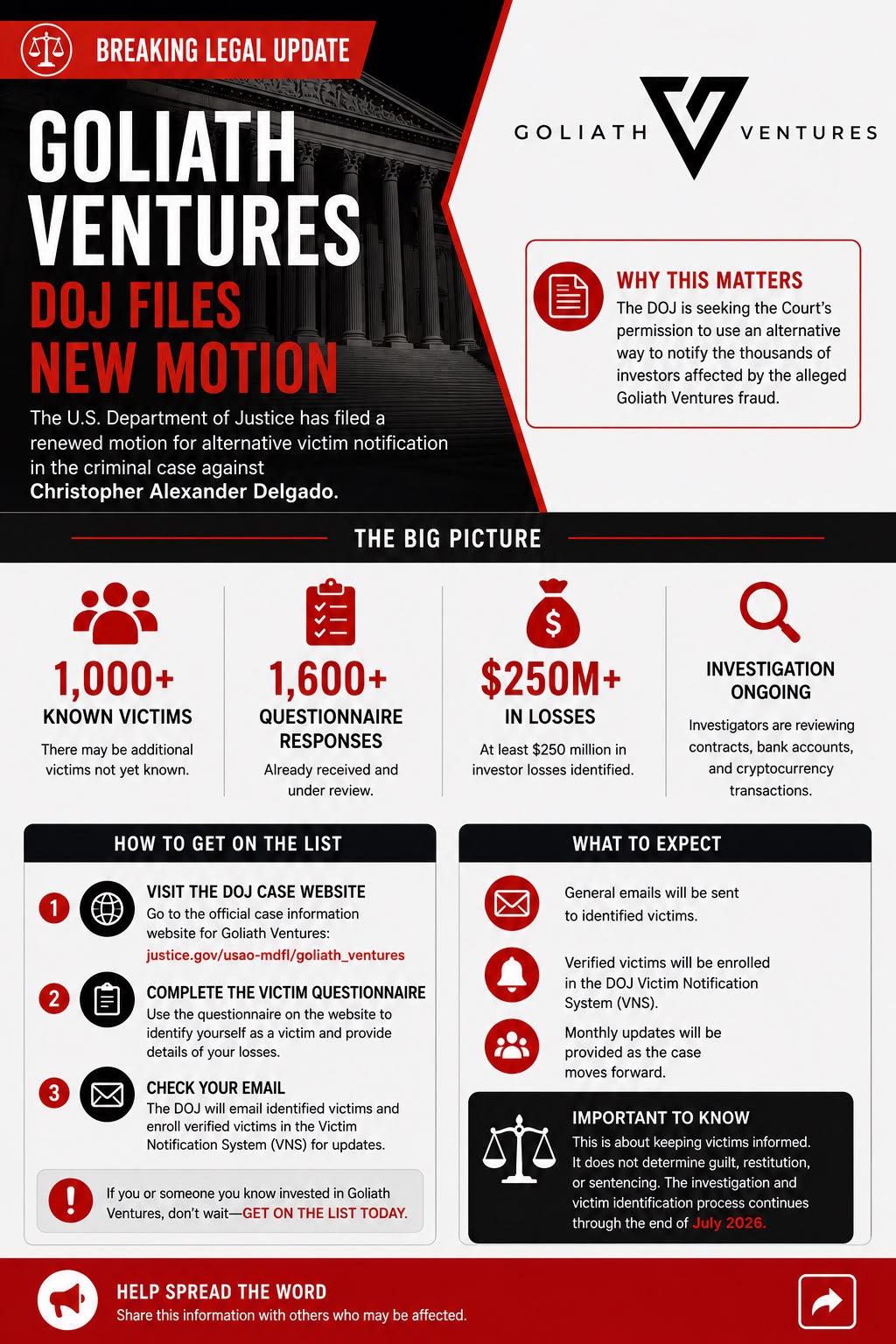
Because of the sheer number of victims, the Department of Justice has asked the Court to continue using an alternative victim notification process. Rather than attempting to contact every victim individually, prosecutors will continue updating the official case website, emailing identified victims and enrolling victims into the Victim Notification System, ensuring everyone receives updates as the case progresses.
For victims, this is genuinely encouraging news.
Justice in a case of this size was never going to happen overnight. Identifying thousands of transactions across traditional bank accounts and cryptocurrency wallets takes time. Verifying every investor claim takes time. Recovering assets takes time.
But the process is moving forward.
If you invested in GOLIATH VENTURES and have not yet identified yourself to the Department of Justice, now is the time to do so. Every verified victim matters when it comes to restitution and ensuring the full scale of this fraud is recognised by the Court.
More importantly, these interviews should not be viewed as the final chapter.
They are one man’s account of how GOLIATH VENTURES rose and fell.
The court proceedings, financial records, blockchain analysis and any future prosecutions will ultimately determine the complete story.
For me, this investigation has never been about one individual.
It has always been about following the evidence, documenting the truth and giving victims a voice.
Christopher Delgado has now admitted his role.
The next question is one that many victims are still asking.
Who else knew, who else profited, and who else will ultimately be held accountable?
Disclaimer: How This Investigation Was Conducted
This investigation relies entirely on OSINT — Open Source Intelligence — meaning every claim made here is based on publicly available records, archived web pages, corporate filings, domain data, social media activity, and open blockchain transactions. No private data, hacking, or unlawful access methods were used. OSINT is a powerful and ethical tool for exposing scams without violating privacy laws or overstepping legal boundaries.
About the Author
I’m DANNY DE HEK, a New Zealand–based YouTuber, investigative journalist, and OSINT researcher. I name and shame individuals promoting or marketing fraudulent schemes through my YOUTUBE CHANNEL. Every video I produce exposes the people behind scams, Ponzi schemes, and MLM frauds — holding them accountable in public.
My PODCAST is an extension of that work. It’s distributed across 18 major platforms — including Apple Podcasts, Spotify, Amazon Music, YouTube, and iHeartRadio — so when scammers try to hide, my content follows them everywhere. If you prefer listening to my investigations instead of watching, you’ll find them on every major podcast service.
You can BOOK ME for private consultations or SPEAKING ENGAGEMENTS, where I share first-hand experience from years of exposing large-scale fraud and helping victims recover.
“Stop losing your future to financial parasites. Subscribe. Expose. Protect.”
My work exposing crypto fraud has been featured in:
- Coffeezilla 2026): Featured in the investigation exposing the alleged $328M Goliath Ventures Ponzi scheme
- Bloomberg Documentary (2025): A 20-minute exposé on Ponzi schemes and crypto card fraud
- News.com.au (2025): Profiled as one of the leading scam-busters in Australasia
- OpIndia (2025): Cited for uncovering Pakistani software houses linked to drug trafficking, visa scams, and global financial fraud
- The Press / Stuff.co.nz (2023): Successfully defeated $3.85M gag lawsuit; court ruled it was a vexatious attempt to silence whistleblowing
- The Guardian Australia (2023): National warning on crypto MLMs affecting Aussie families
- ABC News Australia (2023): Investigation into Blockchain Global and its collapse
- The New York Times (2022): A full two-page feature on dismantling HyperVerse and its global network
- Radio New Zealand (2022): “The Kiwi YouTuber Taking Down Crypto Scammers From His Christchurch Home”
- Otago Daily Times (2022): A profile on my investigative work and the impact of crypto fraud in New Zealand


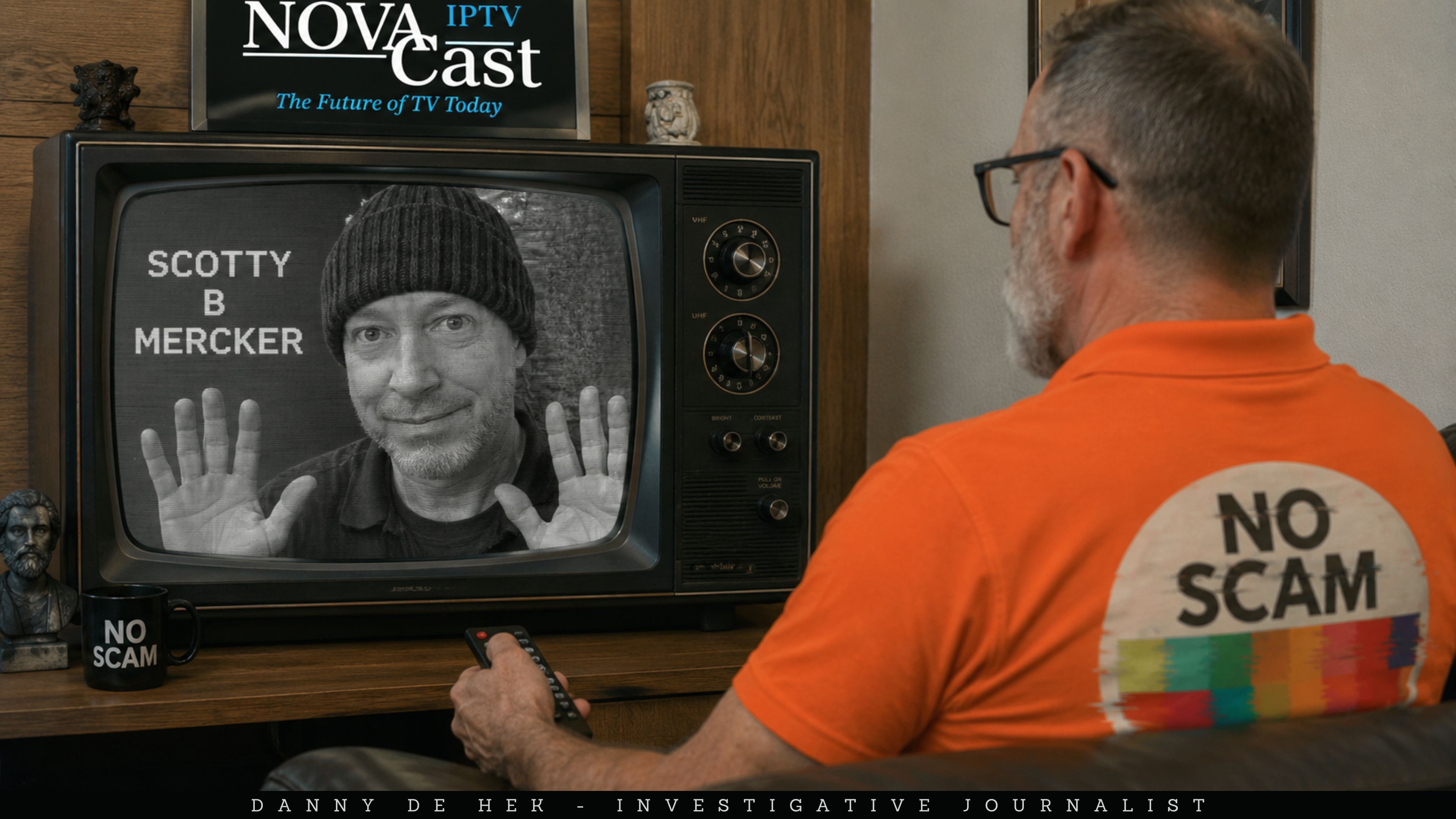
Leave A Comment