


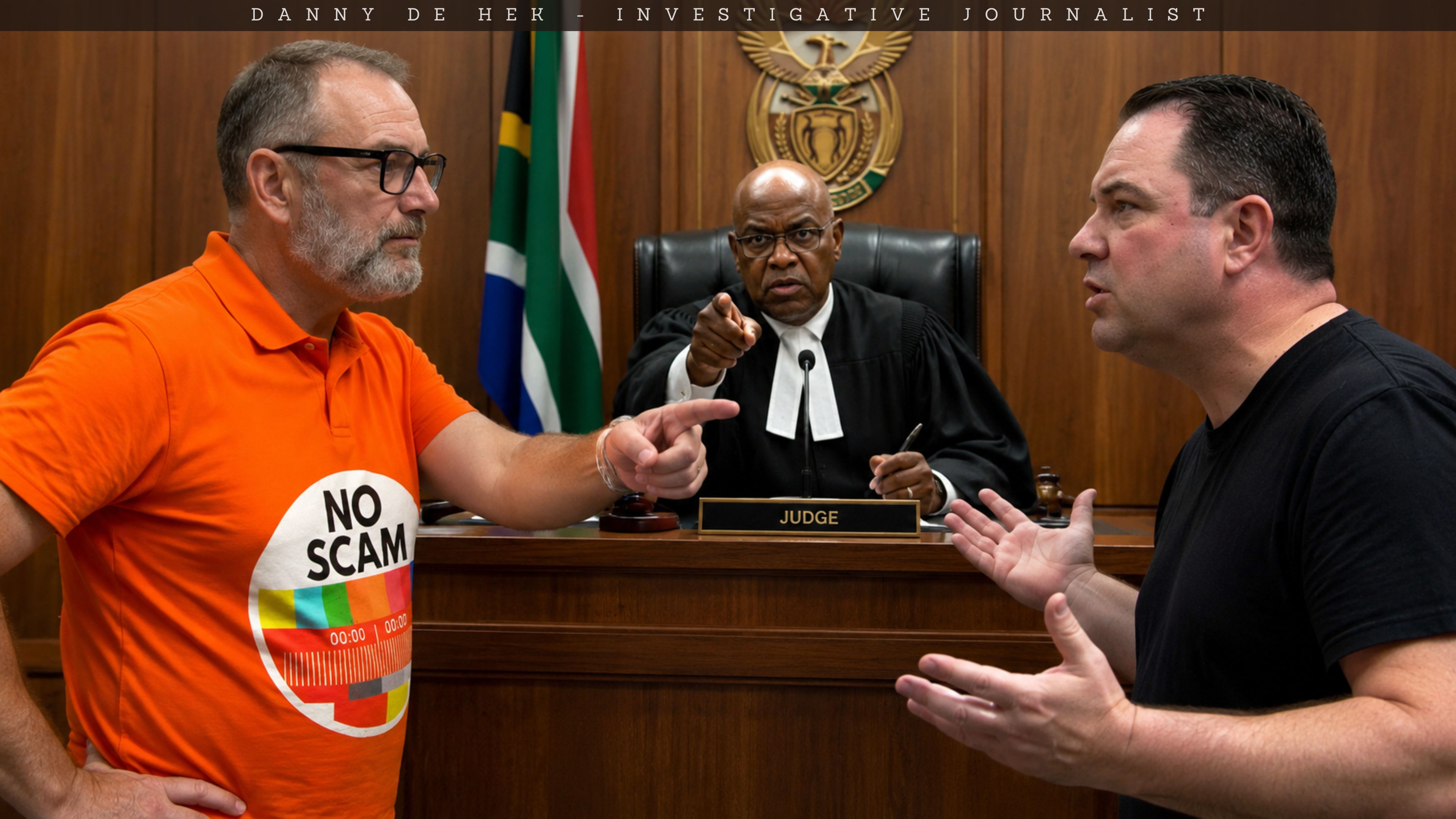
“Due to the director’s failure and/or refusal to cooperate with the liquidators, the liquidators are unable to provide a comprehensive report on the causes of the failure of the company.”
For years, Rory Conacher presented RJS Capital as a legitimate investment business built around cryptocurrency trading, foreign exchange activity, and high-yield opportunities.
Investors were told their money was being actively managed. They were shown statements, updates, and explanations designed to reinforce the belief that a real business existed behind the scenes.
When withdrawals became difficult and confidence began to crack, many investors remained loyal. Some doubled down. Others accepted explanations that delays were temporary, that markets were difficult, or that recoveries were just around the corner. Like so many collapsed investment schemes I have investigated over the years, hope became the glue that held everything together long after the warning signs had appeared.
Now, nearly a year after the courts intervened, creditors finally have their first meaningful look at what court-appointed liquidators have uncovered. The findings do not provide all the answers, but they do reveal a picture that is far removed from the polished image investors were sold.
The liquidators’ report references missing records, unexplained cryptocurrency transactions, potential personal liability, a shortfall exceeding R27 million, and concerns serious enough to justify further enquiries into whether the business itself may have operated as an unlawful enterprise. For those who trusted Rory Conacher with their money, the report marks the beginning of a very different chapter.
From Trading Success Story To Court-Ordered Liquidation
The collapse of RJS Capital did not happen overnight. By the time the courts became involved, many investors had already spent years trying to obtain answers, recover funds, or simply understand what had happened to their money.
 On 4 August 2025, the High Court of South Africa granted an order placing RJS Capital under provisional winding-up following an application brought by Michelle and Sébastien. The company was placed into the hands of the Master of the High Court, effectively removing control from management and placing the business under independent supervision.
A little over a month later, Jochen Eckhoff and Melusi Gumbo were appointed as Provisional Liquidators. Their job was not to defend Rory Conacher or explain away the company’s problems. Their responsibility was to identify assets, investigate liabilities, secure records, and determine whether creditors stood any realistic chance of recovering funds.
The provisional liquidation order became final on 17 October 2025. From that point forward, the story was no longer being controlled through Telegram groups, social media updates, private chats, or promises of future recoveries. The matter had entered the formal insolvency process.
That distinction is important. Marketing can be crafted. Narratives can be controlled. Court-appointed liquidators have a very different job. Their responsibility is to follow evidence wherever it leads.
The First Proven Claim
At the First Meeting of creditors held on 18 February 2026, one claim was formally proved before the presiding officer.
That claim belonged to Michelle and Sébastien, who alleged that substantial sums had been loaned to RJS Capital.
While some may focus on the fact that only one claim had been formally proved at that stage, that would be missing the bigger picture. The liquidation process was still in its early stages, and many creditors had yet to complete the formal requirements necessary to prove their claims.
The significance lies not in the exact amount claimed, but in the fact that The Claim was formally recognised within the liquidation process. It demonstrated that substantial sums had been entrusted to the company and were now being pursued through the courts.
Michelle’s role in this story extends far beyond being a creditor. Long before liquidators became involved, she spent years demanding answers and pursuing accountability through the courts. Alongside Sébastien, she helped force the issue into a legal arena where evidence would matter more than promises. Without that persistence, the liquidation process that now exposes the company’s affairs may never have occurred.
For years, many critics of RJS Capital were dismissed as troublemakers, haters, or people who simply did not understand the business. The liquidation process has changed that dynamic completely. The conversation is no longer being driven by opinion. It is being driven by court filings, creditor meetings, and independent investigations.
The R27 Million Problem
The first creditors’ meeting was only the beginning.
On 28 May 2026, the second meeting of creditors and contributories was held, and this is where the liquidators tabled their First Substantive Report into the affairs of RJS Capital. For creditors who had spent months waiting for answers, this was the moment the investigation began moving beyond procedural formalities and into actual findings.
Buried within that report is a figure that should alarm anyone who entrusted money to the company.
R27,361,877.37.
That is the estimated liability currently recorded by the liquidators.
Against that figure sits a troubling reality. The liquidators had not yet identified confirmed recoverable assets sufficient to offset those liabilities. Movable assets remained under investigation. Debtors remained under investigation. Potential claims remained under investigation.
As a result, the report reflected a shortfall of more than R27 million.
It is important not to overstate what this means. Liquidation investigations frequently uncover assets months or even years after proceedings begin. Additional recoveries may still occur. The figures may change as investigations continue.
What cannot be ignored, however, is the current position. Based on the information available to them, the liquidators identified liabilities exceeding R27 million while recoverable assets remained uncertain.
For creditors hoping their money is safely sitting somewhere waiting to be distributed, that reality should be deeply concerning.
The Crypto Trading Story Starts To Unravel
For years, investors were told that trading activity sat at the heart of the RJS Capital model.
The liquidators tell a very different story.
According to their report, RJS accepted loans from third parties that were allegedly used for foreign currency and cryptocurrency trading activities. Yet despite months of investigation, the liquidators state that the nature of those transactions remains unclear.
That should immediately raise questions.
Legitimate trading operations typically leave extensive trails. Exchange accounts, transaction histories, wallet records, trading logs, bank statements, counterparties, profits, losses, and audit trails all create a picture of what occurred.
The liquidators appear to be still trying to establish that picture.
Even more significantly, they specifically identify cryptocurrency wallets that allegedly received investor funds as a subject requiring further investigation. That means investigators are actively attempting to trace where money moved and who ultimately controlled it.
This is no longer a debate between supporters and critics. It is a matter of professional investigators attempting to determine what happened to investor funds.
The fact that they are still asking these questions speaks volumes.
Missing Records And Missing Answers
One sentence in the report may prove more damaging than pages of financial analysis.
The liquidators state that it appears the company failed to keep adequate financial records.
That finding strikes at the heart of accountability.
Records tell the story that people cannot. They reveal where money came from, where it went, who benefited, and whether public representations align with reality.
When records are missing, incomplete, or inadequate, investigators are forced to reconstruct events through fragments rather than complete evidence. The process becomes slower, more expensive, and significantly more difficult.
It also creates an obvious question.
If RJS Capital was operating the sophisticated investment activities that investors were led to believe existed, where are the records one would reasonably expect to support those activities?
At present, the liquidators do not appear satisfied that they have the documentation necessary to answer that question.
Liquidators Say Rory Failed To Cooperate
Perhaps the most explosive statement contained within the report concerns Rory Conacher himself.
The liquidators state that they have been unable to provide a comprehensive explanation for the company’s failure because of the director’s alleged failure and/or refusal to cooperate.
This is not an accusation coming from former investors.
It is not a statement from critics.
It is not a claim made on social media.
It is a statement made by court-appointed liquidators carrying out their statutory duties.
Whether Rory disputes that characterisation remains his right. However, the statement now forms part of the official liquidation record and raises serious questions about transparency and accountability.
For creditors hoping to understand where their money went, it is difficult to see how a lack of cooperation assists that process.
Why A Formal Enquiry Matters
The report goes further than simply identifying unanswered questions.
The liquidators specifically recommend further enquiries into several critical areas.
Among them are:
- The alleged short-term investments reflected in company records.
- Cryptocurrency wallets that received investor funds.
- Records relating to cryptocurrency trading activity.
- Funds invested through Ihubesi Inkosi Marketing.
- The overall nature of the business itself.
These are not routine housekeeping matters.
These are fundamental questions about how RJS Capital operated, how investor funds were handled, and whether the explanations given to investors match the underlying reality.
Formal enquiries exist for a reason. They allow investigators to compel evidence, examine transactions, and scrutinise conduct in ways that voluntary cooperation often cannot.
The fact that liquidators believe such enquiries are necessary should not be overlooked.
Could RJS Capital Be Declared An Unlawful Enterprise?
One of the most striking sections of the report concerns a question that many former investors have been asking for years.
Was RJS Capital operating lawfully?
The liquidators stop short of making any finding. They do not conclude that RJS Capital was unlawful.
What they do say is that the issue warrants investigation.
Specifically, they identify the nature of the business and whether it should be declared an unlawful scheme as an area requiring further enquiry.
That distinction is important.
An investigation is not a conclusion.
At the same time, this is not a question that appears in a report without reason. The liquidators clearly believe there are sufficient concerns to justify examining the issue in greater detail.
For those who spent years defending the company and dismissing critics, that development deserves careful attention.
Personal Liability Now Enters The Conversation
The report also confirms that liquidators are investigating whether directors or former directors could potentially be held personally liable for actions taken by the company.
Again, no conclusions have been reached.
However, the significance of this development should not be underestimated.
Corporate structures often create the impression that responsibility begins and ends with the company itself. In reality, insolvency investigations frequently examine the conduct of those running the company, particularly where creditors have suffered significant losses.
At the time of liquidation, Rory Paul Conacher was identified as the sole shareholder and director of RJS Capital.
Whether any personal liability ultimately arises remains to be seen. What matters today is that the question is now formally under investigation.
Why This Investigation Still Matters Today
Many people will look at the liquidation of RJS Capital and assume it is old news. After all, the provisional liquidation order was granted in 2025 and the creditors’ meetings took place in 2026.
That would be a mistake.
The significance of the liquidators’ findings extends well beyond the collapse of RJS Capital itself because Rory Conacher remains active in the public arena. He continues to present himself as someone capable of helping victims navigate complex financial disputes and recovery efforts.
In recent months, Rory has promoted what he describes as a legal recovery initiative connected to HyperVerse and related investment losses. Through a company calling itself PSP Legal, investors have been encouraged to register, submit personal information, and prepare for potential legal costs associated with a proposed Dubai-based action.
That is where the liquidation findings become impossible to ignore.
The court-appointed liquidators investigating Rory’s own company are still trying to determine what happened to investor funds, why records appear inadequate, why cryptocurrency transactions remain unclear, and why they say they have been unable to obtain sufficient cooperation from the company’s director.
Those questions remain unanswered.
Before anyone entrusts money, personal information, or authority to a new initiative connected to Rory Conacher, it is entirely reasonable to ask whether the outstanding questions surrounding RJS Capital have been adequately addressed.
This is not a conclusion that the Dubai legal action is illegitimate. Nor is it evidence that PSP Legal is unlawful.
Rather, it is a reminder that credibility matters.
When someone asks investors to place trust in a new recovery effort, particularly one involving additional fees, legal promises, or financial commitments, their previous track record inevitably becomes part of the conversation.
The Warning Signs Investigators Have Seen Before
After years spent exposing collapsed crypto schemes, MLM investment frauds, and Ponzi operations, I have learned that the details change but the patterns rarely do.
Investors are shown a compelling opportunity. Questions are dismissed as negativity. Withdrawals become difficult. Records become harder to access. Communication deteriorates. Then, once independent investigators step in, they discover missing documentation, unanswered questions, unexplained transactions, and a trail that is far less impressive than the story investors were originally sold.
I am not saying every failed investment operation is a Ponzi scheme.
I am saying that the warning signs contained within this liquidation report are the same warning signs that repeatedly appear when investment schemes collapse.
That is why these findings matter.
The Questions That Refuse To Go Away
After reading the liquidators’ report, I am left with the same questions many creditors have been asking for years.
Where did the money go?
What happened to the cryptocurrency trading operation that was promoted to investors?
Why do investigators still not understand the nature of key transactions?
Why are records apparently inadequate?
Why do liquidators believe they have not received sufficient cooperation?
Why are cryptocurrency wallets now part of the investigation?
And why has the possibility of an unlawful enterprise entered the official conversation?
These are not questions being asked by internet commentators.
They are questions emerging from a court-supervised liquidation.
The liquidation of RJS Capital is no longer a matter of opinion.
It is no longer a debate between supporters and critics.
It is no longer about who controls the Telegram group, who can silence questions, or who can shape the narrative.
The matter now sits in the hands of court-appointed liquidators whose job is to follow the evidence wherever it leads.
Their investigation is still ongoing.
More reports will follow.
More questions may be answered.
More uncomfortable facts may emerge.
But one thing is already clear.
The official record now paints a picture that looks very different from the story investors were told while the money was flowing.
Disclaimer: How This Investigation Was Conducted
This investigation relies entirely on OSINT — Open Source Intelligence — meaning every claim made here is based on publicly available records, archived web pages, corporate filings, domain data, social media activity, and open blockchain transactions. No private data, hacking, or unlawful access methods were used. OSINT is a powerful and ethical tool for exposing scams without violating privacy laws or overstepping legal boundaries.
About the Author
I’m DANNY DE HEK, a New Zealand–based YouTuber, investigative journalist, and OSINT researcher. I name and shame individuals promoting or marketing fraudulent schemes through my YOUTUBE CHANNEL. Every video I produce exposes the people behind scams, Ponzi schemes, and MLM frauds — holding them accountable in public.
My PODCAST is an extension of that work. It’s distributed across 18 major platforms — including Apple Podcasts, Spotify, Amazon Music, YouTube, and iHeartRadio — so when scammers try to hide, my content follows them everywhere. If you prefer listening to my investigations instead of watching, you’ll find them on every major podcast service.
You can BOOK ME for private consultations or SPEAKING ENGAGEMENTS, where I share first-hand experience from years of exposing large-scale fraud and helping victims recover.
“Stop losing your future to financial parasites. Subscribe. Expose. Protect.”
My work exposing crypto fraud has been featured in:
- Coffeezilla 2026): Featured in the investigation exposing the alleged $328M Goliath Ventures Ponzi scheme
- Bloomberg Documentary (2025): A 20-minute exposé on Ponzi schemes and crypto card fraud
- News.com.au (2025): Profiled as one of the leading scam-busters in Australasia
- OpIndia (2025): Cited for uncovering Pakistani software houses linked to drug trafficking, visa scams, and global financial fraud
- The Press / Stuff.co.nz (2023): Successfully defeated $3.85M gag lawsuit; court ruled it was a vexatious attempt to silence whistleblowing
- The Guardian Australia (2023): National warning on crypto MLMs affecting Aussie families
- ABC News Australia (2023): Investigation into Blockchain Global and its collapse
- The New York Times (2022): A full two-page feature on dismantling HyperVerse and its global network
- Radio New Zealand (2022): “The Kiwi YouTuber Taking Down Crypto Scammers From His Christchurch Home”
- Otago Daily Times (2022): A profile on my investigative work and the impact of crypto fraud in New Zealand




Leave A Comment