


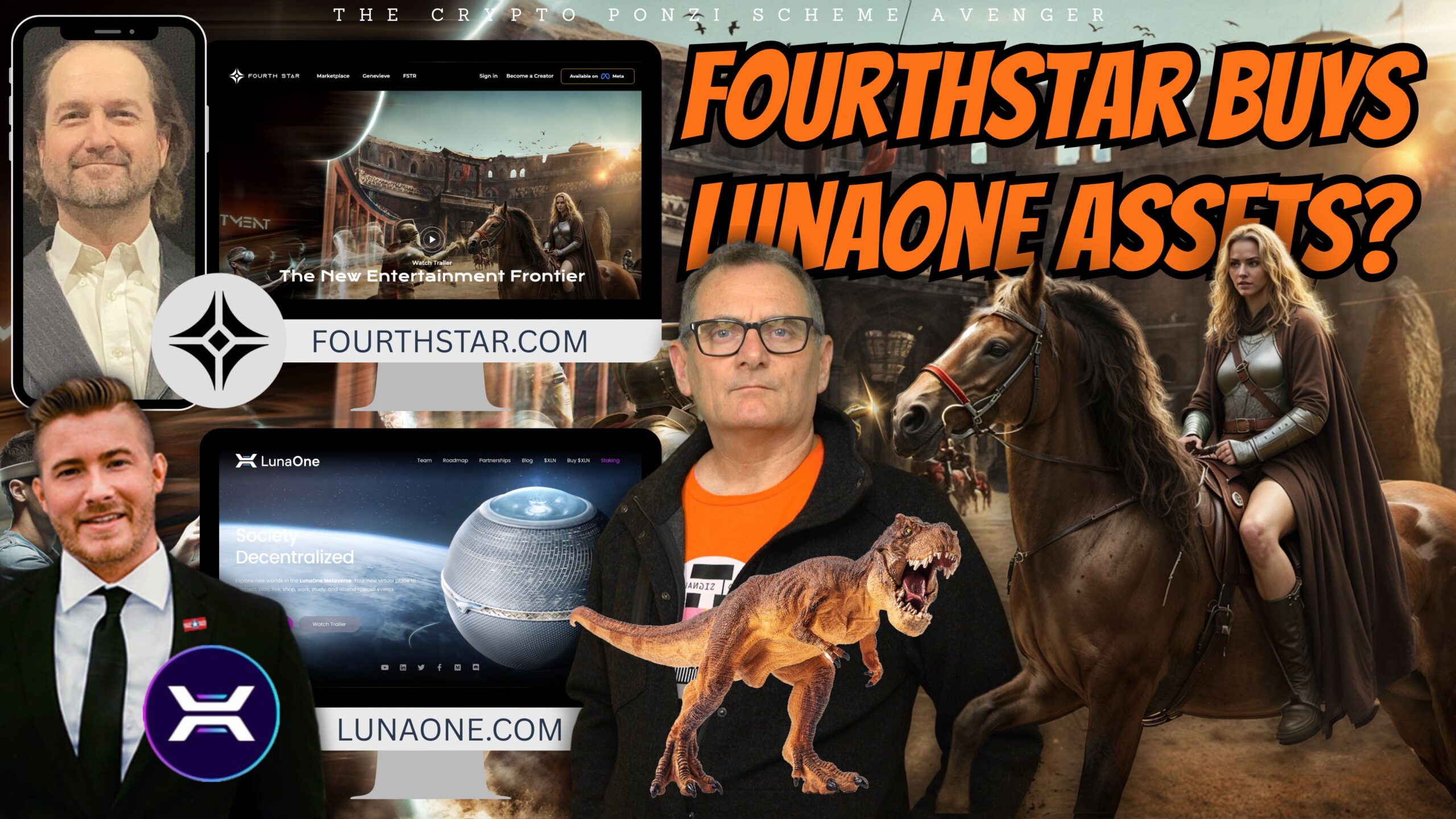
LunaOne promised the moon—and delivered dust. Now, a rebranded company called FourthStar claims it has bought the “intellectual property” from LunaOne and wants to start fresh, while distancing itself from the failed crypto metaverse scheme that allegedly scammed thousands.
But the crypto community isn’t buying the redemption arc, especially when the new players admit they’ve inherited the tech—along with some of the same faces and stories.
The Rise and Fall of LunaOne
LunaOne, a flashy metaverse crypto project, lured in more than 11,000 investors with slick marketing, paid influencer promotions, and bogus claims of brand partnerships. Investors like Cindy and Ann were told that buying in early meant big rewards: pre-sale tokens offered at $0.15 were supposed to launch at $0.25.
But when launch day arrived, tokens debuted at just $0.05—and the platform fell silent.
Some investors didn’t even receive their tokens until after the crash. Others reported never receiving them at all. Promised partnerships with Coca-Cola, Xbox, and PlayStation turned out to be smoke and mirrors. Discords were silenced, admins were paid in tokens to suppress criticism, and investors who asked questions were kicked out.
False Promises and Delayed Tokens
The core deception lay in the tokenomics. Buyers were promised a controlled launch at $0.25—yet what happened was the exact opposite. Many received nothing. Others were air-dropped tokens too late to salvage any value.
The leadership, including Stephen McCullah and Daniel Puzny, disappeared from the project. Puzny, allegedly stepping down for “health reasons,” went on to launch a suspiciously similar project called NuUReal. McCullah, meanwhile, is the man who once raised money on Kickstarter to hunt dinosaurs in the Congo. Yes, really.
Who’s Really Behind LunaOne—and Now FourthStar?
Documents and interviews reveal that McCullah was always the true architect of LunaOne. The front-facing CEO, Daniel Puzny, was little more than a placeholder. McCullah’s name appears on legal documents, company registrations, and apology letters to the LunaOne community.
FourthStar’s current team includes Craig Wilshere, a developer who was contracted by LunaOne and never paid, according to insiders. John Seia, an Australian investor-turned-contributor, reached out to Danny de Hek in a phone call (recorded and published with this blog), claiming he lost $40,000 of his own money and is now helping FourthStar voluntarily. His words:
“I’m just a pleb trying to make something good out of the ashes.”
Misleading Marketing & Red Flags
LunaOne mastered the playbook of crypto hype: fake brand endorsements, influencer-driven sales funnels, staged AMA calls, and vague promises of “world-changing tech.”
They convinced the average person to part with thousands using “starter packages” and gamified staking options.
Meanwhile, The Run Guys—crypto influencers with huge followings—endorsed the project for months, even meeting with McCullah before launch. They later scrubbed their YouTube channel and released a non-apology.
Legal Threats and the $3.8 Million Lawsuit
When Danny de Hek, also known as The Crypto Ponzi Scheme Avenger, started exposing LunaOne, McCullah responded with a $3.8 million defamation lawsuit filed in New Zealand’s High Court. Danny refused to back down. With the help of top defamation lawyers, the case was thrown out just hours before the hearing. The court awarded Danny $27,500 in costs—money McCullah has never paid.
FourthStar Emerges From the Wreckage
Now FourthStar is attempting a PR pivot. They claim they’re not LunaOne. They say they only bought the “IP”—not the guilt. They’re offering new tokens to old investors as a form of compensation, despite having no money, no real customer base, and no working product in public VR stores.
The irony? They’re using the same language, the same tokenomics, and—at least partially—the same team. Their promotional video even features luxury apartments and flying spaceships in the metaverse.
The Community Speaks: You Can’t Rebrand Trust
Crypto investors aren’t fools. Once burned, twice shy. A rebrand doesn’t reset the past. You don’t win trust by offering “airdrop apologies” or selling dream tokens built on the same skeletons that tanked your predecessor.
FourthStar may not be identical to LunaOne on paper, but when you inherit the tech, the narrative, and the mess—you also inherit the responsibility.
The crypto community deserves transparency, not tokens.
If you lost money in LunaOne, or you’re considering investing in FourthStar, now is the time to speak up. Watch the full video. Listen to the call. And draw your own conclusion.


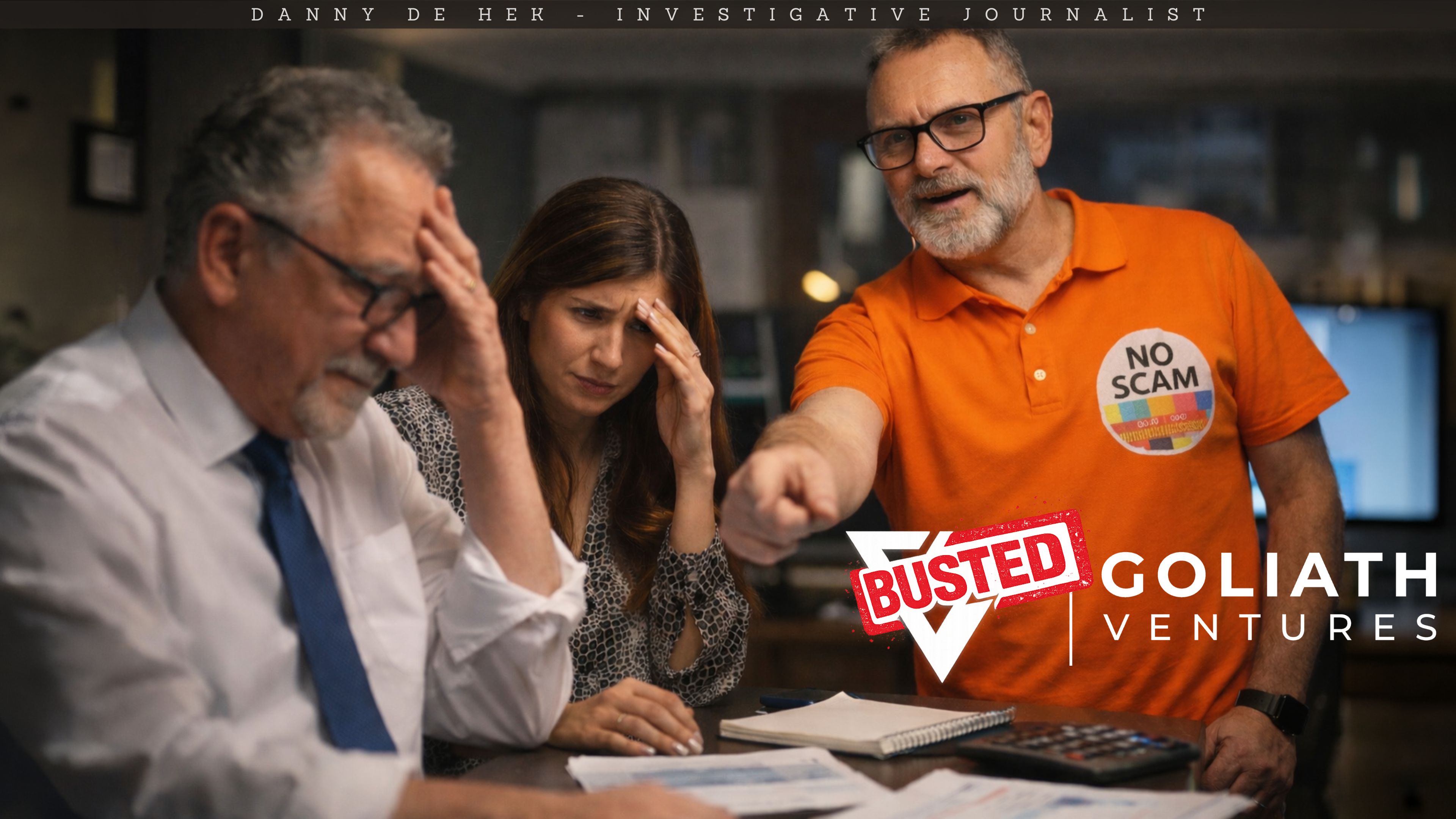
Whenever I expose a crypto scam, I expect backlash—and here it is. Below is a message I received after publishing this video. The individual, who called me twice to discuss the company, later claimed I had no right to record our conversation and threatened legal action. So, for full transparency and as a message to anyone affiliated with FourthStar: if you call me, you should expect it could be published. I don’t play private games with public scams.
JOHN’S MESSAGE:
“I rang and asked you to call Greg for an interview since I had been asked to call your number because you were looking for us. I did not give you consent to record me or the conversation. You’re doing so was a violation of Australian New Zealand law. I’m not an official voice of the CEO as I said. Nor do I know the official answers to what you were asking as I stated repeatedly as I’m not in an official capacity to be privileged to any of that information. If your story turns out to be harmful and taken out of context, I will have to take you to court. Again, you do not have permission to publish my voice or our conversation. I suggest you interview Greg for the true story.”
MY REPLY:
Let’s clear the air here—you called me, not once but twice, and voluntarily shared information. If your goal was to “clear things up,” then transparency, not legal threats, would’ve been the way forward.
Also, I haven’t broken any laws. In both New Zealand and Australia, it’s legal to record a conversation I’m part of under single-party consent laws. That’s well within my rights.
And let’s not pretend you don’t know who I am—I’ve made more videos exposing LunaOne than anyone on the internet. I’m also the person LunaOne tried to sue for $3.8 million—and lost. I was awarded costs by the New Zealand High Court. So if a representative from FourthStar, a company that just acquired assets from that failed scam, is now threatening legal action? That would be a wildly ironic sequel.
The conversation speaks for itself. If it reflects poorly on the company, that’s a you problem.
Lastly, if Greg wants to talk, my line is open. But I don’t do backroom calls and private damage control.
UPDATE: I’ve joined the FourthStar Telegram group—and what I’m seeing is alarming.
This is a company that bought the intellectual property from LunaOne—a project that was publicly promoted by The Run Guys, ended in a classic pump-and-dump, and left a trail of financial wreckage. The promoters deleted their videos, rebranded, sold off the assets… and now here we are.
Inside the Telegram, they’re asking people to buy tokens again—the same playbook, just with a new name. It’s giving serious déjà vu. The “FSTR” token is listed on a low-tier exchange (Probit), and they’re hyping vague partnerships with entities like Crypto Astronaut and Sunrise Venture Capital—but where’s the proof? Can any of these be verified independently?
And here’s the part I’m really starting to question:
Is Stephen McCullah still involved in some hidden capacity? Does he hold shares in FourthStar? Because the messaging style and marketing tactics feel eerily familiar.
Same structure. Same shady rollout. Different name.
This is why transparency matters. If you’re in the Telegram group too, keep your eyes wide open. And if you lost money in LunaOne, ask yourself—are they setting you up again?