


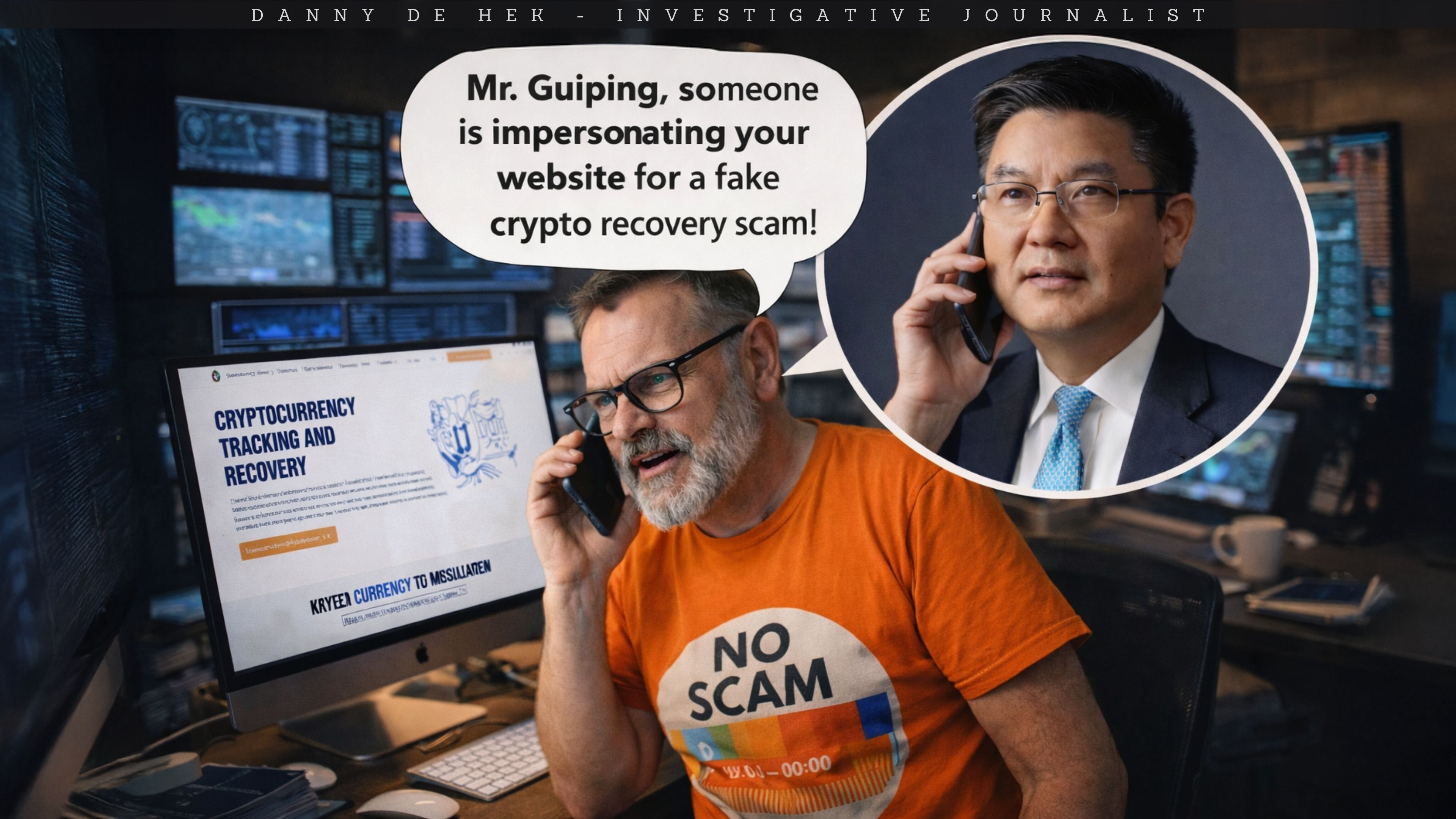
“The most dangerous scams don’t promise riches — they promise relief.”
If you’ve lost money to a crypto scam, this blog is for you. Not to give you false hope, but to give you the truth. Because once your cryptocurrency is gone, the reality is harsh and unavoidable: in most cases, it cannot be recovered.
And the moment you start searching online for “crypto recovery”, you place yourself directly in the crosshairs of a second wave of scammers.
That is exactly where the website assetsecurityinvestigation.com appears — operating under the name “Mayer Brown”, a name deliberately chosen to sound authoritative, legal, and trustworthy. This blog exists to explain, in plain English, why this operation is dangerous, how it works, and how it is impersonating the real Mayer Brown law firm to extract more money from people who have already been scammed once.
Why crypto scam victims are targeted again
When someone loses money to a crypto scam, the damage goes far beyond finances. Victims often feel embarrassed, ashamed, angry, and desperate to fix what happened. Many don’t tell friends or family. Instead, they turn to Google.
That search — “recover my crypto” — is the most dangerous moment of all.
Crypto recovery scams are built around that moment. They don’t promise wealth. They promise closure, justice, and hope. For people who don’t understand how crypto actually works, these promises sound plausible — especially when they appear to come from what looks like a professional legal or investigative firm.
A Pattern We’ve Seen Before: The RecoveryFin Example
This is not the first time we’ve documented this behaviour.
Previously, we investigated and exposed a crypto recovery operation known as RecoveryFin. That website followed the same basic playbook: polished presentation, legal-sounding language, promises of recovery, and pressure to pay upfront fees. When questions were asked and evidence requested, the response was not transparency — it was intimidation, including threats of legal action aimed at silencing those who spoke up.
Despite those tactics, the exposure worked. RecoveryFin was taken offline.
The reason this matters is simple: RecoveryFin was not an anomaly. It was an example of a repeatable business model. The operation using the name “Mayer Brown” follows the same structure, the same emotional manipulation, and the same goal — to monetise desperation after the original scam has already occurred.
What assetsecurityinvestigation.com claims to be
The website assetsecurityinvestigation.com presents itself as a professional cyber intelligence and crypto recovery service using the name “Mayer Brown”. It claims to help victims of:
- Cryptocurrency scams
- Investment scams
- Romance scams
- Remote job offer scams
- Wire fraud
It runs paid Google ads, placing itself directly in front of victims at the exact moment they are searching for help. It claims experience, expertise, and success. It presents a “legal team” and uses the language of law, compliance, and investigation.
To an ordinary person, it looks legitimate.
That appearance is not accidental.
The critical discovery: impersonating real Mayer Brown lawyers
During this investigation, reverse image searches were conducted on the individuals displayed as part of the “team” on assetsecurityinvestigation.com. What was discovered is extremely serious.
The people shown on the website are real lawyers from the real, global law firm Mayer Brown (mayerbrown.com). Their names, photographs, and professional biographies belong to genuine, regulated legal professionals who specialise in corporate law, banking, securities, and capital markets.
However, on assetsecurityinvestigation.com:
- Their images are reused
- Their names are reused
- Different phone numbers are displayed
- No official @mayerbrown.com email addresses are used
- Their real areas of practice are misrepresented
- They are presented as part of a crypto recovery operation
There is no evidence that the real Mayer Brown firm or these lawyers are involved in this operation in any way. This appears to be a clear case of impersonation — using the identities of real professionals to manufacture trust.
This matters because it explains why the site feels safe to victims. Most people would never imagine that a website would simply lift the identities of real lawyers from a major international law firm.
That assumption is exactly what this operation relies on.
Why checking the domain age tells you the truth
You don’t need to understand crypto to spot a scam. One of the simplest checks anyone can do is a WHOIS domain lookup, which shows how long a website has existed.
In this case:
- assetsecurityinvestigation.com was created in November 2025
- A related website hosting identical blog content, onlinescamadvice.com, was created in January 2025
- Both domains were registered for one year only
Yet the website claims years of experience and thousands of people helped.
Those claims are chronologically impossible.
Scam operations rely on people not checking basic facts. A brand-new website claiming long-standing authority is one of the most common warning signs there is.
Why crypto recovery doesn’t work
This is the part most victims are never told.
Cryptocurrency transactions are irreversible by design. There is no central authority, no customer service desk, and no reset button. Once funds leave your wallet, they can be moved, split, and laundered in seconds.
There are legitimate companies that perform blockchain analysis. Their role is to trace transactions for law enforcement during criminal investigations. They do not take money from victims promising to recover funds.
Anyone who tells you they can:
- Hack wallets
- Reverse transactions
- Unlock frozen crypto
- Retrieve funds for a fee
…is lying.
If it were possible to do this, the entire crypto system would collapse. The very fact that recovery scammers claim they can do what even law enforcement usually cannot should tell you everything you need to know.
Why recovery scams target every type of victim
One of the most alarming aspects of this operation is how broadly it targets victims. It doesn’t matter how you were scammed — crypto, romance, investments, job offers — the pitch is always the same.
That’s because desperation is the product.
These operations are often called “the scam after the scam”. Victims are emotionally vulnerable and desperate for closure. Recovery scammers exploit that vulnerability using the same psychological tactics as the original fraudsters.
This is commonly referred to as pig-butchering — extracting value slowly from someone who has already been emotionally softened.
Why Google ads make this even more dangerous
Many people assume that if a company appears in Google ads, it must be legitimate. Unfortunately, that’s not how online advertising works.
Google does not manually verify most advertisers. As long as someone pays and avoids certain trigger phrases, ads can run. Recovery scammers use carefully worded ads to funnel victims into private conversations on WhatsApp or Telegram, where nothing is monitored.
This is why exposure matters. Platforms react after harm occurs, not before.
What to do if you’ve already been scammed
If you’ve lost money to a crypto scam, the most important thing you can do is not lose more.
Do not pay any company that asks for upfront fees to recover crypto.
Do not engage with “recovery experts” contacting you privately.
Do not send documents, wallet addresses, or personal information.
Instead, focus on reporting the scam to the appropriate authorities in your country, warning others publicly, and protecting what you have left.
Your chances of recovery are slim.
Your chances of being scammed again are extremely high if you continue chasing recovery promises.
The Scam After the Scam
The website assetsecurityinvestigation.com is impersonating the real Mayer Brown name and lawyers to create a false sense of legitimacy while targeting people who have already been financially and emotionally harmed.
The real Mayer Brown law firm is not involved. The lawyers whose identities are being used are victims of this impersonation too.
If you’ve already been scammed once, you deserve honesty — not another invoice.
Please don’t give these people another cent.
Disclaimer: How This Investigation Was Conducted
This investigation relies entirely on OSINT — Open Source Intelligence — meaning every claim made here is based on publicly available records, archived web pages, corporate filings, domain data, social media activity, and open blockchain transactions. No private data, hacking, or unlawful access methods were used. OSINT is a powerful and ethical tool for exposing scams without violating privacy laws or overstepping legal boundaries.
About the Author
I’m DANNY DE HEK, a New Zealand–based YouTuber, investigative journalist, and OSINT researcher. I name and shame individuals promoting or marketing fraudulent schemes through my YOUTUBE CHANNEL. Every video I produce exposes the people behind scams, Ponzi schemes, and MLM frauds — holding them accountable in public.
My PODCAST is an extension of that work. It’s distributed across 18 major platforms — including Apple Podcasts, Spotify, Amazon Music, YouTube, and iHeartRadio — so when scammers try to hide, my content follows them everywhere. If you prefer listening to my investigations instead of watching, you’ll find them on every major podcast service.
You can BOOK ME for private consultations or SPEAKING ENGAGEMENTS, where I share first-hand experience from years of exposing large-scale fraud and helping victims recover.
“Stop losing your future to financial parasites. Subscribe. Expose. Protect.”
My work exposing crypto fraud has been featured in:
- Bloomberg Documentary (2025): A 20-minute exposé on Ponzi schemes and crypto card fraud
- News.com.au (2025): Profiled as one of the leading scam-busters in Australasia
- OpIndia (2025): Cited for uncovering Pakistani software houses linked to drug trafficking, visa scams, and global financial fraud
- The Press / Stuff.co.nz (2023): Successfully defeated $3.85M gag lawsuit; court ruled it was a vexatious attempt to silence whistleblowing
- The Guardian Australia (2023): National warning on crypto MLMs affecting Aussie families
- ABC News Australia (2023): Investigation into Blockchain Global and its collapse
- The New York Times (2022): A full two-page feature on dismantling HyperVerse and its global network
- Radio New Zealand (2022): “The Kiwi YouTuber Taking Down Crypto Scammers From His Christchurch Home”
- Otago Daily Times (2022): A profile on my investigative work and the impact of crypto fraud in New Zealand









Damn, that is so low! I hope the real Mayer Brown firm takes action against these scammers if they can trace them.
It really is. Unfortunately, impersonation scams like this often operate across multiple jurisdictions using short-lived domains and disposable contact details, which makes enforcement slow and difficult. That said, documenting the impersonation and warning victims is still important — exposure limits the damage while authorities and the real firm assess their options.