


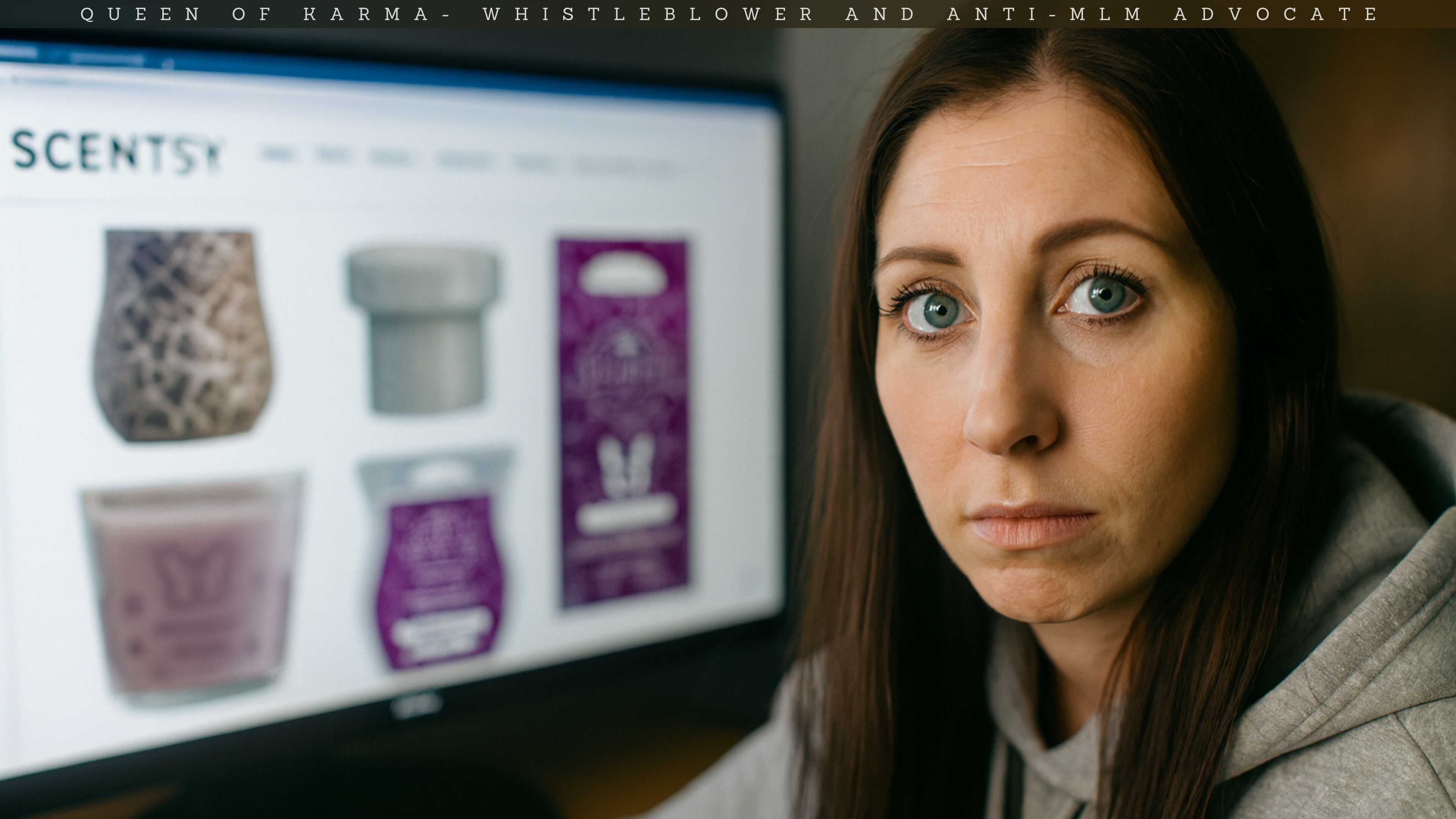
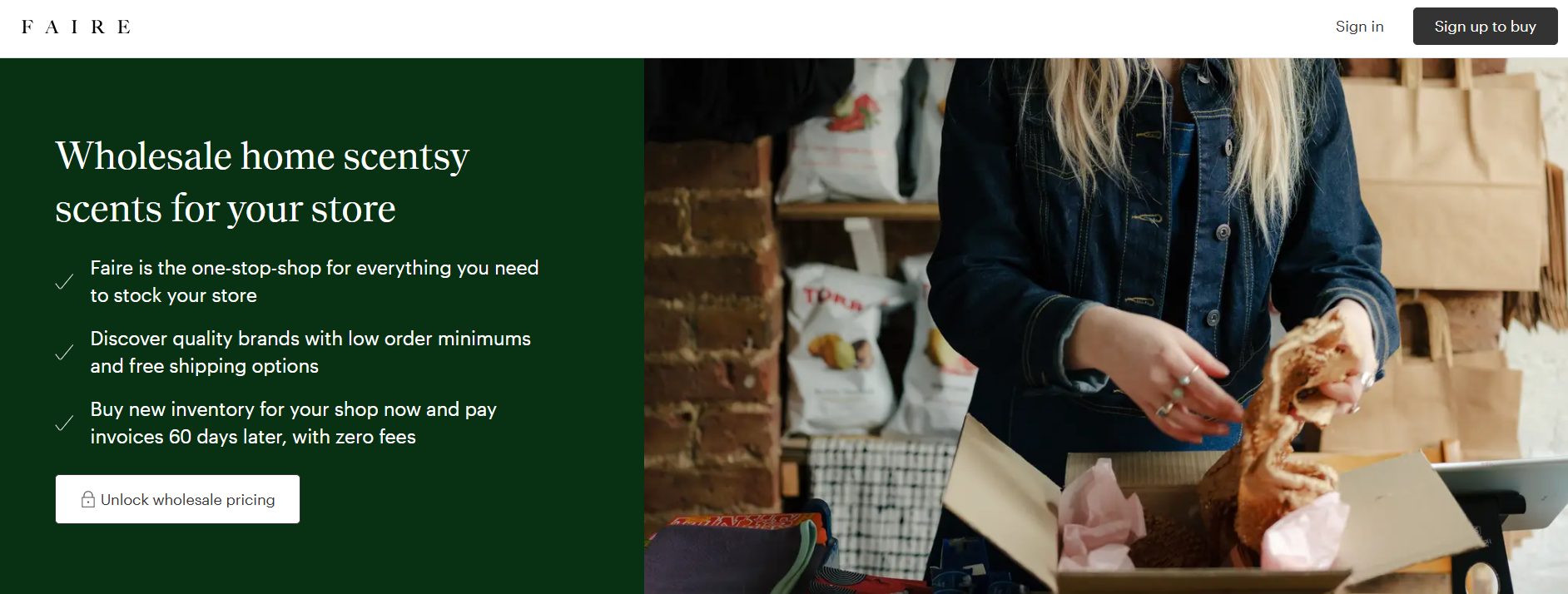
It started with an ad. I was scrolling, half-distracted, when a sponsored post from Faire popped up on my feed. Faire, the wholesale marketplace that prides itself on supporting independent retailers, was promoting Scentsy. Yes, Scentsy — the Multi-Level Marketing (MLM) giant known for wax warmers, endless recruitment pitches, and income disclosure statements that could double as cautionary bedtime stories. The very MLM that I Left before I began speaking out about their harmful tactics.
I had to double-check. Was this really Faire, the platform that claims to empower small businesses, giving prime advertising space to an MLM? It felt like walking into a farmers’ market and finding a pyramid scheme booth sandwiched between the local honey and handmade pottery. The irony was thick, but the implications were worse.
Who Faire Claims to Be
Faire positions itself as the go-to wholesale marketplace for independent retailers. Its mission is to connect shop owners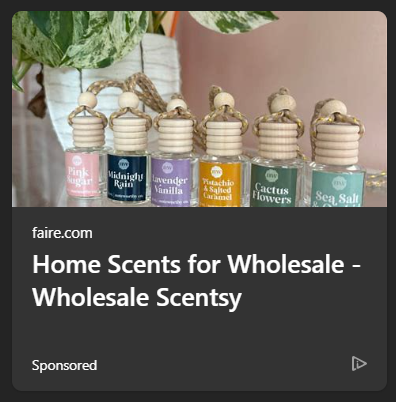 with unique products, streamline ordering, and help small businesses thrive. The promise is simple: authentic, creator-led goods, transparent pricing, and a supply chain rooted in sustainability and trust.
Faire was founded in 2017 by Marcelo Cortes, Daniele Perito, Max Rhodes, and Jeffrey Kolovson. Originally called Indigo Faire, the company rebranded to Faire as it scaled. Its mission is to empower brands and retailers to strengthen the unique character of local communities, positioning itself as a counterbalance to big-box chains and e-commerce giants like Amazon.
Faire operates as a B2B marketplace where independent retailers can discover and order products from thousands of brands. It simplifies wholesale buying with flexible payment terms, efficient shipping, and inventory management tools. The platform emphasizes localism, encouraging shops to source unique goods that differentiate them from mass-market competitors.
Faire has raised over $1.7 billion in funding from investors including Sequoia Capital, Lightspeed Ventures Partners, Y Combinator, and Founders Fund. As of late 2025, Faire is valued at $12-13 billion, making it one of the largest private retail-tech companies globally. It employs around 1, 400-1, 500 people across offices in San Francisco, Waterloo, and Toronto. Faire’s marketplace spans North America, Europe, and Australia, serving millions of small businesses.
Faire competes with other wholesale platforms like Orderchamp, Zax, and Reevooy. Its differentiator is scale: Faire has become the largest player in the independent retail wholesale space, often described as “Amazon for boutiques.”
That’s why the Scentsy ad feels so out of place.
Why Scentsy on Faire Is a Problem
Scentsy is not a small business. MLM distributors are not artisans. They don’t create; they resell corporate products within a compensation plan that rewards recruitment more than retail sales. By promoting Scentsy, Faire undermines its own mission and risks eroding the trust it has worked to build. Faire’s brand promise is built on supporting independent makers and localism, yet Scentsy represents the opposite. This creates several problems for retailers and consumers alike.
First, wholesale pricing is distorted by commission structures, leaving shops with slim margins. Second, customers who recognize the MLM model may avoid stores that stock Scentsy, damaging reputation. And third, Faire’s credibility as a champion of independent retail takes a hit. It’s like inviting a pyramid scheme to a dinner party and pretending they brought dessert.
Could Other MLMs Be Next?
If Scentsy has made its way onto Faire, what’s stopping other MLMs from following? Without a clear AntiMLM policy, the door is wide open. Retailers could soon find themselves browsing “independent makers” only to discover they are buying from distributors of companies like Herbalife, Young Living, or doTERRA.
This is the wholesale equivalent of catfishing: you think you’re supporting a local maker, but you’re actually funding a corporate recruitment machine. Unless Faire takes a stand, the risk will only grow.
The Harm to Consumers and Retailers
The damage isn’t limited to wax melts. It strikes at the heart of trust in independent retail. Trust is earned through transparency and accountability. Right now, Faire’s credibility is wobbling. To rebuild confidence, Faire must answer hard questions. Does it explicitly ban MLMs? How are sellers vetted? Are income disclosure statements checked? When confronted, does Faire remove MLM listings or ignore them?
Until those questions are answered, consumers and retailers should proceed with caution. Trust in marketplaces like Faire should never be assumed; it must be proven.
Retailers lose money when wholesale pricing is inflated and inventory becomes unsellable. Consumers are misled into believing they are buying artisan goods when they are actually purchasing mass-produced MLM stock. Communities lose faith when “independent retail” becomes synonymous with MLM reselling.
Let’s not forget the consultants themselves, who statistically lose money in MLMs. By legitimizing MLM products, Faire indirectly profits from a system that leaves most participants worse off.
When MLMs Hijack Small Business Spaces
The Scentsy Ad on Faire isn’t an isolated incident. We’ve seen MLMs creep into spaces that were designed to celebrate and protect genuine small businesses. Take Small Business Saturday on Facebook, for example. What began as a campaign to spotlight local entrepreneurs quickly turned into a flood of MLM distributors posting recruitment pitches and mass-produced products under the hashtag. The trend was meant to showcase makers and shop owners, but instead it became a billboard for corporate schemes disguised as “independent businesses.”
Even farmer’s markets — the very symbol of handmade authenticity — have occasionally been infiltrated by MLM tables. Shoppers who come expecting local honey, handmade pottery, or fresh produce sometimes find themselves being pitched essential oils or wax warmers by distributors who are not small business owners but participants in a recruitment-driven system. Similar events and campaigns have faced the same problem: MLMs masquerading as entrepreneurs, diluting the meaning of small business and misleading consumers.
The harm here is bigger than a few booths or hashtags. When MLMs are allowed to pose as small businesses, it undermines the integrity of the entire movement. It tells consumers that exploitation can wear the same badge as empowerment, and it erodes trust in platforms and events that claim to support local commerce. If society truly values small business, then we need to stop promoting MLMs under that banner. Drawing a clear boundary preserving the authenticity of independent retail itself.
The Punchline
As consumer advocates, we don’t just point out problems; we push for solutions. Faire must publish and enforce an AntiMLM policy. Retailers should be educated on how to spot MLM signals before placing wholesale orders. Consumers and advocates should report MLM listings when they appear, documenting evidence to hold platforms accountable. We should also celebrate marketplaces that keep MLMs out of their ecosystems, rewarding integrity with visibility.
Faire wants to be the marketplace that empowers small businesses. By promoting Scentsy, it risks becoming the marketplace that empowers pyramid schemes. If your “independent maker” is actually a consultant reading from a recruitment script, that’s not empowerment — that’s exploitation with a scented candle on top.
Independent retailers deserve better than MLM wax melts masquerading as artisan goods. Consumers and retailers deserve marketplaces that stand for authenticity, transparency, and sustainability. Faire needs to decide whether it is a champion of independent makers or just another platform willing to cozy up to MLMs. Until then, keep your wallets — and your wax warmers — on guard.
By Beth Gibbons (Queen of Karma)
Beth Gibbons, known publicly as Queen of Karma, is a whistleblower and anti-MLM advocate who shares her personal experiences of being manipulated and financially harmed by multi-level marketing schemes. She writes and speaks candidly about the emotional and psychological toll these so-called “business opportunities” take on vulnerable individuals, especially women. Beth positions herself as a survivor-turned-activist, exposing MLMs as commercial cults and highlighting the cult-like tactics used to recruit, control, and silence members.
She has contributed blogs and participated in video interviews under the name Queen of Karma, often blending personal storytelling with direct confrontation of scammy business models. Her work aligns closely with scam awareness efforts, and she’s part of a growing community of voices pushing back against MLM exploitation, gaslighting, and financial abuse.


Leave A Comment