


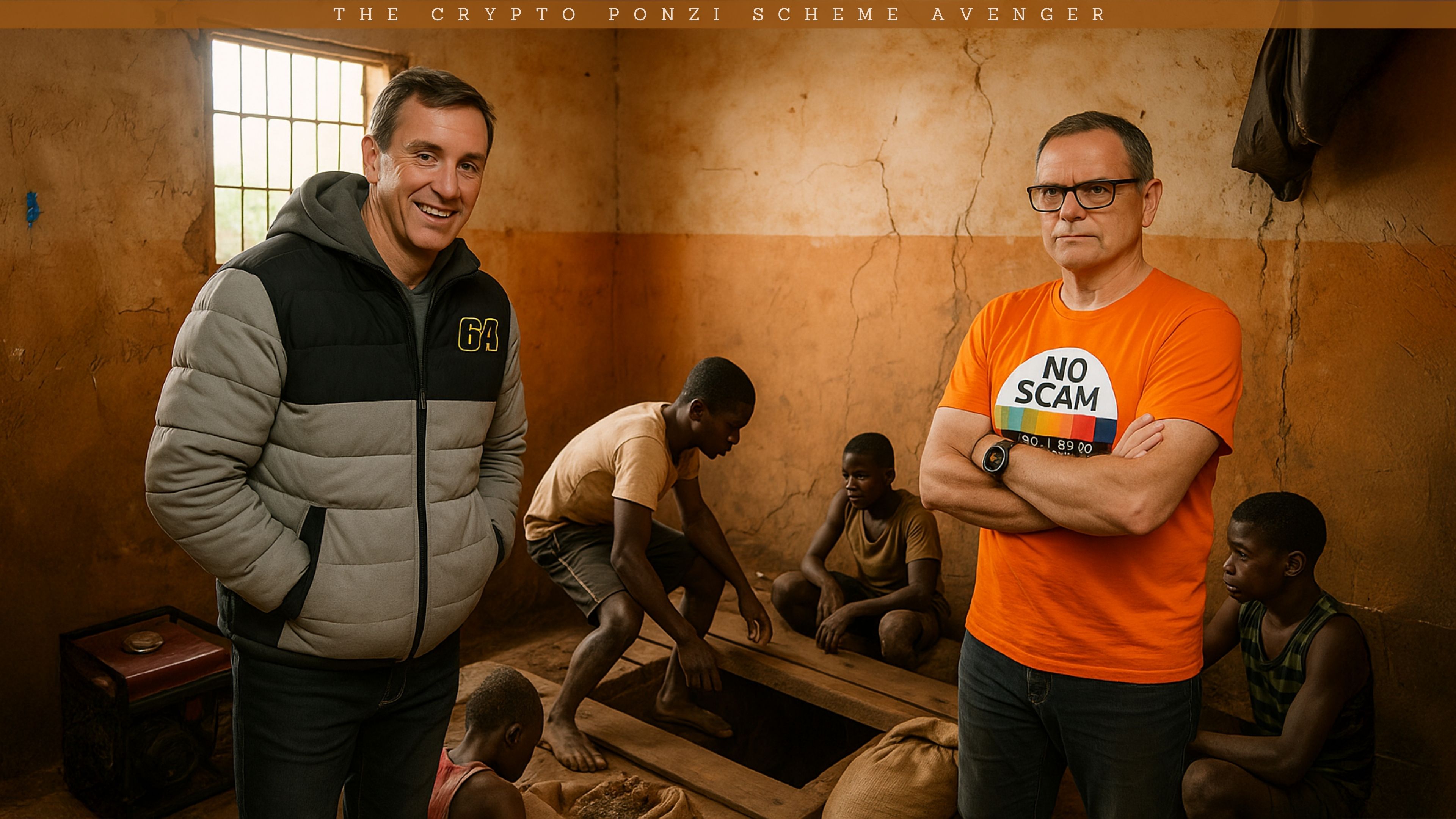
When I first clicked on Mark McCann’s Video, I expected another flashy showcase of supercars and electric vehicles.
What I didn’t expect was to be confronted with the shocking reality of where these cars come from — children, deep underground in the Democratic Republic of Congo, digging cobalt with their bare hands.
That single clip of child labour jolted me. It forced me to stop and ask: is this “green revolution” really saving the planet, or is it just another scam dressed up in shiny marketing?
Governments around the world are pushing electric cars as the future, offering tax breaks, setting deadlines, and shaming anyone who doesn’t fall in line. But behind the eco-friendly slogans lies a disturbing truth: tens of thousands of children are being exploited, families are breathing in toxic dust, and entire communities are being poisoned so that first-world countries can feel good about driving “zero-emission” vehicles.
This blog is not about hating technology, nor is it about defending petrol cars. It’s about lifting the lid on the hidden cost of electric cars — the human suffering, the environmental damage, and the government agendas nobody wants to talk about. Watching McCann’s video made me realise how little we actually question the narrative we’re being fed. Hopefully, by the end of this article, it will get you thinking too.
The Human Cost of Electric Car Batteries
Every electric car proudly sold as “zero emissions” carries with it an invisible trail of blood and dust. At the centre of this story is cobalt, a mineral essential for lithium-ion batteries — the same batteries powering Teslas, iPhones, and laptops. Around 70% of the world’s cobalt comes from the Democratic Republic of Congo (DRC), one of the poorest countries on Earth.
The industry pretends cobalt is responsibly sourced, wrapped up in glossy ESG (Environmental, Social, and Governance) reports. Car companies boast of “traceable supply chains.” But in reality, the truth looks more like slavery 2.0.
Children in the Mines
In the DRC, poverty forces families to send even their youngest children underground. These are not regulated mines with helmets and safety gear — they are hand-dug death traps, some plunging as deep as 60 metres.
One BBC investigation described it bluntly:
“This used to be the kitchen in somebody’s house. It’s now the entrance to a tunnel that goes deep underground.”
Children as young as six are found in these tunnels, hacking at rock with bare hands and pickaxes.
The United Nations estimates that at least 40,000 children work in these mines in southern Congo. Many earn as little as $2 a day.
One father, interviewed while his 13-year-old son washed cobalt in a nearby lake, admitted:
“It’s hard even to get enough money to eat. If he doesn’t work, we don’t survive.”
Death Is Routine
These tunnels collapse without warning. Official figures already count dozens of deaths every year, but locals say the true toll is hidden — bodies simply left buried underground. The risks don’t stop at collapse.
The dust itself is poison. Scientists have linked long-term cobalt exposure to fatal lung disease, birth defects, and cancer. A condition called “hard metal lung disease” is now common among miners, with no healthcare system to support them.
A miner told investigators:
“We know it kills us. But what choice do we have?”
Exploitation at Scale
The injustice isn’t just local. After children dig it out, sacks of cobalt are sold to traders, passed through Chinese-owned refiners like Congo Dongfang Mining, and eventually shipped to global giants. Amnesty International traced these supply chains to Apple, Microsoft, Samsung, Sony, Volkswagen, BMW, and Tesla.
When confronted, companies played the same game of denial:
- Samsung: “It is impossible for us to determine whether the cobalt came from the DRC.”
- Volkswagen: “To the best of our knowledge, our cobalt does not originate from the DRC.”
- Microsoft: “We have not traced cobalt through our supply chain to the smelter level.”
And yet, Amnesty proved what the world already knows — the cobalt does come from Congo. The denials are nothing more than corporate greenwashing.
Slavery 2.0
The history books may tell us that slavery was abolished, but in the cobalt mines of the Democratic Republic of the Congo, it is alive and well — repackaged for the 21st century. Families are trapped in a cycle of poverty, exploitation, and dependency on dangerous mining jobs. Children’s small bodies are sent into tunnels that adults cannot fit into. Women wash cobalt ore in polluted streams, risking long-term health problems. Men spend day after day hacking at rock faces with nothing more than a pickaxe, while their lungs fill with toxic cobalt dust.
The parallels with historical slavery are unavoidable. The miners do not own the land, the minerals, or the fruits of their labor. Instead, they are paid pennies a day, while multinational companies along the supply chain — from Chinese mineral traders to Western tech giants — make billions. The only difference between the transatlantic slave trade and this modern version is that today, the end product is marketed as “green” and “sustainable.”
As one Congolese activist bitterly put it: “We are dying so the world can drive Teslas.”
And yet, the lie continues. Governments push electric vehicles as a moral alternative to fossil fuels. Automakers release glossy sustainability reports. ESG (Environmental, Social, and Governance) policies are touted as proof of “responsible sourcing.” But scratch beneath the surface, and the truth is horrifying: the West has outsourced its slavery to Africa under the banner of saving the planet.
Not Just Tesla: A Global Rush for Dirty Minerals
It’s easy to point fingers at Elon Musk and Tesla because they dominate the headlines, but the truth is far bigger. Volkswagen, Mercedes, BMW, Ford, General Motors, Toyota, Nissan, Hyundai, and a wave of Chinese manufacturers like BYD and NIO are all competing to electrify their fleets at breakneck speed.
Despite the marketing slogans, they all share one uncomfortable fact: the same cobalt and lithium supply chains that run through the Democratic Republic of the Congo, Chile, and Bolivia. These companies may issue glossy sustainability reports, but whether it’s a Tesla Model Y, a VW ID.4, or a Nissan Leaf, the mineral trail almost always leads back to the same toxic mines.
This isn’t just about one CEO or one company. The entire industry is built on a paradox — selling the idea of a cleaner, brighter future while outsourcing the dirtiest, most dangerous labour to some of the poorest regions of the world. The brand names might differ, but the blood in the batteries is the same.
Green Policies, Hidden Agendas
Governments worldwide are not only aware of this reality — they are actively bankrolling it. From London to Washington, Berlin to Wellington, politicians roll out press conferences to announce bans on petrol and diesel cars, usually with glowing speeches about a “sustainable future.” Yet every policy deadline, every tax break for EV buyers, and every subsidy for battery plants means one thing: more demand for cobalt dug out of Congolese soil by children with bare hands.
Corporate Greenwashing
Carmakers know. Tech giants know. Governments know. Everyone in the supply chain is aware that cobalt from the DRC is tainted by child labour, toxic exposure, and death — and yet, no one acts. Instead, they hide behind shiny slogans and carefully crafted statements.
Big names like Apple, Sony, Volkswagen, Samsung, and Microsoft have responded to investigations with evasive denials:
Apple: “We are currently evaluating dozens of different materials including cobalt in order to identify labour and environmental risks.”
Sony: “So far we could not find obvious results that our products contain cobalt originated from Katanga in the DRC.”
Volkswagen: “To the best of our knowledge the cobalt in our batteries does not originate from the DRC.”
Samsung: “It is impossible for us to determine whether the cobalt applied to Samsung SDI came from the DRC.”
Microsoft: “We have not traced the cobalt used in Microsoft products through our supply chain to the smelter level due to the complexity and resources required.”
These aren’t mistakes — these are scripted lines of plausible deniability. Investigations by Amnesty International and The Washington Post have traced cobalt from those very tunnels in the DRC to supply chains of these same companies.
But companies aren’t the only ones turning a blind eye — governments are actively fanning demand for electric vehicles while ignoring the human cost.
In the UK, a 2020 press release declared:
“Sales of new petrol and diesel cars to end in the UK by 2030… plans to accelerate a greener transport future … underpinned by over £1.8 billion to support greater uptake of zero emission vehicles.”
(Reuters, GOV.UK)
And to follow up, a 2024 law made this target even more enforceable:
“80% of new cars and 70% of new vans sold in Great Britain will now be zero emission by 2030, increasing to 100% by 2035.”
(GOV.UK)
Meanwhile, automakers are under pressure — Europe now demands 22% of new cars be EVs in 2024, rising to 80% by 2030, or face fines that could reach billions.
(Reuters)
Even Ford UK warned:
“The UK 2030 target is a vital catalyst to accelerate Ford into a cleaner future,” the company said — and threatening that scaling it back would damage investments and jobs.
(Reuters)
But not everyone is on board. In 2025:
The Labour government confirmed the 2030 ban — hybrids are still allowed until 2035 — and pledged £2.3 billion in investments to support the shift.
(The Electric Car Scheme)
Even so, critics point out changes risk watering down green goals. Transport Secretary Heidi Alexander admitted these flexibility measures will have a “negligible impact on national carbon emissions.” (theguardian.com)
Why this matters: Governments aren’t just turning a blind eye—they’re accelerating EV demand, creating a booming market that drives up the demand for cobalt — and by extension, the exploitation in the DRC. While they quote “net zero” and “green industrial revolutions,” children continue to dig tunnels in toxic conditions.
Let me know if you’d like to move on to the next section — “The Ultimate Irony: Are EVs Really Greener?” — or if you’d like to weave in more global government examples (like from the EU or US) here.
The Ultimate Irony: Are EVs Really Greener?
Electric vehicles have been sold to the world as the silver bullet to climate change. Politicians parade them as proof of progress, automakers plaster billboards with slogans about “zero emissions,” and celebrities pose next to their Teslas as if they’re single-handedly saving the planet. But when you pull back the curtain, the story looks disturbingly different.
EVs don’t run on clean energy alone — they run on a dirty supply chain. Every time a driver plugs in an electric car in London, Los Angeles, or Berlin, they are tapping into cobalt and lithium pulled from poisoned earth in the Democratic Republic of Congo, Chile, or Bolivia. The carbon footprint doesn’t just vanish — it shifts. The pollution is outsourced to the world’s poorest, while the wealthy pat themselves on the back.
And here lies the cruel irony:
Governments have declared war on petrol cars, promising cleaner skies and a healthier planet. Yet, the mining of cobalt, lithium, and nickel for EV batteries releases its own toxic waste, contaminates rivers, and levels entire landscapes. In Chile’s Atacama Desert, for instance, lithium extraction is draining scarce water supplies, destroying ecosystems that have existed for millennia.
Meanwhile, in the Congo, children die digging the cobalt that allows “green revolutions” to happen. Their suffering is invisible to consumers in the West, who only see the sleek marketing campaigns of eco-friendly futures.
The world’s richest corporations and governments frame this as progress — but progress for whom? For every electric car sold in the UK, US, or Europe, there is a child in the DRC coughing cobalt dust out of their lungs. For every “green subsidy” announced in a government press release, there is a river poisoned in South America. For every climate goal achieved on paper, there is a hidden community paying the price in silence.
And if this were truly about sustainability, wouldn’t governments be cracking down on corporate abuse at the source of these minerals instead of fast-tracking EV quotas? Instead, they impose strict bans on petrol cars while quietly ignoring the slave-like conditions fueling their shiny transition.
As one researcher in the Washington Post investigation put it bluntly:
“Never in human history has there been more suffering that generated more profit and was linked to more lives around the world than what is happening in Congo today.”
That is the real cost of the electric revolution. Not cleaner air, not ethical progress — but a reshuffling of exploitation so that the West can keep consuming guilt-free.
Conclusion: Humanity vs. Technology
So where does this leave us? On one side, governments are racing ahead with electric vehicle targets, dangling tax incentives while quietly preparing new systems to replace lost fuel duty. On the other side, hidden in the shadows, tens of thousands of children in the Congo are digging themselves into an early grave so that we can feel morally superior behind the wheel of a “green” car.
It’s a brutal truth: the love of technology has blinded us to the cost of humanity. We’ve been sold a dream of progress — clean, silent cars gliding through city streets — while ignoring the screams of those who are paying the real price.
What can be done? At a government level, the answer is clear:
- Stop greenwashing and confront supply chains honestly.
- Hold corporations accountable for sourcing minerals without child labour.
- Develop real alternatives, including ethical mining, recycling, and better public transport.
But what about us as individuals? Should we keep driving petrol cars? Should we buy an EV? The uncomfortable reality is that both come with costs — one visible in carbon emissions, the other buried in Congolese tunnels.
Maybe the real question isn’t petrol vs. electric at all. Maybe it’s whether we are willing to demand transparency from the companies and governments that profit from our choices. Until then, every EV on the road risks being a silent monument to child labour and exploitation.
Progress at the expense of humanity isn’t progress at all — it’s just a different kind of greed wearing a green mask.
Disclaimer: How This Investigation Was Conducted
This investigation relies entirely on OSINT — Open Source Intelligence — meaning every claim made here is based on publicly available records, archived web pages, corporate filings, domain data, social media activity, and open blockchain transactions. No private data, hacking, or unlawful access methods were used. OSINT is a powerful and ethical tool for exposing scams without violating privacy laws or overstepping legal boundaries.
About the Author
I’m DANNY DE HEK, a New Zealand–based YouTuber, investigative journalist, and OSINT researcher. I name and shame individuals promoting or marketing fraudulent schemes through my YOUTUBE CHANNEL. Every video I produce exposes the people behind scams, Ponzi schemes, and MLM frauds — holding them accountable in public.
My PODCAST is an extension of that work. It’s distributed across 18 major platforms — including Apple Podcasts, Spotify, Amazon Music, YouTube, and iHeartRadio — so when scammers try to hide, my content follows them everywhere. If you prefer listening to my investigations instead of watching, you’ll find them on every major podcast service.
You can BOOK ME for private consultations or SPEAKING ENGAGEMENTS, where I share first-hand experience from years of exposing large-scale fraud and helping victims recover.
“Stop losing your future to financial parasites. Subscribe. Expose. Protect.”
My work exposing crypto fraud has been featured in:
- Bloomberg Documentary (2025): A 20-minute exposé on Ponzi schemes and crypto card fraud
- News.com.au (2025): Profiled as one of the leading scam-busters in Australasia
- OpIndia (2025): Cited for uncovering Pakistani software houses linked to drug trafficking, visa scams, and global financial fraud
- The Press / Stuff.co.nz (2023): Successfully defeated $3.85M gag lawsuit; court ruled it was a vexatious attempt to silence whistleblowing
- The Guardian Australia (2023): National warning on crypto MLMs affecting Aussie families
- ABC News Australia (2023): Investigation into Blockchain Global and its collapse
- The New York Times (2022): A full two-page feature on dismantling HyperVerse and its global network
- Radio New Zealand (2022): “The Kiwi YouTuber Taking Down Crypto Scammers From His Christchurch Home”
- Otago Daily Times (2022): A profile on my investigative work and the impact of crypto fraud in New Zealand


Leave A Comment