


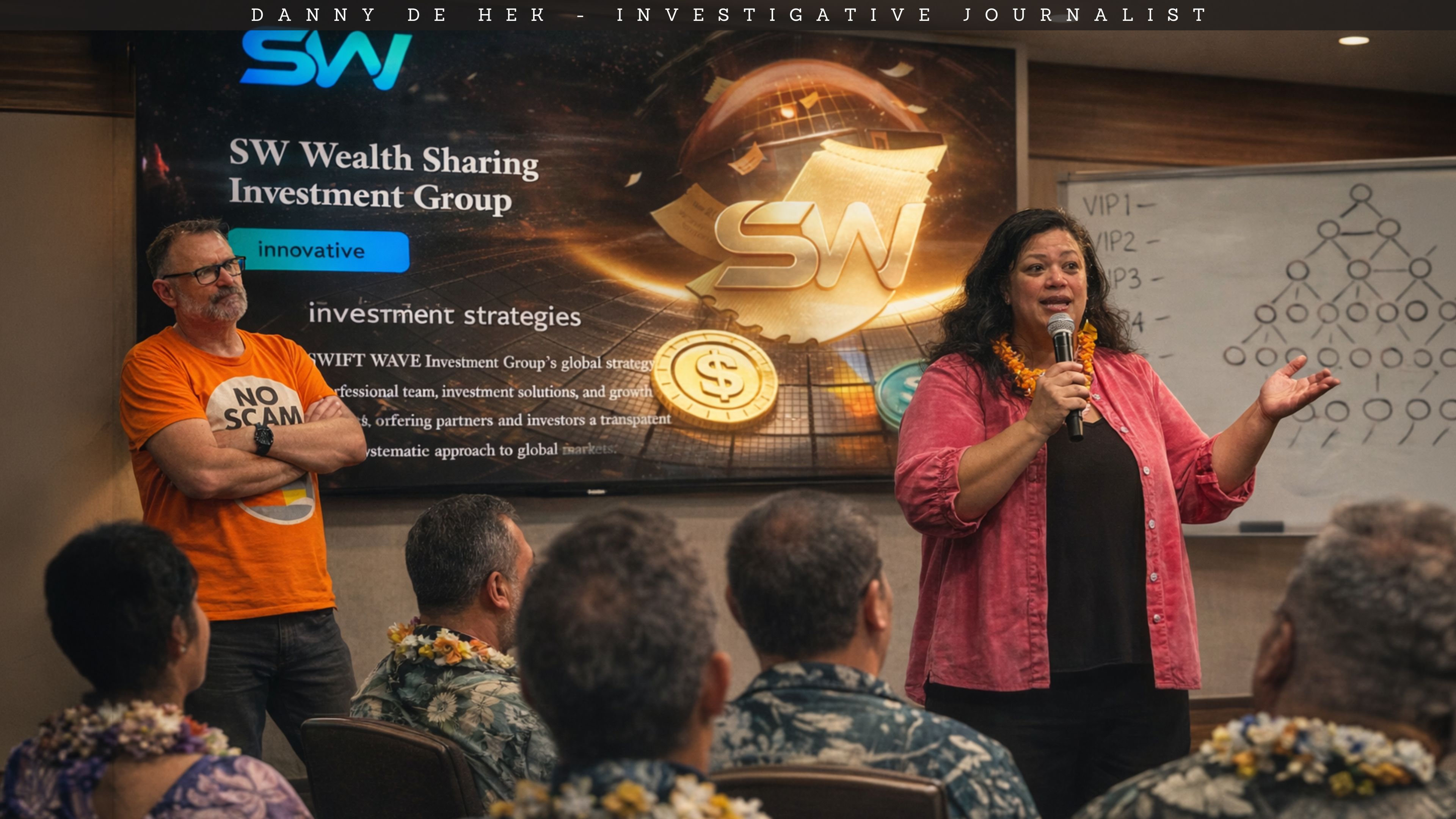
“When the names keep changing… but the structure doesn’t, you’re not looking at something new—you’re looking at something recycled.”
It didn’t take long to realise that Swift Wave Capital wasn’t something new. It surfaced the same way these schemes always do—through people. Promoters moving from one collapsed opportunity to the next, carrying their audience with them as if nothing happened.
 In this case, it was Faiana Brown. Someone who had already promoted Hyperverse, then Sam Lee’s “We Are All Satoshi,” then BG Wealth Sharing… and now Swift Wave Capital. That’s not coincidence. That’s a pattern. And when you follow the pattern instead of the pitch, everything starts to fall into place.
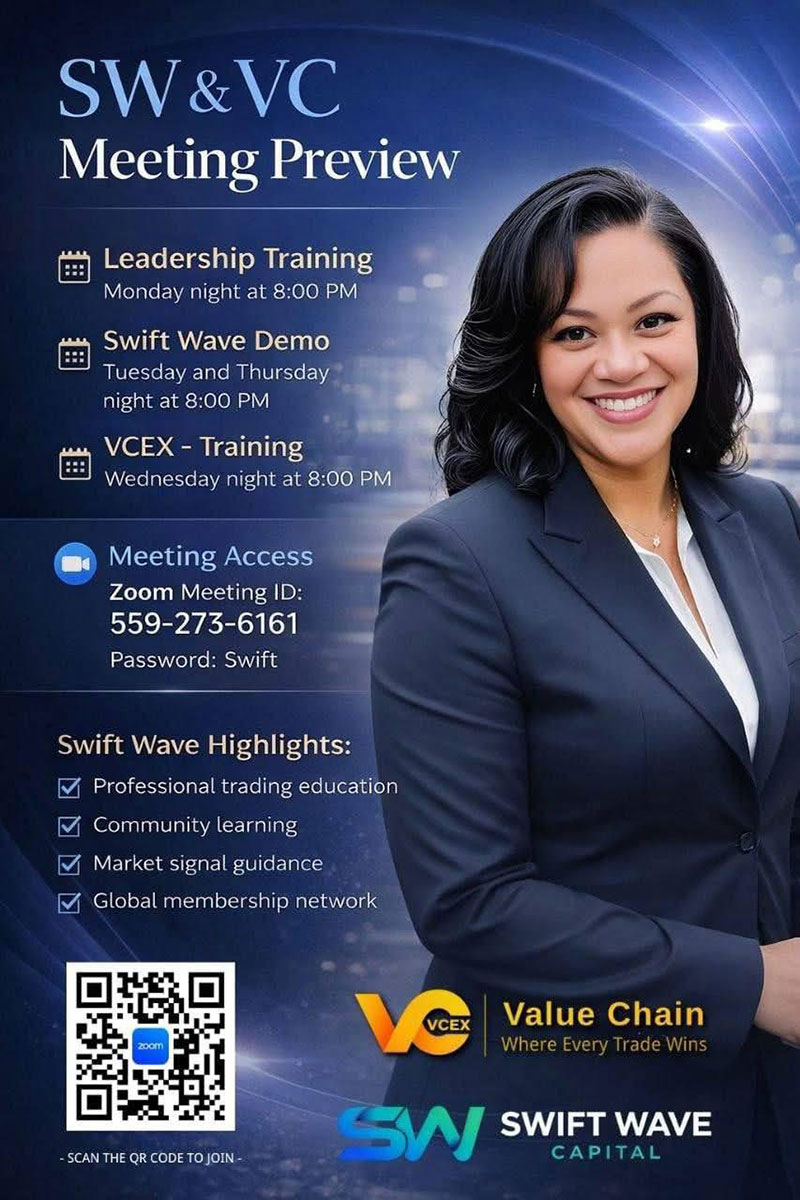
What stood out immediately wasn’t just the language—it was the structure. The same promises of financial freedom. The same talk about helping people escape poverty. The same “data-driven” narrative wrapped around a system that’s supposedly simple, safe, and accessible. But underneath, the mechanics are identical to BG Wealth Sharing.
You need:
- an invitation code
- a minimum deposit
- to follow their signals
And once you’re in, everything happens inside their ecosystem. They claim it’s non-custodial and transparent, yet every step funnels you into their controlled environment. That contradiction matters—because real independence doesn’t require this level of control.
The illusion of trading, and the reality underneath
At the centre of Swift Wave Capital is the same hook we’ve seen before: three daily trading signals, each using 1% of your account balance, presented as disciplined and low risk. They talk about removing emotion and letting the system do the work. On the surface, it sounds structured—even professional.
But when you look for proof, there’s nothing there.
- No independently verified trading history
- No audited results
- No external confirmation of real trades
Everything exists inside their own system, where they control what you see. That’s the key detail most people miss. Because if the signals, execution, and results are all contained within a closed environment, then the experience can be manufactured to look successful.
Then there’s the claim of “around 70% returns” while simultaneously talking about stability and controlled risk. Those two ideas don’t coexist in real trading. You don’t get low risk and high returns packaged together.
But as marketing, it works perfectly.
It removes fear while keeping the upside attractive.
This isn’t about education—it’s about building trust quickly.
The social proof that isn’t what it seems
Another piece of the puzzle is how Swift Wave Capital presents itself on social media. Groups of people sitting together, holding branded certificates, smiling for photos. On the surface, it looks like success. Like momentum. Like something real.
But when you step back, it tells a different story.
Those images don’t show:
- withdrawals
- profits
- verified trading success
They show participation.
And that’s a critical distinction. Because in systems like this, participation is the goal. The more people involved, the more legitimate it appears. It’s a form of manufactured social proof—designed to lower people’s guard and make the opportunity feel safe simply because others are doing it.
We’ve seen this tactic before, and it always serves the same purpose:
build trust first… ask questions later.
The onboarding funnel disguised as opportunity
The Instagram posts also reveal exactly how people are brought into the system. It’s simple, structured, and designed to move quickly.
You’re told to:
- deposit $500 or more using an invitation code
- unlock three daily signals
- trade using 1% of your balance
And then comes the real hook—inviting others.
Invite one person, and both of you receive additional signals. Invite more, and the rewards increase. There’s no real limit. The system actively encourages expansion.
That’s where the model reveals itself.
Because you’re not just participating in trading—you’re being incentivised to grow the network.
The signals keep people engaged.
But recruitment keeps the system alive.
The digital footprint that doesn’t match the story
For a company claiming to operate globally since 2020, Swift Wave Capital has a surprisingly weak and inconsistent online presence. Their YouTube channel was only created in 2024 and has minimal engagement. Their Instagram accounts are small, fragmented, and filled with promotional content rather than anything resembling a credible financial brand.
Then there’s the use of multiple domains, including ones that no longer work. That’s not normal for a legitimate operation. Constant domain changes are often a sign of a system trying to stay ahead of scrutiny or rebuild after exposure.
And finally, the contact method: a WhatsApp Number.
No verified office.
No proper onboarding process.
No regulatory framework.
Just direct messaging.
For something claiming to be a global investment platform, that’s not just unusual—it’s a major red flag.
The pattern we’ve already seen before
When you step back and connect everything—the structure, the messaging, the recruitment incentives, the social proof, the weak digital footprint—it becomes very clear what Swift Wave Capital actually is.
It’s not new.
It’s not innovative.
It’s a rebranded system following a proven formula.
We’ve seen it before:
- Hyperverse
- BG Wealth Sharing
- countless signal-based crypto schemes
And now this.
These systems don’t collapse because of bad luck. They collapse when new people stop joining. When recruitment slows down, the model breaks. And when it breaks, it’s always the same outcome.
The people who joined early might walk away with something.
The majority… don’t.
Swift Wave Capital isn’t different.
It’s just next in line.
Disclaimer: How This Investigation Was Conducted
This investigation relies entirely on OSINT — Open Source Intelligence — meaning every claim made here is based on publicly available records, archived web pages, corporate filings, domain data, social media activity, and open blockchain transactions. No private data, hacking, or unlawful access methods were used. OSINT is a powerful and ethical tool for exposing scams without violating privacy laws or overstepping legal boundaries.
About the Author
I’m DANNY DE HEK, a New Zealand–based YouTuber, investigative journalist, and OSINT researcher. I name and shame individuals promoting or marketing fraudulent schemes through my YOUTUBE CHANNEL. Every video I produce exposes the people behind scams, Ponzi schemes, and MLM frauds — holding them accountable in public.
My PODCAST is an extension of that work. It’s distributed across 18 major platforms — including Apple Podcasts, Spotify, Amazon Music, YouTube, and iHeartRadio — so when scammers try to hide, my content follows them everywhere. If you prefer listening to my investigations instead of watching, you’ll find them on every major podcast service.
You can BOOK ME for private consultations or SPEAKING ENGAGEMENTS, where I share first-hand experience from years of exposing large-scale fraud and helping victims recover.
“Stop losing your future to financial parasites. Subscribe. Expose. Protect.”
My work exposing crypto fraud has been featured in:
- Bloomberg Documentary (2025): A 20-minute exposé on Ponzi schemes and crypto card fraud
- News.com.au (2025): Profiled as one of the leading scam-busters in Australasia
- OpIndia (2025): Cited for uncovering Pakistani software houses linked to drug trafficking, visa scams, and global financial fraud
- The Press / Stuff.co.nz (2023): Successfully defeated $3.85M gag lawsuit; court ruled it was a vexatious attempt to silence whistleblowing
- The Guardian Australia (2023): National warning on crypto MLMs affecting Aussie families
- ABC News Australia (2023): Investigation into Blockchain Global and its collapse
- The New York Times (2022): A full two-page feature on dismantling HyperVerse and its global network
- Radio New Zealand (2022): “The Kiwi YouTuber Taking Down Crypto Scammers From His Christchurch Home”
- Otago Daily Times (2022): A profile on my investigative work and the impact of crypto fraud in New Zealand



Leave A Comment