


When scam fighters like myself get too close to the truth, the scam-fueled defense playbook kicks in.
And right on cue, NexQloud has sent me a formal legal response – drafted by Bell Gully partner Tania Goatley – demanding I publish their “right of reply.” So I’ve done just that. But it doesn’t end there.
Their APPENDIX A is packed with evasive jargon, redirection, and fluff — a PR smokescreen pretending to be a legal takedown. So let’s go line-by-line and expose what they’re really saying (and not saying).
1. Business Presence – Virtual Smoke and Mirrors
NexQloud proudly lists 228 Hamilton Avenue, Palo Alto, as a “legitimate business address.” What they don’t mention is that it’s a Regus virtual mailbox — a mail-drop service anyone can buy for $50/month. There is no actual NexQloud team on site. This isn’t Silicon Valley; it’s smoke and mirrors.
They then wave around their CRM system as proof they reply to messages. But multiple users (including myself) have tested this and received zero response. A CRM system doesn’t prove activity — it proves they know how to buy software.
2. Business Registrations – Delaware? So What?
Yes, NexQloud is registered in Delaware. So are 2 million shell companies. Delaware incorporation is the easiest path to minimal scrutiny in the U.S., and NexQloud leans on it like it’s a badge of honor.
They also deny any association with Juniman Kasman — a name I never even mentioned in my exposé. Why bring this up unless you’re nervous someone will connect you to another scam operation?
3. Product Viability and Pricing – Techno-Babble Disguising Empty Claims
NexQloud’s NanoServers are supposedly “custom-configured” with “Tamperlock™ encryption” and “Qloudscore™ benchmarks.” Not only are these unverified, they sound like marketing buzzwords, not real audited technology.
They say they’ve filed patents and are awaiting regulatory milestones. Translation? Nothing is approved. Filing a patent doesn’t mean anything is functional, let alone valuable.
Then there’s the 88% energy savings claim. Based on what? They say “internal benchmarks” — which means: we made it up and haven’t shown you the math.
4. CertiK Audit: A Fancy Badge for a Basic Code Check
Project Name: NexQloud
Scope: The CertiK audit focuses solely on a limited subset of Solidity-based smart contracts linked to NexQloud’s NFT and token systems — specifically functions like totalSupply, ownerOf, getApproved, balanceOf, and supportsInterface.
These contracts follow the ERC-721 and ERC-165 standards. CertiK performed formal verification checks to ensure these functions comply with mathematical rules known as “state invariants” — meaning they shouldn’t behave unexpectedly or corrupt the system under typical edge cases.
What the audit covers:
- Basic NFT/token interaction logic
- ERC-721 ownership functions
- ERC-165 interface compliance
What the audit does not cover:
- NexQloud’s NanoServer hardware
- Any part of the cloud infrastructure or so-called “Distributed Kubernetes Service”
- Business model, financials, or investment viability
- Code for the hosting dashboard, UI/UX, or tokenomics engine
- Any production security testing or validation of real-world operations
In plain English: this is a low-level code review, not a business audit.
Key Takeaways and Red Flags
CertiK makes it crystal clear:
“This report does not provide any indication of the technologies’ proprietors, business model or legal compliance.”
It goes even further to disclaim:
- This is not an endorsement
- The report cannot be used to evaluate investment risk
- CertiK offers no guarantees about security, reliability, or real-world suitability
NexQloud flaunting this audit as if it confirms they’re legit? That’s either intentionally deceptive or wildly naïve.
Findings from the Audit
The actual audit results were underwhelming — the kind of thing you’d expect from a junior dev project.
CertiK flagged standard categories like:
- Coding Style
- Use of Magic Numbers
- Volatile Code
- Inconsistencies
- Centralization risks
There’s no mention of how the NFTs are actually used, no tokenomics explained, and no connection to the infrastructure supposedly powering NexQloud’s grand decentralized vision.
Methodology Used
CertiK applied formal verification logic using predicate-based assertions like requires, ensures, and invariant to test contract functions.
But:
- This was done on isolated code blocks, not a deployed system
- They used boolean pass/fail outputs, not penetration testing or fuzzing
- There was no infrastructure-level review
Again: it’s a smart contract check-up, not a health report on the entire company.
But Can We Trust CertiK?
Even if the scope weren’t limited, CertiK’s reputation isn’t spotless.
Let’s not forget:
- CertiK audited Huione Guarantee, a Cambodian marketplace later tied to forced labour and human trafficking. They later apologised, admitting they failed their ethical duties.
- In another scandal, Kraken accused CertiK of exploiting a vulnerability to withdraw $3M, calling it extortion — not white-hat hacking.
- CertiK blamed the Kraken incident on a “rogue employee” and tried to spin it as a security test. Sound familiar?
Bottom line? CertiK’s due diligence has failed before. So if you’re relying on their audit as a badge of legitimacy, you’re standing on shaky ground — and hoping no one reads the fine print.
5. “External Media Sources” = Paid Adverts, Not Journalism
This claim is the most insulting to any real journalist:
“Multiple external media sources have reported NexQloud’s technology…”
No, they haven’t. All cited sources are paid placements or press release syndications:
- Yahoo Finance: Paid article, not an editorial
- GlobeNewswire: Company-written press release
- TechTimes: Copywritten fluff
- Forbes Georgia: Literally labeled “Paid Placement”
- BeInCrypto: Authored by “Advertorial”
I would wager that I am the first and only person to investigate NexQloud critically and independently.
6. Real-World Product? Still No Evidence
NexQloud says they’re live with clients using the dashboard. But where’s the proof?
They cite two demos:
So… you’ve got Tetris and Mario running on your servers? Great. That proves nothing about enterprise-grade cloud computing or decentralized infrastructure. Show us real customer deployments, independent benchmarks, or verifiable workloads.
They also say, “Access is available to approved users.” Who approves them? Where’s the application form? How do we verify they exist?
7. MLM Denial — But Something Doesn’t Add Up
NexQloud swears they aren’t MLM: “no override commissions,” “no tier-based rewards.”
Then what are influencers doing openly promoting NexQloud as a passive income opportunity? Why are tokens tied to hardware sales and yield projections being posted on Telegram?
And yes, while their Reg CF listing says “no guaranteed returns,” so do most Ponzi schemes. Disclaimers don’t cancel out structure.
8. App Store Trickery & Recycled Imagery — A Pattern of Deception
NexQloud’s app is published under Rydeum Technologies — not NexQloud Technologies, Inc. They excuse this as a shared infrastructure arrangement from an “incubation phase.” But for a supposedly transparent Web3 pioneer, hiding behind someone else’s developer account while handling investor funds is a glaring red flag.
It gets worse. The Rydeum website prominently features a stock photo of a young woman — the exact same image used to promote WEWE Global, a now-defunct Ponzi flagged by regulators worldwide. NexQloud’s defenders call this a coincidence. I call it a pattern. Scam factories recycle tactics: the same faces, the same fake credibility, the same unsustainable incentives. And when you mimic failed schemes down to the imagery, don’t expect to dodge scrutiny by calling it chance.
Inside Intel: What’s Really Inside a NexQloud “NanoServer”?
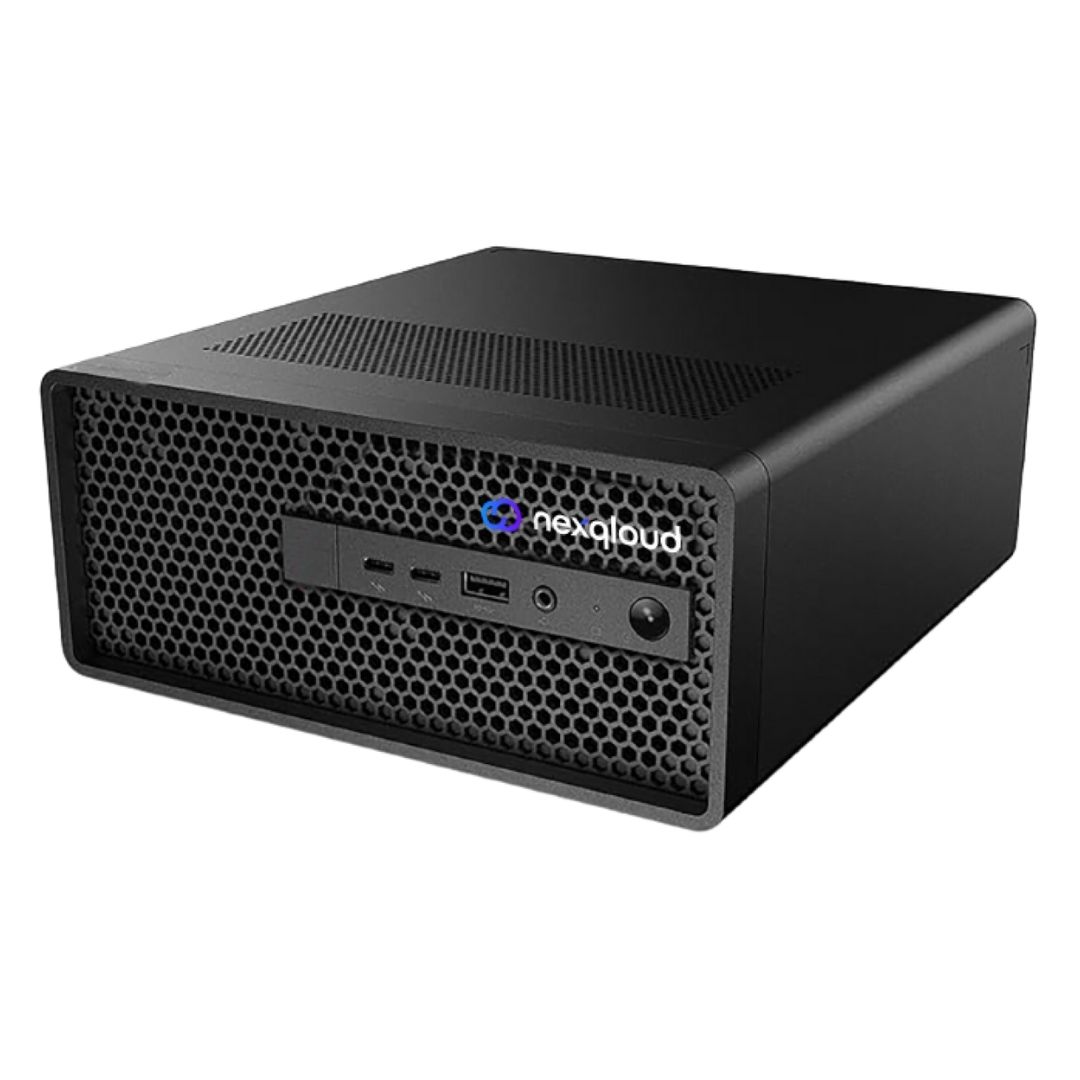
According to someone who’s physically inspected multiple NexQloud devices, these so-called “NanoServers” are nothing more than off-the-shelf HP and Lenovo desktops, repackaged with fancy logos. He confirmed they come with tamper-evident seals — likely to prevent buyers from discovering what’s actually under the hood. But when hooked up to a monitor, the devices showed minimal activity.
Even more damning: network traffic logs show almost zero data usage, a far cry from what you’d expect from devices supposedly supporting blockchain infrastructure. Translation? These machines are likely doing nothing — except acting as window dressing for an elaborate investment scheme.
Conclusion: A Response That Answers Nothing
Let’s be clear — this whole response is designed to appear thorough while dodging every single core question:
- No independent journalist has verified their claims
- No live customer case studies exist
- No peer-reviewed data on energy efficiency
- No real-world audit of NanoServers or business model
- No answer to public access, financial transparency, or token economics
And yet, they claim the high ground.
Final Word
NexQloud’s legal team asked me to publish their reply. I’ve done that. But now I’ve also published mine — and mine comes with evidence, critical thinking, and years of experience chasing crypto fraud across the globe.
A PR-laced appendix doesn’t absolve you. It just proves you’re scared of the truth getting out.
Previous NexQloud Blogs:
- Exposing NexQloud: A Rinse-and-Repeat Crypto Ponzi Masquerading as Cloud Innovation
- Scam Fishing: 4 Hours, 9 Zoom Scams, and a Laptop Full of Lies
- NexQloud’s NanoServer Nonsense – Defended by Law Firm Bell Gully and Partner Tania Goatley
Disclaimer: How This Investigation Was Conducted
This investigation relies entirely on OSINT — Open Source Intelligence — meaning every claim made here is based on publicly available records, archived web pages, corporate filings, domain data, social media activity, and open blockchain transactions. No private data, hacking, or unlawful access methods were used. OSINT is a powerful and ethical tool for exposing scams without violating privacy laws or overstepping legal boundaries.
About the Author
I’m DANNY DE HEK, a New Zealand–based YouTuber, investigative journalist, and OSINT researcher. I name and shame individuals promoting or marketing fraudulent schemes through my YOUTUBE CHANNEL. Every video I produce exposes the people behind scams, Ponzi schemes, and MLM frauds — holding them accountable in public.
My PODCAST is an extension of that work. It’s distributed across 18 major platforms — including Apple Podcasts, Spotify, Amazon Music, YouTube, and iHeartRadio — so when scammers try to hide, my content follows them everywhere. If you prefer listening to my investigations instead of watching, you’ll find them on every major podcast service.
You can BOOK ME for private consultations or SPEAKING ENGAGEMENTS, where I share first-hand experience from years of exposing large-scale fraud and helping victims recover.
“Stop losing your future to financial parasites. Subscribe. Expose. Protect.”
My work exposing crypto fraud has been featured in:
- Bloomberg Documentary (2025): A 20-minute exposé on Ponzi schemes and crypto card fraud
- News.com.au (2025): Profiled as one of the leading scam-busters in Australasia
- OpIndia (2025): Cited for uncovering Pakistani software houses linked to drug trafficking, visa scams, and global financial fraud
- The Press / Stuff.co.nz (2023): Successfully defeated $3.85M gag lawsuit; court ruled it was a vexatious attempt to silence whistleblowing
- The Guardian Australia (2023): National warning on crypto MLMs affecting Aussie families
- ABC News Australia (2023): Investigation into Blockchain Global and its collapse
- The New York Times (2022): A full two-page feature on dismantling HyperVerse and its global network
- Radio New Zealand (2022): “The Kiwi YouTuber Taking Down Crypto Scammers From His Christchurch Home”
- Otago Daily Times (2022): A profile on my investigative work and the impact of crypto fraud in New Zealand





Leave A Comment