


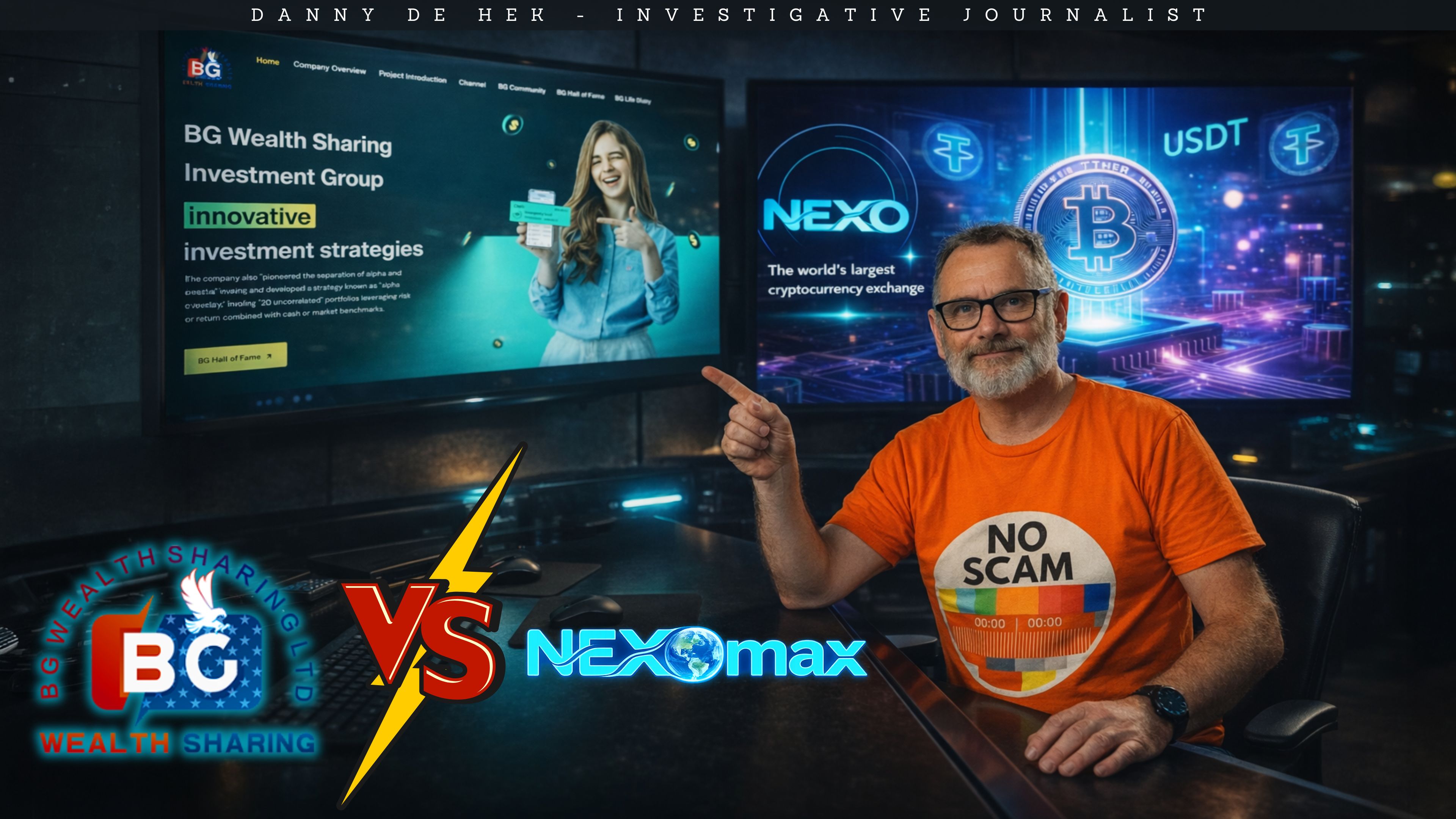
“This isn’t innovation — it’s replication. Same system, different logo.”
Another week, another “crypto opportunity” — and this one looks identical to a growing list of near-identical platforms currently doing the rounds.
I’m writing this to warn people who genuinely believe this is legitimate trading, because what’s unfolding right now is not a new opportunity — it’s a continuation of a system that has already burned people before.
What we’re seeing with NEXO Trading Global fits into a repeating cycle of rebranded Ponzi-style schemes that I’ve been tracking for years. These platforms don’t appear out of nowhere — they emerge at very specific moments, usually just as confidence in the previous version begins to crack, giving existing participants somewhere new to move their money while pulling in a fresh wave of victims who think they’ve found something early.
After five years researching scams like this, one thing has become impossible to ignore: people don’t lose money because they’re careless — they lose money because these systems are engineered to look legitimate at every stage. The branding improves, the story becomes more convincing, the documents look more official, and the people promoting it often genuinely believe what they’re saying.
But underneath all of that, the structure doesn’t change — and neither does the outcome.
Where this actually started
To understand what we’re seeing now, you have to step back and look at the pattern as a whole, not just one brand in isolation. These schemes don’t appear randomly — they evolve, rebrand, and resurface in ways that only become obvious when you’ve been watching them long enough.
To the best of my knowledge, this sequence appears to have started with CR GROUP LLC (UICEX), which had all the characteristics of a testing phase, with strong activity in New Zealand. It was smaller, more contained, and gave the operators a chance to refine the system — how people joined, how withdrawals were handled, and how trust was built. When that version began to break down, the same structure didn’t disappear — it simply re-emerged under a new name.
 That next phase was Signal Raiders, which followed the same formula but with more polish. It introduced structured messaging around twice-daily trades, “up to 5 phases per signal,” and required users to paste order codes into an app to follow signals. It gave the illusion of precision and control, making the process feel more technical and legitimate, even though the underlying mechanics hadn’t changed.
Then came BG Wealth Sharing — and that’s where everything escalated.
 This wasn’t just another relaunch. It was a global rollout, and in my view, one of the fastest-growing scams I’ve ever seen. It spread rapidly across countries, built momentum through aggressive promotion, and created the impression of a large-scale, coordinated trading operation. At the same time, regulators began to take notice. According to BehindMLM (a tip of the hat to Oz), even the Central Bank of The Bahamas confirmed that associated platforms like DSJEX are not licensed and are actively targeting investors with misleading claims.
At this point, this is no longer a small or isolated scheme — it’s a global system that is still actively running, still attracting new participants, and still presenting itself as legitimate trading.
What happens right before these schemes collapse
We’ve already seen how this ends — and it doesn’t happen overnight. It follows a pattern, and when you recognise that pattern, the warning signs become impossible to ignore.
By mid-December 2025, CR GROUP LLC (UICEX) members were told withdrawals were “temporarily paused.”
Not cancelled.
Not denied.
Just delayed.
At first, the explanations sounded reasonable — and that’s exactly why people accepted them. There was always a story, always a justification, always a reason to stay calm and trust the process:
- Christmas bonuses were being processed
- Platform upgrades were underway
- Alleged fraudulent activity by unnamed users needed to be addressed
- Reassurances that everything would resume shortly
Individually, each excuse sounded plausible. Together, they created just enough doubt to stop people from reacting quickly.
But then the tone shifted.
The rules changed, and suddenly it was no longer about waiting — it was about paying.
Members were told they needed to deposit a 20% “verification” fee, calculated against their account balance, before they could withdraw anything at all. They were given a deadline, and if they missed it, their funds would be locked for years.
That’s the moment the illusion started to break.
Because once a platform moves from delaying withdrawals to charging people to access their own money, it’s no longer operating as an investment system — it’s extracting whatever it can before the collapse.
For many, that was the point where they quietly realised something was very wrong.
Why this matters right now
BG Wealth Sharing has not collapsed yet — and that’s exactly why this moment matters.
From the outside, everything can still look like it’s working. Payments are still being shown, promoters are still confident, and the narrative is still being controlled. But from experience, this is often the stage where the pressure is building behind the scenes, even if most participants can’t see it yet.
As these schemes grow, the dynamics start to shift. More people begin trying to withdraw. Larger balances accumulate. Regulators start issuing warnings. And the system — which was never designed to handle sustained outflows — begins to strain under its own weight. It doesn’t break immediately, but the cracks start to form.
I’m not saying it has collapsed — but I am saying this:
This is typically the phase where things can change very quickly.
When confidence starts to slip, even slightly, behaviour changes. And if enough people try to withdraw at the same time, it doesn’t just create pressure — it can expose the reality of the system almost overnight.
That may create panic. But it also serves a purpose.
Because once the illusion is broken, the flow of new money slows down — and that’s often what prevents even more people from walking into the same trap.
Where NEXO Trading Global fits in
Now we come to NEXO Trading Global — and this is where things start to make more sense when you look at the bigger picture.
On the surface, it presents itself as a professional, established financial platform, the kind of operation you’d expect to have years of history behind it. The branding is polished, the messaging is confident, and everything is positioned to give the impression that this is a mature, credible system already operating at scale.
But when you look at the documents being circulated, a very different picture emerges.
The company NEXO LIMITED was only incorporated in February 2026, using a shared address in Denver and a registered agent service — the kind of setup commonly used for basic company formation, not for running a global trading operation. Alongside that, they reference a FinCEN MSB registration, which is often misunderstood or deliberately misrepresented. It does not mean the business is approved, regulated, or endorsed — in fact, it explicitly states that it does not verify or legitimise the activity being promoted.
That contrast is critical.
You have a platform presenting itself as established and globally trusted, while the underlying structure points to something very new, very thin, and largely unverified.
And this is where it connects back to everything we’ve already seen.
Because while BG Wealth Sharing is still actively running, another platform appears — already built, already branded, already positioned as the next place for people to put their money.
Not as a replacement.
Not as a restart.
But as a continuation.
That’s how these systems sustain themselves — by always having the next version ready before the current one begins to fail.
The “Professor” problem: the face behind the story
At the centre of BG Wealth Sharing sits a figure known as “The Professor” — typically presented as Stephen Beard. He is positioned as the founder, the expert trader, and the individual responsible for generating the profits that the entire system depends on.
That role is not a minor detail.
It is fundamental to how the entire story holds together.
Every part of the narrative flows through this one figure. Promoters point to him as the reason the system works, the justification for the returns, and the source of confidence that keeps people invested. Without that central authority figure, the model becomes much harder to explain — and much harder to believe.
Promoters rely on him to:
- Provide authority
- Justify the returns
- Create a sense of trust and leadership
But this is where the story begins to break down.
A man presented as the brains behind a global investment operation — especially one claiming to generate consistent profits at scale — should have a clear and verifiable professional footprint. That would normally include regulatory history, industry recognition, academic credentials, or at the very least a documented track record that stands up to basic scrutiny.
In this case, that footprint does not exist in any meaningful, independently verifiable way.
And that absence matters.
Because when the central figure in a financial operation cannot be verified through normal channels, it raises a fundamental question — not about the person, but about the role they are playing within the system.
That’s not a coincidence.
It’s a red flag built into the structure itself.
Same script, new “expert”
Now we’re seeing the same structure appear again — but with a different name.
Instead of Stephen Beard, the authority figure shifts to Philip J Hermann, positioned as the CEO or leading figure behind NEXO Trading Global. On the surface, it feels like a new setup — a new company, a new leadership team, a new opportunity. But when you look closely, the underlying structure hasn’t changed at all.
The model still revolves around a single central figure, presented as the expert behind the operation — the person responsible for generating the profits and guiding the system. That individual becomes the focal point for trust, the explanation for the returns, and the reason people feel confident putting their money in.
Strip it back, and the pattern is identical:
- One central “expert”
- One source of trading signals
- One figure responsible for the returns
Only the name changes.
And that’s the key point.
Because when the structure stays the same but the identity of the “expert” changes, you’re not looking at a new opportunity — you’re looking at the same script being reused, with a different face assigned to play the role.
The illusion of legitimacy
This is a well-known tactic — and once you recognise it, you start to see it everywhere.
A company is registered, official-looking documents are produced, and those documents are then used in marketing material to create the appearance of credibility. To someone unfamiliar with how these systems work, it looks convincing. There are certificates, registration numbers, addresses, and references to compliance — all the visual signals people associate with a legitimate business.
But when you slow it down and actually examine what’s being presented, the picture changes.
What’s being shown here is not evidence of a functioning trading operation — it’s a basic administrative setup dressed up to look like something much bigger:
- A newly formed company (February 2026)
- A shared commercial address, not an operational headquarters
- A registered agent service acting as a front
- A FinCEN MSB listing being misrepresented as approval
Individually, none of these things are unusual. But together, they create a false sense of legitimacy — enough to convince people that there must be something real behind it.
And that’s the trap.
Because company registration is not regulation.
MSB registration is not approval.
And none of this provides any evidence that real trading activity is taking place.
What it does show is how easily a structure can be built to look legitimate — even when the underlying operation remains completely unverified.
The illusion of trading
Once you look past the branding, the structure becomes very familiar — especially if you’ve seen this before.
On the surface, everything is presented in a way that feels like trading. There are dashboards, signals, charts, and daily updates that give the impression of activity and precision. It looks structured. It looks technical. And for many people, that’s enough to believe there must be something real happening behind the scenes.
You’ll typically see:
- Consistent or “guaranteed” returns
- Smooth, upward-trending profit curves
- Signal-based or “AI-driven” trading explanations
- Ongoing encouragement to increase deposits over time
This is where people get caught — not because they’re naive, but because the system is designed to mimic the appearance of legitimate trading.
But real trading doesn’t behave like this.
Markets move unpredictably. Profits fluctuate. Losses are part of the process. There are no systems that can produce stable, predictable returns day after day without deviation.
So when the results are smooth, consistent, and always moving in one direction, you’re not looking at trading.
You’re looking at a controlled payout system, designed to simulate success while being funded by incoming deposits rather than genuine market activity.
Where is the money actually coming from?
This is the question almost nobody asks — and it’s the one that matters most.
If this were real trading, profits would come from the market. There would be wins, losses, volatility, and risk. But that’s not what’s being presented here. The returns are consistent, predictable, and controlled, which immediately raises a much bigger issue:
If it’s not coming from trading… where is it coming from?
Based on its structure and behaviour, this appears to operate as a Ponzi-style scheme — where returns are funded by new participants rather than genuine trading activity.
The uncomfortable reality is that in systems like this, payouts are typically funded by new money entering the platform. That means when someone receives a withdrawal, it’s not the result of successful trading — it’s coming from other participants who joined after them.
And that’s where the ethical line becomes impossible to ignore.
Because people often feel they’ve “earned” their returns. They’ve:
- Completed daily tasks
- Followed the system
- Recruited others
- Invested time and energy
But effort doesn’t change the source of the money.
If the system isn’t generating real external profits, then any payout is simply a redistribution of funds between participants — where earlier withdrawals are funded by those who joined later. The structure only works while new money continues to flow in, and once that slows down, the entire system begins to fail.
That leads to a difficult but necessary realisation:
Getting out early doesn’t mean you’ve won — it means someone else is left carrying the loss.
So when we talk about people “getting out,” it’s not about encouraging anyone to take the money and ignore what’s happened. It’s about understanding the reality of the system, reducing further harm, and recognising that the longer these schemes continue, the more people are pulled in at the bottom.
Because in the end, the system doesn’t create wealth.
It moves it — from one group of people to another — until there’s nothing left to move.
What we’re seeing now
What makes this situation more concerning is that we’re no longer looking at a single platform operating in isolation — we’re now seeing multiple platforms emerge with strikingly similar structures at the same time.
That overlap matters.
Because when one opportunity appears, it can be dismissed as a one-off. But when several platforms begin to mirror each other — in how they present themselves, how they operate, and how they promise returns — it starts to point toward something much more deliberate.
Right now, that includes:
- BG Wealth Sharing
- VSTSA
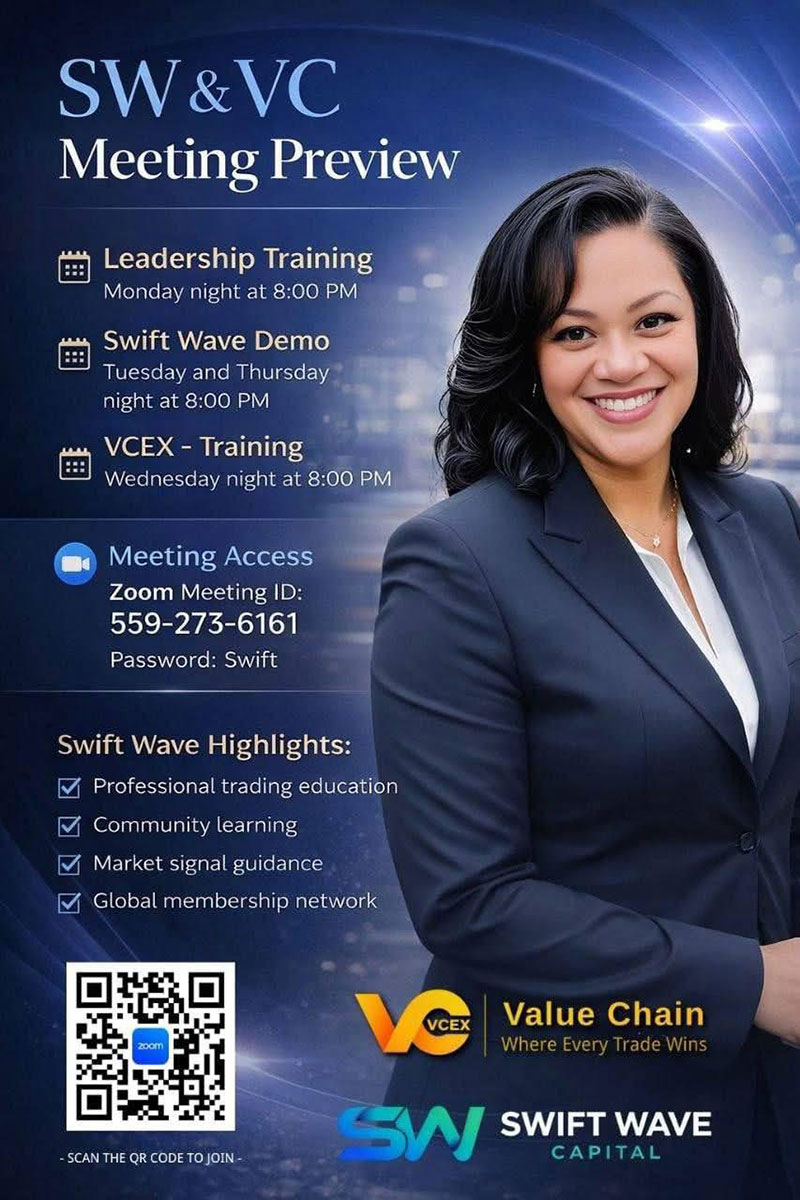
- Swift Wave Capital
- And now NEXO Trading Global [nex.afirrmjob.com, nexo-ox.top, nexo-ox.co or nexo-bn.com]
At this stage, I’m not saying these are all definitively linked — but the similarities are too strong, and too consistent, to ignore.
They follow the same playbook.
They rely on the same messaging.
And they produce the same type of results.
Same structure. Same promises. Same outcome.
The strategy behind it
After years of tracking these types of operations, what starts to emerge is not randomness — it’s a repeatable strategy.
These schemes don’t just appear and disappear. They evolve in stages, adapting as they go, learning what works, and refining how they attract and retain people. When you step back and look at the bigger picture, the pattern becomes much clearer.
They appear to:
- Test the system in smaller or less scrutinised markets
- Scale it aggressively once the model proves effective
- Then introduce new brands as pressure begins to build
Each stage serves a purpose. Testing allows them to refine the messaging and mechanics. Scaling brings in volume and momentum. And rebranding gives them a way to extend the life of the operation, even when confidence in the original version starts to weaken.
This is how the cycle sustains itself.
Because to the people joining, each version feels like a new opportunity — something early, something different, something worth getting into before it takes off. But from the outside, especially if you’ve been watching it long enough, it becomes obvious that nothing fundamental has changed.
It’s the same structure.
The same model.
The same outcome — repeating itself under a new name.
Pig butchering, and who’s really behind it
This follows what’s commonly known as pig butchering — a model designed to maximise extraction over time.
It starts with trust. Small wins are shown. Withdrawals are processed. Confidence builds. Then, gradually, participants are encouraged to deposit more, stay longer, and often bring others into the system.
Yes, some people get paid. You might even withdraw some of your own money.
But unless you recruit, you’re not making money — because the system relies on new deposits, not real profits. What looks like trading success is simply money being recycled through the network, with new participants funding those who came in earlier.
And that leads to a bigger question:
Who is actually running this?
Because when you look closely, there is no transparent, verifiable company structure behind any of these platforms. The names change, the branding changes, and the so-called leadership figures come and go — but there is no accountable organisation that can be independently verified.
Based on the structure, behaviour, and patterns seen across multiple versions of this scheme, my view is that this is not being run by a legitimate investment company at all, but by organised scam networks operating across multiple regions.
There is also a growing body of evidence globally linking these types of operations to industrial-scale scam compounds, where individuals are often coerced into running fraudulent investment schemes targeting victims worldwide.
If that is the case here, then this isn’t just a financial scam.
It may be part of a much larger system of organised exploitation — where the people promoting it are not always in control, and the people investing in it are unknowingly helping to fund it.
The legal risk no one talks about
There’s another side to this that rarely gets discussed — and it’s the part that catches people off guard later.
If you profit from something like this, there is a real risk of clawback. That means any money you’ve withdrawn — especially if it came from funds deposited by other participants — can be recovered through legal action once the scheme is investigated or shut down. What feels like profit at the time can later be reclassified as money taken from other victims.
That’s where things become very real.
You may be required to:
- Repay profits you’ve already withdrawn
- Account for how those funds were earned
- Potentially face legal scrutiny if you were actively promoting the platform
And that last part matters more than most people realise.
Because promoting these types of platforms can involve unregistered financial products or securities, which are regulated in many jurisdictions. Sharing links, recruiting others, or encouraging investment may not feel like a legal risk in the moment — but it can carry serious consequences once authorities step in.
Ignorance doesn’t protect you.
And by the time this becomes an issue, it’s usually too late to undo the damage.
The outcome is always the same
BG Wealth Sharing is still running — and that’s exactly why people need to pay attention now, not later.
Because if you’ve seen this pattern before, you already know what tends to happen next. It doesn’t end with a smooth exit or a controlled shutdown. It ends when withdrawals slow, excuses begin, and access to funds becomes increasingly difficult — often just as confidence starts to break.
At the same time, something new appears.
In this case, NEXO Trading Global is already being positioned as the next opportunity — ready, branded, and waiting for people looking for a place to move their money when doubt starts to creep in.
That’s how the cycle continues.
This is not trading. This is not investing. This is a repeating system that relies on belief, momentum, and constant inflow.
And when that flow slows down, the outcome doesn’t change.
Because the money people think they’re earning isn’t being created —
it’s coming from other people entering after them.
Which means “getting out” isn’t as simple as winning.
It means understanding what you’re actually walking away with — and who is left behind to carry the loss.
The only real question isn’t whether it will collapse —
it’s who gets out before it does… and who gets left behind.
Disclaimer: How This Investigation Was Conducted
This investigation relies entirely on OSINT — Open Source Intelligence — meaning every claim made here is based on publicly available records, archived web pages, corporate filings, domain data, social media activity, and open blockchain transactions. No private data, hacking, or unlawful access methods were used. OSINT is a powerful and ethical tool for exposing scams without violating privacy laws or overstepping legal boundaries.
About the Author
I’m DANNY DE HEK, a New Zealand–based YouTuber, investigative journalist, and OSINT researcher. I name and shame individuals promoting or marketing fraudulent schemes through my YOUTUBE CHANNEL. Every video I produce exposes the people behind scams, Ponzi schemes, and MLM frauds — holding them accountable in public.
My PODCAST is an extension of that work. It’s distributed across 18 major platforms — including Apple Podcasts, Spotify, Amazon Music, YouTube, and iHeartRadio — so when scammers try to hide, my content follows them everywhere. If you prefer listening to my investigations instead of watching, you’ll find them on every major podcast service.
You can BOOK ME for private consultations or SPEAKING ENGAGEMENTS, where I share first-hand experience from years of exposing large-scale fraud and helping victims recover.
“Stop losing your future to financial parasites. Subscribe. Expose. Protect.”
My work exposing crypto fraud has been featured in:
- Bloomberg Documentary (2025): A 20-minute exposé on Ponzi schemes and crypto card fraud
- News.com.au (2025): Profiled as one of the leading scam-busters in Australasia
- OpIndia (2025): Cited for uncovering Pakistani software houses linked to drug trafficking, visa scams, and global financial fraud
- The Press / Stuff.co.nz (2023): Successfully defeated $3.85M gag lawsuit; court ruled it was a vexatious attempt to silence whistleblowing
- The Guardian Australia (2023): National warning on crypto MLMs affecting Aussie families
- ABC News Australia (2023): Investigation into Blockchain Global and its collapse
- The New York Times (2022): A full two-page feature on dismantling HyperVerse and its global network
- Radio New Zealand (2022): “The Kiwi YouTuber Taking Down Crypto Scammers From His Christchurch Home”
- Otago Daily Times (2022): A profile on my investigative work and the impact of crypto fraud in New Zealand



Leave A Comment