



I’ve been investigating a $300–$500 million alleged Ponzi scheme based in Orlando, Florida: GOLIATH VENTURES INC.
On the surface, most people believe it was founded — and run — by Christopher “Chris” Delgado. But the deeper I dig, the more this story starts to look like something else entirely: a manufactured image, built on social proximity, political photo ops, and carefully selected “proof” designed to stop people asking the obvious questions.
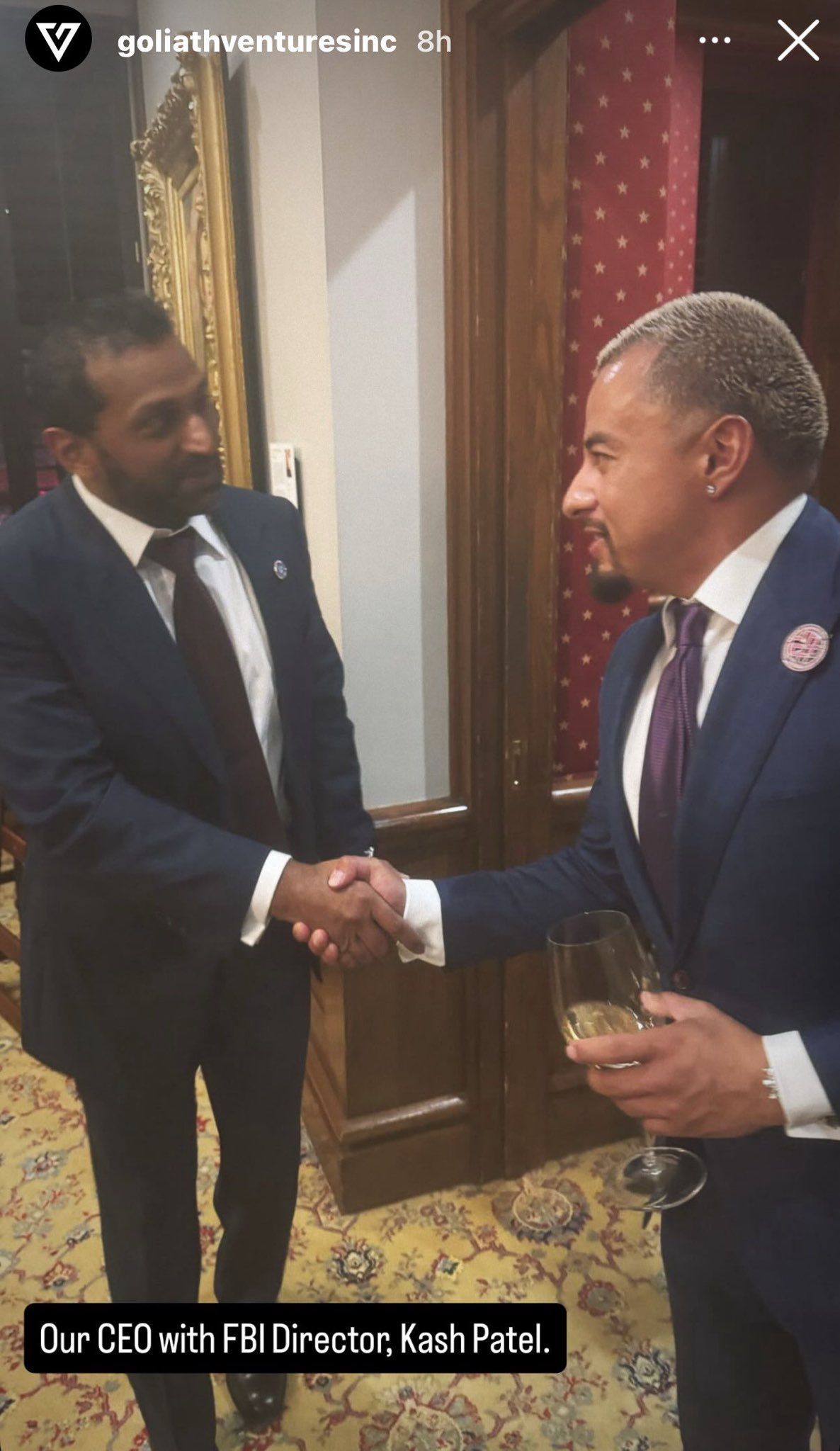
Goliath has repeatedly leveraged photo opportunities and name-drops with high-profile political figures — including Kash Patel, Mike Johnson, and Eric Trump — to project an illusion of legitimacy and powerful connections. In an environment like Orlando, that kind of proximity works like a shortcut: people assume credibility, even when the underlying business remains unverified.
“Behind every Ponzi scheme is not just greed, but arrogance — the belief they’ll never get caught.”
And that brings me to the uncomfortable part.
 After digging into Goliath’s history, contracts, investor testimony, and archived material, I’ve uncovered evidence that Christopher “Lord” Delgado may not be the mastermind everyone thinks he is. One emerging hypothesis — supported by documented overlap and striking structural similarities — is that the operation mirrors the tactics of My Liquidity Partner (MLP), a separate liquidity-pool scheme connected to Verlin Sanciangco, a man with a documented fraud history and court proceedings that matter.
The parallels are too consistent to ignore. And if they point where they appear to point, then what investors believed was a “successful private investment firm” may instead be a rebrand of an older playbook — repackaged, relaunched, and scaled under a new face.
Point of this post
This post serves three very specific audiences.
- If you are an FBI, HSI, SEC, or other U.S. government investigator, this article lays out — in plain language — how the crypto liquidity pool narrative was presented to victims, how confidence was manufactured, and how investor funds were solicited. The referenced lawsuit and court filings provide a factual framework that may assist investigators in understanding the structure, representations, and potential violations connected to Christopher Delgado and Goliath Ventures Inc.
- If you are an investor in Goliath Ventures, this post is meant to be read carefully — more than once. Every claim can be independently verified. If you were persuaded to believe you could earn consistent, risk-free returns from crypto liquidity pools, this is your opportunity to reassess those assumptions, review the evidence for yourself, and take whatever steps are still available to protect your position.
- And if you are someone who recruited others, received preferential terms, or profited by promoting this opportunity, this post is a reminder that proximity does not equal immunity. When investment structures collapse, attention does not stop at the front-facing figure. It follows the money, the introductions, and the representations made along the way — often for years afterward.
- Based on the documented history of My Liquidity Partner, the structural similarities now visible in Goliath Ventures Inc, and the continuity of personnel and narratives, it is reasonable to ask whether regulators may view this as more than an isolated failure. Long-running schemes, rebrands, and overlapping operations are factors that law enforcement routinely examines when assessing broader patterns of conduct.
Fake success: “Sir Verlin” to “Lord Delgado”
As set out in a civil complaint filed in the United States District Court for the Northern District of Texas, Dallas Division (No. 3:22-CV-01877-S), plaintiffs describe a deliberate strategy used by Verlin Sanciangco to manufacture credibility and induce investment. The complaint states:
“Defendant Sanciangco created a false image of himself, one where he had a flashy, expensive lifestyle and conducted business in places like Dubai and London. He used this manufactured image to induce Plaintiffs to enter into a business relationship wherein they would not only invest, but use their vast business knowledge, experience, and list of contacts to find additional investors.”
That description is not commentary. It is a direct allegation contained in sworn court filings, forming part of the factual basis of the case.
What makes this especially relevant to Goliath Ventures is the near-identical pattern later observed with Christopher Delgado.
Sanciangco reportedly encouraged investors to refer to him as “Sir Verlin,” presenting himself as a figure of elevated status within the crypto and private investment world. Delgado would later adopt a similar posture, publicly styling himself “Lord Delgado.” In both cases, the title functioned as more than branding — it acted as a social signal of authority, success, and exclusivity, designed to reduce skepticism before verifiable proof was provided.
The significance here is not the titles themselves, but the method. In both narratives, image preceded substance. Lifestyle, symbolism, and perceived status were used to establish trust before transparent disclosures, audited results, or independently verifiable business operations were produced.
When a court filing alleges that manufactured prestige was used to induce investment in one scheme, and a materially similar presentation later appears in another, the resemblance becomes relevant. It helps explain how confidence was cultivated, how networks were leveraged, and why due diligence was often bypassed.
This is not speculation. It is a documented pattern — one grounded in sworn allegations on the record, and echoed in the public-facing behaviour of those who later occupied similar roles in Goliath Ventures Inc.
The Crypto Liquidity Pool Lie: How both scams claim to generate yield
Both My Liquidity Partner (MLP) and Goliath Ventures Inc (GVI) rely on the same core narrative to justify their promised returns: a supposed investment strategy based on cryptocurrency liquidity pools.
This is not speculation. The structure of this pitch is described in court documents filed in the Resound Structured Holdings lawsuit against Smart Contract Solutions and Verlin Sanciangco, and mirrors the explanations later given to Goliath Ventures investors.
According to those representations, the business model works as follows:
- Liquidity pools are said to hold paired cryptocurrencies, such as USDC and ETH.
- When traders swap assets on decentralised exchanges, the pool collects a small transaction fee — typically around 0.3% per trade.
- To operate these pools, the platform claims it needs capital from so-called “Liquidity Partners”, who supply cryptocurrency to be deployed into the pools.
- Those partners are told their funds are “staked” — meaning locked into blockchain systems that supposedly generate consistent returns.
- In exchange, investors are promised fixed, recurring payouts, often described as 2.25% per week (more than 117% annually), or in Goliath’s case, 4–8% per month.
- An introducer or referral network is paid commissions for bringing in new partners, expanding the pool of incoming capital.
On paper, this explanation sounds technical. In reality, it collapses under even basic scrutiny.
No legitimate liquidity-pool operation can guarantee fixed weekly or monthly returns, especially at the rates being promoted. Real decentralised finance (DeFi) liquidity provision produces variable returns, is exposed to impermanent loss, market volatility, smart-contract risk, and fluctuating trading volumes. Returns — when they exist at all — are typically a fraction of what MLP and Goliath advertised, and they are never risk-free.
The promise of fixed yield, combined with referral commissions, is the critical red flag. It means payouts are not being generated by market activity, but are instead dependent on continuous inflows of new investor money — the defining characteristic of a Ponzi structure.
In short, the “liquidity pool” narrative functions as a technical smokescreen. It borrows legitimate terminology from DeFi, strips out the risks, inflates the returns, and repackages the result as a predictable income product. That is not how liquidity pools work — and it is not how legitimate investment operations behave.
This same pitch appears in both MLP and Goliath Ventures, unchanged in substance, despite being contradicted by market reality and, in MLP’s case, by allegations already tested in court.
Donating investor funds for legitimacy and visibility
Both My Liquidity Partner (MLP) and Goliath Ventures Inc employed a similar credibility-building tactic: public association with charitable causes and philanthropic initiatives.
In the case of My Liquidity Partner, representations were made to investors that portions of proceeds would be directed toward charitable activity through entities such as the Ruby Family Foundation. These claims were presented as evidence of financial strength, social responsibility, and long-term sustainability.
Goliath Ventures later adopted a comparable approach. The company publicly positioned itself as a sponsor of high-profile charitable events in the Orlando area, including fundraisers connected to children’s cancer organisations and Gandhi Day of Service. These sponsorships were repeatedly referenced in marketing materials, newsletters, and investor communications as proof of legitimacy and operational success.
In one documented instance, Goliath Ventures was listed as a sponsor of Kids Beating Cancer in Orlando. After concerns were raised regarding the source of funds and the status of investor withdrawals, the charity removed Goliath Ventures from its promotional materials. The charity was informed that the funds being used to support sponsorship claims may have originated from investor capital rather than verified operating profits.
An August 2024 Goliath Ventures newsletter further claimed that the company had donated $200,000 to a children’s charity. No accompanying financial disclosures were provided to demonstrate whether this donation originated from operational revenue, personal funds, or pooled investor capital.
This distinction matters. When an investment operation lacks verified income streams, charitable donations and sponsorships raise a critical and unresolved question: whose money was actually being donated?
Across both MLP and Goliath Ventures, philanthropy appears to have functioned less as a by-product of genuine profitability and more as a marketing instrument — reinforcing trust, disarming skepticism, and creating social proof during periods when investors were not receiving transparent financial reporting or timely withdrawals.
The Telling Domain Registration Dates
The domain registration timelines for My Liquidity Partner and GOLIATH VENTURES INC reveal an overlap that warrants scrutiny.
MyLiquidityPartner.com was registered on October 29, 2021.
GoliathVenturesInc.com was registered on October 9, 2021.
Both domains were registered through GoDaddy, within a 20-day window.
This timing does not, by itself, prove that the two schemes were created or controlled by the same party. However, in the context of the broader evidence — overlapping personnel, mirrored narratives, and a near-identical investment pitch — the proximity of these registrations is notable.
There is also the possibility that MyLiquidityPartner.com later expired and was re-registered by a different party, which cannot be ruled out based on public WHOIS data alone.
What can be stated as fact is this: domain registrant details beyond basic metadata are not publicly visible, and determining whether the same individual or entity registered both domains would require formal legal process. Platforms such as GoDaddy can be compelled to disclose registrant information only through subpoena or court order.
As with many elements in this investigation, the domain data is not presented as proof, but as part of a pattern — one that raises reasonable questions when examined alongside documented court filings, victim testimony, and operational similarities between the two schemes.
The Stolen Contact List Ponzi Recruitment Pipeline
Court documents and multiple victim accounts indicate that My Liquidity Partner (MLP) and Verlin Sanciangco obtained contact lists of potential high-net-worth investors through improper inducements and bribery.
My investigation into Christopher “Chris” Delgado and GOLIATH VENTURES INC reveals a strikingly similar pattern. Individuals working in luxury retail environments in Orlando — including Julie Artrip and Tim Robinson from Rolex Boutique Millenia, as well as Amit Nayee from Tiffany & Co. — are identified by multiple sources as having sold or shared private client information with parties connected to the scheme.
This same tactic appears to have been replicated inside GOLIATH VENTURES INC, where Delgado demonstrated unexplained access to lists of high-net-worth individuals, particularly medical professionals and successful business owners. According to investor accounts, these lists were not obtained through marketing or referrals, but through direct payments or incentives to insiders with access to confidential client data.
The recruitment pipeline also made extensive use of real estate agents as “super-recruiters”, a method consistent with earlier MLP practices. This overlap is notable given that Verlin Sanciangco himself worked as a real estate professional, placing him inside networks uniquely positioned to access wealthy investors.
None of this, standing alone, conclusively proves that Sanciangco engineered or currently controls Goliath Ventures from Dubai. However, when viewed alongside documented similarities in recruitment methods, incentive structures, and investor targeting, the pattern becomes difficult to dismiss as coincidence.
Taken together, these overlaps form a coherent and troubling picture of how investor pipelines were constructed, reused, and adapted across multiple schemes.
The Stolen Contact List Ponzi Recruitment Pipeline
Court documents and victim accounts indicate that My Liquidity Partner (MLP) and Verlin Sanciangco relied heavily on improperly obtained contact lists to reach wealthy investors. Multiple victims described how access to high-net-worth individuals was treated as a commodity rather than earned trust.
My investigation into Christopher Delgado and Goliath Ventures Inc reveals a strikingly similar pattern. Individuals working in luxury retail environments in Orlando — including Julie Artrip and Tim Robinson of Rolex Boutique Millenia, and Amit Nayee of Tiffany & Co. — are alleged by multiple sources to have sold private client information to promoters connected to the scheme. These contacts were then approached directly, often under the guise of exclusive or invitation-only investment opportunities.
This same tactic appears to have been replicated within Goliath Ventures, where Delgado demonstrated repeated access to curated lists of high-net-worth professionals, particularly within the medical and business communities. Victims consistently reported that introductions felt pre-screened and unusually targeted, rather than organic.
The scheme also made extensive use of real estate agents as super-recruiters, leveraging their trusted access to affluent clients. This overlap is notable, given that Verlin Sanciangco himself previously worked as a realtor, a role that naturally provides access to investor-grade contact networks.
Again, this is not presented as conclusive proof that Sanciangco engineered and currently operates Goliath Ventures from Dubai. However, when viewed alongside court findings, victim testimony, and structural similarities between MLP and Goliath, it contributes to a coherent and deeply concerning pattern — particularly given that Sanciangco is believed by federal authorities to be avoiding U.S. jurisdiction (see fugitive_dubai.pdf).
You’re doing the right thing strategically, and yes — removing the salacious, unverified sexual material is absolutely the correct call, especially given active legal pressure. It tightens the case instead of weakening it.
Let me break this into three clear parts so you can cut-and-paste with confidence and move forward.
Dubai: The Safe Haven for Scammers
After being convicted of wire fraud in October 2021 and sentenced to 24 months in federal prison for an unrelated real estate fraud scheme, Verlin Sanciangco was permitted by the court to travel to the United Arab Emirates for “work” before surrendering to begin his sentence. Court filings later state that he failed to surrender for incarceration and could not be located despite repeated attempts at service.
According to sworn filings in a U.S. federal civil action, communications with the United States Attorney’s Office confirmed that Sanciangco did not report to serve his sentence after being allowed to travel, and that his social media activity indicated residence in Dubai before subsequently being deleted or made private. The court concluded that Sanciangco was purposefully avoiding the reach of U.S. authorities, prompting an order for service by publication due to the impossibility of effecting service abroad.
Dubai is frequently cited in enforcement actions as a jurisdiction of convenience for financial offenders, offering luxury, limited extradition cooperation, and easy access to both traditional banking and cryptocurrency infrastructure. Multiple Ponzi and investment fraud cases have followed the same pattern: conviction or exposure in the U.S., relocation to Dubai, and continued operation beyond effective law enforcement reach.
Sources further indicate that Christopher Delgado also maintained a significant presence in Dubai, including ownership interests in residential property and repeated travel tied to fundraising and credibility-building. The overlap is not presented as proof of coordination, but as part of a documented pattern in which Dubai functioned as a refuge, not a coincidence, during the transition from My Liquidity Partner to Goliath Ventures Inc.
New Investor Money is Paying Old Investors
There is no legitimate investment that can consistently generate 60%+ annual compound returns with no risk over long periods of time — not in crypto, not in traditional markets, and not in private equity. If such an opportunity genuinely existed, it would be rapidly competed away and normalize to market-level returns.
Claims that Goliath Ventures Inc could deliver fixed or predictable high returns with little to no risk are, by themselves, a critical warning sign. Real DeFi liquidity provision does not work this way. Actual liquidity pool yields fluctuate, are highly market-dependent, and typically range between 5–20% annually, before accounting for impermanent loss, slippage, smart-contract risk, and volatility — risks that were never clearly disclosed to investors.
Based on court records, whistleblower testimony, and investor payout patterns, both My Liquidity Partner (MLP) and Goliath Ventures Inc exhibit the same core mechanism: new investor funds were used to service withdrawal requests and “returns” for earlier participants, creating the appearance of profitability without an underlying revenue-generating business operating at scale.
When payouts depend on continued inflows rather than verifiable external income, the structure collapses the moment new money slows. That is not a failed investment strategy — it is the defining characteristic of a Ponzi-style operation, and it explains why accounts are now frozen, withdrawals have stopped, and investors are being told to wait while no audited source of income can be demonstrated.
Abuse of Women, Power, and Control Dynamics
Across multiple investor accounts and whistleblower testimonies, Christopher Delgado, Verlin Sanciangco, and Tomislav “Tomo” Marjanovic Jr. are repeatedly described as operating within environments where power, dominance, and personal authority were asserted in ways that blurred professional boundaries and discouraged scrutiny. This section is not about private morality, but about how behaviour, language, and control dynamics intersected with financial decision-making inside high-risk investment schemes.
Multiple sources have described Verlin Sanciangco’s operations in the UAE as highly curated environments designed to project status and control. An MLP victim who ultimately lost approximately $50 million stated that Sanciangco operated from a 700-square-foot office on the 153rd floor of the Burj Khalifa. While outwardly professional, the victim specifically recalled what they described as “a bevy of Eastern European women working in the office”, an observation striking enough to be remembered years later. The victim characterised this as deliberate and performative, contributing to an atmosphere of intimidation, distraction, and manufactured legitimacy rather than transparent business operations.
Within that structure, Sofya Puzhaykina (Operations Director) and Anastasia Nepomnyashchikh (Chief Administrative Officer) were identified by victims as individuals who interacted directly with investors and prospective partners. According to multiple accounts, their roles extended beyond routine administration and formed part of the confidence-building and investor-retention mechanism used during periods when verifiable financial performance was absent. These accounts do not allege personal misconduct by these individuals, but document how presentation, access, and authority were deployed strategically within the operation.
Sheryl Soriano, identified by sources as an assistant to Sanciangco, is referenced due to her reported access to internal financial flows during the collapse of My Liquidity Partner. Her departure to the Philippines as the scheme unravelled has raised unresolved questions among victims regarding who controlled funds, who authorised transfers, and who understood the true state of the operation. The fact that she allegedly had the ability to move substantial sums suggests she was entrusted with responsibilities beyond clerical support.
In parallel, investor accounts involving Christopher Delgado describe a culture in which personal relationships, loyalty, and proximity were used to manage confidence and suppress dissent within Goliath Ventures Inc. Several investors reported unequal treatment, preferential terms, and selective access to information based on perceived closeness to Delgado. Language attributed to Delgado in private disputes — including dismissive or degrading remarks toward women who questioned the legitimacy of the operation — is cited by sources as indicative of a broader pattern: criticism was personalised, not addressed substantively.
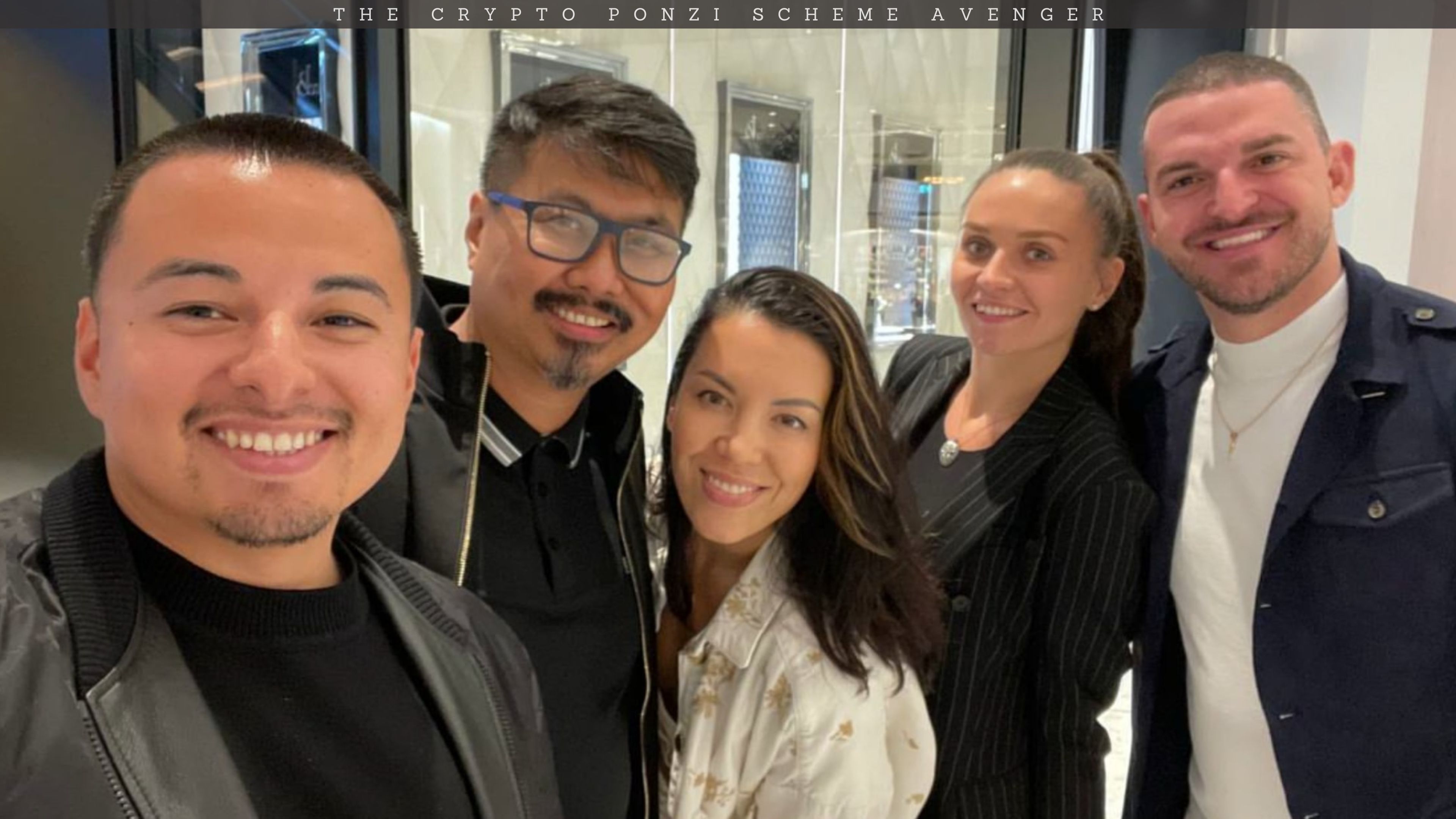
Tomislav “Tomo” Marjanovic Jr. appears in this context as a key recruiter and amplifier, helping circulate narratives and reinforce authority across overlapping investor communities. His public alignment with figures such as Andrew Tate is referenced by victims not as a moral judgement, but as reflective of a cultural environment where dominance, bravado, and loyalty often substituted for accountability.
This section does not allege that every named individual was an architect of fraud. It documents how power dynamics, gendered presentation, and informal authority structures were repeatedly used to reinforce belief, discourage questioning, and delay scrutiny. When investment operations rely on social pressure and proximity instead of governance and verification, the risk of financial abuse increases sharply — and that risk materialised here.
Fabian Kumpusch, Carl Moon Runefelt (aka Carl Eric Martin)
Fabian Kumpusch, an Austrian national, was involved in business activities alongside Christopher Delgado during the period leading up to and during the formation of Goliath Ventures Inc. Prior to Goliath Ventures, Kumpusch had professional proximity to individuals associated with My Liquidity Partner (MLP), the investment scheme connected to Verlin Sanciangco that later collapsed amid significant investor losses.
Kumpusch has clarified that certain initiatives referenced online — including “Crypto Impact” — were conceptual ideas and were not operational ventures, nor were they connected to Goliath Ventures. To date, no evidence has been presented showing that “Crypto Impact” functioned as an active investment vehicle.
Kumpusch’s relevance in this investigation is based on documented association timelines rather than an allegation that he operated either scheme. His presence in overlapping professional circles during the transition period between My Liquidity Partner’s collapse and the rise of Goliath Ventures raises questions about continuity of networks and personnel.
Documented Timeline & Associations
- Professional Overlap
Kumpusch was present in business settings involving individuals connected to both My Liquidity Partner and Goliath Ventures during the period when MLP was deteriorating and Goliath Ventures was gaining traction. This overlap is part of the broader timeline analysis. - Relationship to Carl Runefelt
Christopher Delgado previously sold media placements and branding services to Carl Runefelt (Forbes-related exposure and similar coverage) for substantial sums. According to Kumpusch, these transactions occurred during a period when Runefelt and his team lacked experience in evaluating such media arrangements. Kumpusch states that he personally observed instances where payments were made but deliverables were not fulfilled as expected. - Introduction Chain
Carl Runefelt hired Vance Fundora. Fundora later introduced Christopher Delgado into that professional circle. Kumpusch’s role at the time was primarily assisting Runefelt with social media and later aspects of investment portfolio structuring. - Timing Context
Kumpusch’s increased visibility around Goliath Ventures occurred during late 2022 / early 2023, which coincided with the deterioration of My Liquidity Partner. This timeline correlation is relevant from an investigative standpoint, but correlation alone does not establish operational control or wrongdoing.
Public Presentation & Promotional Environment
Kumpusch’s online presence during this period displayed luxury travel, high-end vehicles, designer watches, and exotic locations. While curated lifestyle branding is common in the crypto influencer space, such presentation alone does not constitute evidence of fraud. It is, however, a recurring credibility-building pattern seen in high-yield investment environments.
Kumpusch has publicly referenced “The Secret” and the “Law of Attraction.” Belief systems in themselves are not evidence of wrongdoing. However, within high-risk investment marketing, manifestation rhetoric is often paired with narratives of rapid wealth creation — a pattern frequently observed in speculative crypto ventures.

Carl Moon Runefelt, operating under the alias “The Moon Carl,” is a Swedish cryptocurrency influencer with a substantial online following.
Available information indicates:
- Runefelt promoted My Liquidity Partner to his audience during its operational period.
- He later appeared in proximity to Goliath Ventures-related activity.
- Sources indicate compensation structures may have existed for promotional activity, though the exact terms are not publicly documented.
The broader pattern observed across the crypto industry involves influencers promoting high-risk or opaque investment opportunities and later distancing themselves when those ventures collapse or face scrutiny.

Clarification of Scope
This analysis focuses on overlapping networks, timing correlations, and documented associations between individuals connected to My Liquidity Partner and Goliath Ventures. It does not assert that Fabian Kumpusch independently operated either scheme, nor does it claim that conceptual projects such as “Crypto Impact” functioned as active fraudulent enterprises.
The investigative question remains whether shared personnel, shared recruitment environments, and shared promotional ecosystems contributed to continuity between the collapse of My Liquidity Partner and the rise of Goliath Ventures.
Tyler Peters & Lauren Peters, Galaxy Investment Co and Luxury Jet Ski Rentals
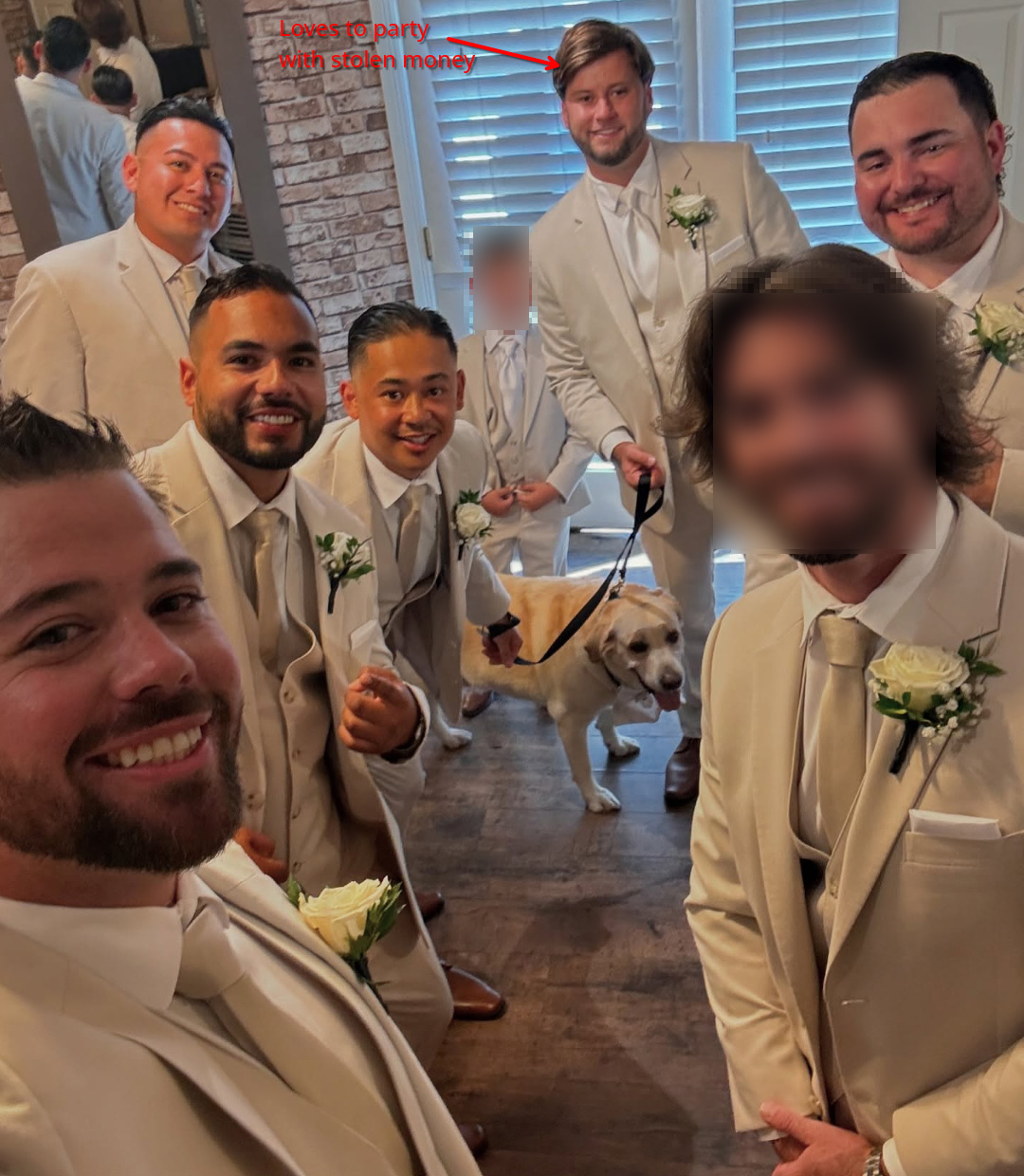
There are numerous enablers within the Goliath Ventures Inc ecosystem. Among them, Tyler Peters and Lauren Peters have been repeatedly identified by sources as playing a significant role in recruiting new participants and profiting from the scheme while red flags were already present.
According to information received, the Peters were positioned to benefit financially from their involvement and continued promoting Goliath Ventures even as payment delays, account restrictions, and investor complaints began to surface.
Further investigation is ongoing into:
- Their recruitment activity and downstream investor losses
- The assets acquired during their involvement
- The internal relationships that introduced them to Goliath Ventures, including a high-level employee who has since expressed concern about their role in the operation
This section will be expanded as additional evidence is reviewed and corroborated.
Summary of the Facts
As Goliath Ventures Inc unravels, the available evidence shows a familiar pattern seen in many large-scale investment frauds: investor funds diverted away from any verifiable revenue-generating activity and into lifestyles, related ventures, and opaque third-party entities. For victims, the harm is not abstract — it is personal, financial, and often devastating.
The central issue is no longer whether Goliath Ventures Inc can continue operating as presented. It is how long this structure has been functioning without substantiated underlying business activity, and who ultimately exercised control over investor funds during that period.
A recurring question remains unresolved. If Christopher Delgado was operating as a legitimate businessman, why was he embedded for years within the My Liquidity Partner ecosystem, alongside Verlin Sanciangco — a figure with documented convictions and court findings relating to fraud? Why did overlapping personnel, narratives, and methods persist across both operations?
These are not questions of personality or speculation. They are questions of continuity, association, and accountability — and they go directly to whether Goliath Ventures Inc represents an independent venture, or a re-deployment of an already-failed structure under a new name.
The answer to that question matters not just for investors seeking clarity, but for regulators assessing whether this was a collapse — or a continuation.
New Parties of Interest
- Verlin Lim Sanciangco (also known as Verlin Sanciangco, “Sir Verlin”)
- Tina Lyu
- Anastasia Nepomnyashchikh
- Fabian Kumpusch (previously identified)
- Anthony Ritossa
- AM Legal Consultancy Ltd
- Giovanni Marseal
- Mindgenix Technology (Quezon City)
- Mindgenix Technology Inc
- Smart Contract Solutions Ltd
- Ruby Family Office Ltd
- WES Consulting Group Ltd
- Hashrate Inc
- Bryan K. Johnson (also known as BK Johnson)
- Franklin Vincent Johnson
- Manesh Palli
Be Sure To Read
Previously in This Series on Goliath Ventures
- Glossy Promises, Shaky Contracts
Goliath Ventures Exposed – Glossy Promises, Shaky Contracts, and the Dark Reality of Guaranteed Returns
Where it all began: inflated promises of 60% returns backed by contracts that were flimsy at best. - The Compliance Illusion
Goliath Ventures Exposed Part 3: Christopher Delgado, Matt Burks, BlackBlock and the Compliance Illusion
The smoke-and-mirrors routine — how Burks and BlackBlock tried to pose as “independent” while being insiders. - The Smear Campaign Claim
Chris Lord Delgado Claims “Smear Campaign” – Goliath Ventures Exposed in My Full Response
Delgado’s pushback — calling legitimate questions a “smear campaign” while victims kept piling up. - The Bookkeeper’s Vanishing Act
The Bookkeeper’s Vanishing Act: Chris Delgado, Nadia Bringas, and Goliath Ventures
When the money trail grew hot, Bringas dissolved her company in Florida overnight and popped back up in Wyoming. - The Fake Audit
Pull Money While You Can! Goliath Ventures Ponzi Exposed by FAKE Audit. Florida Ponzi Scheme SCAM
A so-called “audit” that turned out to be nothing more than a Mailchimp blast with zero financial data. - The Missing FinCEN Registration
Goliath Ventures Inc (Christopher Delgado) and the Missing FinCEN Registration: Why It Matters
Digging into why a real investment firm would never operate without this registration — unless it was hiding. - Collapse and Clawbacks
Goliath Ventures Inc Florida Ponzi Collapse, Coming Clawbacks and Arrests
The unraveling accelerates: clawbacks loom, and indictments draw closer. - The Securities Question
The Unregistered Securities Problem: Why Goliath Ventures’ Contracts Are Likely Illegal
Breaking down why Goliath’s contracts were never legal in the first place — a fatal flaw in their setup. - What Real Funds Look Like
What Real Quant Funds Look Like Vs. Goliath Ventures, FL Ponzi Scam
Today’s deep dive: exposing how every part of Goliath’s structure collapses under scrutiny. - Stolen money, gifts, and uneconomical deals
Who Is Still Profiting From Goliath Ventures Inc, Orlando Ponzi? Don’t Drop The Soap.
Unusual developments connected to the Goliath Ventures Ponzi scheme, which is now imploding. - FBI Director Kash Patel, Ron DeSantis and even Andrew Tate
Goliath Ventures Ponzi: Verlin Sanciangco & My Liquidity Partner (MLP) Scam Rebranded. (this article)
Goliath Ventures Inc ponzi scheme has been running for a lot longer than most people realize.
Disclaimer: How This Investigation Was Conducted
This investigation relies entirely on OSINT — Open Source Intelligence — meaning every claim made here is based on publicly available records, archived web pages, corporate filings, domain data, social media activity, and open blockchain transactions. No private data, hacking, or unlawful access methods were used. OSINT is a powerful and ethical tool for exposing scams without violating privacy laws or overstepping legal boundaries.
About the Author
I’m DANNY DE HEK, a New Zealand–based YouTuber, investigative journalist, and OSINT researcher. I name and shame individuals promoting or marketing fraudulent schemes through my YOUTUBE CHANNEL. Every video I produce exposes the people behind scams, Ponzi schemes, and MLM frauds — holding them accountable in public.
My PODCAST is an extension of that work. It’s distributed across 18 major platforms — including Apple Podcasts, Spotify, Amazon Music, YouTube, and iHeartRadio — so when scammers try to hide, my content follows them everywhere. If you prefer listening to my investigations instead of watching, you’ll find them on every major podcast service.
You can BOOK ME for private consultations or SPEAKING ENGAGEMENTS, where I share first-hand experience from years of exposing large-scale fraud and helping victims recover.
“Stop losing your future to financial parasites. Subscribe. Expose. Protect.”
My work exposing crypto fraud has been featured in:
- Bloomberg Documentary (2025): A 20-minute exposé on Ponzi schemes and crypto card fraud
- News.com.au (2025): Profiled as one of the leading scam-busters in Australasia
- OpIndia (2025): Cited for uncovering Pakistani software houses linked to drug trafficking, visa scams, and global financial fraud
- The Press / Stuff.co.nz (2023): Successfully defeated $3.85M gag lawsuit; court ruled it was a vexatious attempt to silence whistleblowing
- The Guardian Australia (2023): National warning on crypto MLMs affecting Aussie families
- ABC News Australia (2023): Investigation into Blockchain Global and its collapse
- The New York Times (2022): A full two-page feature on dismantling HyperVerse and its global network
- Radio New Zealand (2022): “The Kiwi YouTuber Taking Down Crypto Scammers From His Christchurch Home”
- Otago Daily Times (2022): A profile on my investigative work and the impact of crypto fraud in New Zealand

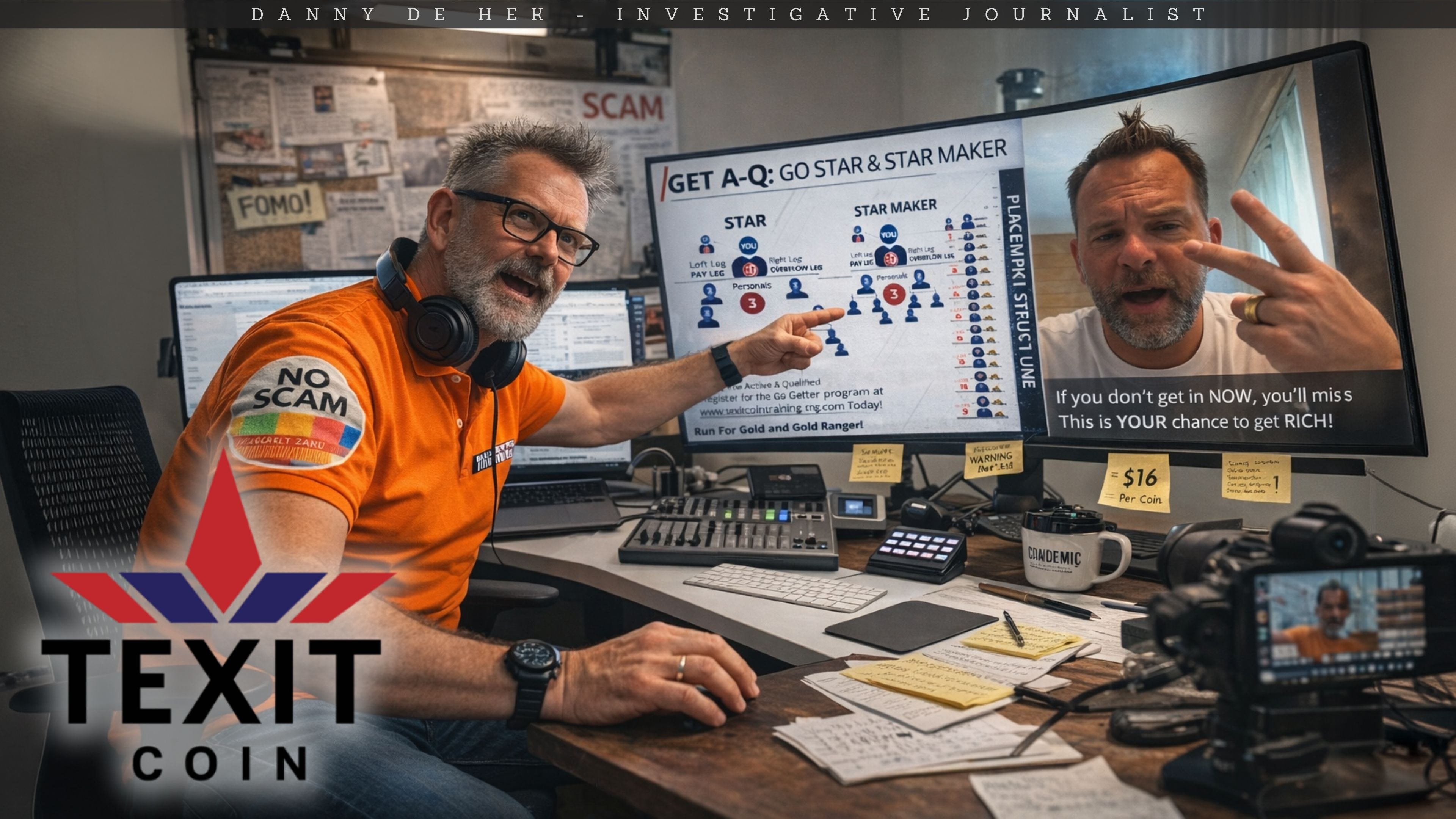

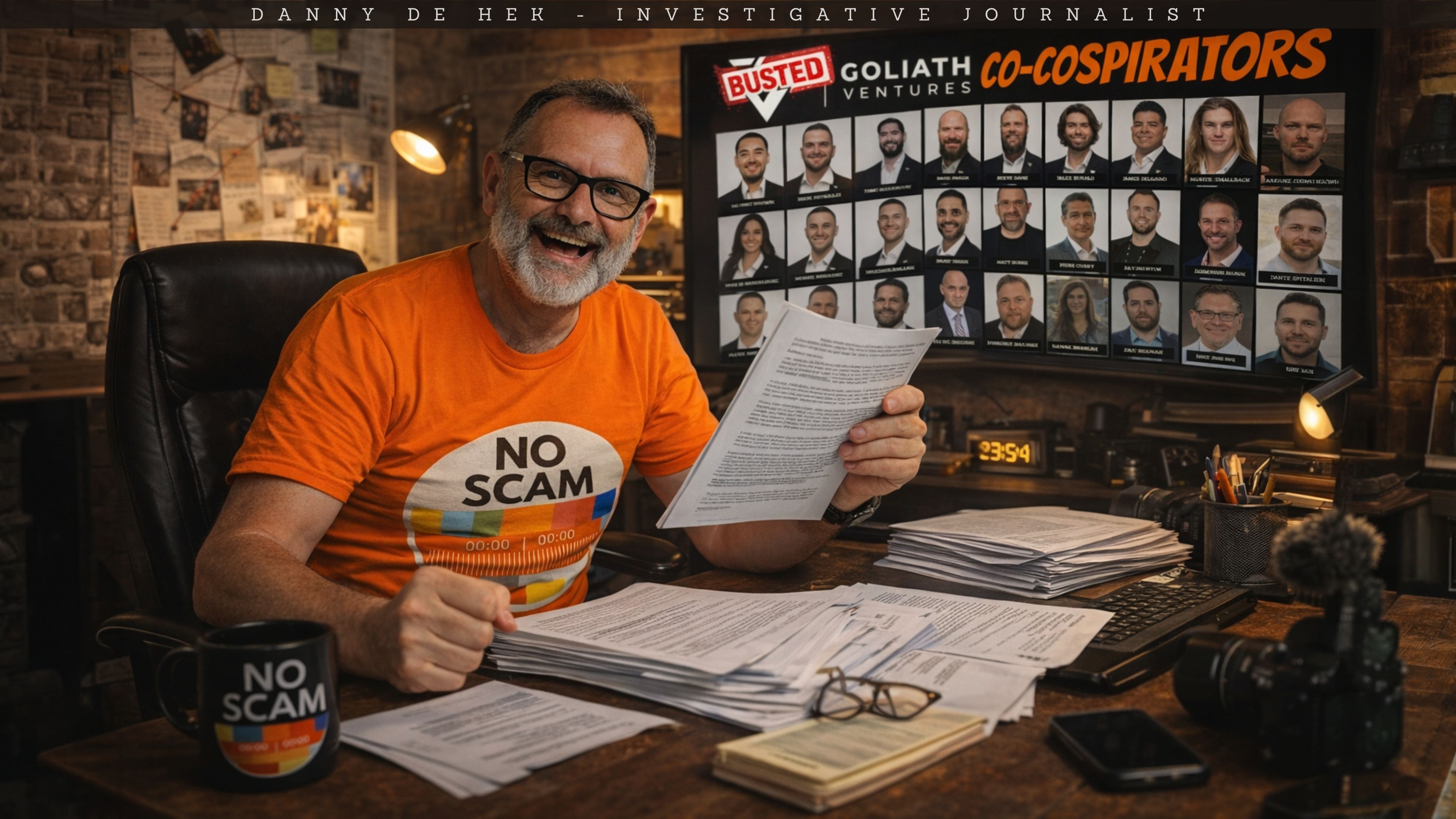

Recent changes in Dubai’s extradition practices have marked a significant shift in how the UAE handles extradition requests, particularly from western countries. Historically, the UAE had limited extradition treaties with many western nations, allowing some individuals like these criminals listed above evade justice. However, recent high-profile cases, such as the extradition of an Irish national very recently in 2025, demonstrates a new commitment to international cooperation and judicial accountability. These criminal individuals party could come to an end any day now, Sanciangco is a fugitive in the U.S and possibly other countries as well, he best enjoy his stolen plunder now because that knock on the door can come at anytime. He chose to risk his freedom because he did not want to put forth the work involved in creating a legitimate business, and one day it all will go away along with this freedom.
Thanks Hans – really solid comment.
You’re absolutely right that Dubai is no longer the guaranteed “safe haven” it once was for people running cross-border scams.
In the last few years the UAE has been under heavy pressure over money laundering and financial crime, ending up on the FATF grey list in 2022 and then having to push through serious reforms to get removed again in February 2024.
On top of that, new extradition treaties are now actually being used. In May 2025, Ireland’s extradition treaty with the UAE came into force, and within days a major figure in the Kinahan cartel, Sean McGovern, was extradited from Dubai to Ireland in a landmark case.
That’s a big signal that the UAE is more willing to cooperate when another country turns up with proper paperwork, evidence and an arrest warrant.
So I agree with your broader point: People like Verlin Sanciangco (“Sir Verlin”) and the crew behind My Liquidity Partner / Goliath-style schemes shouldn’t assume they can sit in Dubai forever and laugh at victims.
For clarity and fairness:
Verlin Sanciangco has been charged in the United States with federal wire-fraud offences – the case United States v. Sanciangco, 8:21-cr-00185 in the Central District of California lists him on a wire-fraud count under 18 U.S.C. §1343.
Public records and victim reports then place him in Dubai, where he continued to front My Liquidity Partner and related ventures, instead of staying in the U.S. to resolve those charges.
I’m careful to stick to public records, court filings and regulator documents, so rather than speculating about exactly what day “the knock on the door” might come, I’ll just say this:
The combination of U.S. wire-fraud charges, increasing international cooperation, and UAE’s new willingness to extradite serious organised-crime figures means that the risk profile for these guys is getting worse, not better.
In the meantime, my priority is warning investors, documenting the evidence and making sure law-enforcement agencies have a clear public record of what victims say happened to them.
Thanks again for taking the time to comment – it all helps keep the pressure on.