


“Every Ponzi scheme needs two things to survive — money coming in, and someone believable explaining why it’s safe.”
There is a reason schemes like BG Wealth Sharing do not spread through official prospectuses, audited reports, or transparent public disclosures. They spread through people.
Through voices that already have an audience. Through figures who present themselves not as polished salesmen, but as relatable guides.
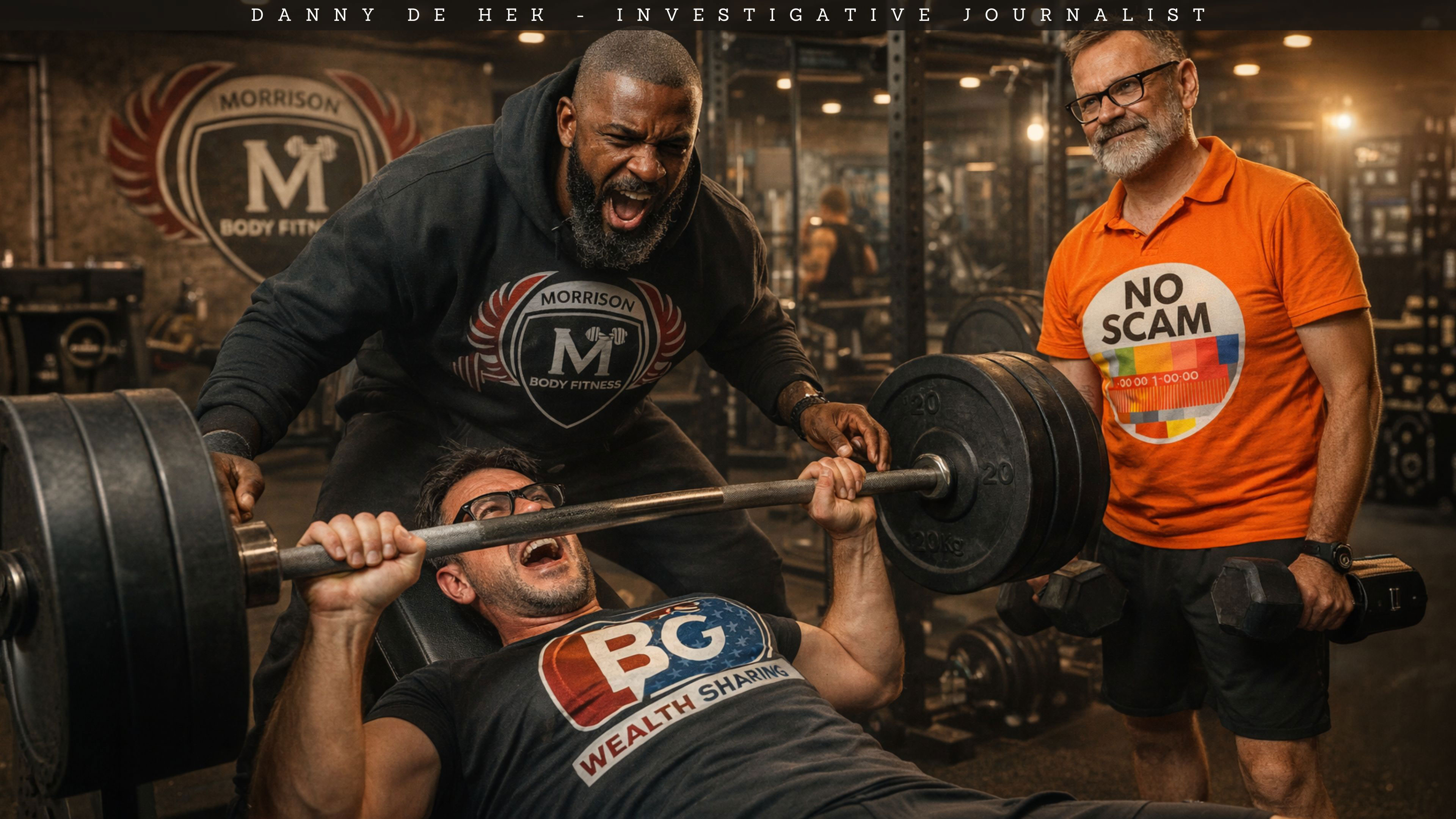
That is why the case of Yitzhak Morrison matters so much.

Yitzhak Morrison, a Florida-based bodybuilder and fitness creator behind Morrison Body Fitness, has published around a dozen videos framing BG Wealth Sharing as his “experience” while steadily walking viewers toward participation.
This is not simply a story about a man uploading opinion Videos to YouTube.
It is a story about how trust is converted into recruitment, how doubt is softened into belief, and how belief is then weaponised to pull fresh money into a system regulators are already warning the public about.
The purpose of this blog is simple.
It is to warn people — especially those who may have come across BG Wealth Sharing, DSJ EX, or any of its endless rebranded websites and chat groups — that what they are being shown is not a legitimate investment opportunity.
It is a high-risk, regulator-flagged online investment scam that uses priva
te messaging apps, “signal codes,” recruitment structures, and small early withdrawals to create the illusion of trading and success.
New Zealand’s Financial Markets Authority and the National Reserve Bank of Tonga have already warned the public that BG Wealth / DSJ EX is a Ponzi-style investment scam, and the FMA has told people plainly: do not download the app, do not invest, and do not share it in your community networks.
The platform sells “trading,” but the real product is belief
 To understand why Morrison’s videos are dangerous, you first have to understand what BG Wealth Sharing is actually selling.
On the surface, the story is seductive. Members are told they are joining a sophisticated crypto trading system. They are told the platform uses advanced analysis, algorithmic decision-making, or AI-assisted signals to produce consistent profits, sometimes framed as 1–2% or more per day, with claims that money can even double within 60 days.
The daily process sounds simple enough for anyone to follow:
Deposit cryptocurrency.
Wait for the code.
Paste the signal.
Watch your account grow.
The pitch removes complexity on purpose. You do not need experience. You do not need to understand markets. You do not need to ask where the profit comes from.
You just need to trust the people who are already inside.
That is where the first major crack appears.
Legitimate trading does not work this way.
Real trading produces independent records, counterparty visibility, broker
connections, and market-verifiable transaction histories. What BG Wealth Sharing offers instead is a closed interface, controlled internally, where participants see numbers rise on a screen but cannot independently confirm the underlying trades.
Alberta’s securities regulator specifically warned about promises of guaranteed or unrealistic daily returns, including claims that participants can double their funds within 60 days using near-perfect algorithmic trading signals.
That is not normal investing language.
That is classic fraud language — designed to override scepticism with certainty.
The trading illusion is simple: copy, paste, trust, repeat
What makes BG Wealth Sharing so effective on social media is that its process is easy to demonstrate and easy to imitate.
Participants are told to deposit crypto into a platform connected to DSJ EX or one of its many domain variants, then, inside a private chat environment, receive what are described as “signal codes.”
These codes are presented as instructions for trades that are supposedly timed and structured by experts or AI. The participant copies the code, pastes it into the platform, and after a short period, the system displays a profitable result.
Morrison’s content leans heavily on that ritual.
It looks active.
It looks technical.
It looks like something is happening.
But appearance is doing all the work here.
The problem is not just that outsiders cannot see the trade. It is thatinsiders cannot verify it either. There is no independently auditable broker execution trail being shown. There is no transparent market data link proving the exact transaction occurred where and when claimed.
There is only an internal platform telling users that a successful trade has taken place.
And when your only proof is a number controlled by the same people asking you for deposits, you are not observing trading —
you are observing a managed display of profitability.
Critics have been saying for months that BG Wealth Sharing manufactures the illusion of trading, and nothing in the promoter material convincingly disproves that.
Early growth on a dashboard is not evidence.
It is stagecraft.
Where the money comes from is the question promoters keep avoiding
Every serious investigation into an online investment scheme eventually returns to the same question:
Where does the money actually come from?
Not the story. Not the testimonials. Not the screenshots.
The real money.
In BG Wealth Sharing’s case, that answer is never properly provided.
Instead, the scheme relies on the emotional shortcut that Morrison uses repeatedly in his videos:
people are withdrawing, therefore it must be real.
That is one of the oldest traps in the book.
Small early withdrawals are not a defence against the accusation of fraud; they are often the mechanism that makes the fraud believable.
Regulators have been clear about this pattern. The FMA and Tonga’s central bank described BG Wealth / DSJ EX as part of a wider Ponzi-style scam using MLM-type recruitment tactics, while warning that people are already losing significant amounts of money.
The official concern is not theoretical.
It is based on the same structure seen again and again:
New deposits come in.
Early participants get paid.
Confidence spreads.
More people join.
That is why the focus on withdrawals is so misleading.
A scam does not fail because it pays some people.
It succeeds because it pays just enough people at the beginning to create a flood of belief.
The “Professor” is the authority figure the story depends on
 At the centre of this whole operation sits a figure known as “The Professor,” usually presented as Professor Stephen Beard — the man promoters say founded BG Wealth Sharing in 2018 and leads its so-called hedge-fund-style trading operation.
In promoter material, he is cast as the calm, intelligent, visionary leader behind the model. He provides guidance. He delivers signals. He appears to offer both expertise and legitimacy.
That persona is not a side detail.
It is fundamental to how the story works.
And yet, this is one of the biggest red flags of all.
The supposed founder and intellectual force behind a global crypto investment operation appears to have no independently verifiable professional footprint that matches the claims made about him.
A man presented as the brains behind a global investment operation should not vanish the moment basic verification begins.
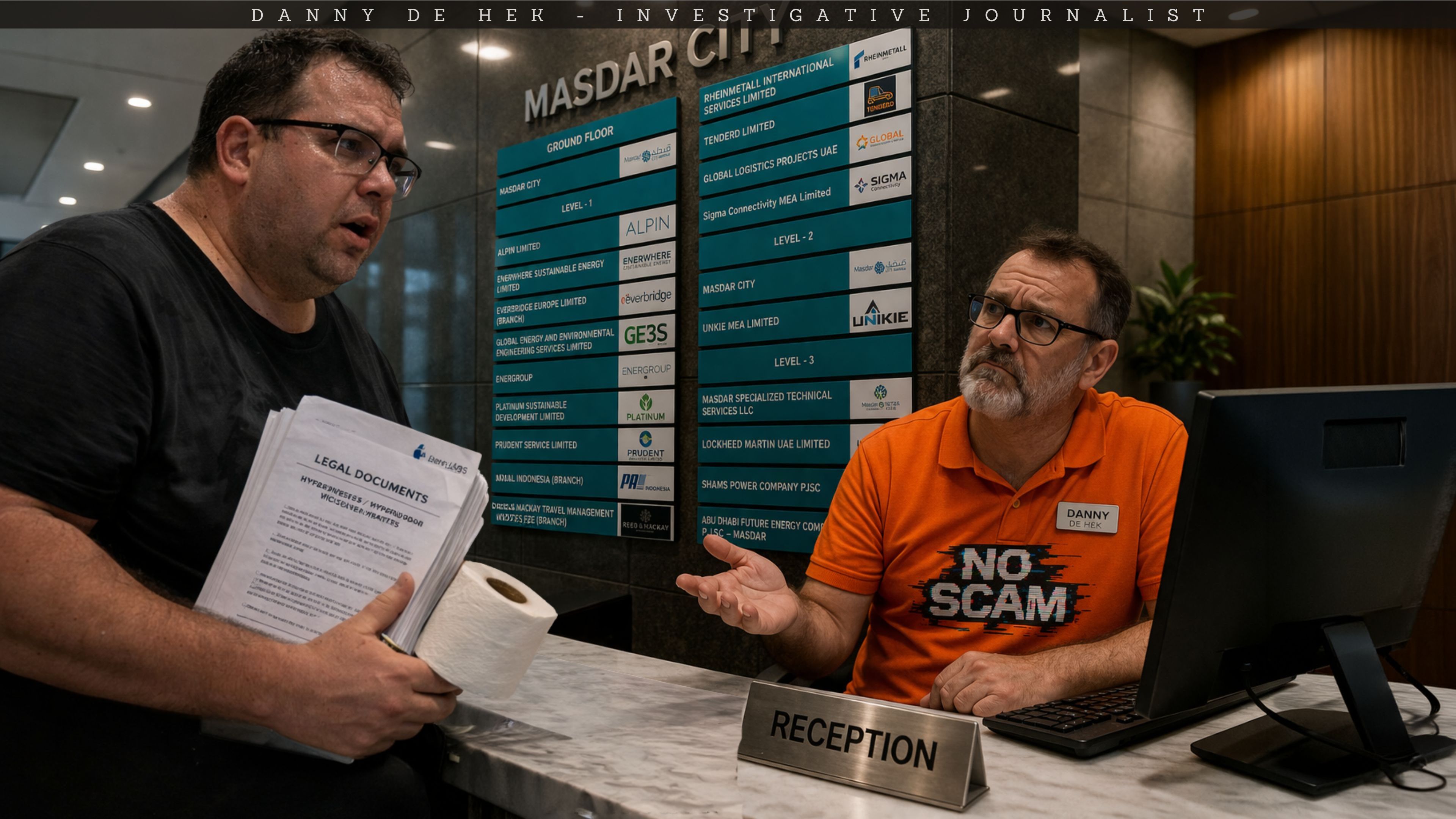
The UK’s FCA warning identifies BG Wealth Sharing / dsjex.net as unauthorised and notes that firms like this may give incorrect contact details or use information that belongs to another business or individual so the scheme “looks genuine.”
That warning matters because it goes directly to the heart of the “Professor” problem.
If the operation’s central public authority cannot be verified through ordinary professional, academic, or regulatory channels, then the role he serves is not that of a real accountable executive.
It is the role of a credibility prop.
BonChat is not the investment — it is the control room
One of the details many outsiders miss is how much of this operation appears to run through BonChat (sometimes referred to by promoters as BondChat), the messaging app members are pushed onto for instructions, updates, and “signals.”
On paper, apps like this are marketed around privacy, private communication, and control over user data.
That sounds reassuring — until you place it in the context of an investment scheme already being flagged by multiple regulators.
In that context, the app is not just a communication tool.
It becomes an infrastructure of control.
It keeps members inside a closed loop.
It funnels them away from public scrutiny.
It centralises the flow of instructions, explanations, excuses, and reassurance.
That matters because encrypted or private messaging is not the same thing as safety.
In scam environments, it often serves the opposite purpose.
And when people are told to move onto BonChat to receive “signals,” unlock opportunities, or understand withdrawals…
that should not feel professional — it should feel like containment.
Morrison did not stumble into this — he gradually became part of the machinery
This is the part people need to understand clearly.
Morrison did not begin as an obvious salesman. He began in a way that made him far more effective — as a curious sceptic. He raised concerns, questioned the system, and mirrored the doubts his audience would naturally have. That approach built alignment. It made his audience feel that he was not pushing them toward danger, but carefully examining it alongside them.
That built trust.
Once that trust was in place, the content began to shift.
The scepticism didn’t disappear — it was still referenced — but it was no longer driving the story. It became a backdrop for reassurance.
Then came the deeper explanations. Then came the walkthroughs.
The onboarding.
The instructions.
He began showing people how to join, what to download, what code to use, and how to position themselves inside the system.
At that point, Morrison was no longer merely “sharing.”
He was reducing friction.
Making it easier.
Making it familiar.
Making it feel safe.
This was not passive commentary. It was a step-by-step soft sell dressed up as personal testimony.
That is the very essence of recruitment.
The right of reply mattered — because fairness matters
Before publishing this piece, I gave Yitzhak Morrison a right of reply.
That was not a token gesture. It was a deliberate and important part of the process.
He was given the chance to explain:
- where the profits come from
- whether the trading can be independently verified
- what proof he has that Stephen Beard is a real and qualified individual
- why he continues promoting the scheme despite the warnings
There was no reply.
And that silence matters.
Because it shows the concerns were put clearly on the table — and left unanswered.
The real harm comes later, when the confidence is already built
Schemes like this do not do their worst damage at the moment of first deposit.
They do it later.
After belief has been established.
A person starts small.
They see results.
They hear about withdrawals.
They trust the explanation.
Then they put in more.
Then they bring others in.
This is exactly why regulators highlighted the scam’s spread through community networks across New Zealand, Tonga, Australia, and the United States.
Because these systems grow through trust, not transparency.
And when they collapse — they don’t just take money.
They damage relationships.
What this blog is really warning you about
This blog is not just about Yitzhak Morrison.
It is about the mechanics of a modern online investment scam — and the role individuals play in making it seem safe.
BG Wealth Sharing is not just selling a platform.
It is selling a story:
- that profits are easy
- that signals are real
- that withdrawals prove legitimacy
- that the “Professor” can be trusted
But regulators are not buying that story.
They have already called it what it is:
Ponzi-style. Unauthorised. High-risk.
And that is the real point.
Do not let a familiar face become a substitute for evidence.
Do not confuse a polished walkthrough with due diligence.
Do not mistake a private chat room for legitimacy.
Because that is exactly how systems like this are designed to work.
Until they don’t.
Disclaimer: How This Investigation Was Conducted
This investigation relies entirely on OSINT — Open Source Intelligence — meaning every claim made here is based on publicly available records, archived web pages, corporate filings, domain data, social media activity, and open blockchain transactions. No private data, hacking, or unlawful access methods were used. OSINT is a powerful and ethical tool for exposing scams without violating privacy laws or overstepping legal boundaries.
About the Author
I’m DANNY DE HEK, a New Zealand–based YouTuber, investigative journalist, and OSINT researcher. I name and shame individuals promoting or marketing fraudulent schemes through my YOUTUBE CHANNEL. Every video I produce exposes the people behind scams, Ponzi schemes, and MLM frauds — holding them accountable in public.
My PODCAST is an extension of that work. It’s distributed across 18 major platforms — including Apple Podcasts, Spotify, Amazon Music, YouTube, and iHeartRadio — so when scammers try to hide, my content follows them everywhere. If you prefer listening to my investigations instead of watching, you’ll find them on every major podcast service.
You can BOOK ME for private consultations or SPEAKING ENGAGEMENTS, where I share first-hand experience from years of exposing large-scale fraud and helping victims recover.
“Stop losing your future to financial parasites. Subscribe. Expose. Protect.”
My work exposing crypto fraud has been featured in:
- Bloomberg Documentary (2025): A 20-minute exposé on Ponzi schemes and crypto card fraud
- News.com.au (2025): Profiled as one of the leading scam-busters in Australasia
- OpIndia (2025): Cited for uncovering Pakistani software houses linked to drug trafficking, visa scams, and global financial fraud
- The Press / Stuff.co.nz (2023): Successfully defeated $3.85M gag lawsuit; court ruled it was a vexatious attempt to silence whistleblowing
- The Guardian Australia (2023): National warning on crypto MLMs affecting Aussie families
- ABC News Australia (2023): Investigation into Blockchain Global and its collapse
- The New York Times (2022): A full two-page feature on dismantling HyperVerse and its global network
- Radio New Zealand (2022): “The Kiwi YouTuber Taking Down Crypto Scammers From His Christchurch Home”
- Otago Daily Times (2022): A profile on my investigative work and the impact of crypto fraud in New Zealand



Leave A Comment