


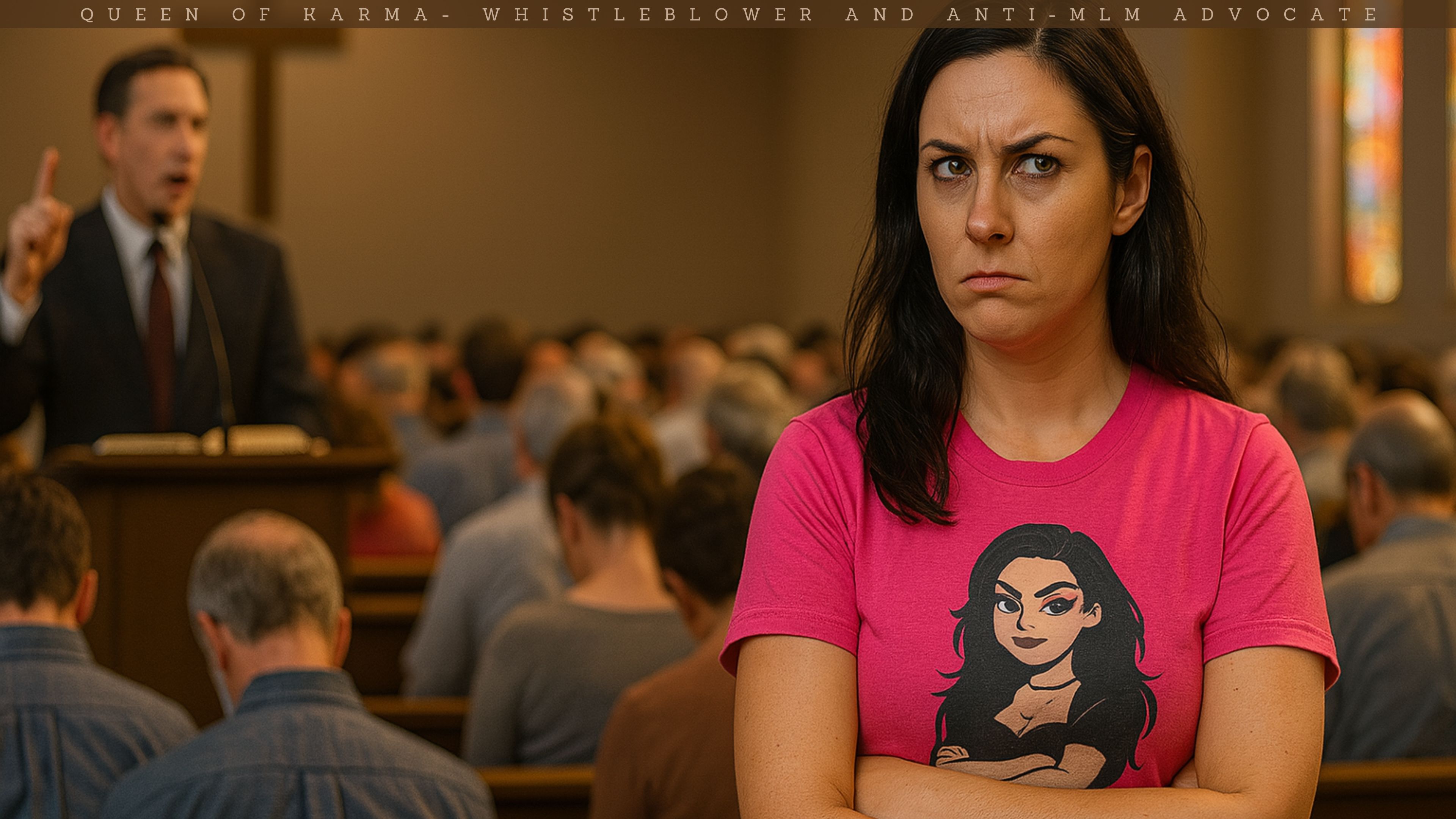
“For the love of money is a root of all kinds of evil. Some people, eager for money, have wandered from the faith and pierced themselves with many griefs.” — 1 Timothy 6:10
The Illusion of Divine Entrepreneurship
Multi-level marketing (MLM) has long been sold as a dream — one of financial freedom, flexible schedules, and the promise of becoming your own boss. But beneath the glossy Instagram posts and carefully staged motivational conferences lies a quieter, more insidious tactic: the spiritual seduction of religious communities.
In the heart of Utah, and particularly within the Church of Jesus Christ of Latter-day Saints (LDS), MLMs have woven themselves into the fabric of faith, taking advantage of trust, belief, and tight-knit social structures in pursuit of profit.
The Utah Nexus
Utah serves as the epicenter of the MLM universe, hosting more MLM companies per capita than anywhere else in the U.S. This is no coincidence.
The Mormon culture fosters an environment where MLMs thrive. LDS members often participate in mission work that builds strong communication and persuasion skills—ideal traits for direct sales. These communities are also tightly connected, with high levels of mutual trust, which MLMs eagerly exploit by encouraging recruitment within personal networks.
Traditional gender roles play a major role too. MLMs target stay-at-home mothers with promises of empowerment, flexible income, and community. The LDS value of financial self-reliance is cleverly reframed as a divine entrepreneurial calling, casting recruitment and sales as spiritually endorsed missions.
Faith as a Sales Strategy
MLMs don’t just sell products — they sell purpose, spiritual affirmation, and divine alignment.
Many of these organizations adopt religious language and branding to build trust. Recruits are encouraged to see their involvement as a calling, often using phrases like “mission” and “testimony.”
MLM events mimic revival-style worship, filled with emotional testimonials and group praise. Even the products are cloaked in religious symbolism — oils named “Grace” or “Faith”, supplements that claim to align with divine design.
Leaders are elevated to prophetic status, presenting themselves as visionaries guiding others to financial salvation. Success is seen as proof of divine favor; failure is framed as spiritual weakness.
The Psychology of Spiritual Vulnerability
Why are religious communities so easily targeted?
It starts with trust. Religious groups foster high-trust environments, where members are inclined to believe each other’s intentions. When a fellow believer presents an MLM opportunity, it feels more like a blessing than a sales pitch.
MLMs mirror religious vocabulary intentionally — using words like calling, testimony, mission, and blessing — creating emotional and symbolic familiarity. Rejecting the pitch can feel like rejecting God’s plan.
These tactics overlap with cult-like behavior:
- Thought-stopping
- Cognitive reframing
- Blaming failure on belief, not structure
- Suppressing doubt
- Equating loyalty with moral strength
For believers, MLMs become a form of spiritual identity. Participation is seen as a divine assignment, not a business venture. Leaving can feel like betraying the church or abandoning one’s spiritual path.
When Faith Turns to Fallout
The fallout is devastating. People suffer financial ruin, emotional trauma, and fractured relationships. But worse still is the spiritual betrayal — the sense that faith itself was used against them.
As one ex-consultant put it:
“It felt like church, until the blessings stopped and the bills came in.”
This speaks to the deep emotional manipulation MLMs inflict when they exploit belief for profit.
Redemption & Resistance
Faith communities must act.
Start by promoting financial literacy, encouraging members to question spiritualized sales pitches, and recognizing MLMs for what they truly are — exploitation wrapped in faith.
Offer nonjudgmental support to those trapped inside the MLM cycle. The solution isn’t shame — it’s education, empathy, and open conversation.
MLMs have mastered the art of mimicking spirituality. They offer belonging, identity, and salvation — only to replace them with debt and disillusionment.
The only miracle many participants witness is how fast the promises disappear once the money dries up.
Stay tuned to this blog for more insight into MLM psychology and the coercive tactics that continue to entangle vulnerable communities.
By Beth Gibbons (Queen of Karma)
Beth Gibbons, known publicly as Queen of Karma, is a whistleblower and anti-MLM advocate who shares her personal experiences of being manipulated and financially harmed by multi-level marketing schemes. She writes and speaks candidly about the emotional and psychological toll these so-called “business opportunities” take on vulnerable individuals, especially women. Beth positions herself as a survivor-turned-activist, exposing MLMs as commercial cults and highlighting the cult-like tactics used to recruit, control, and silence members.
She has contributed blogs and participated in video interviews under the name Queen of Karma, often blending personal storytelling with direct confrontation of scammy business models. Her work aligns closely with scam awareness efforts, and she’s part of a growing community of voices pushing back against MLM exploitation, gaslighting, and financial abuse.





Leave A Comment