



Just after sunrise on May 5, 2021, police officers in Singapore responded to a call at a flat along Commonwealth Avenue. It was early, around 6:30am, the kind of quiet hour when the city is still waking up. Inside the unit, officers found a young woman lying motionless. She was pronounced dead at the scene.
Nothing about the initial call hinted at the complexity that would follow. There was no immediate indication of the layers of pressure, control, and manipulation that had shaped the final months of her life. No one yet knew that the investigation would lead police into the inner workings of a tightly controlled “team” operating inside a global MLM company. No one yet understood the role that coercive authority, financial strain, and group obedience would play in the story that was about to unfold.
What began as a routine emergency response would soon unravel into one of the most disturbing MLM-related cases in recent memory.
The Case Begins to Unravel
The young woman was identified as 19-year-old Ms. Huang Baoying, a Herbalife distributor who had been deeply involved in the company’s local community. At first, her death appeared to be a tragic but isolated incident. But as investigators interviewed those around her, a different picture emerged — one involving three individuals, all connected to her through Herbalife and through a woman named Chee Mei Wan.
The three arrested were:
- Chee Mei Wan, 47 — the Herbalife “upline” and “team leader”
- Huang Bocan, 21 — the victim’s older brother
- Lim Peng Tiong, 66 — an associate who carried out much of the physical punishment
The three were arrested and charged with voluntarily causing grievous hurt, a serious offense under Singapore law. They were remanded at the Central Police Division, and their cases were adjourned to May 25. The charge carries a penalty of up to 10 years in prison, along with possible fines or caning. Chee, being a woman, could not be caned under Singaporean law.
But the legal charges were only the surface. What investigators uncovered next was far more troubling.
A Cult Within Herbalife
Herbalife is one of the world’s most recognizable multi-level marketing (MLM) company. Like all MLM companies, Herbalife encourages distributors to form “teams” — groups built around mentorship, motivation, and recruitment. These teams often take on the personality of their leaders. In this case, that leader was Chee Mei Wan, a woman who had constructed a rigid, authoritarian structure around her downline.
Former members described Chee’s group as:
- rule-bound
- punitive
- hierarchical
- fear-driven
- emotionally coercive
She allegedly imposed:
- financial penalties for mistakes
- punishments for disobedience
- public shaming for underperformance
- strict behavioral expectations
- constant monitoring of members’ activities
But what happened to Ms. Huang went far beyond “strict leadership.”
The Abuse She Endured
On the morning she was found, an argument had occurred in the home. The three accused individuals allegedly assaulted Ms. Huang during this conflict. She was later found unresponsive in the flat.
The investigation focused on the assault itself, not the broader coercive environment that had shaped the dynamics leading up to it.
According to court documents and Reporting, Ms. Huang was subjected to repeated physical punishment, forced confinement, and severe deprivation in the weeks leading up to her death. The abuse was not random — it was framed as “discipline,” tied directly to her performance in Herbalife and her perceived lack of commitment.
She was struck with a stick more than 200 times.
This was not a single incident. It was a pattern — repeated, deliberate, and justified by Chee and Ms. Huang’s brother as a way to “correct” her behavior and “motivate” her to work harder in the MLM.
She was confined to a bathroom for extended periods.
The bathroom became a place of punishment. A space where she was isolated, monitored, and kept away from the rest of the household. Confinement is a common tactic in coercive environments, used to break down resistance and enforce obedience.
She was malnourished.
Her access to food was restricted. Deprivation was used as another form of control, reinforcing the idea that she had to “earn” basic needs through compliance and performance.
The justification was always the same:
She wasn’t making enough sales.
She wasn’t disciplined enough.
She wasn’t “committed” to the Herbalife lifestyle.
Chee — who was married and simultaneously in a relationship with Ms. Huang’s brother, Huang Bocan — used her authority within the MLM to justify escalating control. The brother, caught in the same belief system, participated in the abuse under the guise of “helping” her improve.
Lim Peng Tiong, the third perpetrator, carried out much of the physical punishment at Chee’s direction.
This was not business coaching.
This was not motivation.
This was coercive control, weaponized through the language of MLM success culture.
The Legal Outcome
As the case moved through the courts, the full extent of he abuse became clear — not only through the physical evidence, but through the admissions made by one of the perpetrators. Lim Peng Tiong, 66, plead guilty to culpable homicide not amounting to murder and wrongful confinement, acknowledging his direct role in the prolonged abuse that led to Ms. Huang’s death.
According to the prosecution, Lim carried out the physical punishments at the direction of Chee Mei Wan and Huang Bocan, the victim’s older brother. Over several days, Lim repeatedly struck the 19-year-old with a bamboo stick — more than 200 times — even as she grew visibly weaker, malnourished, and unable to stand without support. He also admitted to confining her in a toilet, restricting her movement and access to basic needs.
The court heard that the abuse was not spontaneous or fueled by sudden anger. It was systemic, deliberate, and framed as discipline. Chee and Bocan believed Ms. Huang was not performing well enough in Herbalife, not “disciplined” enough, and not committed to the sales-driven lifestyle they demanded. Lim, acting under their instruction, enforced this twisted version of “motivation.”
The prosecution emphasized that Lim continued the punishments even after Ms. Huang was clearly deteriorating — a sign of the coercive environment and the distorted belief system that had taken hold within the group.
While Lim awaits sentencing, Chee Mei Wan and Huang Bocan both face murder charges, reflecting their alleged roles as the architects of the abuse. Chee, despite being married, was in a romantic relationship with Bocan, a dynamic that prosecutors say contributed to the power structure inside the household. Both are accused of directing, encouraging, and participating in the punishments that ultimately led to Ms. Huang’s death.
Their cases remain pending, but the charges alone underscore the severity of the coercive control system they created — one that weaponized MLM ideology, family loyalty, and psychological domination.
Not The First Time
The Herbalife Singapore case is shocking, but it is not isolated. MLM structures — with their high-pressure sales culture, identity entanglement, and lack of oversight — have been linked to several other cases where coercive control escalated into fatal or near-fatal outcomes. These cases span continents, companies, and cultures, but the underlying patterns are disturbingly similar.
Below are the real, documented cases that reveal how MLM environments can become breeding grounds for extreme harm.
Amway-Linked Coercive Group — South Korea (2000s)
A splinter group of Amway distributors operated as a high-control cult, imposing punishments, isolation, and financial exploitation on members. Several members attempted suicide, and one death was linked to the group’s coercive practices.
Parallels:
- Cult-like hierarchy
- Punishment systems
- Isolation and obedience
Nu Skin “Training” Death — Taiwan (2013)
A 21-year old woman died after being subjected to the extreme “training” by members of her Nu Skin team. The group had adopted cult-like practices, including forced physical activities, sleep deprivation, and obedience rituals. Several team members were arrested and charged. Investigators described the environment as a “closed system of discipline” masquerading as business coaching.
Parallels:
- Punishment framed as “motivation”
- Groupthink
- Leader-driven obedience
- Isolation from outside support
Herbalife “Boot Camp” Death — China (2014)
A teenager died after being sent to a “training camp” run by Herbalife distributors. The camp used harsh physical drills and punishment systems under the guise of “character building.” Multiple arrests followed, and authorities described the camp as operating outside any legitimate Herbalife oversight.
Parallels:
- MLM branding used to justify extreme control
- Physical punishment tied to performance
- Vulnerable young recruits targeted
Herbalife Distributor Death — Mexico (2015)
A young woman died after being subjected to extreme dieting and “discipline” imposed by her Herbalife upline. While not a murder case, it involved coercive control, physical harm, and a leader who framed dangerous behavior as “commitment to the program.”
Parallels:
- Leader-imposed control
- Dangerous “health” practices
- Vulnerable recruits manipulated through MLM ideology
Amway-Related Family Murder-Suicide — India (2019)
A distributor facing severe financial loses and mounting debt killed family members before taking his own life. Investigators found that the family had invested heavily in Amway inventory and training, and the financial pressure had become overwhelming. Friends reported that the distributor felt trapped and ashamed.
Parallels:
- Financial strain
- Shame around failure
- Identity collapse tied to MLM performance
Forever Living Case — Malaysia (2016)
A woman involved in Forever Living was killed by her partner during a period of financial collapse tied to MLM losses. Friends said she had been pressured to keep buying products to maintain her rank, and the couple’s finances had deteriorated rapdily.
Parallels:
- Financial coercion
- Pressure to maintain rank
- MLM-driven debt contributing to domestic violence
LuLaRoe Domestic Violence Case — United States (2017)
A woman involved in LuLaRoe was killed by her husband during a period of extreme financial stress tied to the MLM. The couple had accumulated significant debt from purchasing inventory, and the pressure contributed to escalating conflict in the home.
Parallels:
- Inventory debt
- Emotional strain
- MLM-driven financial collapse
How MLM Structures Enable Coercive Control
Across every country, every company, and every tragic case, the same structural pattern emerges — not because the companies intend harm, but because the MLM business model creates the perfect conditions for coercive leaders to thrive.
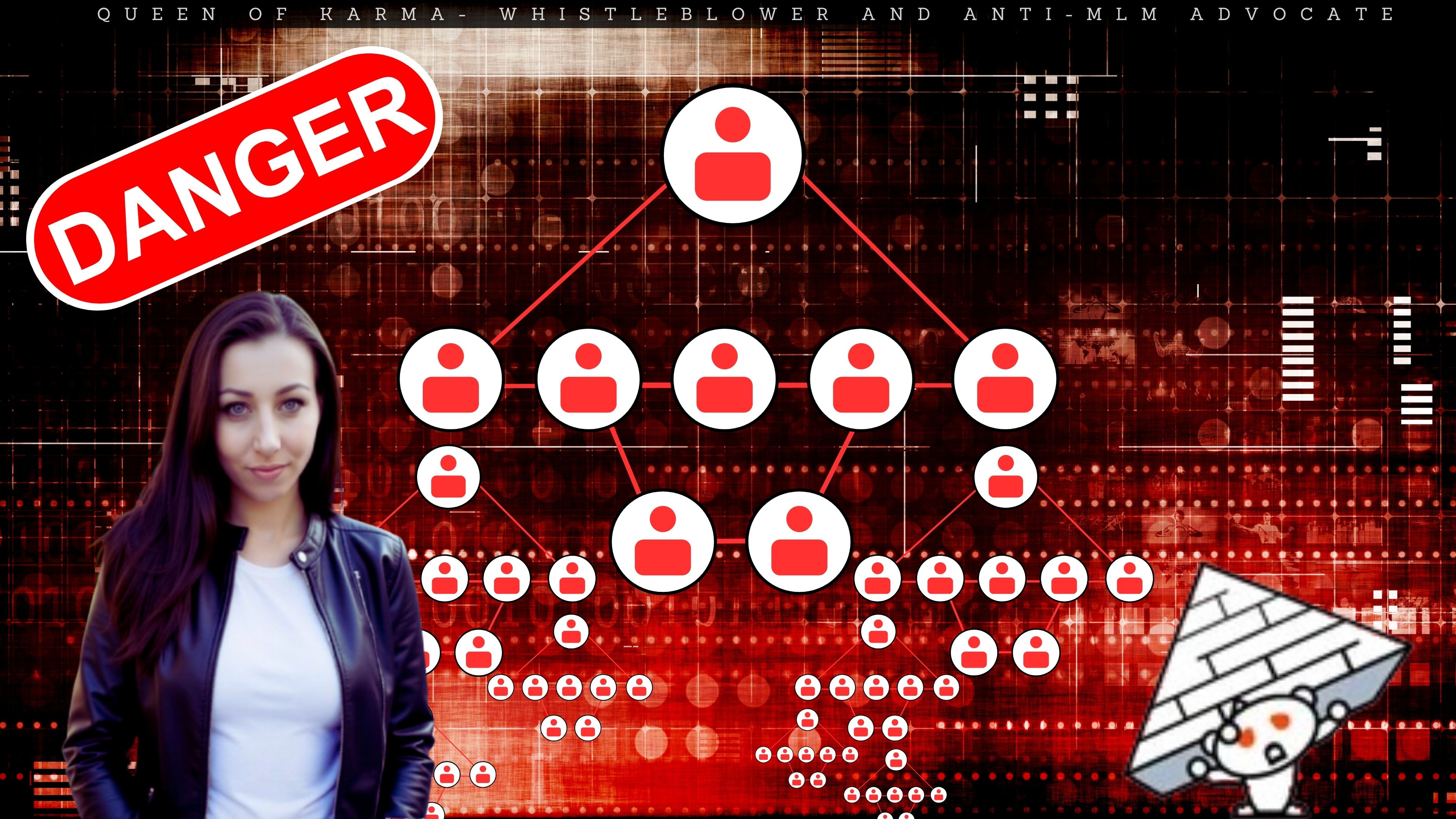
MLMs are built on hierarchical, pyramid-shaped structure where:
- uplines (the people above you) are treated as mentors, coaches, and authority figures
- downlines (the people below you) are expected to follow their guidance without question
- success is framed as a result of mindset, discipline, and obedience
- failure is framed as a personal flaw rather than a structural inevitability
This dynamic is not accidental — it is the engine that keeps MLMs running.
Uplines become unofficial gurus.
In MLM culture, uplines are not just sales managers. They become:
- life coaches
- spiritual guides
- motivational speakers
- pseudo-therapists
- financial advisors
- moral authorities
They are positioned as people who have “figured it out,” who possess secret knowledge, who can unlock success if you simply follow their system.
This creates a guru effect — the same psychological mechanism seen in cults, high-control religious groups, and authoritarian communities.
The upline becomes:
- the source of truth
- the model of success
- the judge of the effort
- the arbiter of discipline
- the person who defines what is acceptable
And because MLMs reward loyalty, obedience, and constant positivity, downlines are conditioned to trust their upline more than their own instincts.
Downlines are conditioned to obey.
Downlines are taught:
- “Don’t question the system.”
- “Your upline knows what works.”
- “If you’re struggling, it’s because you’re not coachable.”
- “Success requires total commitment.”
- “Negativity is failure.”
- “If you quit, you’re letting everyone down.”
This creates a psychological environment where:
- obedience is rewarded
- doubt is punished
- independence is discouraged
- critical thinking is reframed as negativity
- personal boundaries erode
In this environment, a charismatic or authoritarian upline can easily slide into abusive relationship.
Creating “Mini-Cults” Inside the Larger Organization
Most MLMs don’t operate as cults at the corporate level — but they enable cult-like subgroups to form within the distributor network.
These subgroups often have:
- their own rules
- their own rituals
- their own punishments
- their own belief systems
- their own internal hierarchy
- their own “chosen” leader
This is exactly what happened in the Herbalife Singapore case.
Chee Mei Wan created a closed, high-control micro-cult inside Herbalife:
- She framed herself as a mentor and authority figure
- She dictated how members should behave, think and “discipline” themselves.
- She used MLM ideology — discipline, mindset, commitment — to justify punishment.
- She convinced others, including Huang Bocan, to enforce her rules.
This is not unique.
This is structural.
MLMs create the conditions for these micro-cults to form because:
- there is no oversight
- there is no HR department
- there is no accountability
- uplines are financially incentivized to control their downlines
- the company disclaims responsibility for distributor behaior
When you combine:
- financial pressure
- identity entanglement
- charismatic leadership
- lack of oversight
- cult-like motivational language
- a belief that success requires total obedience
…you get an environment where abuse can escalate unchecked.
Why These Cases Keep Happening
When people hear about the Herbalife Murder, the Amway violence cases, or the NXIVM fallout, it’s tempting to treat each incident as an isolated tragedy — a one-off, a fluke, a “bad apple.” But when you zoom out, a pattern emerges. These cases don’t keep happening because MLMs are cursed or because the people involved are uniquely unstable. They keep happening because the MLM business model creates the exact psychological, financial, and social conditions where extreme behavior becomes more likely.
MLMs attract people who are already under pressure — financially strained, isolated, or searching for purpose. Once inside, the system amplifies those vulnerabilities. Distributors are encouraged to cut off “negative” influences, rely solely on their upline, and tie their entire identity to the company. When someone’s sense of self becomes fused with their MLM role, any threat to that identity — financial collapse, public embarrassment, or loss of status — can feel catastrophic.
At the same time, MLM leadership often models entitlement and rule-breaking. Executives flaunt luxury lifestyles, present themselves as visionaries, and operate with minimal accountability. When the people at the top behave as if the rules don’t apply to them, it sets a tone that trickles downward. The culture rewards dominance, relentless positivity, and image-management, while pushing vulnerability, honesty, and dissent. It’s a psychological environment where empathy erodes and pressure intensifies.
Financial stress compounds the problem. Most distributors lose money, and many lose far more than they ever admit publicly. Financial desperation is one of the strongest predictors of impulsive or violent behavior across all industries — and MLMs generate that desperation at scale. Combine that with isolation, identity collapse, and culture that glorifies success at all costs, and you have a volatile mix.
These tragedies don’t happen because MMLs sells shampoos or shakes. They happen because MLMs sell identity, pressure, and delusion — and when that bubble bursts, the fallout can be devastating. The Herbalife murder is not a random anomaly. It is a symptom of a system that pushes people to their psychological limits while shielding its leaders from accountability.
The Line Between Motivation and Abuse
A 19-ear-old lost her life in circumstances shaped by pressure, control, and a system that thrives on vulnerability. Her story is not just a tragedy — it is a warning. MLMs create environments where coercive leaders can flourish, where financial strain becomes normalized, and where young people can be pulled into dynamics they never fully understand until it’s too late.
Herbalife did not cause her death. But the structure she was embedded in — the pressure, the hierarchy, the coercive team culture — created conditions where harm could escalate unchecked.
When profit depends on obedience, and success depends on submission, the line between motivation and abuse disappears.
And when that line disappears, people get hurt.
Our hearts go out to this beautiful woman’s friends and family. We need to remember Ms. Huang by who she was, not by what happened to her. May her family and friends find some peace and closure in knowing that her story can at least help ensure this never happens to another person again.
By Beth Gibbons (Queen of Karma)
Beth Gibbons, known publicly as Queen of Karma, is a whistleblower and anti-MLM advocate who shares her personal experiences of being manipulated and financially harmed by multi-level marketing schemes. She writes and speaks candidly about the emotional and psychological toll these so-called “business opportunities” take on vulnerable individuals, especially women. Beth positions herself as a survivor-turned-activist, exposing MLMs as commercial cults and highlighting the cult-like tactics used to recruit, control, and silence members.
She has contributed blogs and participated in video interviews under the name Queen of Karma, often blending personal storytelling with direct confrontation of scammy business models. Her work aligns closely with scam awareness efforts, and she’s part of a growing community of voices pushing back against MLM exploitation, gaslighting, and financial abuse.

Leave A Comment