


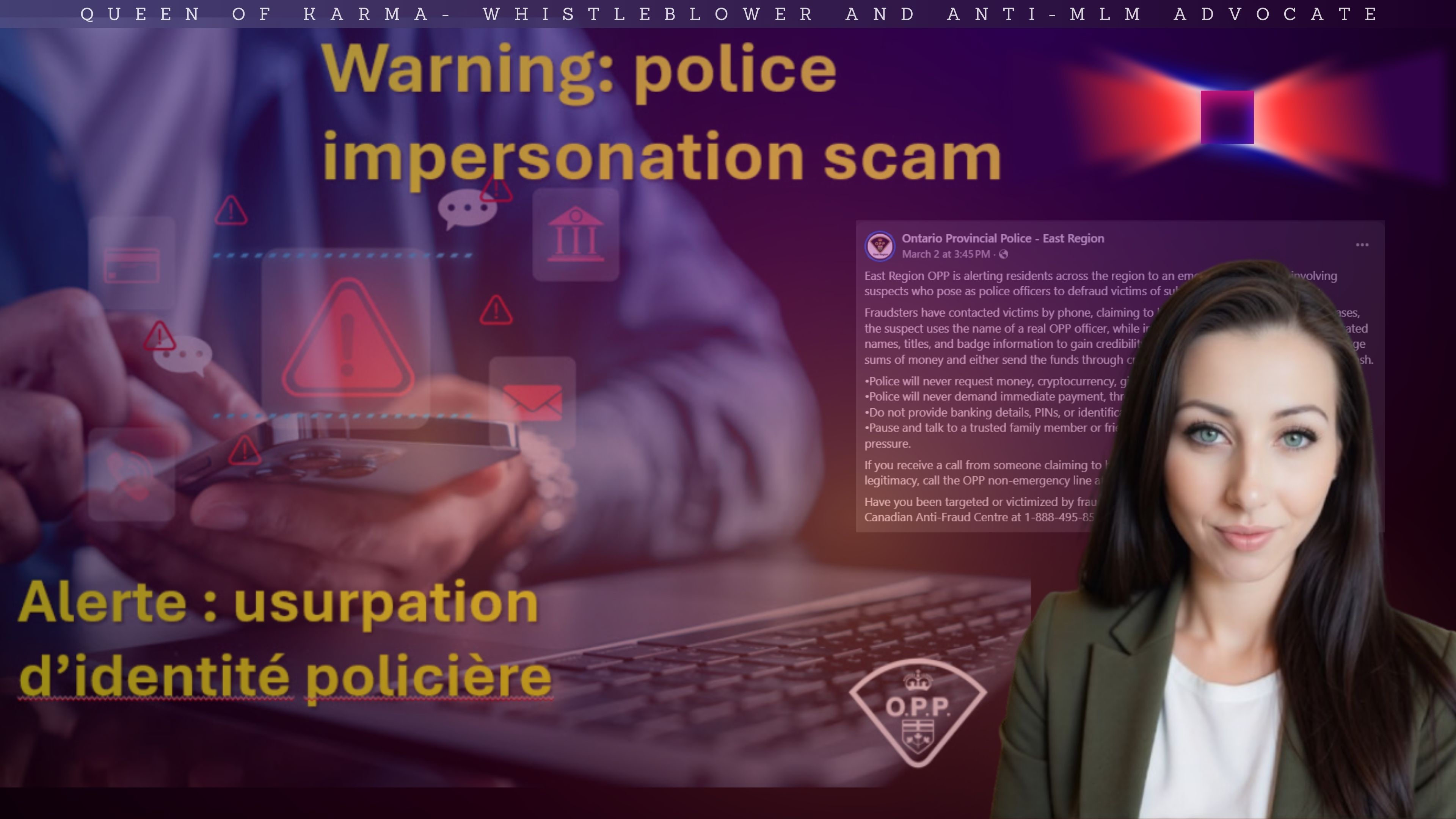
A new deeply unsettling fraud trend is taking hold across Eastern Ontario, one that exploits the public’s trust in law enforcement and the emotional vulnerability created by fear. The Ontario Provincial Police (OPP) East Region has issued a public safety alert warning residents about a rapidly rising scam in which suspects impersonate police officers to coerce victims into handing over large sums of money.
This is not a minor or isolated scheme. It is a coordinated, evolving operation that uses technology, psychological pressure, and the authority of the OPP’s name to manipulate victims into compliance.
The Scam’s Emergence
The earliest signs of this scam began appearing in February 2026, when residents across Eastern Ontario started reporting suspicious phone calls from individuals claiming to be OPP officers. These calls were not the typical “Canadian Revenue Agency scam” or generic fraud attempts. They were detailed, convincing, and tailored to mimic legitimate police contact. Victims described callers who knew their names, referenced real OPP officers, and used official-sounding terminology.
As reports increased, the pattern became impossible to ignore. By late February, multiple detachments were receiving complaints from residents who believed they were under investigation or facing imminent arrest. The callers were using spoofed phone numbers that appeared to come from actual OPP detachments, making the scam even more believable.
On March 2, 2026, the OPP East Region issued an Official Public Safety Alert on Facebook confirming what many residents already feared: this was a rising trend, and victims were losing thousands of dollars. The alert was quickly picked up by Kingstonist and other regional outlets, spreading awareness across the region. Within days, additional municipalities and media organizations echoed the warning, confirming that the scam was not only active but expanding.
As of early March, new cases continue to surface, and the OPP is urging residents to remain vigilant.
How the Scam Works
The scam begins with a phone call that appears to come from an OPP detachment. The caller introduces themselves as an officer, often using the name of a real OPP member or a fabricated identity complete with a badge number and rank. This is the first layer of credibility, and for many victims, it is enough to lower their guard.
Once the scammer establishes authority, they inform the victim that they are implicated in a serious matter — often identity theft, financial fraud, or criminal activity. The tone is urgent, authoritative, and intimidating. Victims are told that their bank accounts are compromised, that they are under investigation, or that they must act immediately to avoid arrest.
The scammer then instructs the victim to withdraw large amounts of cash or convert their savings into cryptocurrency, claiming this is necessary to “protect” their funds. In some cases, a courier is dispatched to collect the money directly from the victim’s home. The OPP confirms that victims has lost between $6,000 and $13,000 in a single encounter.
The scammer often keeps the victim on the phone for extended periods, preventing them from seeking advice or verifying the call. This isolation is intentional. The longer the scammer maintains control, the more likely the victim is to comply.
Why This Scam is So Effective
This scam works because it weaponizes authority, fear, and urgency — three of the most powerful psychological levers. When someone believes they are speaking to a police officer, especially one who sounds knowledgeable and provides official-sounding details, their instinct is to comply. The threat of arrest or legal consequences triggers a fight-or-flight response, narrowing the victim’s ability to think critically.
The OPP emphasizes that scammers rely heavily on intimidation. Victims are told they must act immediately, they they cannot speak to anyone else, and that failure to comply will result in severe consequences. This sense of imminent danger overrides rational decision-making.
Another factor is he use of caller ID spoofing, which makes the call appear legitimate. When the number on the screen matches the number of a real OPP detachment, victims feel they have no reason to doubt the caller’s identity.
The Human Impact on Victims
The financial losses are significant, but the emotional impact is often even more devastating. Victims describe feeling terrified during the call, convinced they were in serious legal trouble. Many report intense shame afterward, believing they “should have known better.” This shame often prevents victims from reporting the scam, which means the true number of cases is likely far higher than what has been documented.
The psychological aftermath can include anxiety, loss of trust, and a lingering fear of answering the phone. For some, the experience is traumatic. The scam does not just steal money — it steals a sense of safety and stability.
What the OPP Says
The OPP’s March 2 release is clear and direct. They warn that suspects are posing as police officers to defraud victims of substantial amounts of money, and that scammers are using both real and fabricated officer identities to gain credibility. The OPP stresses that real officers will never request money, cryptocurrency, gift cards, or financial transfers over the phone. They will never demand immediate payment, threaten arrest, or pressure someone to act urgently.
The OPP urges residents to hang up immediately if they receive a suspicious call and to contact the OPP non-emergency line to verify any claims. They also encourage victims to report incidents to the Canadian Anti-Fraud Centre, which tracks fraud trends and assists law enforcement.
Who Is Being Targeted
While the OPP has not released demographic data, the pattern across multiple reports suggests that scammers are targeting individuals who may be more likely to comply with authority figures. Older adults are often disproportionately affected by phone-based scams, but anyone who answers an unsolicited call could be at risk. Scammers rely on the assumption that victims will trust the legitimacy of a police officer and fear the consequences of non-compliance.
Protecting Yourself and Your Community
The OPP’s guidance is simple but crucial: no legitimate police officer will ever ask for money over the phone. If someone claims to be an officer and demands payment, the call is fraudulent. The safest response is to hang up and contact the OPP directly using the non-emergency number.
The OPP also encourages residents to pause and speak to a trusted family member or friend before making any financial decision under pressure. Scammers rely on secrecy and urgency; breaking that pattern can prevent victimization.
Reporting suspicious calls helps law enforcement track the spread of the scam and warn others. Even if no money was lost, reporting the incident can provide valuable information to investigators.
A Troubling Evolution
The rise of police-impersonation scams in Eastern Ontario represents a troubling evolution in fraud tactics. By exploiting trust in law enforcement and using technology to mimic legitimacy, scammers are deceiving victims into handing over large sums of money. The OPP’s March 2, 2026 warning underscores the seriousness of the threat and the need for public awareness.
Understanding how the scam works is the first step in preventing it. By recognizing the signs, questioning unexpected demands, and verifying suspicious calls, residents can protect themselves and their communities from financial and emotional harm.
By Beth Gibbons (Queen of Karma)
Beth Gibbons, known publicly as Queen of Karma, is a whistleblower and anti-MLM advocate who shares her personal experiences of being manipulated and financially harmed by multi-level marketing schemes. She writes and speaks candidly about the emotional and psychological toll these so-called “business opportunities” take on vulnerable individuals, especially women. Beth positions herself as a survivor-turned-activist, exposing MLMs as commercial cults and highlighting the cult-like tactics used to recruit, control, and silence members.
She has contributed blogs and participated in video interviews under the name Queen of Karma, often blending personal storytelling with direct confrontation of scammy business models. Her work aligns closely with scam awareness efforts, and she’s part of a growing community of voices pushing back against MLM exploitation, gaslighting, and financial abuse.






Leave A Comment