


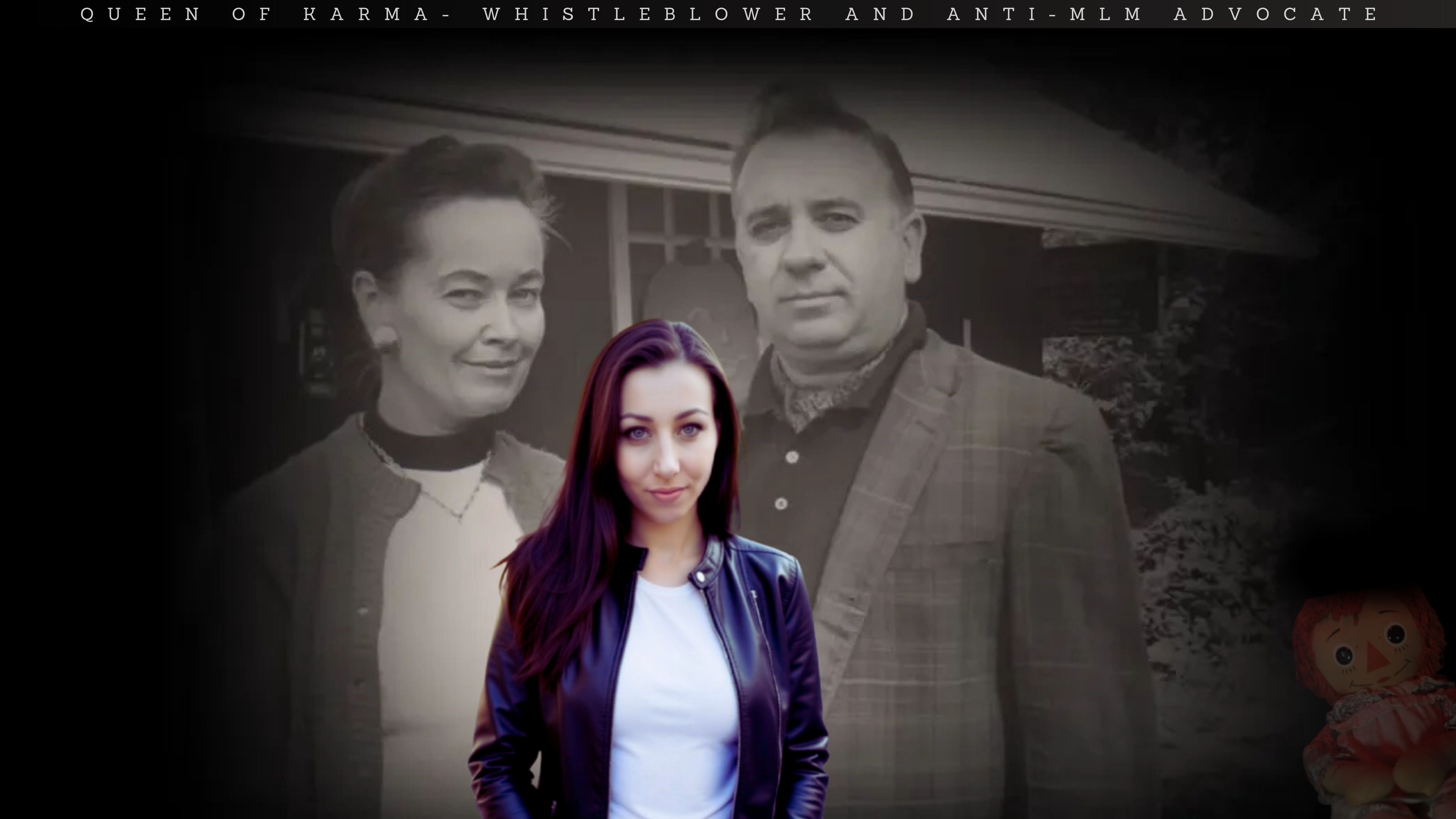
Ed and Loraine Warren are household names in the world of the paranormal. Their careers, spanning over five decades, have inspired blockbuster films, best-selling books, and a thriving industry of ghost tours and haunted attractions.
Yet, beneath the veneer of devout demonologists and selfless investigators lies a far more complex — and troubling — story.
Who Is Lorraine Warren?
Lorraine Rita Moran was born on January 31, 1927, in Bridgeport, Connecticut, into a devout Catholic family whose worldview shaped her understanding of spirituality from an early age. She attended Lauralton Hall, a private Catholic girls’ academy in Milford, where the curriculum emphasized religious instruction, moral philosophy, and the idea that supernatural was not only real but intertwined with everyday life. This environment reinforced the belief that unseen forces could influence the physical world, a belief that would later become central to her public persona.
Lorraine often claimed that her psychic sensitivity began in childhood, describing experiences of heightened intuition and clairvoyance long before she had the language to articulate them. These claims were rooted in personal interpretation rather than formal training; she never studied parapsychology, psychology, or theology in an academic setting. Instead, her sense of identity as a clairvoyant emerged organically from her upbringing, her religious environment, and the cultural moment in mid-20th-century America when spiritualism and psychic phenomena were enjoying renewed popularity.
By her teenage years, Lorraine was already drawn to stories of hauntings and spiritual encounters circulating in New England folklore. Bridgeport, with its mix of Catholic tradition and old New England ghost lore, provided fertile ground for someone inclined toward the mystical. It was during this period that she met a young man named Ed Warren, whose own fascination with the supernatural mirrored her own. Their shared interest in the paranormal became the foundation of a lifelong partnership. They married in 1945, and Lorraine’s self-described clairvoyance would eventually become one half of the brand that made the Warrens famous.
Who Is Ed Warren?
Edward Warren Miney was born on September 7, 1926, also in Bridgeport, Connecticut. His early life was shaped by stories he later told about growing up in what he believed was a haunted house. According to Ed, he experienced unexplained noises, shadowy figures, and disturbances that he interpreted as supernatural. These accounts cannot be independently verified, but they became a defining part of his public identity and the origin story he repeated throughout his career.
Ed’s formal education was limited; he did not pursue academic training in theology, psychology, or any scientific discipline related to paranormal investigation. Instead, he developed his identity as a “demonologist” through self-study, Catholic literature, and personal belief. He served in the US Navy during World War II, and after returning home, he used the G.I. Bill to attend art school. Painting became his first profession, and he often sold landscapes and portraits door-to-door. This work unexpectedly became his entry point into the paranormal world: he would paint allegedly haunted houses, strike up conversations with homeowners, and ask about their experiences. These interactions gradually shifted his focus from art to ghost hunting.
Ed’s charisma and confidence allowed him to position himself as an authority on demonic phenomena despite lacking formal credentials. He cultivated an image of someone who understood the darker side of the supernatural, drawing heavily on Catholic demonology and folklore. His self-appointed expertise became the backbone of the Warrens’ later work.
Ed met Lorraine when they were both teenagers in Bridgeport. Their relationship grew quickly, strengthened by shared cultural background and a mutual fascination with the supernatural. They married young, and their partnership became both personal and professional. In 1952, they founded the New England Society for Psychic Research, which they described as the oldest ghost-hunting organization in the United States. Their marriage became the foundation of a paranormal empire: Ed as the demonologist, Lorraine as the clairvoyant, and together as the couple who would go on to shape the modern ghost-hunting industry.
Public Persona and Career Trajectory
Ed Warren, a self-taught demonologist, and Lorraine Warren, a professed clairvoyant and trance medium, began their journey in the 1950s, founding the New England Society for Psychic Research (NESPR) in 1952. Their early years were marked by a blend of artistic hustle — Ed painted houses and used the artwork as a pretext to gain entry to purportedly haunted homes — and a growing interest in the supernatural. Over time, the Warrens cultivated a public image as devout Catholics battling the forces of evil, positioning themselves as the last hope for families besieged by the paranormal.
Their approach was methodical: they documented cases, collected artifacts, and built a network of clergy, police, and lay investigators. The NESPR, still active today, claims to have investigated over 10,000 cases, though the veracity and depth of these investigations are widely disputed. The Warrens’ Occult Museum, housed in their Monroe, Connecticut home, became a macabre tourist attraction, featuring infamous items like the Annabelle doll and relics from their most publicized cases.
The couple’s rise to fame was propelled by media appearances, lectures, and a prolific output of books — many ghostwritten or co-authored with horror writers. Their stories, often sensationalized, found a receptive audience in the 1970s and 1980s, a period marked by a cultural fascination with the occult and a growing appetite for supernatural entertainment.
The Amityville Horror: Fact, Fiction, and Fabrication
The Amityville case is perhaps the most iconic in the Warrens’ portfolio. In November 1974, Ronald DeFeo Jr. murdered his parents and four siblings in their Long Island home. The following year, George and Kathy Lutz purchased the house at a steep discount, aware of its bloody history. After just 28 days, the Lutz family fled, claiming to have been terrorized by a host of supernatural phenomena: cold spots, green slime, levitating objects, and demonic apparitions.
The Warrens entered the Amityville story after the Lutzs had already left the house. Invited by a local TV crew, they participated in a televised séance in March 1976. Other investigators present reported nothing unusual, but Lorraine Warren claimed to sense overwhelming evil, famously stating, “I hope this is as close to hell as I’ll ever get.” The Warrens never met the Lutz family during their investigation, but their presence at the séance allowed them to claim a central role in the case, which they would later leverage in books, lectures, and media appearances.
One of the most enduring pieces of “evidence” from the Amityville house is the so-called “ghost boy” photo, captured by the Warrens’ investigation. The image, showing a small boy with glowing eyes peering from a doorway, was widely touted as proof of the supernatural. Skeptics, however, have demonstrated that the figure is almost certainly a member of the investigative team, caught in motion by an infrared camera. The glowing eyes are a common artifact of infrared photography, and the supposed “boy” matches the appearance of Paul Bartz, an investigator present that night.
The Amityville haunting quickly became a media sensation, spawning Jay Anson’s best-selling book and a series of films. However, the story’s credibility was undermined by a series of revelations:
- William Weber, Ronald DeFeo’s defense attorney, admitted that he, the Lutz family, and Anson had concocted the haunting story “over many bottles of wine” in hopes of securing book and film deals.
- Contradictions in the Lutzes’ accounts, lawsuits over rights, and the lack of corroborating evidence led many to conclude the story was a fabrication.
- Investigations by skeptics such as Joe Nickell and Benjamin Radford found no scientific evidence of paranormal activity, and subsequent residents of the house reported no unusual phenomena.
Despite these debunkings, the Warrens continued to present Amityville as a cornerstone of their career, and Hollywood adaptations further cemented their version of events in the public imagination.
The Enfield Poltergeist: Exaggeration and Opportunism
The Enfield Poltergeist case, which unfolded in North London between 1977 and 1979, involved the Hodgson family and a series of bizarre phenomena: knocking sounds, moving furniture, levitations, and the infamous “Bill Wilkins” voice emanating from 11-year-old Janet Hodgson. The primary investigators were Maurice Grosse and Guy Lyon Playfair of the Society for Psychic Research (SPR), who spent over a year documenting the events, amassing hundreds of hours recordings and dozens of eyewitnesses testimonies.
Contrary to the narrative presented in The Conjuring 2, the Warrens’ involvement in the Enfield case was minimal. According to Playfair and Grosse, the Warrens showed up uninvited, were refused admittance to the home, and played no significant role in the investigation. Playfair recalled that Ed Warren told him, “You could make a lot of money out of this,” underscoring the couple’s commercial motivations.
The Enfield case remains controversial, with some evidence suggesting genuine unexplained phenomena and other incidents clearly attributable to trickery by the children. Janet Hodgson later admitted to faking some of the events “about two percent of the time,” and skeptics have pointed to inconsistencies and the influence of media attention as factors in the escalation of the haunting. Nonetheless, the Warrens’ attempt to insert themselves into the case — and their subsequent portrayal as heroic investigators in film — stands as a clear example of credibility laundering and narrative manipulation.
A Haunting in Connecticut: Contradictions and Confessions
In 1986, the Snedeker family moved into a former funeral home in Southington, Connecticut, to be closer to medical care for their son, Philip, who was undergoing cancer treatment. Almost immediately, they reported a barrage of supernatural events: apparitions, physical attacks, personality changes, and even sexual assaults by unseen forces. The family’s story was publicized before they left the house, and the case quickly attracted the attention of Ed and Lorraine Warren.
The Warrens declared the house “infested by demons” and brought in a priest to perform an exorcism. The case was later dramatized in the book In a Dark Place, co-authored by horror writer Ray Garton, and adapted into the film The Haunting in Connecticut.
Ray Garton, the book’s author, has since publicly disavowed the story, stating that the Snedeker family “could not keep their story straight,” and that Ed Warren encouraged him to “make the rest up and make it scary.” Garton recounted that Ed told him, “Everybody who comes to us is crazy. Otherwise why would they come to us? They’ve got some of the story — just use what works and make the rest up.” This admission is a damning indictment of the Warrens’ methods and their willingness to fabricate or embellish details for commercial gain.
Neighbors, the landlord, and subsequent owners of the house have all dismissed the Snedekers’ claims as a hoax. The landlord noted that reports of paranormal activity escalated when the family was behind on rent, and friends described Philip as a known storyteller. The new owner, interviewed in 2009, called the stories “Hollywood foolishness” and “ludicrous.”
The Demons and The Dolls
The Perron Family (The Conjuring)
The Perron haunting, which inspired the first Conjuring film, involved a Rhode Island farmhouse and a series of alleged supernatural attacks. The Warrens claimed the house was haunted by the spirit of Bathsheba Sherman, a supposed witch. The family’s daughter, Andrea Parron, has described a range of experiences, from missing brooms to violent possessions. However, historical research has failed to substantiate the claims about Bathsheba, and the narrative has shifted over time, with different spirits blamed for the haunting.
The Warrens’ intervention culminated in a séance, not an exorcism as depicted in the film. After the séance, Roger Perron asked the Warrens to leave, concerned for his wife’s mental health. The family remained in the house for years due to financial constraints, and the hauntings reportedly ceased after they moved out.
The Smurl Haunting (The Conjuring: Last Rites)
The Smurl family’s ordeal in West Pittston, Pennsylvania, involved claims of levitations, foul odors, and sexual assaults by a demonic presence. The Warrens spent months at the home, collecting audio recordings and advocating for exorcisms. Skeptics, including Paul Kurtz of the Committee for the Scientific Investigation of Claims of the Paranormal, dismissed the case as a hoax, noting the lack of scientific evidence and the family’s refusal to undergo psychiatric evaluation. Subsequent residents reported no unusual activity, and the case remains unconvincing to most outside the paranormal community.
Annabelle
The Annabelle case, involving a Raggedy Ann doll allegedly possessed by a malevolent spirit, became a staple of the Warrens’ Occult Museum and inspired multiple films. The story, like many others, is based on anecdotal accounts and lacks independent verification. The doll’s legend has been amplified by Hollywood, but there is no credible evidence supporting the claims of possession or supernatural activity.
Arne Johnson (“The Devil Made Me Do It”)
In 1981, Arne Cheyenne Johnson was accused of murdering his landlord and attempted to plead not guilty by reason of demonic possession, with the Warrens testifying in his defense. The court rejected the defense, and Johnson was convicted of manslaughter. The case, dramatized in The Conjuring: The Devil Made Me Do It, is notable for the Warrens’ willingness to insert supernatural explanations into legal proceedings, raising ethical and legal concerns.
Skeptical Investigations and Critiques
The New England Skeptical Society (NESS)
Skeptics Perry DeAngelis and Steven Novella of NESS conducted a thorough investigation of the Warrens’ evidence, concluding that it was “all blarney.” They found common errors with flash photography, no compelling evidence of the supernatural, and a pattern of predetermined conclusions rather than scientific inquiry. Novella noted, “They have…a ton of fish stories about evidence that got away…They’re not doing good scientific investigation; they have a predetermined conclusion which they adhere to, literally and religiously.”
Joe Nickell and Benjamin Radford
Paranormal investigators Joe Nickell and Benjamin Radford have systemically debunked the Warrens’ most famous cases, including Amityville and the Snedeker haunting. Their analyses highlight the lack of verifiable evidence, the reliance on anecdotal testimony, and the frequent contradictions in the Warrens’ accounts. Nickell, in particular, has emphasized the dangers of reinforcing delusions and confusing the public about scientific methodology.
Community and Forum Criticism
Within the broader paranormal community, opinions on the Warrens are sharply divided. Some view them as sincere, if misguided, investigators; others see them as outright frauds who manipulated fear for profit. Online forums and social media are rife with debates over the legitimacy of their cases, with many users expressing skepticism and frustration at the blending of show business and supposed reality.
Allegations of Personal Misconduct and Abuse
In 2017, Judith Penney came forward with allegations that she had a sexual relationship with Ed Warren beginning when she was 15 years old, with Lorraine’s full knowledge. Penney claimed to have lived in the Warrens’ home for decades, to have become pregnant by Ed, and to have been pressured by Lorraine to have an abortion and lie about the circumstances. She also described witnessing physical abuse between Ed and Lorraine.
These allegations, supported by legal filings and corroborated in part by Gerald Brittle’s biography of the Warrens, cast a dark shadow over the couple’s carefully curated public image. Lorraine repeatedly had it written into her contract for The Conjuring films that she and Ed could not be portrayed engaging in extramarital affairs or crimes such as sex with a minor.
While the Warrens’ daughter and son-in-law have denied witnessing any misconduct, the allegations have fueled further skepticism and damaged the couple’s reputation, particularly in the wake of the #MeToo movement and increased scrutiny of public figures’ private lives.
Deceptive Practices, Fabrication, and Staged Evidence
The pattern that emerges from the Warrens’ career is one of opportunism, embellishment, and, at times, outright fabrication. Whether encouraging ghostwriters to invent details, inserting themselves into cases for publicity, or leveraging media connections to amplify their stories, the Warrens consistently prioritized narrative and commercial appeal over rigorous investigation.
Their willingness to stage evidence, as in the case of Amityville “ghost boy” photo, and to encourage witnesses to exaggerate or invent details, as in the Snedeker case, demonstrates a disregard for truth and focus on spectacle. This approach has had lasting consequences, not only for the families involved but for the credibility of paranormal research as a whole.
Monetization Strategies for a Reputation
The Warrens were adept at monetizing their reputation. Their income streams included:
- Books: Many of their cases were turned into best-selling books, often ghostwritten or co-authored with horror writers. These books were marketed as “true stories,” despite admissions of fabrication and embellishment.
- Lectures: The Warrens toured college campuses and community centers, charging for lectures and presentations on their most famous cases.
- Museum: The Occult Museum in Monroe, Connecticut, charged admission and sold merchandise, capitalizing on the public’s fascination with haunted objects.
- Film Rights: The adaptation of their cases into films, most notably The Conjuring franchise, generated substantial revenue and further amplified their brand. Lorraine Warren served as a consultant on several films, ensuring that the cinematic portrayal aligned with the couple’s preferred narrative.
Tactics Resembling Commercial Cult Behavior
The Warrens’ organization exhibited several characteristics commonly associated with commercial cults:
- Charismatic Leadership: Ed and Lorraine positioned themselves as uniquely qualified to battle evil, cultivating a devoted following and discouraging dissent.
- Control of Information: The Warrens tightly controlled access to their case files, museum, and personal history, often rewriting or omitting inconvenient details.
- Credibility Laundering: By associating with clergy, police, and medical professionals, the Warrens sought to legitimize their claims and obscure the lack of scientific evidence. This tactic mirrors the process of “credibility laundering,” in which questionable actors use reputable institutions or individuals to bolster their image.
- Monetization and Fear: The Warrens’ business model relied on the exploitation of fear and the promise of exclusive knowledge or protection from supernatural threats.
The adaption of the Warrens’ cases into films has played a significant role in laundering their credibility and perpetuating their myths. The Conjuring franchise, in particular, has presented the couple as heroic, self-sacrificing warriors against evil, glossing over the controversies, contradictions, and allegations that define their real-life story.
The Afterlife of the Brand
Ed Warren died on August 23, 2006, at the age of 79, after several years of declining health following a major heart attack in 2001 that left him in a coma for weeks. Although he eventually recovered enough to return home, he never fully regained his strength, and his public appearances became rare in the final years of his life.
Lorraine Warren lived much longer, continuing to make media appearances and consult on film projects well into her nineties. She died on April 18, 2019, at the age of 92, passing away peacefully in her sleep at her home in Monroe, Connecticut.
Their deaths marked the end of an era in paranormal pop culture, but the mythology they created — and the controversies surrounding their methods — continue to shape the industry they helped build.
Even after their deaths, the Warrens’ legacy continues to generate revenue and controversy. The Occult Museum, once owned by their daughter Judy and son-in-law Tony Spera, remained a focal point for paranormal tourism. In 2025, comedian Matt Rife and YouTuber Elton Castee purchased the Warrens’ home and museum, announcing plans to reopen it and allow patrons to spend the night inside.
The museum’s artifacts, many of dubious provenance, are marketed as powerful connections between the human and spirit worlds. The continued commercialization of the Warrens’ legacy underscores the enduring appeal — and the unresolved ethical questions — of their approach to the paranormal.
The Warrens and the Architecture of Belief
The story of Ed and Lorraine Warren is not simply the story of two paranormal investigators; it is the story of how a belief-based industry was built. Their careers were shaped by a combination of mythology, Catholic demonology, media amplification, and a willingness to present the narrative as evidence. Across their most famous cases, the same pattern emerges: dramatic claims unsupported by verifiable documentation, witnesses who later contradicted their accounts, and investigators who found no empirical basis for the stories that made the Warrens famous. Yet the couple’s influence endured because they understood something fundamental about human psychology — people are drawn to stories that explain fear, and they are even more drawn to storytellers who speak with confidence.
The Warrens’ legacy is not just a collection of case files; it is a blueprint. Their approach blended elements of performance, authority, and spiritual urgency in a way that mirrors the tactics of commercial cults. They positioned themselves as the only interpreters of supernatural truth, controlled the narratives around their cases, and used credibility laundering — through priests, authors, television specials, and later Hollywood — to reinforce their authority. The result was a system where belief became a commodity, and the Warrens became its most successful merchants.
This is why their influence still shapes the paranormal world today. The modern ghost-hunting industry, paranormal tourism, and haunted-house branding all trace their lineage back to the Warrens’ model. The emphasis on narrative control, and gatekeeping of “approved” versions of events, and the monetization of fear are not accidents — they are inherited structures. These same dynamics are at the heart of the ongoing drama surrounding The Conjuring House.
The Warrens built an empire on stories that could not be verified but were too compelling to ignore. Their impact is undeniable, but so is the pattern they left behind: a system where belief is shaped, curated, and sold. Understanding that pattern is essential before stepping into the modern controversies that continue to unfold in their shadow.
By Beth Gibbons (Queen of Karma)
Beth Gibbons, known publicly as Queen of Karma, is a whistleblower and anti-MLM advocate who shares her personal experiences of being manipulated and financially harmed by multi-level marketing schemes. She writes and speaks candidly about the emotional and psychological toll these so-called “business opportunities” take on vulnerable individuals, especially women. Beth positions herself as a survivor-turned-activist, exposing MLMs as commercial cults and highlighting the cult-like tactics used to recruit, control, and silence members.
She has contributed blogs and participated in video interviews under the name Queen of Karma, often blending personal storytelling with direct confrontation of scammy business models. Her work aligns closely with scam awareness efforts, and she’s part of a growing community of voices pushing back against MLM exploitation, gaslighting, and financial abuse.





Leave A Comment