


The Hare Krishna movement, formally known as the International Society for Krishna Consciousness (ISKCON), has long carried the weight of controversy. Survivors and researchers have described it as a high-control religious group, a cult-like organization where devotion is leveraged to demand obedience, labor, and financial sacrifice. From child abuse scandals in its gurukula schools to financial exploitation and psychological manipulation, ISKCON’s history is marked by systemic harm that continues to reverberate across its global communities.
Now, in South Africa, those longstanding concerns have collided with tragedy. On December 12, 2025, a temple building under construction in Verulam collapsed, killing several people and injuring many more. This disaster is not only a local catastrophe — it is a stark reminder of how unchecked ambition, negligence, and cult-like expansion practices can cost lives.
A Cult With a Controversial Legacy
Founded in 1966 by A.C. Bhaktivedanta Swami Prabhupada, ISKCON spread rapidly across the globe, presenting itself as a spiritual society devoted to Krishna. Yet beneath the chanting and saffron robes lies a Troubling Legacy.
Survivors have documented decades of harm: child abuse scandals in ISKCON schools, financial coercion where devotees were pressured to donate beyond their means, and labor exploitation framed as “service to Krishna.” The movements teachings often encourage followers to cut ties with outside support systems, leaving them isolated and dependent on temple leadership. Questioning authority is discouraged, dissent silenced, and devotion leveraged to justify neglect.
This legacy of harm is not abstract. It shapes the lived experience of survivors who continue to speak out, warning that ISKCON’s pursuit of expansion and image often comes at the expense of safety, dignity, and human life.
The Collapse in Verulam
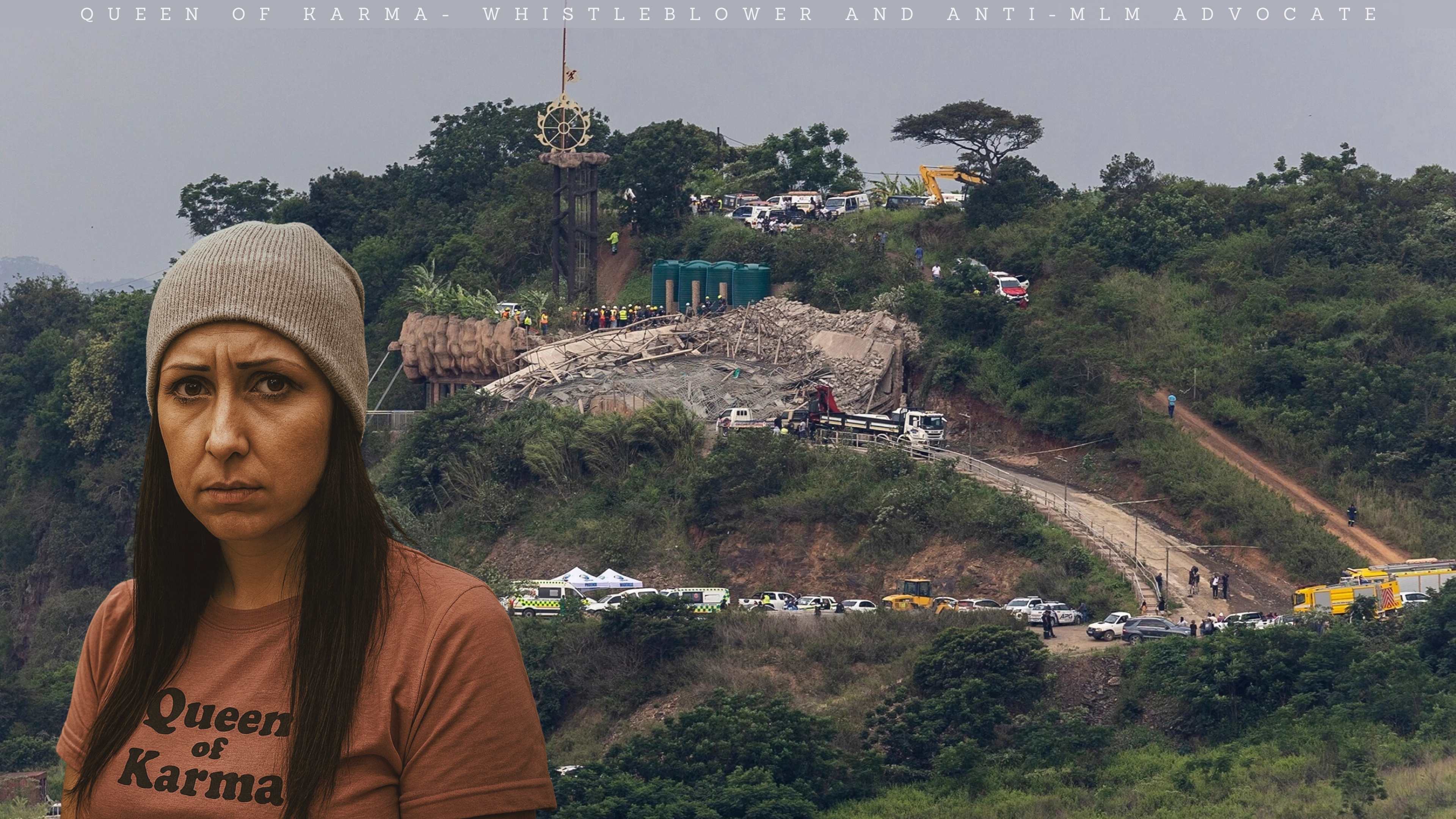
On December 12, 2025, Tragedy Struck in Verulam, KwaZulu-Natal. A four-storey building under construction at the New Ahobilam Temple of Protection collapsed while workers were pouring concrete. Survivors describe the deafening sound of cracking beams, the suffocating dust cloud, and the terror of being trapped beneath rubble.
At least five people were killed, including Vic Panday, the temple’s founder, and many others were injured. Rescue operations were complicated by unstable debris and severe weather conditions. Families gathered outside the site, waiting in anguish for news of loved ones.
Local authorities later confirmed the building had no approved plans or permits. The eThekwini Municipality stated that no building plans were approved for the four-storey structure that collapsed at the New Ahobilam Temple of Protection in Verulam. What might have been seen as a tragic accident was now understood as a preventable disaster, born of negligence and disregard for civil law.
Survivors at the Center
For survivors and families, the collapse is not only physical trauma but also emotional betrayal. Many trusted the temple as a spiritual refuge, a place of protection and devotion. Instead, they discovered that basic safety standards were ignored.
Survivors now carry the weight of grief, injury, and the knowledge that their suffering was avoidable. Some describe feeling manipulated into contributing labor or funds for the temple’s expansion, only to see those efforts end in tragedy. Others speak of the silence and minimization that often follows disasters in high-control groups — where leaders emphasize spiritual explanations rather than accountability.
This is the human cost of negligence: lost lives, families shattered more, and communities left questioning whether devotion was exploited in the name of ambition.
ISKCON’s Expansion Culture
The Verulam collapse reflects a broader culture of expansion within ISKCON, where temples are built rapidly, often without proper oversight. In many countries, ISKCON has pursued ambitious construction projects, framing them as offerings to Krishna or symbols of spiritual progress.
Yet survivors and critics argue that these projects often prioritize image over safety. The pressure to expand, to build bigger and more impressive temples, can lead to shortcuts, exploitation of labor, and disregard for regulations. The Verulam collapse is a stark example of how this culture of unchecked ambition can have deadly consequences.
Global Pattern of Harm
The collapse in Verulam fits into a global pattern of harm tied to ISKCON’s operations:
- Child abuse scandals: Survivors of ISKCON’s gurukula schools in the US and India have testified to widespread abuse, leading to lawsuits and settlements.
- Financial mismanagement: Temples worldwide have faced accusations of misusing donations, with funds diverted to expansion projects or leadership lifestyles.
- Labor exploitation: In countries from Indian to the UK, devotees have reported being pressured into unpaid service, often at the expense of their health and livelihoods.
- Neglect of safety: Construction projects, festivals, and mass gatherings have sometimes ignored basic safety standards, putting devotees at risk.
The Verulam collapse is part of this continuum — a reminder that ISKCON’s pursuit of growth and visibility often comes at a devastating human cost.
What This Means for South Africa
The Verulam Collapse forces South Africa to confront the accountability gap that allows religious organizations to operate with limited oversight.
- For devotees: It is a moment to question whether loyalty to a movement should come at the cost of safety and dignity.
- For the public: It is a call to scrutinize religious institutions accused of cult-like practices, ensuring they meet the same standards as any other organization.
- For survivors: It is a painful but powerful opportunity to speak truth, demand reform, and ensure that no one else suffers in silence.
This tragedy highlights the need for stricter enforcement of building codes, greater transparency in religious construction projects, and recognition of the systemic harms tied to high-control groups.
Survivor-Centered Accountability
This disaster demands more than condolences. Survivors deserve justice, transparency, and recognition of the systemic failures that led to the collapse. Their voices must guide the reckoning that follows.
Minister Dean Macpherson vowed to reform building regulations after the collapse, explicitly stating the need to prevent future tragedies and ensure compliance. The KwaZulu-Natal Government called for a reassessment of building standards, especially in light of climate risks and illegal construction practices. eThekwini Mayor Cyril Xaba expressed serious concern about compliance, denying that illegal construction is widespread but acknowledging the need for better enforcement.
These statements show that authorities view the collapse as a preventable failure, not an act of fate. The absence of approved plans, the rushed expansion, and the lack of oversight all point to systemic negligence — not just by builders, but by those who allowed the project to proceed unchecked.
Faith cannot be used as a shield against accountability. The Verulam collapse is both a human tragedy and a cautionary tale — a reminder that devotion must never come at the expense of safety, dignity, and human life.
Closing Thoughts
The collapse of the Hare Krishna temple in Verulam is not only a physical disaster but a symbol of deeper harms tied to high-control religious groups. Survivors now stand at the center of this story, and their voices must shape the future.
This is a moment for South Africa — and for the global community — to demand accountability, reform, and solidarity with those harmed by institutions that claim to offer salvation while neglecting the most basic human protections.
By Beth Gibbons (Queen of Karma)
Beth Gibbons, known publicly as Queen of Karma, is a whistleblower and anti-MLM advocate who shares her personal experiences of being manipulated and financially harmed by multi-level marketing schemes. She writes and speaks candidly about the emotional and psychological toll these so-called “business opportunities” take on vulnerable individuals, especially women. Beth positions herself as a survivor-turned-activist, exposing MLMs as commercial cults and highlighting the cult-like tactics used to recruit, control, and silence members.
She has contributed blogs and participated in video interviews under the name Queen of Karma, often blending personal storytelling with direct confrontation of scammy business models. Her work aligns closely with scam awareness efforts, and she’s part of a growing community of voices pushing back against MLM exploitation, gaslighting, and financial abuse.




Leave A Comment