


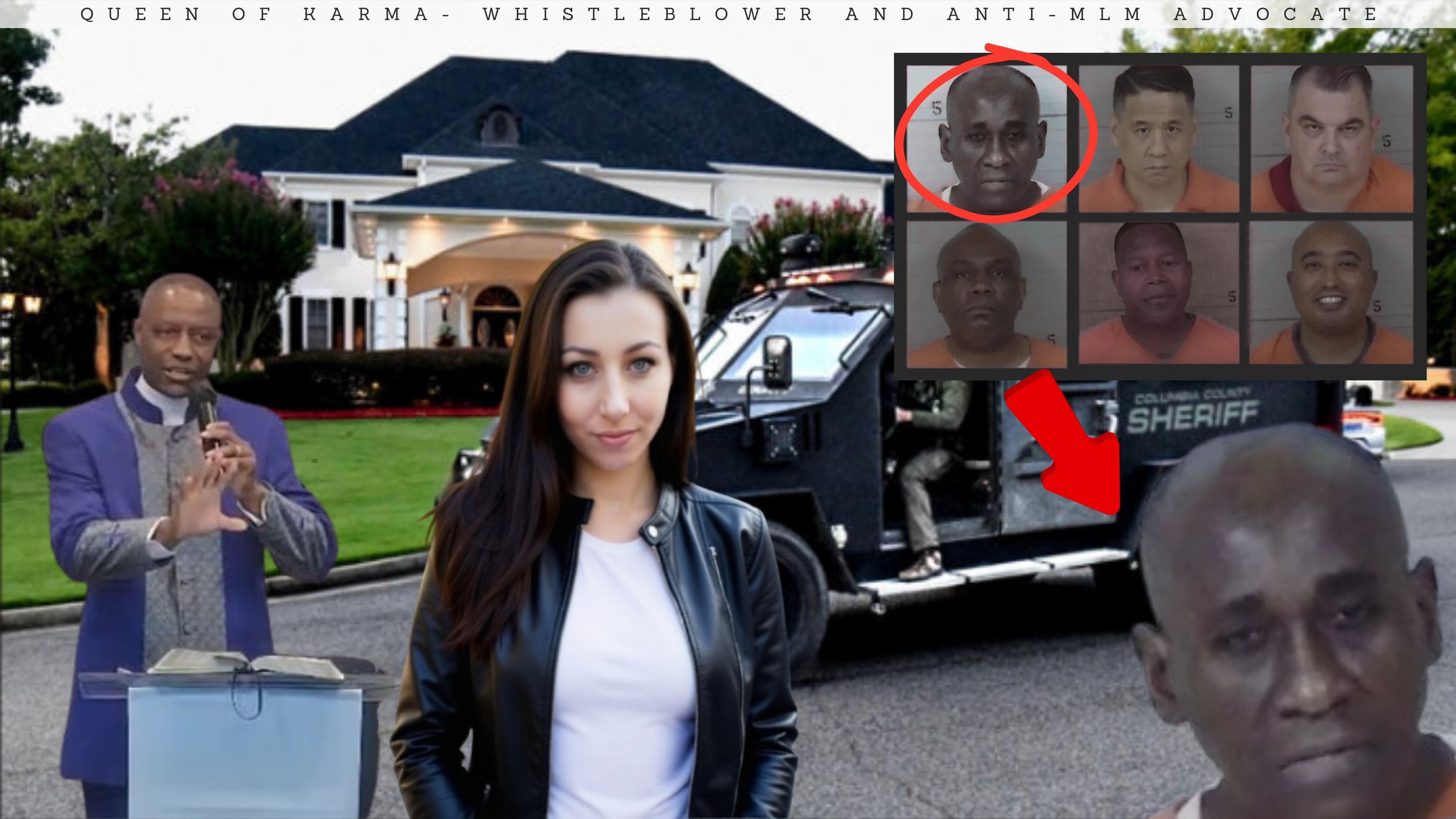
The House of Prayer Christian Church (HOPCC) is a Pentecostal-styled ministry founded by Rony Denis in the early 2000s. On the surface, it presents itself as a holiness church. But survivors, journalists, and federal investigators describe something far more dangerous: a high-control, cult-like organization that isolates members, exploits their finances, and weaponizes faith to dominate their lives.
In 2025, the US federal government confirmed what survivors had been saying for years. Multiple HOPCC leaders — including Denis — were indicted in a sweeping fraud case involving bank fraud, wire fraud, and tax crimes. The FBI publicly announced it was seeking victims, noting that HOPCC leadership had primarily targeted US service members from 2005 to present. This exposé is a survivor-centered documentation of the group’s tactics and shows why naming coercive control matters while validating the voices of those who endured HOPCC’s control.
The Cult of Rony Denis: Origins and Rise
To understand how HOPCC became one of the most notorious high-control religious groups in the United States, you have to start with Denis himself — his background, his break from his former denomination, and the early warning signs that survivors now recognize as the roots of a coercive, cult-like system. This is the beginning of the story.
Rony Denis began his ministry within the New Testament Christian Churches of America (NTCC), a denomination already known for strict holiness teachings and authoritarian leadership. Even within that environment, Denis stood out for his intensity, rigidity, and fixation on obedience. Survivors who knew him during this period describe him as charismatic but controlling, ambitious but paranoid, deeply invested in hierarchy, and obsessed with purity and submission. These traits would later become the foundation of HOPCC’s internal culture.
In 2002, Denis split from NTCC under the claim that God had given him a “higher revelation.” This is a common pattern in the formation of high-control groups: a leader declares themselves uniquely chosen, uniquely enlightened, or uniquely capable of interpreting divine will. Denis founded the House of Prayer Christian Church in Baton Rouge, Louisiana, positioning it as a stricter, purer, more “holy” alternative to mainstream Pentecostalism. From the beginning, HOPCC was built around Denis’s personal authority, rigid behavioral rules, isolation from outside influence, a belief that the world was spiritually corrupt, and a narrative that only Denis’s followers were truly saved. The seeds of coercive control were already planted.
Shortly after founding HOPCC, Denis relocated the church’s headquarters to Hinesville, Georgia, just minutes from Fort Stewart, one of the largest U.S. Army installations. This was not an accident. Survivors and investigators now recognize the move as a strategic targeting of vulnerable military countries — young soldiers far from home, often isolated, often seeking belonging, and often conditioned to respect hierarchy and authority. From 2005 onward, HOPCC’s membership became heavily military, and Denis’s influence grew rapidly.
As HOPCC expanded, Denis’s leadership style hardened into something unmistakably authoritarian. Survivors describe micromanagement of daily life, punitive discipline, public shaming, obsession with obedience, demonization of anyone who questioned him, and claims of prophetic authority. He began referring to himself as a prophet. Members were told that disobeying Denis was equivalent to disobeying God. This is the point where HOPCC shifted from a strict church to a high-control religious group.
Long before the indictments, long before the public knew anything was wrong, survivors inside HOPCC were noticing patterns: families being separated, members pressured to cut off outside relationships, finances being funneled into church-controlled accounts, leaders monitoring marriages, friendships and living arrangements, fear-based sermons about hell, demons, and divine punishment, and Denis inserting himself into every aspect of members’ lives. Many didn’t have the language for it at the time. Now they do: coercive control.
Understanding Denis’ rise is essential to understanding everything that came after — the financial exploitation, the psychological manipulation, the sexual abuse case, and the federal indictments. This is the origin story of a system that would go on to harm countless people and it’s only the beginning.
A Belief System Being Weaponized
Survivors consistently describe the same pattern: HOPCC’s theology wasn’t simply strict or conservative — it was weaponized. Scripture became surveillance. Holiness became punishment. “Spiritual authority” became a mechanism for controlling every aspect of a person’s life. To understand the harm HOPCC caused, you have to understand how Denis reshaped religion into a psychological cage.
HOPCC presents itself as a holiness church, but survivors describe a belief system rooted in fear of damnation, fear of demons, fear of displeasing leadership, fear of losing salvation, and fear of being shunned. Fear wasn’t a byproduct — it was the primary tool. Members were taught that questioning leadership was rebellion, rebellion was witchcraft, witchcraft was demonic, and demons were constantly waiting to destroy them. This created a closed loop where any doubt became proof of spiritual danger, and only Denis could provide safety.
HOPCC taught that it was the only church preaching true holiness. Everyone outside the group — including family — was spiritually compromised. Survivors recall being told:
“Your family will drag you to hell!”
“Only this church is right with God.”
“Leaving means losing your salvation.”
This narrative served two purposes: isolation from outside support and dependence on Denis as the sole spiritual authority. Once a person believes their eternal fate depends on staying in the group, coercive control becomes effortless.
HOPCC enforced extreme holiness standards, including strict dress codes, bans on makeup and jewelry, prohibitions on secular media, and restrictions on dating and marriage. But unlike mainstream holiness movements, HOPCC used these rules to monitor loyalty. Survivors describe public shaming, accusations of inviting demons, forced confessions, and pressure into marriages or separations. Purity wasn’t about morality — it was about control.
Denis used demonology to manipulate members’ emotions and behavior. Survivors report being told their doubts were demonic attacks, that leaving the church would open them to possession, and that mental health struggles were proof of spiritual failure. Some endured “deliverance sessions” resembling interrogations. This created chronic hypervigilance and prevented people from seeking legitimate medical or psychological help.
Over time, Denis’s teachings shifted toward self-deification through prophetic authority. Survivors recall Denis saying:
“God speaks to me directly.”
“I know your thoughts.”
“God told me you’re in rebellion.”
If Denis’s words were God’s words, then disagreement became sin, boundaries became rebellion, autonomy became disobedience, and obedience became salvation. This is the hallmark of a high-control religious group or what we like to call a cult.
HOPCC restricted access to outside information, including news, social media, books, former members, and other churches. Survivors describe being told that the world was full of lies, the media was controlled by Satan, and former members were demon-possessed. By controlling information, Denis controlled reality itself. Members couldn’t compare their experiences to outside perspectives or see red flags.
Every high-control group has an emotional currency. In HOPCC, the currency was guilt. Survivors describe constant self-doubt, fear of disappointing leadership, pressure to confess minor “sins,” public rebukes, and sermons tailored to humiliate specific members. Guilt kept people compliant. Shame kept them silent. Denis used both to maintain absolute authority.
The theology of HOPCC wasn’t just strict religion. It was a psychological architecture designed to isolate, destabilize, indoctrinate, and control. This belief system laid the groundwork for everything that came later.
Coercive Control and Psychological Breakdown in HOPCC
Survivors consistently describe HOPCC not as a church, but as a psychological environment engineered to break down autonomy, identity, and critical thinking. HOPCC’s structure aligns almost perfectly with the BITE Model of Authoritarian Control, developed by cult expert Steven Hassan. The four pillars — Behavior, Information, Thought, and Emotional control — were all present and deeply embedded in daily life.
Behavior control included strict rules governing dress, relationships, finances, housing and daily routines. Members were pressured to live in church-owned homes, work for church-affiliated businesses, and attend multiple weekly services.
Information control involved restricting access to outside media, discouraging contact with former members, and framing all criticism as demonic or deceptive. Members were told that the world was full of lies and only HOPCC taught the truth.
Thought control was enforced through constant sermons, scripture manipulation, and Denis’s claims of prophetic authority. Members were taught to suppress doubt, distrust their own perceptions, and rely entirely on leadership for interpretation of reality.
Emotional control was maintained through fear, guilt, shame, public rebukes, and threats of divine punishment. Members were told that leaving the church meant losing salvation, being attacked by demons, or facing catastrophic life events.
One of the most powerful tools Denis used was isolation. Survivors describe being pressured to cut ties with family, friends, and anyone outside the church. Holidays, birthdays, and family gatherings were discouraged or outright forbidden.
This isolation served two purposes: it removed outside perspectives that might challenge the group’s teachings, and it made members emotionally dependent on the church for validation, community, and identity.
HOPCC cultivated an atmosphere of constant surveillance. Members were encouraged to report on each other’s behavior, creating a culture of suspicion and fear. Even private conversations could be used against someone.
Survivors describe:
- leaders questioning them about personal thoughts
- spouses pressured to report on each other
- children encouraged to tell leaders if parents were “rebellious”
- members being confronted with information only someone close to them could have shared
This destroyed trust and ensured that no one felt safe expressing doubt.
Confession was a central part of HOPCC’s control system. Members were expected to confess sins, doubts, and even private thoughts to leadership. These confessions were often used to shame, punish, or manipulate them.
Punishments included:
- public rebukes during services
- forced fasts
- mandatory counseling sessions
- separation from spouses or children
- loss of housing or employment
The goal was not spiritual growth — it was submission.
Coercive control creates a psychological phenomenon known as Trauma Bonding — a cycle of fear, love, punishment, and reward that makes it extremely difficult for victims to leave.
Survivors describe moments when Denis or other leaders would show affection, praise, or approval immediately after harsh punishment. This intermittent reinforcement created emotional dependency and confusion. We recognize this as love-bombing and in a relationship, it is considered the “honeymoon phase.”
Members came to believe that suffering was a sign of spiritual growth and that Denis’s approval was proof of God’s favor.
Over time, constant control and punishment led many members to develop learned helplessness — a state where they felt incapable of making decisions, trusting their own judgement, or imagining a life outside the group.
Survivors describe feeling:
- afraid to make choices without permission
- unable to trust their own thoughts
- convinced they were spiritually weak
- terrified of the outside world
This psychological breakdown was not accidental — it was the result of deliberate, systematic conditioning.
Coercive control is the invisible architecture of every high-control group. It explains why intelligent, capable people can become trapped in systems that harm them. It reveals how abuse can occur without physical violence. And it shows why leaving HOPCC was not simply a matter of walking away — it required survivors to rebuild their identities from the ground up.
The Financial Machinery of HOPCC: Fraud, Exploitation, and the Psychology of Obedience
The Fraud that led to Federal Indictments did not happen in a vacuum. It was the predictable outcome of a structure designed to extract obedience, labor, and money from vulnerable people — especially US service members. These are the psychological mechanisms that made exploitation possible.
HOPCC’s move to Hinesville, Georgia — minutes from Fort Stewart — was not incidental. It was a calculated decision to position the church near a population uniquely vulnerable to high-control recruitment.
Survivors describe why soldiers were ideal targets:
- They were far from home and isolated.
- They were conditioned to respect hierarchy.
- They were accustomed to strict rules and structure.
- They often sought belonging and stability.
- They had steady income and access to federal benefits.
Denis understood this. He built an environment that mirrored military discipline but replaced military authority with spiritual authority — himself.
In mainstream churches, tithing is voluntary. In HOPCC, it was mandatory, monitored, and enforced. Survivors describe being told that failing to tithe would:
- open them to demonic attack
- bring curses on their family
- prove they were rebellious, or
- result in public rebuke
Members were pressured to give not only 10% of their income, but also:
- “special offerings”
- “sacrificial offerings”
- tax returns
- savings
- and even entire paychecks
This was not generosity — it was financial control rooted in fear.
Many members lived in church-owned homes. On the surface, this looked like community support. In reality, it created total dependency.
Survivors describe:
- rent being used as leverage
- threats of eviction for disobedience
- leaders entering homes without permission
- and housing being revoked as punishment.
When your home belongs to the church, your obedience becomes a condition of shelter.
HOPCC operated businesses staffed by members who were told their labor was a form of spiritual service. Survivors report:
- unpaid or underpaid labor
- long hours framed as sacrifice
- pressure to quit outside jobs
- and fear of punishment for refusing
This labor created revenue streams that flowed upward — to Denis and his inner circle. Something we are very used to seeing around here are schemes where the money flows upward…
The federal indictment revealed a complex real estate fraud scheme involving:
- straw buyers
- falsified loan applications
- inflated property values
- and the use of church members’ identities without informed consent
Many victims were soldiers who trusted leadership and signed documents they did not fully understand. Some were told it was “God’s will.” Others were told refusing would prove they were rebellious.
This was not just financial fraud — it was psychological exploitation.
One of the most disturbing elements of the indictment was the alleged misuse of VA education benefits. Survivors describe being pressured to enroll in programs that existed only on paper, with benefits funneled into church-controlled accounts.
The Indictment alleged that over 20 years, HOPCC leaders defrauded veterans and the federal government of approximately $22 million. This was possible because members were conditioned to obey without question.
When a person believes their salvation depends on obedience, exploitation becomes easy.
For many survivors, the financial exploitation was the moment the illusion cracked. They describe:
- realizing money was flowing upward, not into the community
- noticing leaders living in luxury while members struggled
- questioning why God needed fraudulent loans
- and recognizing the pattern of manipulation
This awakening was painful — but it was also the first step toward freedom.
The fraud was not an isolated crime. It was the financial expression of a psychological system built on fear, obedience, and control. Understanding the financial machinery of HOPCC reveals the full scope of harm — not just spiritual and emotional, but economic and legal harm.
The Federal Reckoning: Indictments, Raids and the Collapse of HOPCC’s Control
For years, survivors warned that HOPCC was not simply a strict church — it was a coercive, financially predatory system operating under the guise of religion. In 2025, the federal government finally caught up. We will examine the moment the outside world intervened: the indictments, the FBI raids, the unsealed charges, and the psychological shockwave that hit both survivors and remaining members. This is how a closed, authoritarian system collided with federal law — and what happened when the walls finally cracked.
On September 10, 2025, the US Department of Justice unsealed a sweeping indictment against eight HOPCC leaders, including founder Rony Denis.
The charges included:
- conspiracy to commit bank fraud
- conspiracy to commit wire fraud
- filing false tax returns
- misuse of VA education benefits
- real estate fraud
- identity manipulation
- financial exploitation of veterans
For survivors, the indictments were validating. For current members, they were destabilizing. The psychological foundation of HOPCC depended on the belief that Denis was untouchable, divinely protected, and above worldly authority. The indictments shattered that illusion.
In the hours following the unsealed indictment, FBI agents executed search warrants at multiple HOPCC-linked properties.
Survivors describe the significance of this moment:
- The church’s isolation bubble was pierced.
- Members saw law enforcement enter spaces they believed were spiritually protected.
- The myth of Denis’s invincibility cracked.
For many inside the group, this was the first time they witnessed a direct contradiction to Denis’s teachings. He had always claimed that no one could touch “God’s prophet.” The raids proved otherwise.
On the same day as the fraud indictment, a separate federal case was unsealed: a HOPCC Pastor Charged with enticement and sexual abuse of a minor.
The case struck at the core of HOPCC’s moral façade. Survivors describe how leadership often preached purity while policing members’ relationships, shaming victims, and protecting abusers. The sexual abuse indictment exposed the hypocrisy and revealed a pattern survivors had long described: abuse was hidden, minimized, or spiritualized — never addressed.
When authoritarian systems face external pressure, members experience cognitive dissonance — a psychological clash between belief and reality. The remaining members reacted in predictable ways:
- Denial (“This is persecution.”)
- Fear (“If Denis falls, what happens to us?”)
- Rationalization (“God is testing the church.”)
- Dissociation (emotionally shutting down)
- Panic (fear of divine punishment for questioning leadership)
This is the psychological cost of coercive control: when the leader falls, the world becomes terrifying.
For survivors, the indictment triggered a complex mix of emotions:
- Relief — validation after years of being dismissed.
- Rage — anger at how long it took authorities to act.
- Grief — mourning the years and identities stolen by the group.
- Vindication — the truth finally acknowledged.
Many survivors describe crying when they saw the news — not out of sadness, but out of release.
Authoritarian leaders rely on three pillars: fear, mythology, and control of information. The federal indictments attacked all three.
- Fear cracked — members saw Denis could be touched by the law.
- Mythology shattered — the “prophet” narrative collapsed.
- Information control failed — news coverage spread faster than leadership could contain it.
This was the beginning of the end.
This marks the turning point where HOPCC’s internal machinery collided with external accountability. It shows how fragile authoritarian systems become when confronted with truth, how survivors’ voices paved the way for justice, and how psychological control unravels when reality intrudes.
Life After HOPCC: Healing, Identity Reconstruction, and the Long Road Out
Leaving a high-control group is not the end of the story — it is the beginning of a psychological unraveling that can take years to understand. Survivors of HOPCC describe the aftermath as a collision between freedom and fear, clarity and confusion, grief and rebirth.
Survivors Describe the first days after leaving HOPCC as a surreal psychological free-fall. Many report sensory overload, panic attacks, guilt for leaving, fear of divine punishment, confusion about basic decisions, and emotional numbness.
“I walked into a grocery store and froze. I didn’t know what cereal I was allowed to buy. I didn’t know what I liked. I didn’t know who I was without someone telling me.”
HOPCC didn’t just control behavior — it controlled identity. Survivors describe adopting Denis’s language, suppressing their own preferences, losing touch with personal values, and struggling to make even small choices.
“I didn’t leave a church. I left an entire personality that wasn’t mine.”
Survivors frequently report hypervigilance, nightmares, dissociation, startle responses, intrusive memories, and somatic symptoms. These are classic trauma responses — not signs of weakness.
“Even after I left, I still heard Denis’s voice in my head. Not literally — but the fear, the shame, the rules. It took years before my nervous system understood I was safe.”
HOPCC systematically damaged relationships. After leaving, survivors often struggle with trusting others, trusting themselves, setting boundaries, and fear manipulation.
“I didn’t know how to have a normal friendship. I only knew how to confess, obey, or hide.”
Survivors grieve lost years, lost identity, lost community, lost family, lost opportunities, and lost innocence. The grief is complicated because it is mixed with relief.
“I hate what the church did to me. But I also missed the people. I missed the structure. I missed the version of myself who believed she was doing the right thing.”
Survivors reclaim autonomy in small, powerful ways: choosing their own clothes, listening to music, celebrating holidays, reconnecting with family, going to therapy, and making decisions without guilt.
“The first time I bought a birthday cake, I cried in the car. It felt like I was stealing something sacred back from them.”
Online survivor communities provide validation, shared language, education, emotional support, and belonging without control. Research shows these communities significantly reduce shame and accelerate healing.
Systems That Failed: Legal Loopholes, Institutional Blind Spots, and Cost of Inaction
Again, HOPCC did not exist in a vacuum. It existed in the gaps. To understand how we got here, we need to examine the institutional failures, legal loopholes, and cultural blind spots that enabled a high-control group to operate for more than two decades while survivors begged for help.
In the US, religious organizations enjoy broad protections under the First Amendment. These protections are essential — but they also create vulnerabilities. Survivors describe how HOPCC weaponized these protections: labeling criticism as “religious persecution,” framing financial exploitation as “tithing,” hiding coercive control behind “spiritual discipline,” and using pastoral privilege to avoid scrutiny.
“Every time someone tried to report them, the answer was the same: ‘It’s a church. We can’t interfere.'”
Multiple survivors reported HOPCC to local police long before federal indictments. They were told: “There’s no crime here,” “Adults can choose their religion,” and “We can’t get involved in church matters.” Coercive control is not well understood by law enforcement. Without physical violence or clear financial fraud, many officers saw HOPCC as strict, intense, unusual — but not criminal.
“I told them my pastor controlled my marriage, my money, my housing, my job. They said, ‘That’s between you and your church.'”
Because of HOPCC targeted soldiers, the military should have been a protective barrier. Instead, it became an entry point. Survivors describe chaplains recommending HOPCC, commanders dismissing concerns, soldiers being punished for leaving, and leadership ignoring signs of coercion.
“I told my sergeant the church was controlling my life. He said, ‘At least you’re not drinking or getting into trouble.'”
Coercive control is psychological, emotional, financial, and spiritual — but not always physical. Survivors who sought help were often told: “You’re not in physical danger,” “You can leave anytime,” or “It doesn’t meet the criteria for intervention.” Most institutions are trained to recognize bruises, not brainwashing.
Even when systems failed them, survivors often didn’t push further — not because they didn’t want help, but because coercive control conditioned them to believe they were the problem no one would believe them, leaving meant damnation, outsiders were dangerous, and the church was their only family.
“I didn’t report them because I thought I deserved what was happening.”
Because institutions failed to intervene, marriages were broken, children were separated, veterans lost benefits, families went bankrupt, and survivors lost years of their lives. Many still struggle with PTSD, financial ruin, estrangement, chronic anxiety, and identity loss.
Survivors and experts recommend:
- Legal recognition of coercive control
- Mandatory training for law enforcement
- Military oversight of high-control groups
- Accountability for religious organizations
- Survivor-led education and advocacy
HOPCC thrived not because it was powerful, but because the systems meant to protect people were not built to recognize this kind of harm.
After the Exposé: Justice, Prevention, and the Future of Survivor-Led Accountability
What now? The collapse of HOPCC’s control structure the beginning of a new era — one shaped by survivors, advocates, journalists, and communities determined to ensure that what happened inside HOPCC never happens again.
For some survivors, justice means prison sentences. For others, it means public exposure. For many, it means simply being believed. Survivors describe justice as validation, accountability, safety, closure, and the ability to move forward.
“Justice isn’t revenge. Justice is knowing they can’t hurt anyone else.”
“I don’t need them to suffer. I just need the truth to be undeniable.”
Federal indictments are only the beginning of a long process. Survivors often face delays plea deals, appeals, retraumatizing testimony, media scrutiny, and uncertainty. But they also gain access to victim services, legal recognition of harm, opportunities to submit impact statements, and a sense of agency they were denied for years.
Healing is not a straight line — it is a spiral. Survivors describe good days and bad days, sudden triggers, unexpected grief, moments of empowerment, rebuilding trust, and reclaiming identity.
“Healing felt like learning to walk again. Some days I ran. Some days I crawled.”
“I didn’t realize how much of my life was shaped by fear until I finally felt safe.”
One of the most powerful outcomes of the HOPCC exposé is the rise of survivor-led advocacy. Survivors are now creating online communities, educating the public, supporting each other, documenting evidence, pushing for legal reform, partnering with journalists, building archives, and telling their stories on their own terms.
Survivor-led advocacy is effective because survivors understand the tactics, recognize the red flags, know how to reach others still inside, and speak with authority institutions cannot ignore.
High-control groups thrive in silence, confusion, and institutional blind spots. Prevention requires public education, legal reform, training for law enforcement, military oversight, survivor-centered reporting, and community awareness. Prevention is not about eliminating religion — it is about eliminating abuse disguised as religion.
“For the first time, I feel like someone is telling the truth out loud.”
We may be closing the investigative arc for now, but we are opening the door to something bigger: systemic change, survivor empowerment, public awareness, legal reform, cultural understanding, and long-term healing. This is not the end of the story — it is the beginning of a new one.
By Beth Gibbons (Queen of Karma)
Beth Gibbons, known publicly as Queen of Karma, is a whistleblower and anti-MLM advocate who shares her personal experiences of being manipulated and financially harmed by multi-level marketing schemes. She writes and speaks candidly about the emotional and psychological toll these so-called “business opportunities” take on vulnerable individuals, especially women. Beth positions herself as a survivor-turned-activist, exposing MLMs as commercial cults and highlighting the cult-like tactics used to recruit, control, and silence members.
She has contributed blogs and participated in video interviews under the name Queen of Karma, often blending personal storytelling with direct confrontation of scammy business models. Her work aligns closely with scam awareness efforts, and she’s part of a growing community of voices pushing back against MLM exploitation, gaslighting, and financial abuse.




Leave A Comment