


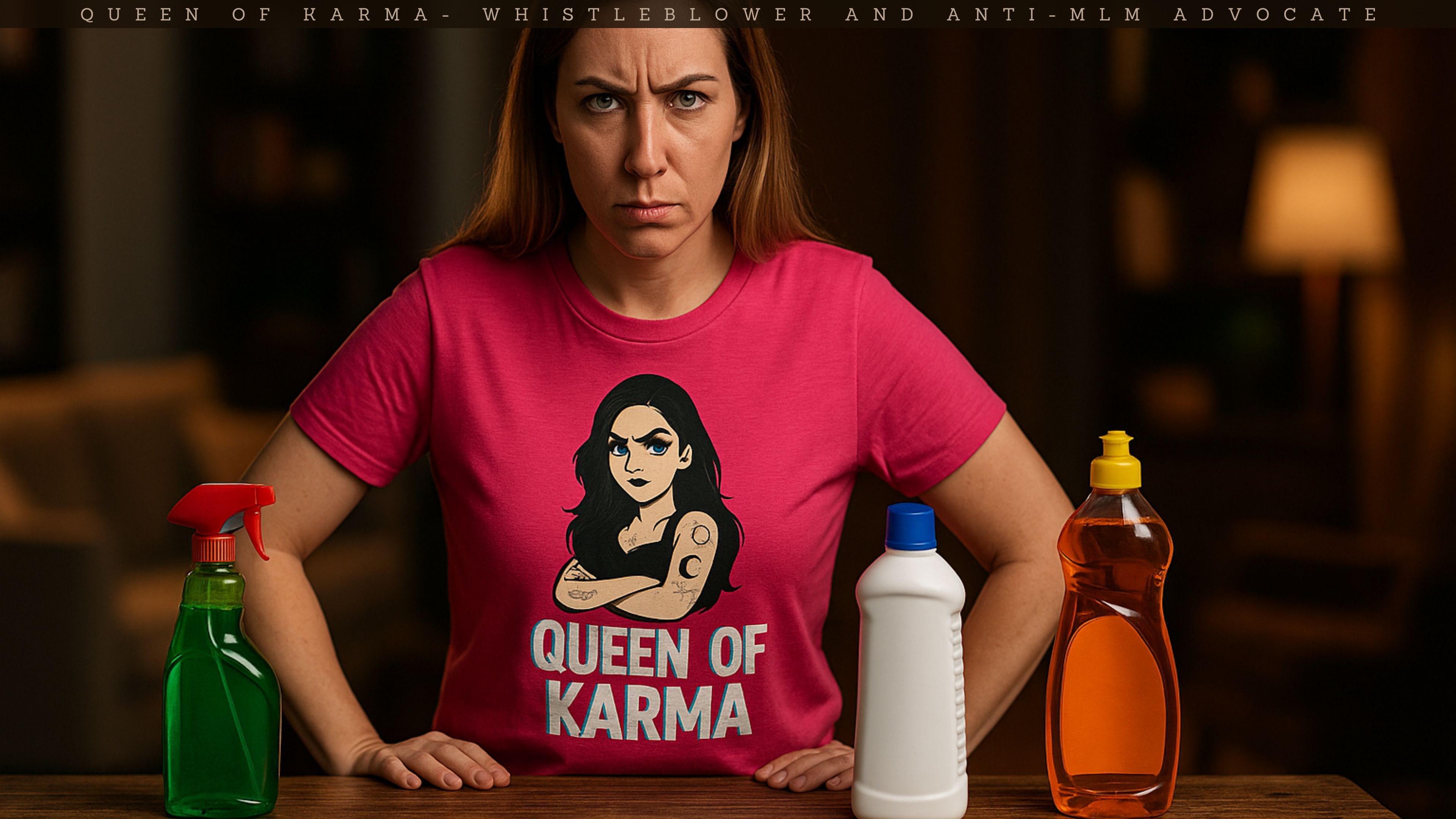
Hope In Soap – It began with a cleaner—literally.
In 1959, two men, Rich DeVos and Jay Van Andel, launched Amway from the quiet suburbs of Michigan with one biodegradable household product: L.O.C. But what they were really selling wasn’t soap—it was a belief system.
A self-replicating business model that promised anyone—regardless of background or education—a shot at the American Dream.
All you had to do was buy in.
And recruit others to buy in.
And teach them to recruit more.
The model they built borrowed heavily from their experience with Nutrilite, a vitamin company that had pioneered a similar structure. By acquiring Nutrilite, DeVos and Van Andel cemented their place as the architects of modern multi-level marketing (MLM). Amway wasn’t the first—but it became the blueprint. It laid the foundation for an industry designed not to sell products, but to sell participation.
Amway: The Legal Loophole MLMs Worship
As Amway ballooned, so did the scrutiny. The business model didn’t sit right with consumer advocates or regulators. In 1979, the Federal Trade Commission opened an investigation, suspecting it was little more than a pyramid scheme.
And this should have been the end.
But instead, it became a beginning.
Thanks to aggressive lobbying, political influence, and a carefully curated legal defense, Amway was ruled not to be a pyramid scheme. The decision hinged on technicalities: the presence of buy-back policies, a supposed focus on retail sales, and distributor guidelines that appeared consumer-friendly on paper. The truth? Those “safeguards” were window dressing. But they created a powerful shield—a legal template that MLMs continue to hide behind today.
That FTC ruling wasn’t justice—it was a get-out-of-jail-free card. And Amway was holding all the duplicates.
The DeVos Family: Wealth, Influence, and Deregulation
It’s impossible to understand how MLMs escaped accountability without confronting the power of the DeVos family.
Rich DeVos used his immense fortune to fund conservative political campaigns, think tanks, and organizations that pushed for deregulation across industries. His son, Dick DeVos, married Betsy DeVos—a woman who would later become Secretary of Education under Donald Trump, despite having no formal experience in public education.
Together, the family wielded incredible political influence. And they used it to protect the MLM model.
Their donations helped shape policy. Their networks helped install allies. And their legacy ensured that MLMs, despite mounting evidence of exploitation and financial harm, remain legally insulated and socially accepted in many circles.
The Direct Selling Association, often backed by Amway itself, continues to lobby against efforts to reform or ban these practices. Why? Because they’re extremely profitable—for those at the top.
MLMs and Scientology: Two Cults, One Playbook
The most chilling aspect of MLMs is their psychological machinery.
These are not just flawed businesses. They are engineered belief systems that weaponize hope. MLMs wrap their pitch in empowerment, entrepreneurship, and personal growth. Participants are told success is a mindset, and failure is the result of negativity or lack of effort. Anyone who questions the system is labeled as toxic or “not committed.”
It’s not a coincidence that this mirrors Scientology’s inner logic.
Both systems isolate critics. Both maintain strict internal hierarchies. Both teach self-blame over structural accountability. Scientology promises spiritual enlightenment—MLMs promise financial freedom. And both leave thousands broken, indebted, and disillusioned.
They prey on emotion. They recruit through trust. They retain through guilt. They operate like commercial cults. In fact, they are commercial cults.
And yet, one has the protection of religious freedom—and the other, legal legitimacy.
We’re Calling It Out—Because Someone Has To
MLMs are not just misleading. They are intentionally manipulative, structurally exploitative, and culturally corrosive. They target the vulnerable. They consume time, money, and self-worth. And they are still protected—because companies like Amway wrote the rules and funded the referees.
This blog is part of an ongoing mission by myself and Danny De Hek to expose the truth. Not the glossy ad campaigns. Not the rags-to-riches myths. The truth—about how these systems operate, who’s profiting from them, and why silence isn’t just complicity, it’s collaboration.
MLMs deserve no more loopholes.
They deserve regulation, investigation—and ultimately, abolition.
Let’s end the cult of commerce before it recruits another victim.
By Beth Gibbons (Queen of Karma)
Beth Gibbons, known publicly as Queen of Karma, is a whistleblower and anti-MLM advocate who shares her personal experiences of being manipulated and financially harmed by multi-level marketing schemes. She writes and speaks candidly about the emotional and psychological toll these so-called “business opportunities” take on vulnerable individuals, especially women. Beth positions herself as a survivor-turned-activist, exposing MLMs as commercial cults and highlighting the cult-like tactics used to recruit, control, and silence members.
She has contributed blogs and participated in video interviews under the name Queen of Karma, often blending personal storytelling with direct confrontation of scammy business models. Her work aligns closely with scam awareness efforts, and she’s part of a growing community of voices pushing back against MLM exploitation, gaslighting, and financial abuse.



Leave A Comment