


The Church of Jesus Christ of Latter-day Saints, better known as the Mormon Church, has over 17 million members worldwide and presents itself as just another branch of Christianity.
However when you examine its origins, leadership, beliefs, and history of manipulation, a very different picture emerges — one that looks a lot more like a cult than a church.
In this deep dive, we’ll trace the roots of the LDS movement, unpack its doctrines and daily practices, explore its history of controversy and control, and examine its darker offshoot, the Fundamentalist LDS Church (FLDS).
The Charismatic Founder: Joseph Smith Jr.
The LDS Church was founded in 1830 by Joseph Smith Jr., a young man from upstate New York. Smith claimed that, as a teenager, he had visions of God and Jesus Christ, who told him that all existing churches were corrupt and that he alone had been chosen to restore the true faith. In 1823, he said that an angel named Moroni appeared to him and revealed the location of golden plates buried in the ground. From these plates, Smith claimed to translate the Book of Mormon, which he presented as a lost record of ancient Israelites who migrated to the Americas.
Smith’s life was turbulent and filled with scandal. He was arrested multiple times for charges including fraud, was accused of running treasure-digging scams, and secretly practiced Polygamy. In fact, he married girls as young as 14 and even married wives of his followers. He declared himself a prophet, seer, and revelator, titles that continue to be used by LDS leaders today. In 1844, after years of tension with neighbors and former followers, Smith was arrested and killed by a mob at Carthage Jail in Illinois. His violent death cemented him as a martyr to believers, but to outsiders, he remains one of America’s most controversial religious figures.
After Smith’s death, Brigham Young emerged as leader, guiding thousands of followers westward to Utah and solidifying the authoritarian structure that continues to define Mormonism.
The Belief System
The LDS Church combines elements of Protestant Christianity with its own unique scriptures and doctrines. Members revere four sets of scripture: the Bible (King James Version), the Book of Mormon, the Doctrine and Covenants, and the Pearl of Great Price.
At the heart of the LDS theology is the idea of a living prophet, a man who receives direct revelation from God. This gives enormous power to one individual, placing members’ spiritual lives entirely under the authority of Church leadership. The priesthood is considered essential for salvation, and only male members are allowed to hold this authority, reinforcing a strict patriarchal hierarchy.
Members are taught the Plan of Salvation, which describes a pre-mortal existence, early testing, and the potential for humans to become gods themselves in the afterlife. Eternal marriages, performed in LDS temples, are said to bind families together for eternity. The Church also emphasizes missionary work, pressuring young men (and increasingly young women) to devote 18-24 months of their lives to unpaid proselytizing.
Practices and Control Mechanisms
Daily life in Mormonism is shaped by strict behavioral codes and financial obligations. Members are required to pay 10% of their income as tithing to remain in good standing, yet the Church provides no financial transparency despite amassing a secretive $100+ Billion Investment Fund through Ensign Peak Advisors.
Access to sacred temples requires a worthiness interview, where members are asked intrusive personal questions about their sexual behavior, financial contributions, and loyalty to Church leaders. These interviews enforce conformity through fear and shame.
The Church also relies heavily on lay leadership, meaning members themselves fill unpaid leadership roles. While this gives the appearance of community involvement, it functions as a built-in surveillance system, ensuring that members police each other’s behavior. Families are pressured to remain loyal across generations, making it emotionally and socially devastating to leave the faith.
Major Controversies
The LDS Church has been embroiled in controversy since its earliest days. Joseph Smith and Brigham Young both promoted and practiced polygamy, with Smith secretly marrying dozens of women and girls, including teenagers. The practice continued openly until 1890 when the Church officially renounced it under U.S. government pressure.
Another dark chapter was the Mountain Meadows Massacre of 1857, when Mormon militia killed more than 100 emigrants passing through Utah. For decades, the Church suppressed details of its involvement, blaming Native American allies.
The Church also enforced a racist policy for over a century, banning black men from holding the priesthood until 1978. Leaders provided shifting and contradictory explanations, none of which hold theological or moral weight.
In more recent decades, the Church has poured millions into campaigns opposing LGBTQ+ rights, most infamously California’s Proposition 8 in 2008. Survivors of Church-backed conversion therapy programs continue to speak out about the lasting harm they experienced.
Cult Tactics and Manipulation
By examining the LDS Church through the lens of cult dynamics, the parallels are undeniable. Joseph Smith was a charismatic founder who demanded loyalty and obedience by claiming direct communication with god. The Church exerts information control, rewriting its own history and discouraging members from reading critical sources.
Fear and shame are constant tools of manipulation, whether through worthiness interviews, public shaming, or threats of eternal consequences. The Church exploits members’ time, money, and autonomy, demanding unpaid labor, mandatory tithing, and conformity to rigid codes of behavior. Its authoritarian hierarchy concentrates power in the hands of one man — the prophet — whose word is treated as divine.
By nearly every measure of cult criteria — undue influence, financial exploitation, suppression of dissent, and authoritarian leadership — the LDS Church qualifies.
The FLDS: Mormonism’s Darker Mirror
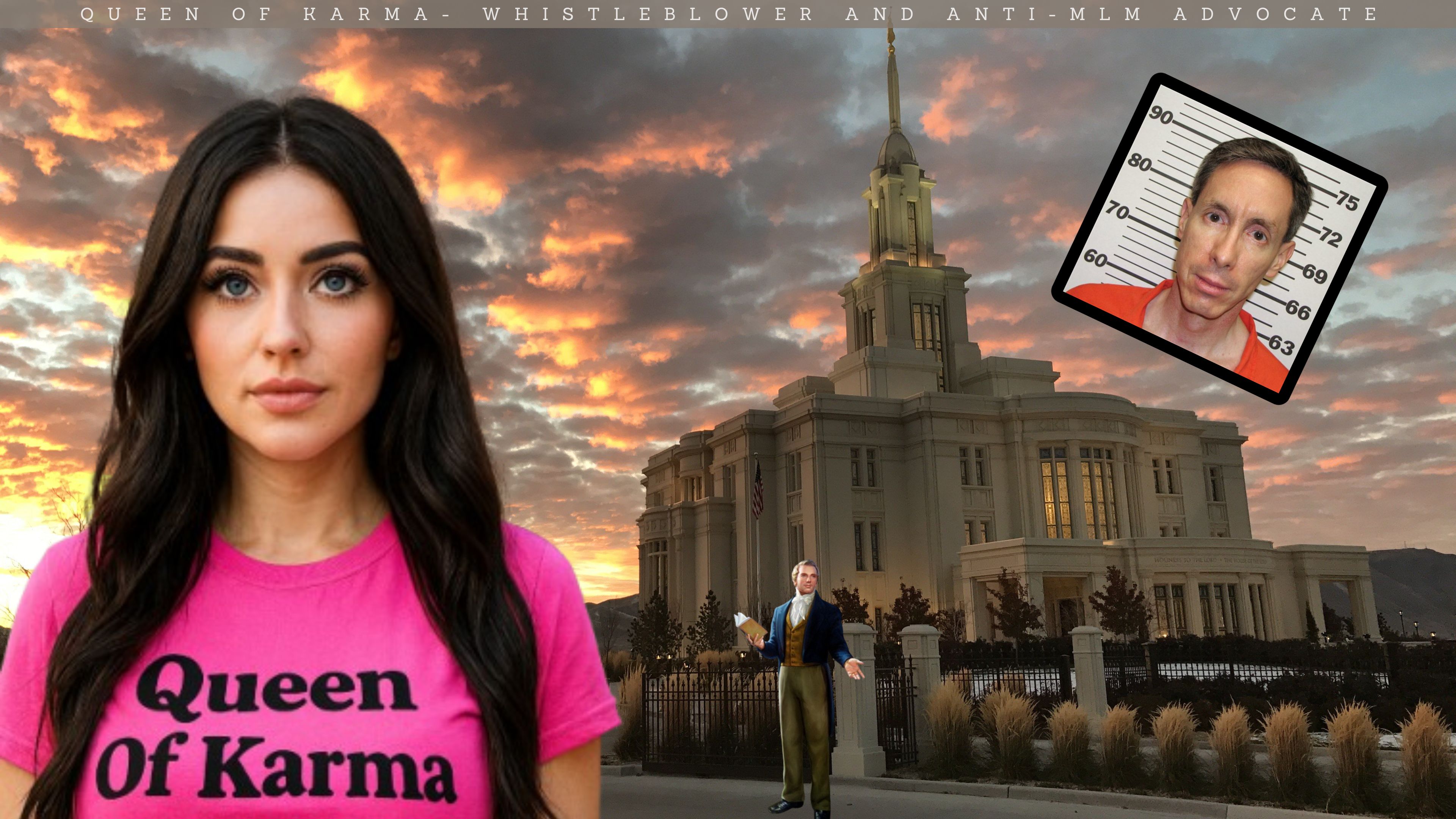
When the mainstream LDS Church abandoned polygamy in 1890, hardline believers splintered off into the Fundamentalist LDS Church (FLDS). Under leaders like Warren Jeffs, the FLDS became notorious for systemic abuse, including child marriage, forced labor, and total Authoritarian Control. Jeffs is currently serving a life sentence for sexually assaulting minors, yet many FLDS members still revere him as a prophet.
The FLDS is a chilling example of what happens when Mormonism’s cult tactics are taken to their extreme. In a future deep dive, we’ll explore the FLDS in detail and show how its roots connect directly back to Joseph Smith’s original system of control.
Conclusion
The LDS Church projects a wholesome, family-friendly image, but its history and structure tell another story. From Joseph Smith’s frauds and secret marriages to the modern Church’s financial secrecy, racial discrimination, and LGBTQ+ persecution, the pattern of exploitation and authoritarian control is clear.
This is not just another Christian denomination. The LDS Church is a high-demand, manipulative organization with a cultic core. And when you see how its offshoots like FLDS operate, the dangers of Mormonism’s cult foundation become impossible to ignore.
By Beth Gibbons (Queen of Karma)
Beth Gibbons, known publicly as Queen of Karma, is a whistleblower and anti-MLM advocate who shares her personal experiences of being manipulated and financially harmed by multi-level marketing schemes. She writes and speaks candidly about the emotional and psychological toll these so-called “business opportunities” take on vulnerable individuals, especially women. Beth positions herself as a survivor-turned-activist, exposing MLMs as commercial cults and highlighting the cult-like tactics used to recruit, control, and silence members.
She has contributed blogs and participated in video interviews under the name Queen of Karma, often blending personal storytelling with direct confrontation of scammy business models. Her work aligns closely with scam awareness efforts, and she’s part of a growing community of voices pushing back against MLM exploitation, gaslighting, and financial abuse.






Leave A Comment