


Every few months, a new “AI trading” miracle pops us promising passive income, daily returns, and a shortcut to financial freedom. And every few months, one of these platforms collapses — leaving victims confused, out of pocket, and wondering how it all went wrong.
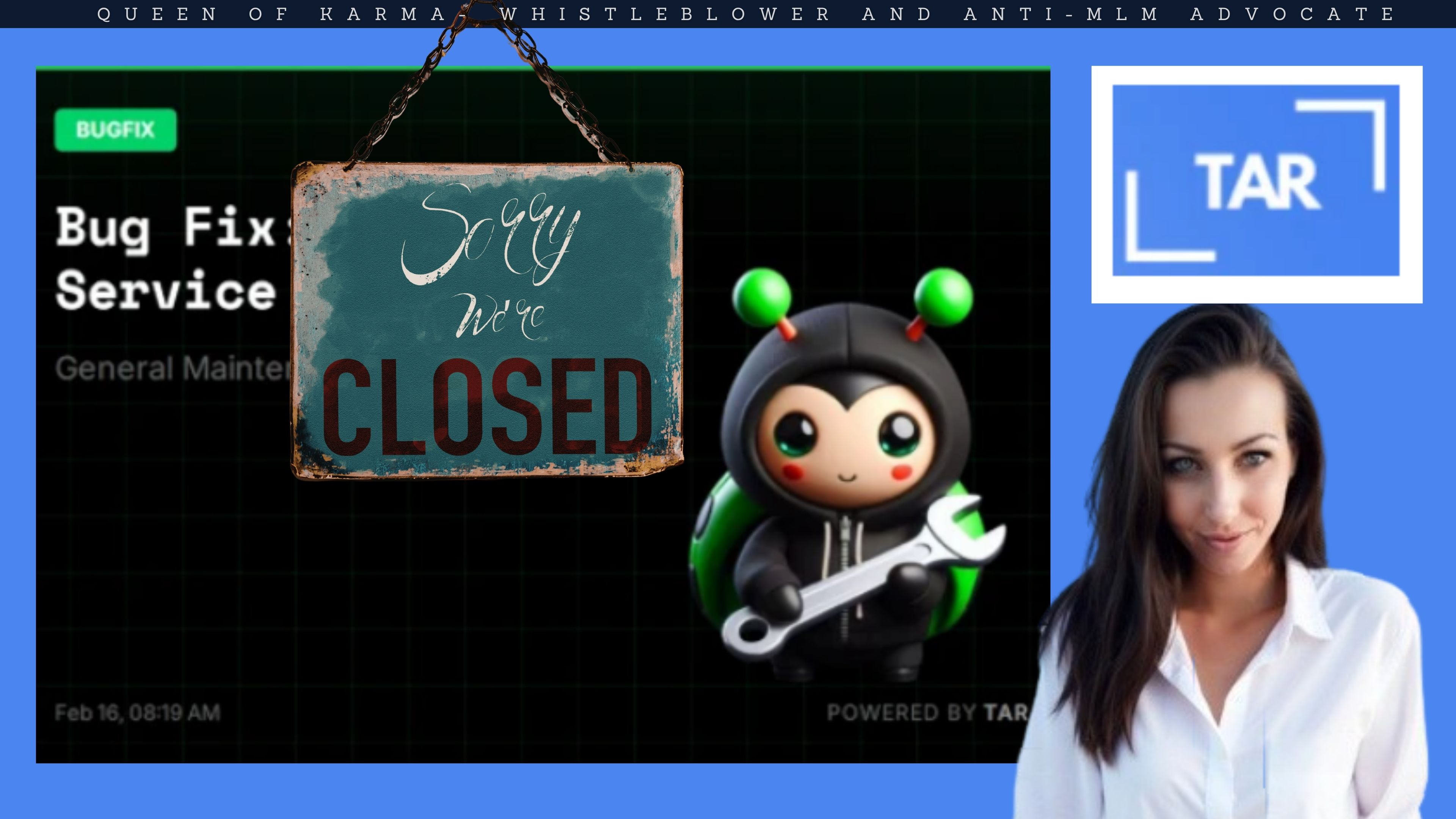
This time, it’s TAR Global, a platform that marketed itself as an automated trading system powered by artificial intelligence. BehindMLM has now confirmed that TAR Global has collapsed, withdrawals have been disabled, and the people running it have disappeared.
If you’ve been following the pattern, none of this is surprising. But for the people who trusted TAR Global, the fallout is real. So let’s break down what TAR actually was, how it collapsed, and what this tells us about the current state of the “AI passive income” industry.
What Was TAR Global?
TAR Global positioned itself as a cutting-edge trading platform that used AI, bots, and “advanced algorithms” to generate consistent profits for investors. The pitch was simple and seductive:
- Deposit money
- Let the AI “trade” for you
- Earn daily or weekly returns
- Earn even more by recruiting others
It was wrapped in all the usual buzzwords:
- AI trading
- Automated profits
- Guaranteed returns
- Referral bonuses
- Team commissions
But underneath the shiny branding, TAR Global has no real product, no verifiable trading activity, and no external revenue. The only money coming in was from new participants — which is the textbook definition of a Ponzi scheme.
How TAR Global Actually Worked
TAR Global followed the same structure that we have seen in dozens of collapsed schemes.
The Hype Phase
Promoters flood social media with:
- Screenshots of “profits”
- Fake dashboards
- Claims of AI trading success
- Lifestyle content to lure people in
This creates FOMO and gives the illusion of legitimacy.
The Stability Illusion
Early investors receive payouts — not from trading, but from new deposits. This convinces them to:
- Reinvest
- Recruit friends and family
- Promote the platform harder
This is how Ponzi schemes grow.
The Strain Phase
Eventually, recruitment slows.
More people try to withdraw than deposit.
The math stops working.
The Collapse
And then it happens:
- Withdrawals disabled
- Website issues
- Admin silence
- Promoters vanish
- Investors locked out
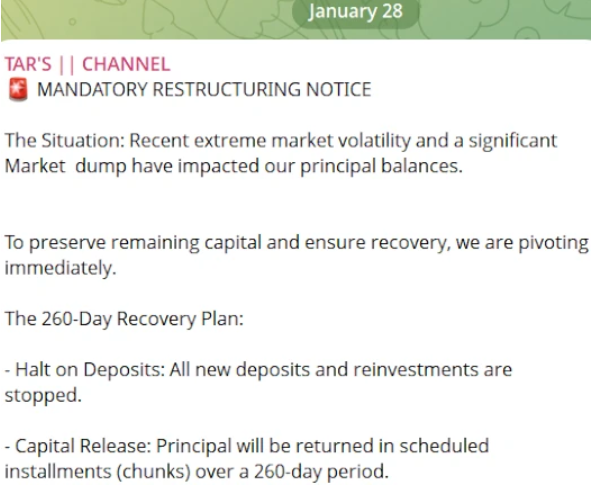
TAR Global hit this stage — and like every Ponzi, once the inflow dries up, the entire structure collapses.
Why People Fall for These Schemes
It’s important to say this clearly: Victims are not stupid. They are targeted.
These schemes prey on:
- Financial stress
- Hope for a better future
- Trust in friends or influencers
- The illusion of “easy money”
- The belief that AI can do the work for you
Scammers know exactly how to manipulate emotions, urgency, and community pressure. TAR Global is just one more example of how sophisticated these tactics have become.
How TAR Global Mirrors BG Wealth Sharing — and Why This Pattern Matters
Recently we did a Deep Dive on BG Wealth Sharing, another “AI trading” platform that uses nearly identical tactics:
- AI buzzwords
- Promised daily returns
- Zero transparency
- Recruitment-driven payouts
- No verifiable trading activity
- A leadership team that hides behind vague titles and unverifiable claims
The similarities between TAR Global and BG Wealth Sharing are not a coincidence — they’re a blueprint.
These schemes collapse in the same way because they are built in the same way:
- Hype and recruitment drive the money in
- Early payouts create the illusion of legitimacy
- The platform grows faster than the money coming in
- Withdrawals slow down or stop
- The website goes down or “maintenance” begins
- The operators disappear
TAR Global collapsing is not just a warning about TAR — it’s a warning about every AI trading platform using the same script.
These schemes don’t collapse because they fail. They collapse because they run out of new victims.
And TAR Global is simply the latest domino to fall.
What TAR Global’s Collapse Says About the Industry Now
TAR Global isn’t an isolated incident — it’s part of a larger trend.
- “AI” Is the New Magic Word
Scammers have realized that if they say “AI,” people stop asking questions. It sounds futuristic, advanced, and believable — even when there’s nothing behind it. - Ponzi Schemes Are Rebranding Faster Than Ever
Crypto, forex, bots, AI — the labels change, but the mechanics don’t. TAR Global is just the latest costume. - Victims Are Being Recycled
The same promoters move from scheme to scheme, dragging the same audience with them. TAR Global’s collapse will be used as fuel to push people into the next scam. - Regulation Can’t Keep Up
These platforms launch quickly, scale globally, and disappear before regulators can intervene. That’s why independent education and watchdog content is essential.
Another Reminder
TAR Global is another reminder that if a platform promises guaranteed returns, passive income, or AI-powered profits with no risk, it’s not an opportunity — it’s a trap.
These schemes don’t collapse because they “fail.” They collapse because they run out of new victims.
The best defense is always awareness. The best protection is education. And the best way forward is refusing to fall for the same recycled promises dressed up in new tech buzzwords.
If you or someone you know was affected by TAR Global, you’re not alone and you’re not to blame. These schemes are designed to deceive.
And as long as scammers keep reinventing themselves, we’ll keep exposing them.
By Beth Gibbons (Queen of Karma)
Beth Gibbons, known publicly as Queen of Karma, is a whistleblower and anti-MLM advocate who shares her personal experiences of being manipulated and financially harmed by multi-level marketing schemes. She writes and speaks candidly about the emotional and psychological toll these so-called “business opportunities” take on vulnerable individuals, especially women. Beth positions herself as a survivor-turned-activist, exposing MLMs as commercial cults and highlighting the cult-like tactics used to recruit, control, and silence members.
She has contributed blogs and participated in video interviews under the name Queen of Karma, often blending personal storytelling with direct confrontation of scammy business models. Her work aligns closely with scam awareness efforts, and she’s part of a growing community of voices pushing back against MLM exploitation, gaslighting, and financial abuse.





Leave A Comment