


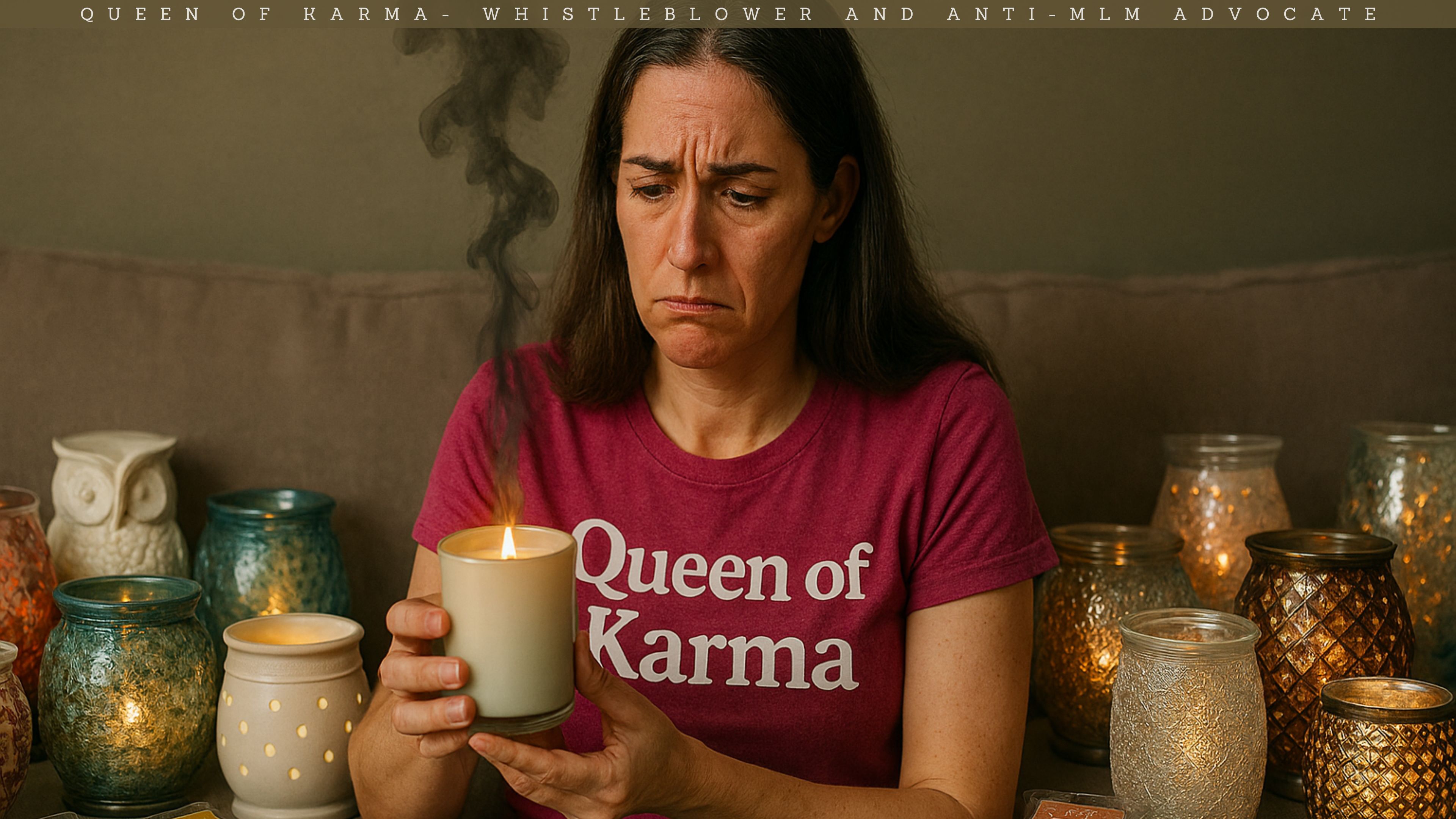
Seven years ago, when I was a Scentsy consultant, the company’s entire identity revolved around one big selling point: wickless is better. We were told again and again that Scentsy warmers were a safer, cleaner, more modern alternative to traditional candles.
Candles, we were told, were dangerous, outdated, and messy — something we could proudly say we’d moved past.
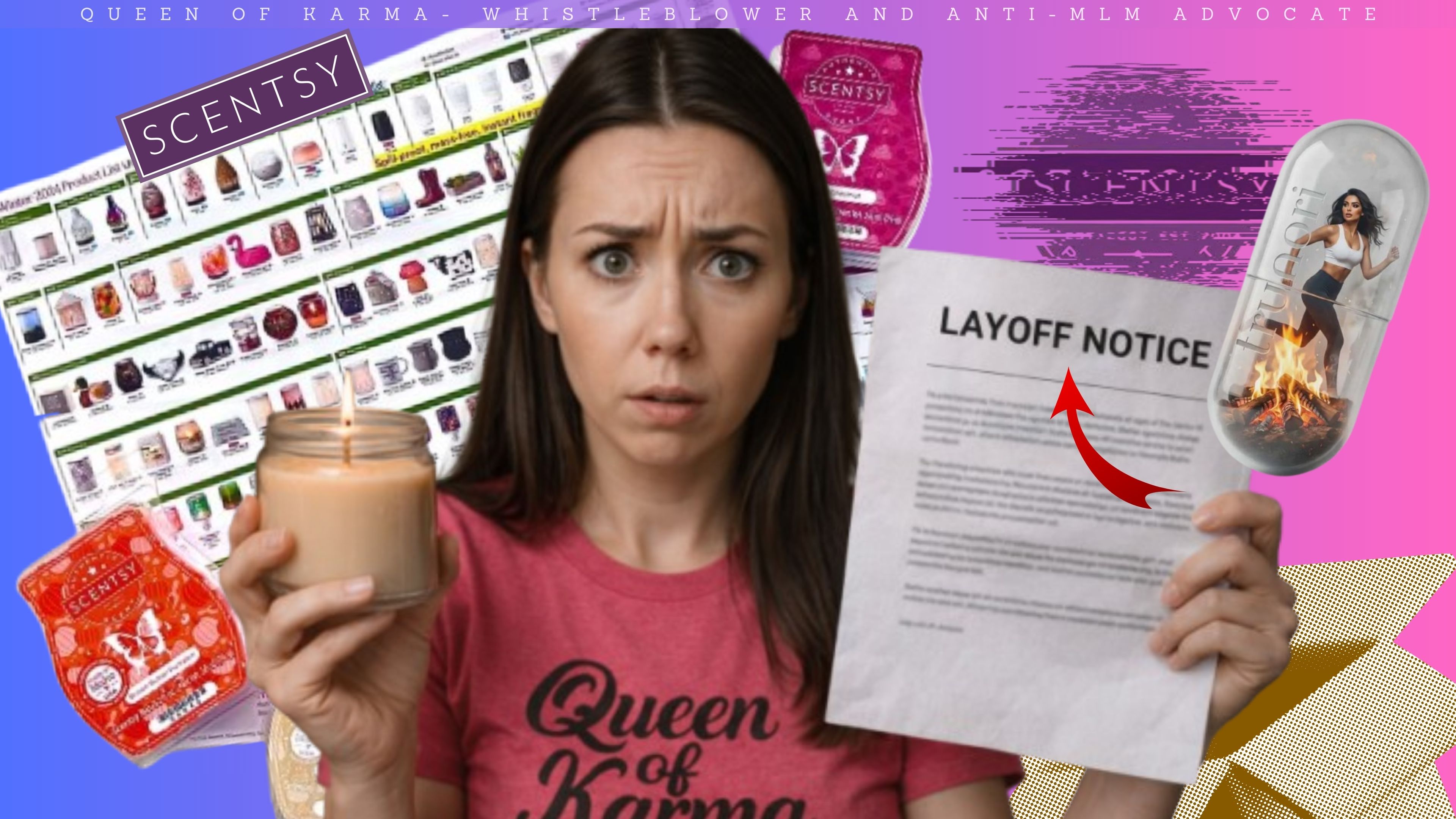
But here we are in 2025, and Scentsy has announced they’ll be selling… candles. Wick, flame, jar — the very thing they built their brand against.
This is not just a product expansion. This is a 180-degree turn that exposes something MLM insiders know all too well: when sales start slipping, loyalty to “the mission” evaporates. Scentsy’s move screams of desperation to stay relevant and capture a market they once dismissed.
What is Scentsy?
Scentsy is a U.S.-based multi-level marketing company founded in 2004 by Orville and Heidi Thompson. The company built its name on wickless fragrance warmers — decorative electric warmers paired with scented wax bars. Consultants sell the products directly and are encouraged to recruit others to do the same, earning commissions from their own sales and from the sales of those they recruit.
Like other MLMs, Scentsy operates on a tiered compensation model that rewards recruitment and high personal purchase volumes, often leaving the majority of consultants in debt or operating at a loss.
Scentsy’s Mormon Ties
Both Orville and Heidi Thompson are members of The Church of Jesus Christ of Latter-day Saints (LDS Church). Scentsy’s headquarters is in Meridian, Idaho — a region with a high Mormon population and close cultural ties to Utah, the MLM capital of the world.
While Scentsy does not officially brand itself as a “Mormon company,” its leadership’s faith has shaped its culture and values in ways that mirror other Mormon-led MLMs like Nu Skin, doTERRA, and Young Living. The emphasis on “family values,” “service,” “community,” and “blessings” in Scentsy’s promotional materials echoes the faith-based language often found in LDS circles.
Sidebar: Why So Many MLMs Have Mormon Leadership
Utah and surrounding states are home to a disproportionate number of MLM headquarters. This is not by chance. Several cultural and structural factors in LDS communities make them fertile ground for MLM growth:
- Missionary experience — Young members spend years honing sales, persuasion, and public speaking skills during missionary service.
- Tight-knit networks — LDS communities are often close, with strong internal trust, making recruitment easier.
- Prosperity narratives — The idea of financial blessings tied to faith can align well with MLM “success” stories.
- High tolerance for direct sales — MLMs are normalized in many LDS circles, making recruitment less socially awkward.
This combination has helped Utah and nearby Idaho become a global hotspot for MLM operations — Scentsy included.
The Rebrand Problem
For current consultants, Scentsy’s pivot to selling candles creates a branding nightmare. How do you convince customers that wickless was the future, only to now say candles are fine — and worth buying from Scentsy at a premium price? The inconsistency undermines credibility and forces consultants to rewrite their sales scripts overnight.
And that’s the thing: MLM companies are never truly about the product. The product is just the hook. The real business is recruitment and constant reinvention to keep the downline buying more, whether it makes sense or not.
The Bigger Picture
Scentsy isn’t unique here. This same “pivot to survive” pattern is seen across the MLM world — from Amway to Unicity to every other commercial cult in the industry. When the hype fades, companies don’t double down on quality; they rebrand, spin a new story, and move the goalposts, leaving their field scrambling to keep up.
The consultants, meanwhile, are left holding unsellable inventory, pressured to buy new starter kits or product lines just to “stay competitive.” And when they fail to sell enough, the blame is placed squarely on them, not on the unsustainable business model.
Time to Stop “Saving” MLM
Some Scentsy fans will argue this is just a smart business decision, that diversification keeps the brand alive. But that thinking is exactly what keeps MLMs alive long after they should have collapsed. The truth is, you can’t “save” MLM. The structure itself — endless recruitment, shifting narratives, and consultant-funded “growth” — is the problem.
Scentsy’s candle launch isn’t innovation. It’s a warning sign. And for those still clinging to the idea that their MLM is somehow “different,” it’s time to let go.
By Beth Gibbons (Queen of Karma)
Beth Gibbons, known publicly as Queen of Karma, is a whistleblower and anti-MLM advocate who shares her personal experiences of being manipulated and financially harmed by multi-level marketing schemes. She writes and speaks candidly about the emotional and psychological toll these so-called “business opportunities” take on vulnerable individuals, especially women. Beth positions herself as a survivor-turned-activist, exposing MLMs as commercial cults and highlighting the cult-like tactics used to recruit, control, and silence members.
She has contributed blogs and participated in video interviews under the name Queen of Karma, often blending personal storytelling with direct confrontation of scammy business models. Her work aligns closely with scam awareness efforts, and she’s part of a growing community of voices pushing back against MLM exploitation, gaslighting, and financial abuse.



Leave A Comment