


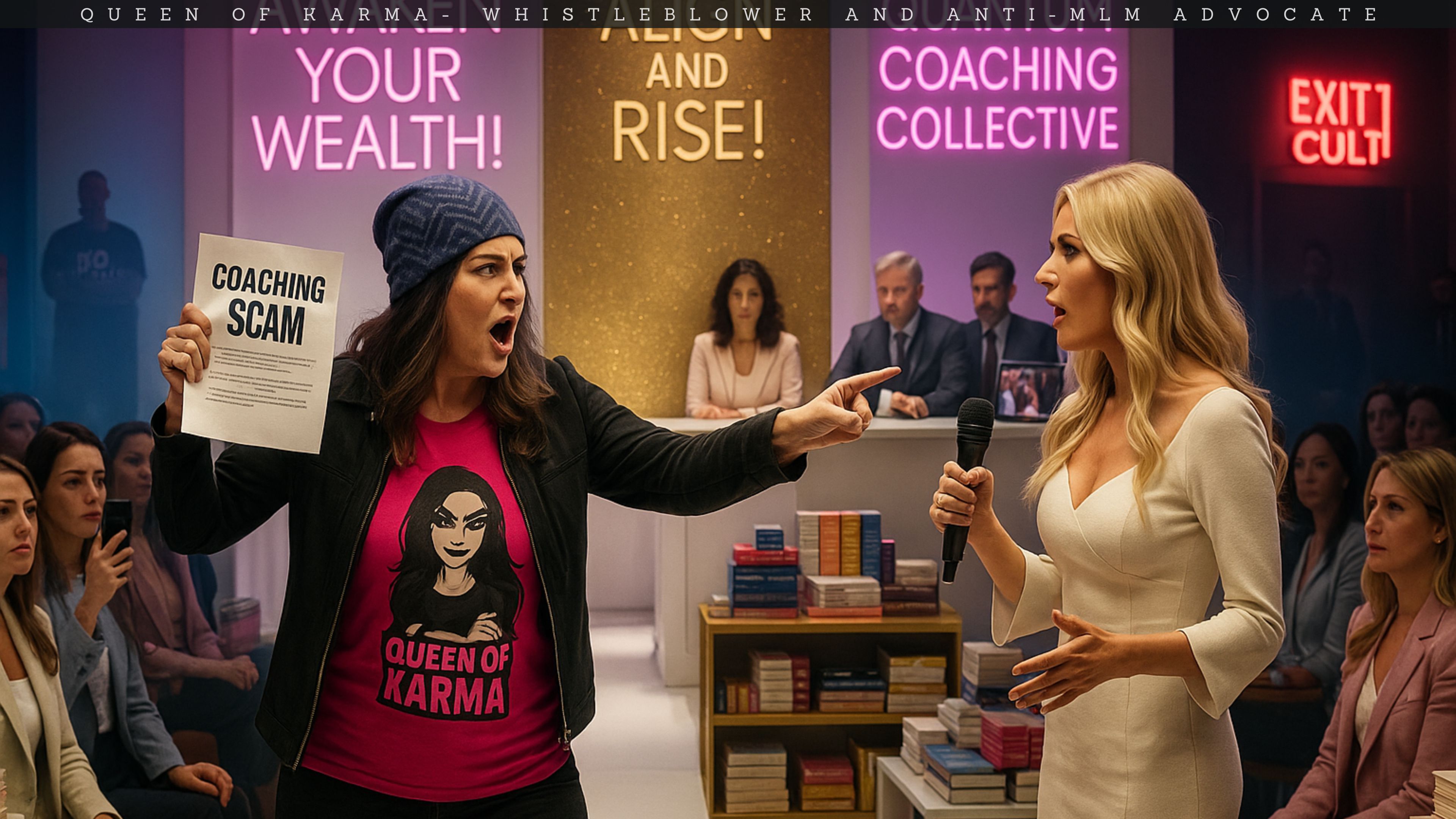
In the age of ring lights and reels, a new kind of con artist has emerged: the scamfluencer — an influencer who blends aspirational content with manipulation, monetizing their audience by pushing MLMs, fake “coaching,” or outright cult recruitment.
They don’t knock on your door anymore. They slide into your DMs, flash their Amazon favorites, and claim they “just want to help you find freedom.”
But the line between lifestyle influencer and cult recruiter is thinner than you think — and many don’t just blur it, they bulldoze it.
From Hashtags to High-Control: How It Starts
It usually begins with relatable content:
– “How I paid off my debt working from home”
– “3 things that changed my mindset”
– “You deserve more. Let me show you how.”
At first glance, it looks like standard motivational fluff. But scratch the surface, and you’ll find a sales funnel into a high-control group, whether that’s an MLM disguised as “social retail,” or a cult posing as a life coaching movement.
Scamfluencers often act as the friendly face of much darker systems.
MLMs: The Gateway Cult
Multi-level marketing companies thrive on parasocial relationships. Your favorite YouTuber, TikToker, or Instagram mom seems just like you. She swears this skincare line changed her life. She made money from home. She has “a team of empowered women.”
But the truth is:
- Most MLM reps lose money.
- The community is conditional on obedience.
- Dissent is punished (often through shunning or online mobbing).
- Leaving is emotionally devastating.
Sound familiar? That’s cult behavior in business casual.
Once someone is deep into MLM culture, they often adopt cult-like language and thinking:
- “I was chosen for more.”
- “Haters are just negative people who don’t get it.”
- “If you fail, it’s your mindset.”
These phrases aren’t just annoying — they’re tools of coercive control.
Scamfluencers Go Full Cult
Some scamfluencers go even further. They ditch the MLM brand and launch their own coaching programs, masterminds, or “awakening” retreats. They become gurus instead of reps.
Examples include:
- Ex-MLM leaders who now run “mindset coaching” scams for thousands of dollars.
- Wellness influencers who blend pseudoscience with spiritual manipulation.
- Self-help cults rebranded as “business incubators” or “feminine energy collectives.”
The end goal? Control, compliance, and cash — just like any cult.
Red Flags of a Scamfluencer
- Love bombs with inspirational quotes, then tries to sell you something.
- Claims their success is easy to replicate — if you pay for access.
- Discourages critical thinking: “You’re overthinking it.”
- Creates a false sense of community: “We’re a family.”
- Vilifies outsiders and critics as toxic or jealous.
They’re not just manipulating you — they’re training you to manipulate others in turn. That’s how the pipeline works.
A Harmful Pipeline
The scamfluencer-to-cult pipeline isn’t just annoying. It’s harmful. People have:
- Gone into debt buying courses or inventory they didn’t need.
- Experienced emotional abuse and isolation from family and friends.
- Suffered trauma from gaslighting, shaming, and groupthink.
Some never recover. Others become the next generation of recruiters.
How to Break the Cycle
- Unfollow loudly. Don’t be afraid to call out shady behavior.
- Ask questions. If something feels off, it probably is.
- Support survivors. Many speak out — and they deserve to be heard.
- Educate others. Especially young people and moms — the main targets.
Scamfluencers are just cult leaders with a Canva subscription.
Their polished branding hides predatory intent, and the longer we pretend it’s just “hustle culture,” the more people will get hurt.
If your favorite online personality suddenly starts talking about mindset shifts, quantum abundance, or passive income through “alignment” — don’t walk. Run.
And maybe forward them this article while you’re at it.
By Beth Gibbons (Queen of Karma)
Beth Gibbons, known publicly as Queen of Karma, is a whistleblower and anti-MLM advocate who shares her personal experiences of being manipulated and financially harmed by multi-level marketing schemes. She writes and speaks candidly about the emotional and psychological toll these so-called “business opportunities” take on vulnerable individuals, especially women. Beth positions herself as a survivor-turned-activist, exposing MLMs as commercial cults and highlighting the cult-like tactics used to recruit, control, and silence members.
She has contributed blogs and participated in video interviews under the name Queen of Karma, often blending personal storytelling with direct confrontation of scammy business models. Her work aligns closely with scam awareness efforts, and she’s part of a growing community of voices pushing back against MLM exploitation, gaslighting, and financial abuse.

Leave A Comment