


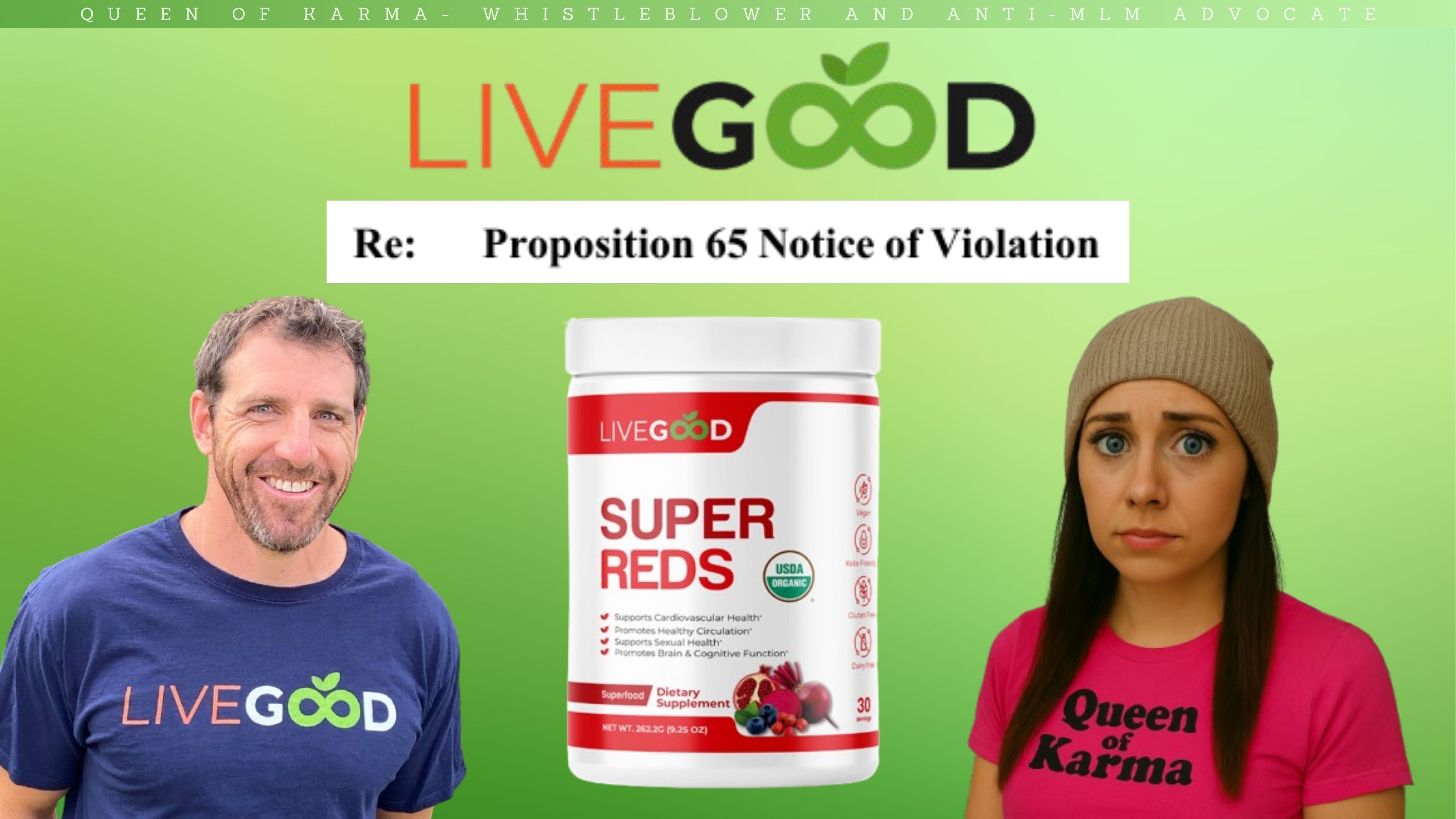
LiveGood Supplements Inc. has spent the last few years branding itself as a disrupter in the wellness industry — a company offering “high-quality,” “organic,” and “affordable” supplements while promising consumers a path to better health and financial freedom. But behind the polished marketing and influencer-driven hype, a very different story is emerging.
A newly filed Proposition 65 Notice of Violation with the California Attorney General has placed LiveGood under serious scrutiny for lead contamination in one of its flagship products. Combined with the company’s MLM-style recruitment model, questionable quality claims, and affiliate-driven reputation, LiveGood is beginning to look less like a wellness revolution and more like another supplement company cutting corners while hiding behind buzzwords.
A Proposition 65 Violation That Can’t Be Ignored
On September 12, 2025, LiveGood Supplements Inc. was served with a 60-day Notice of Violation under California’s Proposition 65 — a law requiring businesses to warn consumer before exposing them to chemicals known to cause cancer, birth defects, or reproductive harm.
The notice alleges that LiveGood’s Organic Super Reds supplement contains lead, a toxic heavy metal with no safe level of exposure. This product retails for $34.95 ($19.95 if you’re a member).
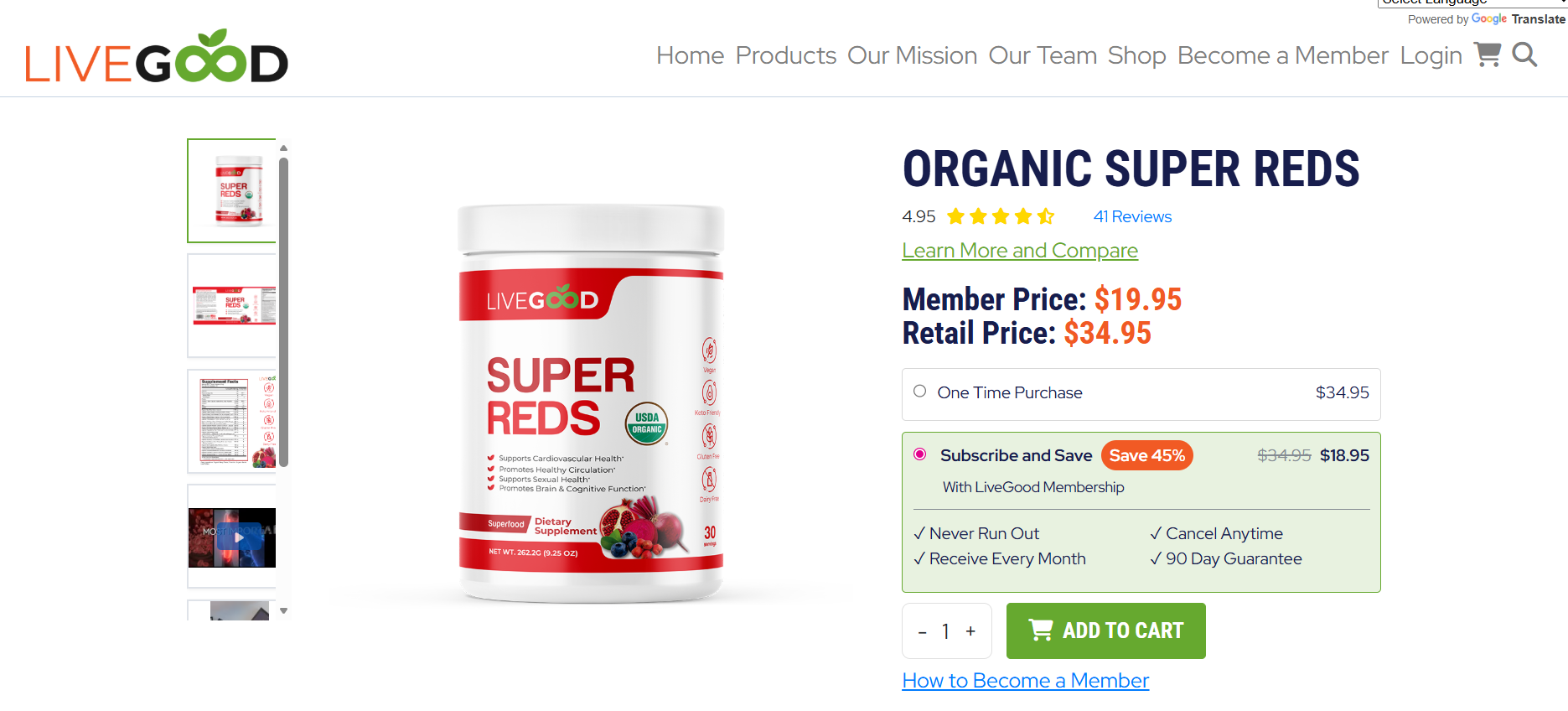
The allegations include:
- Selling a supplement contaminated with lead
- Failing to provide legally required warnings
- Exposing consumers to a listed carcinogen and reproductive toxin
- Violating California Health & Safety Code §25249.6
- Continuing sales since at least June 2025
The notice also stated:
“The routes of exposure to the chemical(s) in violation include ingestion by consumers. These
exposures occur through the reasonably foreseeable use of the product. The sales of this product have
been occurring since at least June 2025, are continuing to this day and will continue to occur as long
as the product subject to this notice is sold to and used by consumers.”
The filing includes a Certificate of Merit, meaning experts reviewed the evidence and found credible basis for the claim. For a company that markets itself as “clean,” “organic,” and “highest quality,” this is a devastating contradiction.
Who Is LiveGood, Really?
LiveGood operates out of Jupiter, Florida, a state known for its concentration of supplement and MLM companies due to lighter regulatory oversight. Their branding leans heavily on wellness culture:
- “Highest quality ingredients on the planet”
- “Organic superfoods”
- “Science-backed formulations”
- “Live better, longer, freer”
But these claims are self-reported — not verified by independent regulators. And now, with a Proposition 65 violation on the table, the company’s quality-control promises deserve serious scrutiny.
LiveGood was founded by Ben Glinsky, a long-time figure in the nutritional supplement and MLM industry. He has over 20 years of experience running supplement and network-marketing companies and positions himself as someone who “helps people win.”
Additional details from multiple sources show:
- Glinsky previously stepped away from direct sales in 2019 due to “market flaws,” then returned with a new model he calls the “Costco of supplements.”
- He partnered with Nauder Khazan and others to build LiveGood in 2022.
Glinsky’s background is deeply tied to MLM culture — he claims his previous companies paid out nearly $1 billion in commissions worldwide.
LiveGood’s Product Line
LiveGood markets itself as a “health, wellness, and beauty” company offering affordable, high-quality supplements. Their catalo includes core product categories of:
- Superfood powders (Super Reds, Super Greens)
- Vitamins and minerals (Vitamin D3-K2, magnesium, multivitamins)
- Anti-inflammatory blends (Factor 4)
- Protein powders and amino acids
- Skincare and wellness products
The MLM Skeleton in the Closet
LiveGood is not just a supplement company — it is also an MLM (multilevel marketing) operation, though they often soften the language by calling it an “affiliate program.” They also frame this membership-based MLM model as a hybrid between Costco-style wholesale membership, and Network marketing/affiliate recruitment.
Their compensation plan encourages:
- Recruitment
- Team building
- Downline commissions
- Membership fees for “wholesale pricing”
LiveGood offers two membership types:
- Customers (discount shoppers)
- Affiliates (recruiters + shoppers)
Members pay for access to “wholesale pricing.” This model is described in detail in a 2025 Review noting the company’s rapid growth and reliance on MLM membership tiers.
This structure mirrors countless MLM supplement companies that have collapsed under regulatory pressure or consumer lawsuits.
LiveGood claims they keep prices low by not paying commissions on product sales, instead paying commissions on membership fees and team growth. This is explained in their Business Model Breakdown.
This is a classic MLM workaround: Instead of marking up products to pay upline commissions, they charge for membership and pay commissions on recruitment. It sounds like a pyramid scheme…but okay!
Several red flags are present when looking at the business model of this MLM company.
MLM Red Flags Present in LiveGood:
- Income tied to recruitment rather than product sales
- Overhyped health claims
- Affiliate-driven reviews flooding Trustpilot
- Emotional marketing targeting vulnerable consumers
- “Health and wealth” narratives used to lure recruits
When a company’s loudest supporters are also financially incentivized to recruit others, the credibility of heir praise becomes questionable.
LiveGood reportedly grew from $5 million to $85 million in revenue between 2022 and 2023. This growth is typical of MLM companies during their early hype phase.
A Reputation Built on Affiliate Hype, Not Consumer Trust
LiveGood’s Trustpilot page is filled with glowing reviews — but a closer look reveals a pattern:
- Many reviewers are affiliates
- Reviews often read like recruitment pitches
- Repetitive language suggests templated talking points
- Few reviews offer detailed product analysis
This is typical of MLM ecosystems, where affiliates flood review platforms to boost legitimacy and attract recruits. Meanwhile, independent consumer reviews are sparse.
Quality Claims vs. Reality
LiveGood claims to use:
- “Unmatched quality ingredients”
- “Rigorous testing”
- “The highest standards in the industry”
Yet the Proposition 65 filing alleges that one of their core products contains lead, a toxin known to cause:
- Cancer
- Developmental harm
- Reproductive toxicity
- Neurological damage
This is not a minor labeling issue — it is a fundamental failure of quality control.
If a company cannot ensure the safety of its “organic superfood” powders, what does that say about the rest of its product line?
Why This Matters for Consumers
Supplements are not regulated like pharmaceuticals. Companies can:
- Manufacture products overseas
- Outsource testing
- Self-certify quality
- Make broad health claims
- Operate MLM structures with minimal oversight
When a company like LiveGood is hit with a Proposition 65 violation, it often signals deeper systemic issues:
- Poor ingredient sourcing
- Inadequate testing
- Lack of transparency
- Profit prioritized over safety
Consumers deserve better than this — especially when the product in question is marketed as a daily health booster.
What Happens Next?
LiveGood now has 60 days to respond to the violation. Possible outcomes include:
- Reformulating the product
- Adding warnings
- Paying civil penalties
- Facing a lawsuit
- Being forced to improve testing protocols
Penalties can reach $2, 500 per day per violation, and enforcement actions often lead to broader investigations. This is not going away quietly.
A Wellness Brand Built on Shaky Ground
LiveGood built its identity on the promise of clean, affordable, high-quality supplements — and a business opportunity that could “change lives.” But the Proposition 65 violation exposes a harsh reality:
A company cannot claim to be a leader in wellness while allegedly selling products contaminated in lead.
A company cannot claim transparency while operating an MLM structure that relies on recruitment and affiliate hype.
A company cannot claim quality while failing to meet basic safety standards.
Consumers deserve honesty, safety, and accountability — not marketing spin.
We will continue to monitor this case and report any updates as they unfold.
By Beth Gibbons (Queen of Karma)
Beth Gibbons, known publicly as Queen of Karma, is a whistleblower and anti-MLM advocate who shares her personal experiences of being manipulated and financially harmed by multi-level marketing schemes. She writes and speaks candidly about the emotional and psychological toll these so-called “business opportunities” take on vulnerable individuals, especially women. Beth positions herself as a survivor-turned-activist, exposing MLMs as commercial cults and highlighting the cult-like tactics used to recruit, control, and silence members.
She has contributed blogs and participated in video interviews under the name Queen of Karma, often blending personal storytelling with direct confrontation of scammy business models. Her work aligns closely with scam awareness efforts, and she’s part of a growing community of voices pushing back against MLM exploitation, gaslighting, and financial abuse.




Leave A Comment