


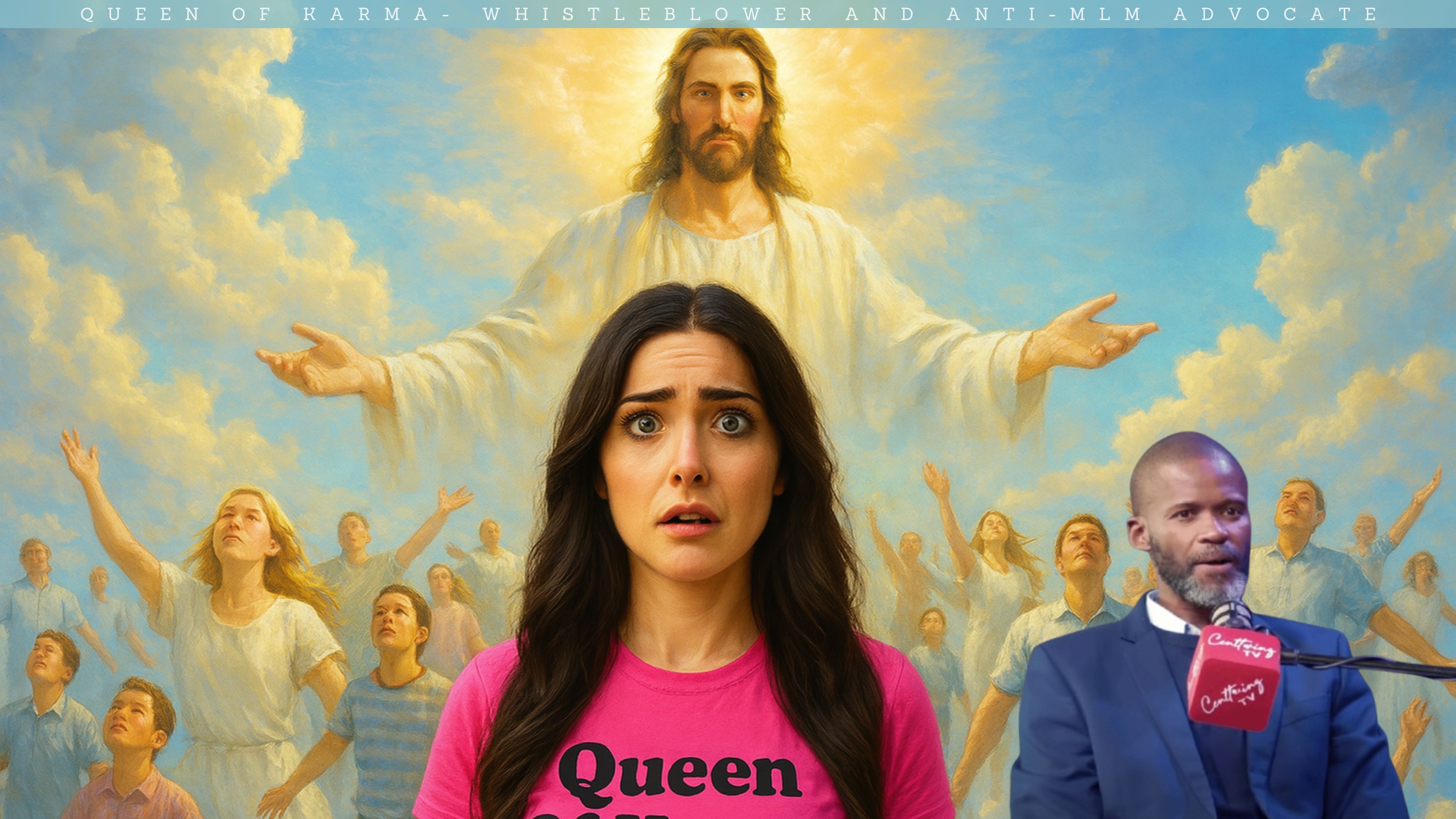
Every generation seems to have its prophet of doom. In September 2025, that mantle was briefly claimed by Joshua Mhlakela, a South African pastor who declared with absolute certainty that the Rapture would occur on September 23-24. His prophecy spread quickly on TikTok, igniting a storm of fear, satire, and debate. For some, it was a joke. For others, it was a terrifying countdown. And for millions of Christians, it was a reminder of a belief system they already hold — whether they admit it or not.
This is not just the story of one man’s prediction. It is the story of the Rapture belief system itself: where it came from, why it has been so damaging, how it continues to shape lives, and why even those who laugh at Mhlakela’s prophecy may still be complicit in sustaining the very theology that makes such predictions possible.
The History of The Rapture Belief System
The idea of the Rapture is not something the early church fathers taught, nor is it found in historic creeds of Christianity. It is a relatively modern doctrine, born in the 19th century and shaped by a unique mix of theology, politics, and culture.
The roots trace back to John Nelson Darby (1800-1882) an Anglo-Irish preacher and founder of the Plymouth Brethren movement. Darby developed a system called dispensationalism, which divided history into distinct eras or “dispensations” in which God dealt with humanity in different ways. According to Darby, the present age would end with a sudden, secret coming of Christ to remove true believers from the Earth before a period of tribulation and judgment.
Darby’s ideas spread to the United States in the mid-1800s, where they found fertile ground in a nation already primed by revivalism, frontier uncertainty, and fascination with biblical prophecy. His teaching was systematized and popularized through the Scofield Reference Bible (1909). This Bible, with its extensive notes, was widely distributed and became a staple in evangelical homes and seminaries. For many readers, Scofield’s commentary carried as much authority as the biblical text itself, embedding the Rapture into the DNA of American evangelicalism.
By the 20th century, the Rapture had become a cultural phenomenon. Preachers like Dwight L. Moody and later Billy Graham helped normalize apocalyptic preaching. In the 1970s, Hal Lindsey’s The Late Great Planet Earth sold over 15 million copies, presenting Cold War geopolitics as a direct fulfillment of biblical prophecy. Lindsey’s book convinced millions that the Soviet Union, the European Union, and the Middle East were all pieces of a prophetic puzzle leading to the end.
The 1990s and early 2000s saw another surge with the Left Behind series by Tim LaHaye and Jerry Jenkins. These novels, dramatizing the Rapture and its aftermath, sold over 80 million copies worldwide and were adapted into films. For many evangelicals, these books were not just entertainment but a theological education. They reinforced the idea that the Rapture was imminent, inevitable, and central to Christian identity.
This history matters because it shows that the Rapture is not a fringe belief. It is the product of two centuries of theological development, publishing success, and cultural reinforcement. From Darby’s dispensational charts to Scofield’s Bible notes, from Lindsey’s Cold War prophecies to LaHaye’s fictionalized tribulations, the Rapture has been marketed, preached, and dramatized into the mainstream.
Today, when Joshua Mhlakela sets a date for the Rapture, he is not inventing something new. He is standing on a long platform built by preachers, publishers, and cultural forces that made the Rapture one of the most enduring — and damaging — beliefs in modern Christianity.
A Problematic Belief
The belief in the Rapture may appear harmless to outsiders, but it has caused significant harm on both personal and societal levels.
First, the long history of failed prophecies has left behind a trail of devastation. From the Millerites’ “Great Disappointment” in 1844 to Harold Camping’s 2011 prediction, every date that has come and gone has shattered lives. Families have sold homes, drained savings, and abandoned careers in preparation for an event that never arrived. When the prophecy fails, the financial and emotional wreckage is very real, even if the apocalypse is not.
Second, the psychological toll of living under constant threat of the end cannot be overstated. Children raised in rapture-focused churches often describe growing up with nightmares, panic attacks, and a deep fear of abandonment. Many recall the trauma of coming home to an empty house and believing, even for a moment, that their family had been raptured without them. This kind of conditioning creates long-lasting anxiety and distrust of the world.
Third, the doctrine encourages social withdrawal. If the world is about to end, why invest in education, careers, or civic engagement? Why fight for justice or environmental sustainability if everything will soon be destroyed? This mindset has led many believers to disengage from society, leaving them vulnerable to isolation and exploitation.
Fourth, the Rapture belief system creates fertile ground for exploitation by leaders. Figures like Joshua Mhlakela, Harold Camping, and countless televangelists have used the promise of inside knowledge about the end times to extract money, loyalty, and obedience from their followers. When people are convinced that their eternal destiny is at stake, they will give up almost anything — finances, autonomy, even family ties — to secure their place among the “chosen.”
Finally, the Rapture fosters a worldview of fear and fatalism. Instead of inspiring hope or compassion, it often instills suspicion of outsiders, distrust of institutions, and a sense that the world is irredeemable. This can erode empathy and reinforce an “us versus them” mentality, where believers see themselves as righteous remnant and everyone else as doomed.
“I grew up terrified that I’d come home and find my family gone, raptured without me. Every empty house, every unanswered phone call was a panic attack. That fear doesn’t leave you easily.”
— Survivor of rapture-focused upbringing
In short, the Rapture is not just a theological curiosity. It is a psychological and cultural system that has repeatedly harmed individuals, fractured families, drained communities, and fueled cycles of fear.
A Timeline of Failed Rapture Predictions
Mhlakela’s prophecy is not unique. It is part of a long tradition of failed end-time predictions that stretch back centuries. A few of the most infamous include:
- 1844 – The Millerites’ “Great Disappointment:” Preacher William Miller convinced tens of thousands that Christ would return on October 22, 1844. When nothing happened, many abandoned faith, while others reinterpreted the event as spiritual rather than physical.
- 1914 – Jehovah’s Witnesses: The Watch Tower Society predicted the end of the world in 1914. When it failed, the date was reinterpreted as the beginning of Christ’s “invisible reign.”
- 1988 – “88 Reasons Why the Rapture Will Be in 1988:” Evangelical author Edgar Whisenant sold millions of copies of his booklet predicting the Rapture between September 11-13, 1988. When it failed, he revised the date multiple times before fading into obscurity.
- 1994 – Harold Camping’s First Prediction: Christian radio broadcaster Harold Camping predicted the Rapture in September 1994. When it failed, he recalculated.
- 2011 – Harold Camping Again: Camping gained global attention by predicting the Rapture on May 21, 2011, followed by the end of the world on October 21. Billboards went up worldwide. When nothing happened, many followers were left bankrupt and devastated.
Each of these moments followed the same cycle: anticipation, disappointment, rationalization, and fallout. Mhlakela’s September 23-24 prophecy is simply the latest entry in this long, tragic pattern.
The Psychology of Doomsday Predictions
Why do people keep believing, even after so many failed prophecies? Psychologists point to several dynamics.
- Cognitive Dissonance: When prophecy fails, believers often double down, convincing themselves their prayers “averted” disaster. This preserves faith while avoiding the pain of admitting error.
- Charismatic Authority: Leaders like Mhlakela present themselves as uniquely chosen, creating a dependency loop where followers outsource critical thinking.
- Existential Comfort: Paradoxically, the idea of the Rapture can feel reassuring. In a chaotic world, it offers a clear narrative: history has a plan, and believers have a guaranteed escape.
- Community Reinforcement: Belief is sustained by group identity. To doubt the Rapture is to risk losing not just faith, but family, friends, and belonging.
TikTok Reacts: Fear, Satire, and Virality
When Mhlakela’s Prophecy hit TikTok, the platform exploded. Under hashtags like #RaptureTok and #September23, videos racked up millions of views.
- Satire: Creators mocked the prediction with skits about missing the Rapture because they overslept, or packing snacks for the trip to heaven.
- Fear: Others, especially teens raised in evangelical homes, confessed genuine panic. Some posted tearful videos asking if they would be “left behind.”
- Debate: Christians flooded the comments — some denouncing Mhlakela as a false prophet, others warning skeptics not to mock God’s timing.
TikTok became a microcosm of the larger cultural divide: ridicule from outsiders, fear from insiders, and a swirl of memes that blurred the line between comedy and trauma.
The Uncomfortable Truth
It is tempting to dismiss Mhlakela as a fringe figure. But the uncomfortable truth is that the Rapture is not fringe. It is mainstream Christianity.
Millions of Christians worldwide believe in some version of it. Churches preach it. Missionaries spread it. Donations fund it. Even if most believers reject date-setting, the underlying theology remains.
And crucially, those who promote the Rapture point directly to Bible verses that they claim prove it. Among the most frequently cited are:
“For the Lord himself will come down from heaven, with a loud command, with the voice of the archangel and with the trumpet call of God, and the dead in Christ will rise first. After that, we who are still alive are left will be caught up together with them in the clouds to meet the Lord in the air. And so we will be with the Lord forever”
— 1 Thessalonians 4:16-17
This is the cornerstone verse for rapture theology, with the phrase “caught up” (Latin: rapturo) giving the doctrine its very name.
“Listen, I tell you a mystery: We will not all sleep, but we will all be changed — in a flash, in the twinkling of an eye, at the last trumpet. For the trumpet will sound, the dead will be raised imperishable, and we will be changed.”
— 1 Corinthians 15:51-52
This passage is used to support the idea of a sudden, transformative event where believers are instantly taken.
“My Father’s house has many rooms…I am going there to prepare a place for you. And if I go and prepare a place for you, I will come back and take you to be with me that you also may be where I am.”
— John 14:2-3
Preachers often frame this as Jesus’ personal promise of a rapture-style return.
“And he will send his angels with a loud trumpet call, and they will gather his elect from the four winds, from one end of the heavens to the other.”
— Matthew 24:31
This verse is frequently tied to the imagery of angels sweeping believers into safety before judgment falls.
“Since you have kept my command to endure patiently, I will also keep you from the hour of trial that is going to come on the whole world to test the inhabitants of the earth.”
— Revelation 3:10
This is often cited as proof that true believers will be spared from the coming tribulation.
These verses are not obscure. They are preached in pulpits, taught in Bible studies, and dramatized in Christian media. They form the scriptural backbone of rapture theology, even though mainstream biblical scholars argue that none of them, in context, describe a secret removal of believers before tribulation.
So when people laugh at Mhlakela’s September 23-24 prophecy, they are laughing at a symptom, not the disease. The real issue is that Christianity has normalized a worldview in which the end of the world is always imminent, and human history is always one trumpet blast away from collapse.
Supporting Christianity, in many cases, means supporting the infrastructure that sustains rapture theology — whether or not you personally believe in Mhlakela’s date.
The Rapture That Never Comes
Joshua Mhlakela’s September 23-24 prophecy will pass like all the others — another date etched into the long ledger of failed predictions. Yet the cycle will not end with him. Another preacher will rise, another date will be set, and another wave of fear will ripple through congregations and social media feeds. The pattern is as predictable as it is destructive.
The deeper issue is not the individual prophets but the belief system itself. The Rapture has been marketed for nearly two centuries as a promise of escape, a divine evacuation plan for the faithful. But in practice, it has delivered fear, disillusionment, and exploitation. It has left children traumatized, families divided, and believers financially and emotionally drained. It has encouraged withdrawal from society, replacing hope for the future with a fixation on its destruction.
And yet, the Rapture persists because it is woven into the fabric of modern Christianity. It is preached from pulpits reinforced in study Bibles, dramatized in novels and films, and shared in viral TikTok clips. Even those who laugh at Mhlakela’s prophecy often fail to recognize that the same theology underpins much of mainstream evangelical belief. To support the institutions Christianity is, in many cases, to support the infrastructure that sustains rapture theology — whether or not one personally endorses a specific date.
The uncomfortable truth is that the Rapture is not just a quirky doctrine on the margins. It is a psychological and cultural machine that has shaped how millions of people see the world, plan their lives, and raise their children. Until that machine is dismantled — until believers and institutions alike reckon with the harm it has caused — the Rapture will keep coming. Always tomorrow. Never today.
Rapture Update (After Original Publication)
Critics were calling it another failed prophecy but Joshua Mhlakela’s supporters are echoing a new date: October 6-7, 2025. Supporters claim the “delay” was due to a calendar mix-up — arguing that biblical prophecy should be read using the Julian calendar instead of the Gregorian one. In Josh’s own words:
“Jesus doesn’t know we changed our calendar. That’s why it didn’t happen on September 23.“
The recalculation has spread widely on TikTok and other platforms, fueling renewed hype in the #RaptureTok community. Scholars note this follows the classic prophecy cycle: prediction then failure, reinterpretation then a new prediction.
Whether October 6 brings anything more than another anticlimax, this saga shows how apocalyptic movements keep followers hooked by simply moving the goalposts.
By Beth Gibbons (Queen of Karma)
Beth Gibbons, known publicly as Queen of Karma, is a whistleblower and anti-MLM advocate who shares her personal experiences of being manipulated and financially harmed by multi-level marketing schemes. She writes and speaks candidly about the emotional and psychological toll these so-called “business opportunities” take on vulnerable individuals, especially women. Beth positions herself as a survivor-turned-activist, exposing MLMs as commercial cults and highlighting the cult-like tactics used to recruit, control, and silence members.
She has contributed blogs and participated in video interviews under the name Queen of Karma, often blending personal storytelling with direct confrontation of scammy business models. Her work aligns closely with scam awareness efforts, and she’s part of a growing community of voices pushing back against MLM exploitation, gaslighting, and financial abuse.





Leave A Comment