


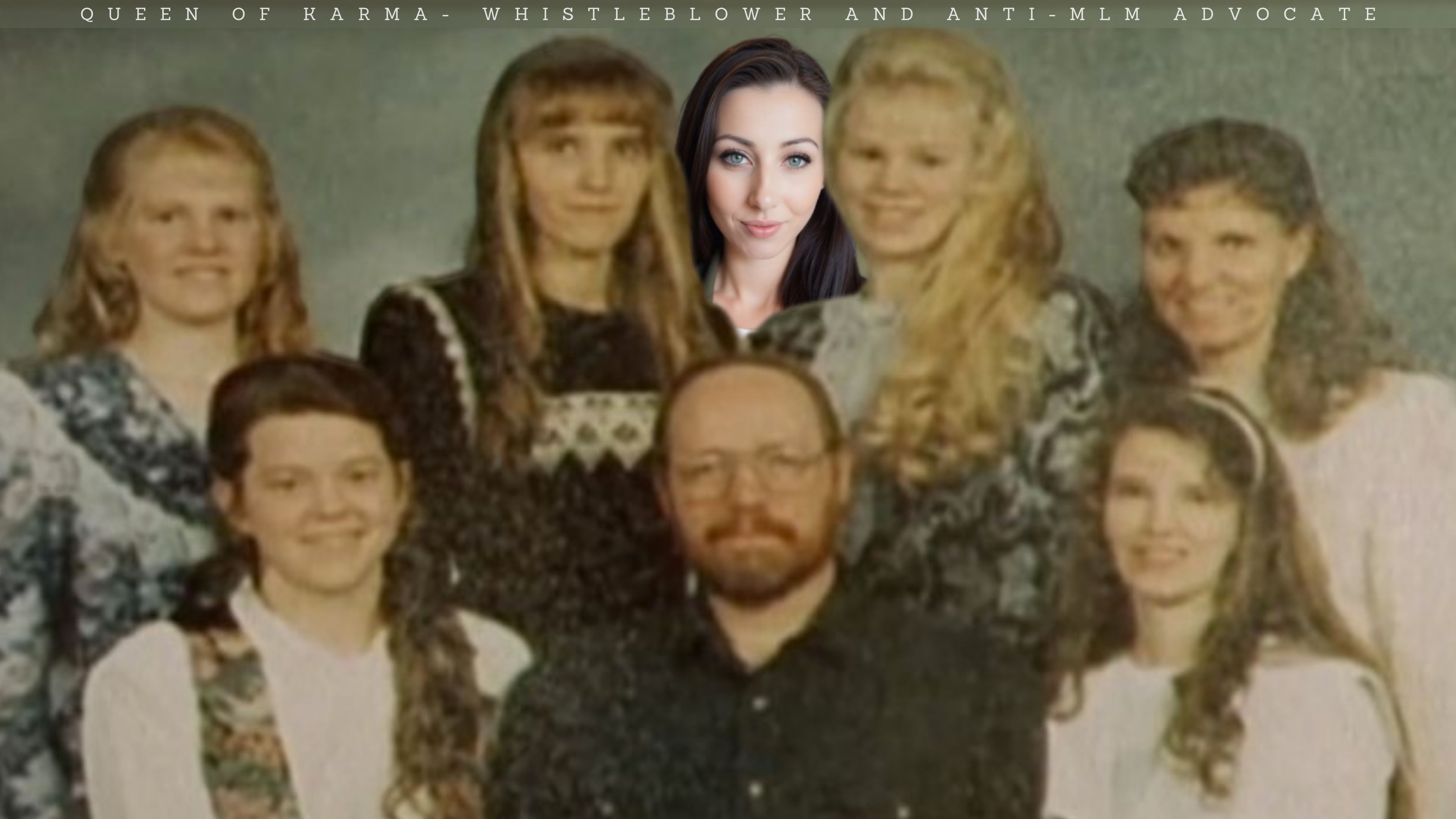
Thomas Arthur “Tom” Green was born on June 9, 1948, in Salt Lake City, Utah. He grew up within the cultural orbit of the Church of Jesus Christ of Latter-Day Saints, but like many future fundamentalists, he gravitated toward the early doctrines the mainstream church abandoned — especially plural marriage. By adulthood, Green had embraced a belief system that framed polygamy not as a historical artifact but as a divine mandate. This conviction would shape every aspect of his life, eventually leading him to create what is now known in commentary as the Greenhaven Sect.
Green died on February 28, 2021, at age 72, leaving behind a legacy of controversy, legal precedent, and a sprawling family shaped by a closed, patriarchal system.
Early Influences and the Formation of a Belief System
Green’s childhood unfolded in a religious environment where obedience, patriarchal authority, and eternal family structures were central values. While mainstream LDS doctrine had long renounced polygamy, fundamentalist offshoots continued to teach that plural marriage was essential for exaltation — the highest level of salvation.
Green absorbed these ideas deeply. As he entered adulthood, he became increasingly drawn to Mormon fundamentalism, a movement that claims to preserve the “original” teachings of early LDS prophets. This belief system provided the theological scaffolding he would later use to justify:
- multiple simultaneous “spiritual” marriages
- marriages to extremely young girls
- marriages to former stepdaughters
- a patriarchal hierarchy where his authority was absolute
By the 1990s, Green had fully embraced the role of a self-styled patriarch, gathering wives and children into a nomadic, insular family structure that would eventually be known as Greenhaven.
How the Greenhaven Sect Took Shape
Green’s family did not begin as a formal sect. It evolved into one through:
- Isolation: living in remote properties and trailers, away from outside scrutiny
- Patriarchal consolidation: Green positioned himself as the spiritual and practical head of the entire group
- Doctrinal framing: plural marriage was presented as a divine requirement, not a choice
- Boundary erosion: parental, spiritual, and marital roles blurred under Green’s authority
By the time he appeared on national television in the late 1990s, Green had multiple wives and dozens of children. Some wives were adults when they joined him; others were extremely young. One wife, Linda, was 13 when she became pregnant by him, a fact that later contributed to his conviction for child rape.
The family’s living arrangement — multiple wives, multiple children, and a patriarch at the center — mirrored other Mormon fundamentalist groups, but Greenhaven was uniquely shaped around one man’s personal authority rather than a large church structure.
The Public Face: Media Exposure and Self-Promotion
Unlike most polygamists who avoided attention, Green actively sought it.
He appeared on:
- The Jerry Springer Show
- Sally Jessy Raphael
- Documentaries including One Man, Six Wives and 29 Children
He framed his family as a loving, consensual plural marriage and an “alternative lifestyle” misunderstood by outsiders. But this visibility drew the attention of Utah prosecutors, who had historically avoided prosecuting polygamy unless other crimes were involved.
Green’s media appearances became the catalyst for his downfall.
The Legal Case: Bigamy, Child Rape, and a Landmark Conviction
In 2001, after a high-profile trial, Green was convicted of:
- four counts of bigamy
- one count of failure to pay child support
- and later, child rape, for impregnating a 13-year-old girl who became his first wife
His bigamy conviction was upheld by the Utah Supreme Court in 2004. The case became a modern test of Utah’s anti-polygamy laws and exposed the darker realities behind Green’s public persona.
The Doctrinal Architecture That Enabled Abuse
To understand the Greenhaven Sect, you have to understand the belief system that made it possible. Green used Mormon fundamentalist teachings to create a closed world where:
- his authority was unquestionable
- obedience was tied to salvation
- plural marriage was a divine requirement
- women’s value was tied to submission and childbearing
- children were raised to see the outside world as dangerous and immoral
This doctrinal framing allowed Green to justify relationships that, outside the sect, were clearly abusive.
How Incest-Adjacent Marriages Were Normalized
Green married at least two former stepdaughters. From the outside, this is an obvious abuse of power. Inside the sect, it was reframed as:
- “spiritual, not biological” — erasing the parental dynamic
- “foreordained” — implying divine selection
- “a test of faith” — turning discomfort into spiritual failure
- “sacrifice for God” — sanctifying the taboo
This is a common tactic in high-control religious groups: the more socially forbidden the act, the easier it becomes to frame it as holy.
How Girls Became “Prepared Wives”
Girls in the Greenhaven Sect were groomed from childhood to accept plural marriage as their destiny. The process followed a predictable pattern:
- Early indoctrination
They were taught that men hold priesthood authority, obedience equals righteousness, plural marriage is God’s law, and that refusing a marriage is rejecting God. - Emotional dependency
Green positioned himself as a provider, spiritual leader, disciplinarian, and a father figure. This created a psychological double bind: the person they depended on was also the person they were expected to marry. - Special attention
Girls targeted as future wives were praised for spiritual maturity, given more responsibilities, brought into private “spiritual” conversations, and emotionally groomed under the guise of mentorship. - Marriage framed as destiny
By the time marriage was proposed, the girl had been conditioned to believe she was chosen, she was fulfilling God’s plan, and that discomfort was a sign of spiritual weakness. Consent, in any meaningful sense, was impossible.
Control Tactics Used on Wives
Once inside the marriage structure, wives were kept compliant through:
- spiritual blackmail — disagreement framed as rebellion against God
- manufactured competition — wives compared to each other to maintain control
- economic dependency — limited resources controlled by Green
- social isolation — outsiders framed as immoral or dangerous
These tactics mirror those used in other polygamist sects, cults, and even MLMs: isolate, control, spiritualize obedience, and punish dissent.
Control Tactics Used on Children
Children were shaped into future participants in the system through:
- identity built around closeness
- normalization of adult-child power imbalance
- fear of the outside world
- confusion around boundaries
If a stepfather can become a husband, then boundaries dissolve — and that confusion is exactly what allows abuse to continue.
The Collapse of the Sect and Green’s Death
Green served six years in prison and was paroled in 2007. He continued to defend his beliefs until his death in 2021. He passed away from complications with COVID. It may have been the best thing that COVID ever did…
The Greenhaven Sect did not survive in its original form. Without Green’s central authority, the system fractured — a common outcome in patriarch-centered cults.
A Personal Reflection as a Survivor of a Different System
Watching the Greenhaven story unfold hits hard, even from outside the world of Mormon fundamentalism. As someone who has lived through a different kind of high-control system, the patterns are painfully familiar:
- the charismatic leader
- the weaponized doctrine
- the blurred boundaries
- the grooming framed as destiny
- the isolation
- the fear of leaving
- the belief that suffering is holy
The details change, but the architecture of control stays the same.
What stays with me most is the human cost — the wives who believed obedience would save them, the children who are still trying to rebuild their lives after escaping systems like this.
My hope is that the anti-cult and antiMLM communities can continue to be a place where survivors can land safely, be believed, and find a home outside the structures that once defined them.
By Beth Gibbons (Queen of Karma)
Beth Gibbons, known publicly as Queen of Karma, is a whistleblower and anti-MLM advocate who shares her personal experiences of being manipulated and financially harmed by multi-level marketing schemes. She writes and speaks candidly about the emotional and psychological toll these so-called “business opportunities” take on vulnerable individuals, especially women. Beth positions herself as a survivor-turned-activist, exposing MLMs as commercial cults and highlighting the cult-like tactics used to recruit, control, and silence members.
She has contributed blogs and participated in video interviews under the name Queen of Karma, often blending personal storytelling with direct confrontation of scammy business models. Her work aligns closely with scam awareness efforts, and she’s part of a growing community of voices pushing back against MLM exploitation, gaslighting, and financial abuse.






Leave A Comment