


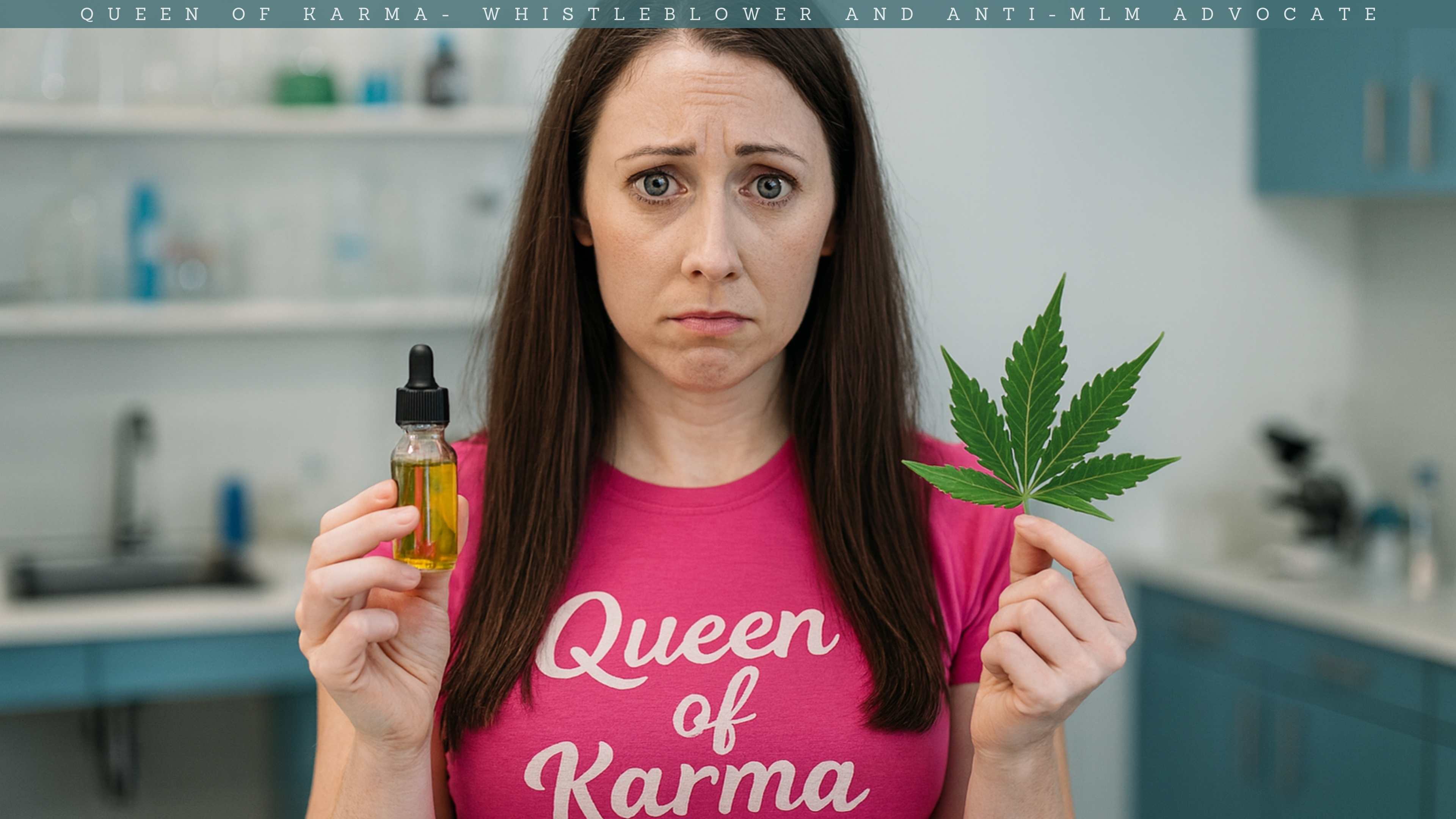
When investors hear the word “biotech,” they often imagine cutting-edge science, breakthrough therapies, and the promise of innovation. But in the murky world of penny stocks, biotech hype can mask deception. Rapid Therapeutic Science Laboratories Inc. (RTSL) is a case in point: a Dallas-based company that rebranded itself as a cannabinoid innovator, only to end up in the crosshairs of the US Securities and Exchange Commission (SEC) for fraud.
It started with an inhaler and a biotech promise, but Rapid Therapeutic Science Laboratories was selling more illusion than innovation. Today, we break down what happened.
From Hollywood Dreams to CBD Inhalers
RTSL wasn’t always a biotech firm. Incorporated in 2013 as Holly Brothers Pictures Inc., the company originally had ties to the entertainment industry. This company was already showing signs of financial distress. In 2018, the company faced Lawsuits in California from Pioneer Group LLC and Black Car Inc over unpaid promissory notes totaling more than $740,000.
To resolve the litigation, Holly Brothers Pictures entered into a Settlement Agreement: instead of paying cash, the company agreed to issue millions of shares of common stock to the creditors. The deal capped each creditor’s ownership at 4.99% of outstanding shares at any given time, with shares issued in tranches until September 2019. Once the stock was delivered, both sides signed a mutual release, ending the lawsuit.
This episode is not technically a “scam,” but it reveals a pattern of red flags that foreshadowed RTSL’s later troubles. When viewed alongside the SEC’s 2025 final judgment, the 2018 debt settlement paints a fuller picture: RTSL was not a biotech breakthrough waiting to happen, but a struggling penny stock company that repeatedly leaned on stock insurance, hype, and misleading claims to survive.
In January 2020, Holly Brothers Pictures rebranded to Rapid Therapeutic Science Laboratories, pivoting to the booming CBD market.
The pitch was simple but seductive: RTSL claimed to have developed aerosol delivery systems for cannabinoids, specifically CBD inhalers marketed as “natural relief” products. These inhalers were promoted as faster, safer, and more effective than oils or edibles. For retail investors chasing the cannabis boom, RTSL looked like a ground-floor opportunity.
The Man Behind the Curtain
At the center of RTSL was Donald R Schmidt Jr., serving as President, CEO, and Chairman. Schmidt positioned himself as a visionary leader, but the SEC later alleged that he was the architect of a fraudulent scheme.
Donald R Schmidt Jr. is a licensed attorney in Texas (Bar #00798486) and a Certified Public Accountant (CPA, Texas Board #054611). He has practiced law for nearly three decades, running The Law Firm of Donald R. Schmidt Jr. PLLC in Dallas.
His education is extensive, with a J.D. from Texas Wesleyan University School of Law (now Texas A&M), where he graduated with honors and served on law review. With an MBA in Finance and M.S. in Accounting from the University of Texas at Dallas, you would think he would be able to run a legitimate business instead of an extensive scam! His undergraduate studies were in Petroleum Engineering at the University of Texas at Austin, and Mathematics & Chemistry at Texas Tech University. Not only that but he is a pilot! He has his FAA Airline Transport Pilot license, but I would never fly with him.
Schmidt specialized in litigation, commercial law, oil & gas, environmental law, contracts, and bankruptcy (funnily enough). He also worked as an expert witness in economics, tax, business valuations, and forensic accounting. His resume positioned him as a highly credentialed professional with authority in both law and finance. So why is he now involved in a scheme?
According to his resume, he also served on nonprofit boards, including Disciples of the Way (DOW) and EarthX – Earth Conservation, reflecting interests in faith-based outreach and environmental issues. I just hope he isn’t using faith manipulation, as we have seen so many times before in schemes.
It appears Donald R Schmidt Jr. has decades of professional credentials. His background makes the fraud charges even more striking: despite his legal and financial expertise, he crossed into misrepresentation and securities fraud, showing how professional authority can be misused to deceive investors.
Until his leadership, RTSL issued glowing press releases and investor communications that painted a picture of a company on the verge of biotech success. In reality, the SEC found that these claims were misleading, exaggerated, and in some cases outright false.
From Inhalers to Illusions
RTSL built its entire pitch around a flagship product: the CBD metered-dose inhaler (MDI). This device was marketed as a breakthrough in a cannabinoid delivery, promising faster relief and more precise dosing than oils, tinctures, or edibles.
- The Pitch to Consumers: RTSL claimed its inhalers offered “fast-acting relief through aerosol delivery of non-psychoactive cannabinoids” and positioned them as a safer, more effective alternative to traditional methods.
- The Pitch to Investors: In a 2021 Press Release, RTSL announced it had “executed two contracts to conduct Phase 1 human clinical trials of its flagship metered dose inhaler containing Cannabidiol (CBD).” The company suggested it was preparing to file an Investigational New Drug (IND) application with the FDA, implying regulatory legitimacy and imminent commercialization.
- The Promise of Growth: RTSL described itself as a “growth-oriented aerosol manufacturing company focused on delivery of non-psychoactive cannabinoid compounds.” This language was designed to attract investors by painting a picture of biotech innovation and scalability.
The SEC’s enforcement action revealed that RTSL’s CBD inhalers were less a biotech breakthrough than a vehicle for investor deception. By presenting themselves as a cutting-edge science lab, RTSL created the illusion of legitimacy — an illusion that collapsed under scrutiny.
What Went Wrong
According to the SEC, these claims were misleading and exaggerated. Despite promises of clinical trials and FDA filings, RTSL had little evidence of meaningful revenue, no proven large-scale distribution and no regulatory approvals to support its ambitious projections.
The SEC’s Investigation revealed a pattern of misconduct:
- Fraudulent Statements: RTSL misled investors about the viability of its CBD inhaler business.
- Unregistered Securities: The company offered and sold securities without proper registration, violating Section 5 of the Securities Act.
- False Filings: RTSL failed to file accurate and complete reports with the SEC, violating Section 13(a) of the Exchange Act.
- Investor Deception: By hyping products and prospects, RTSL lured retail investors into a scheme that had little basis in reality.
The SEC’s Final Judgment
On November 24, 2025, the US District Court for the Northern District of Texas entered a Final Judgment against RTSL. The language of the injunction in unambiguous:
“Rapid Therapeutic Science Laboratories, Inc. is permanently restrained and enjoined from, directly or indirectly, engaging in any act, practice, or course of business which operates or would operate as a fraud or deceit upon any person, in violation of Section 10(b) of the Exchange Act and Rule 10b-5 thereunder.”
The court also ordered RTSL to pay $869,618 — consisting of $686,090 in disgorgement and $183,528 in prejudgment interest — within 30 days. These funds may be distributed to harmed investors through a court-approved Fair Fund.
Beyond the financial penalty, RTSL is permanently barred from offering unregistered securities and must comply with SEC reporting requirements. The injunction applies not only to the company but also to its officers, agents, employees, attorneys, and anyone acting in concert with them.
Why This Case Matters
RTSL’s downfall is more than just another penny-stock scandal. It highlights the dangers of hype-driven biotech pitches in the cannabis sector, where scientific jargon and wellness promises can be weaponized to mislead investors.
For retail investors, the lesson is clear:
- Scrutinize claims. If a company promises revolutionary products but operates on the fringes of regulation, be skeptical.
- Check filings. SEC reports are public for a reason — they reveal whether a company is playing by the rules.
- Beware of penny stocks. Micro-cap firms often lack transparency and are fertile ground for fraud.
The Reality of Penny Stocks
Rapid Therapeutic Science Laboratories Inc. promised innovation but delivered deception. Its CBD inhalers were less a biotech breakthrough than a vehicle for securities fraud. The SEC’s final judgment ensures RTSL can no longer mislead investors, but the damage to those who bought into the hype is already done.
This case stands as a stark reminder: in the world of penny stocks, not every “science lab” is what it claims to be.
By Beth Gibbons (Queen of Karma)
Beth Gibbons, known publicly as Queen of Karma, is a whistleblower and anti-MLM advocate who shares her personal experiences of being manipulated and financially harmed by multi-level marketing schemes. She writes and speaks candidly about the emotional and psychological toll these so-called “business opportunities” take on vulnerable individuals, especially women. Beth positions herself as a survivor-turned-activist, exposing MLMs as commercial cults and highlighting the cult-like tactics used to recruit, control, and silence members.
She has contributed blogs and participated in video interviews under the name Queen of Karma, often blending personal storytelling with direct confrontation of scammy business models. Her work aligns closely with scam awareness efforts, and she’s part of a growing community of voices pushing back against MLM exploitation, gaslighting, and financial abuse.






Leave A Comment