


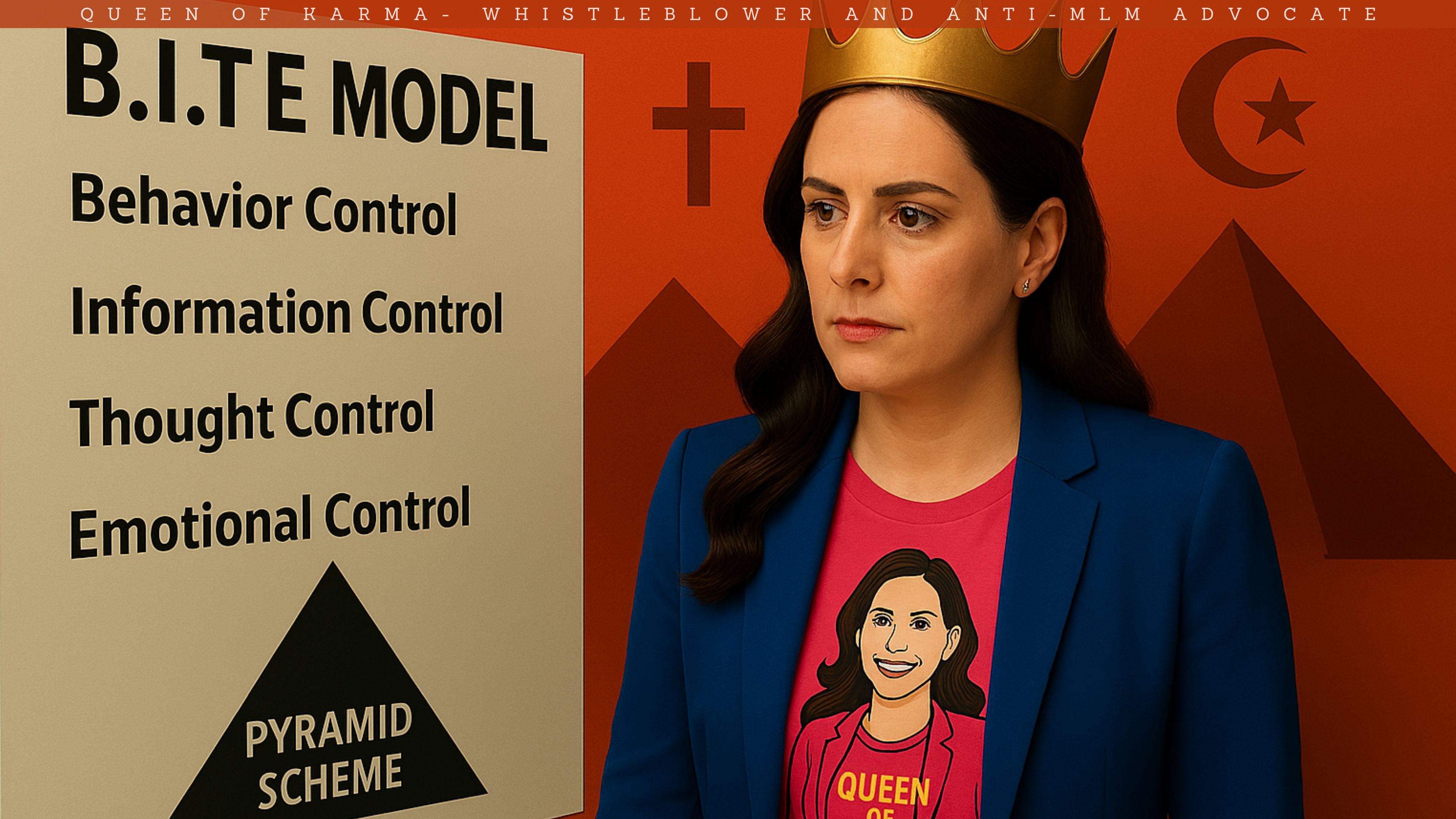
Not every group that promises transformation is what it seems. Whether it’s spiritual salvation or financial freedom, some organizations use manipulation—not mentorship—to keep people under control.
To understand how cults operate, we turn to the B.I.T.E. Model and the Influence Continuum, developed by cult expert Steven Hassan.
The B.I.T.E. Model: Four Pillars of Control
The B.I.T.E. Model breaks down cult tactics into four categories: Behavior, Information, Thought, and Emotional control.
Behavior Control limits personal freedom. Members may be told where to live, how to dress, what to eat, and who to associate with. In MLMs, this often looks like pressure to attend endless meetings, adopt a “success” persona, and cut off anyone who questions the system.
Information Control restricts access to outside perspectives. Cults and MLMs alike discourage critical media, label dissenters as “haters,” and flood members with curated success stories while hiding failures.
Thought Control demands ideological purity. Members are taught to suppress doubts and accept the group’s beliefs as absolute truth. MLMs push the idea that failure is never the system’s fault—it’s yours for not “wanting it enough.”
Emotional Control uses guilt, fear, and shame to enforce loyalty. In religious cults, this might involve threats of damnation. In MLMs, it’s the fear of being labeled lazy, negative, or disloyal to the “family.”
The Influence Continuum: Ethical vs. Unethical Persuasion
The Influence Continuum helps us distinguish between healthy influence and coercive control. On one end, ethical groups promote autonomy, transparency, and informed consent. On the other, destructive cults use deception, manipulation, and dependency.
MLMs often fall on the unethical side. They promise empowerment but deliver dependency—convincing people to invest time and money into a system designed to benefit only those at the top. The pressure to recruit, the scripted positivity, and the emotional manipulation all serve one purpose: control.
MLMs as Commercial Cults
While religious cults may claim divine authority, MLMs operate as commercial cults, using the same psychological tactics to sell a dream of financial freedom. The product is secondary—the real business is recruitment.
MLMs use behavior control to shape members into brand ambassadors. They enforce information control by discouraging outside research and labeling critics as “bitter ex-distributors.” They apply thought control by teaching that success is a mindset, not a math problem. And they rely on emotional control to keep people buying, recruiting, and believing—even when the numbers don’t add up.
How This Knowledge Helps Us Push Back
By understanding the B.I.T.E. Model and the Influence Continuum, we gain a powerful lens for spotting manipulation—before it takes hold. These frameworks give us the language to describe what’s often felt but hard to explain: the slow erosion of autonomy, the pressure to conform, and the emotional toll of being controlled.
Whether the group is selling salvation or supplements, recognizing these tactics allows us to challenge them, support those affected, and speak out with clarity. The more we expose how these systems operate, the harder it becomes for them to thrive in silence.
By Beth Gibbons (Queen of Karma)
Beth Gibbons, known publicly as Queen of Karma, is a whistleblower and anti-MLM advocate who shares her personal experiences of being manipulated and financially harmed by multi-level marketing schemes. She writes and speaks candidly about the emotional and psychological toll these so-called “business opportunities” take on vulnerable individuals, especially women. Beth positions herself as a survivor-turned-activist, exposing MLMs as commercial cults and highlighting the cult-like tactics used to recruit, control, and silence members.
She has contributed blogs and participated in video interviews under the name Queen of Karma, often blending personal storytelling with direct confrontation of scammy business models. Her work aligns closely with scam awareness efforts, and she’s part of a growing community of voices pushing back against MLM exploitation, gaslighting, and financial abuse.



Leave A Comment