


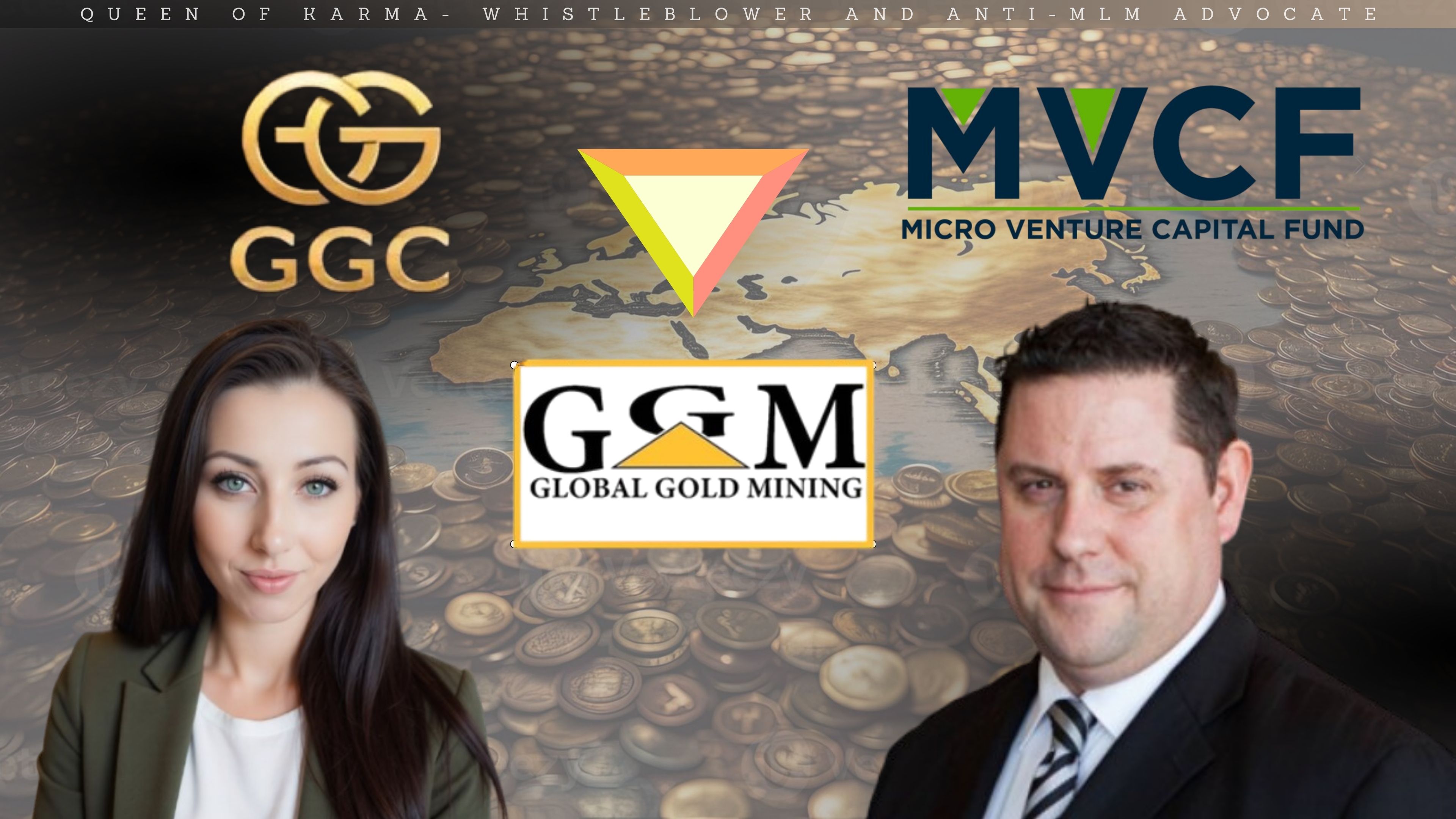
Global Gold Mining Corporation (GGMC) and Global Gold Coin (GGC) are being promoted as a revolutionary fusion of cryptocurrency and real-world gold assets. Their pitch promises a future where digital tokens are backed by tangible reserves, where early adopters become wealthy, and where a new financial ecosystem is born.
But when you examine the structure, the documents, and the people involved, a very different picture emerges — one built on layered entities, unverified claims, and credibility laundering.
Now, at the center of this ecosystem is Tony Drexel Smith, a business finance consultant whose involvement is being used to signal legitimacy. Yet the investor materials he co-authored tell a story that raises more questions than answers.
Key Takeaways
- Credibility laundering is the engine of this entire ecosystem. GGMC and GGC rely on borrowed legitimacy—polished decks, impressive‑sounding titles, and the presence of consultants—to create the appearance of stability without providing audited facts or verifiable assets.
- The structure is built to look complex, not to be transparent. Multiple entities, overlapping roles, and corporate layering create confusion rather than clarity, which is a hallmark of commercial cult tactics and high‑pressure financial movements.
- Urgency and emotional pressure replace evidence. The fundraising language, lifestyle perks, and scarcity framing mirror the psychological playbook used by MLMs, timeshare seminars, and belief‑based financial groups.
- The portfolio is a credibility collage, not a foundation. A handful of real but tiny businesses are mixed with unverified or shell‑like entities to create the illusion of diversification and maturity.
- Tony Drexel Smith’s involvement is not a seal of approval. His professional niche is documentation and presentation—not verification, auditing, or regulatory oversight. His presence adds polish, not proof.
- Nothing presented by GGMC or GGC demonstrates the transparency required for trust. No audited gold reserves, no verified mining rights, no regulatory filings, no independent due diligence, and no evidence that the token is backed by anything other than belief.
- The pattern matches commercial cult behavior. When a system depends on belief, urgency, and borrowed credibility instead of verifiable facts, it is not offering an opportunity—it is demanding trust it has not earned.
- The safest conclusion is caution. Based on the structure, tactics, and lack of verification, GGMC/GGC has not demonstrated the qualities of a trustworthy financial venture. And anyone choosing to stand at the center of that ecosystem inherits the same doubts.
What Is Credibility Laundering
Credibility laundering is when a person, company, or a project borrows legitimacy from someone else to appear more trustworthy that it actually is. It’s the reputational equivalent of money laundering: taking something risky, unproven, or dubious and running it through a “clean” source so it looks respectable on the other side.
It usually involves one or more of these patters:
- Attaching a respected-sounding person (a consultant, professor, lawyer or “expert”) to a project so outsiders assume it must be legitimate.
- Using polished documents, investor decks, or corporate branding to make something look more established than it is.
- Listing a long portfolio of companies, even if many are shells or inactive, to create the illusion of diversification and professionalism.
- Co-branding with someone who has a track record, even if that person isn’t actually verifying anything.
- Using a legitimate small business or real asset as a prop to make the larger scheme look grounded in reality.
The key idea is that the appearance of legitimacy is being manufactured, not earned. Most people don’t have the time or expertise to verify claims. A professional-looking presentation can override skepticism. If a trusted person is involved, people assume due diligence has been done. It lowers psychological resistance to investing or joining. It’s a way to shortcut trust.
The Two-Entity Structure: GGMC vs. GGC
The first thing to understand is that GGMC and GGC are not the same thing — and that distinction is intentional.
Global Gold Mining Corporation (GGMC): The Corporate Costume
Founded in 2023, the GGMC is presented as the “real-world-asset” company. It has a board of directors, officers, and an advisory board that includes Larry and Garry Lane. GGMC is framed as the mining arm — the entity that supposedly owns or will acquire the gold assets that will back the coin.
Global Gold Coin (GGC): The Token
Founded in 2025, GGC is the digital asset being sold to recruits and investors. It is marketed as gold-backed, compliant, and tied to real-world value. But the investor deck contains a critical disclosure:
“The GGC digital asset is NOT backed by actual gold reserves at this time.”
A single sentence contradicts months of promotional claims and exposes the purpose of the two-entity structure. By separating the “company” from the “coin,” promoters can shift responsibility, avoid regulatory clarity, and create the illusion of legitimacy without ever proving that gold exists.
The Third Entity: MVCF — The Money Funnel
The Micro Venture Capital Fund (MVCF), managed by Tony Drexel Smith, is not a neutral observer. It is the financial pipeline connecting investors to GGMC. The investor deck is explicitly co-branded:
“MICRO VENTURE CAPITAL FUND × GLOBAL COIN MINING CORPORATION.”
This is not consulting. This is a partnership. The deck reveals that 40% of all money raised by MVCF is immediately funneled into GGMC. Investors believe they are buying into a diversified venture fund, but nearly half their money is redirected into a high-risk, unverified mining-crypto hybrid.
This structure is not diversification — it is a pipeline.
Who Is Tony Drexel Smith?
Tony Drexel Smith is a business finance consultant who has built his career around helping early-stage companies prepare investor-ready documentation. His public persona leans heavily on experience and volume: he claims three decades in capital formation, more than 1000 business assessments, and over 10,000 pitch evaluations. In his own materials, he describes himself as a “numbers guy” (we’ve heard that before!) and a “fixer,” someone who builds business plans, pro formas, financial models, and due-diligence packages for entrepreneurs who need help presenting themselves to investors.
His professional identity is built around packaging rather than auditing. He is not an accountant, regulator, or financial examiner. Instead, he positions himself as the person who organizes information, structures business concepts, and prepares the documents that make a company look ready for investment. His companies, including he US Business Incubator and various consulting ventures, frame him as a guide for founders who need help presenting themselves professionally to potential investors. His niche sits in a part of the business world where startups, speculative ventures, and high-risk ideas often overlap, and where the emphasis is on producing polished documents, not independently verifying the claims behind them.
Public Court Records show that Tony has been involved in at least one active business-related lawsuit. In April 2024, Capitalize Inc. filed a corporate/business case against him in the Nevada Eighth Judicial District Court, and as of he most recent update, the case remains open. The filing does not determine wrongdoing on its own, but it does place him in ongoing commercial litigation — something investors may find relevant when evaluating his professional background and the types of ventures he becomes involved with.
What makes Tony relevant to GGMC and GGC is not just his skillset, but the degree to which he has embedded himself in their fundraising efforts. In the February 2026 Investor Presentation, he appears not as an outside advisor but as a co-presenter and co-brand partner. His Micro Venture Capital Fund is positioned alongside Global Gold Mining Corporation as part of a joint investment opportunity, and he is the one delivering the pitch, directing the urgency, and structuring the flow of investor money.
That is the core of who he is: a consultant who specializes in business documentation and presentation, helping companies look organized and investor-ready on paper.
What the Investor Deck Actually Reveals
The February 2026 Investor Deck is the most revealing document in the entire ecosystem. It contains several key admissions that undermine the promotional narrative.
The coin is not backed by gold. The deck states plainly, “NOT backed by actual gold reserves at this time.” This contradicts the public claims made by GGC promoters.
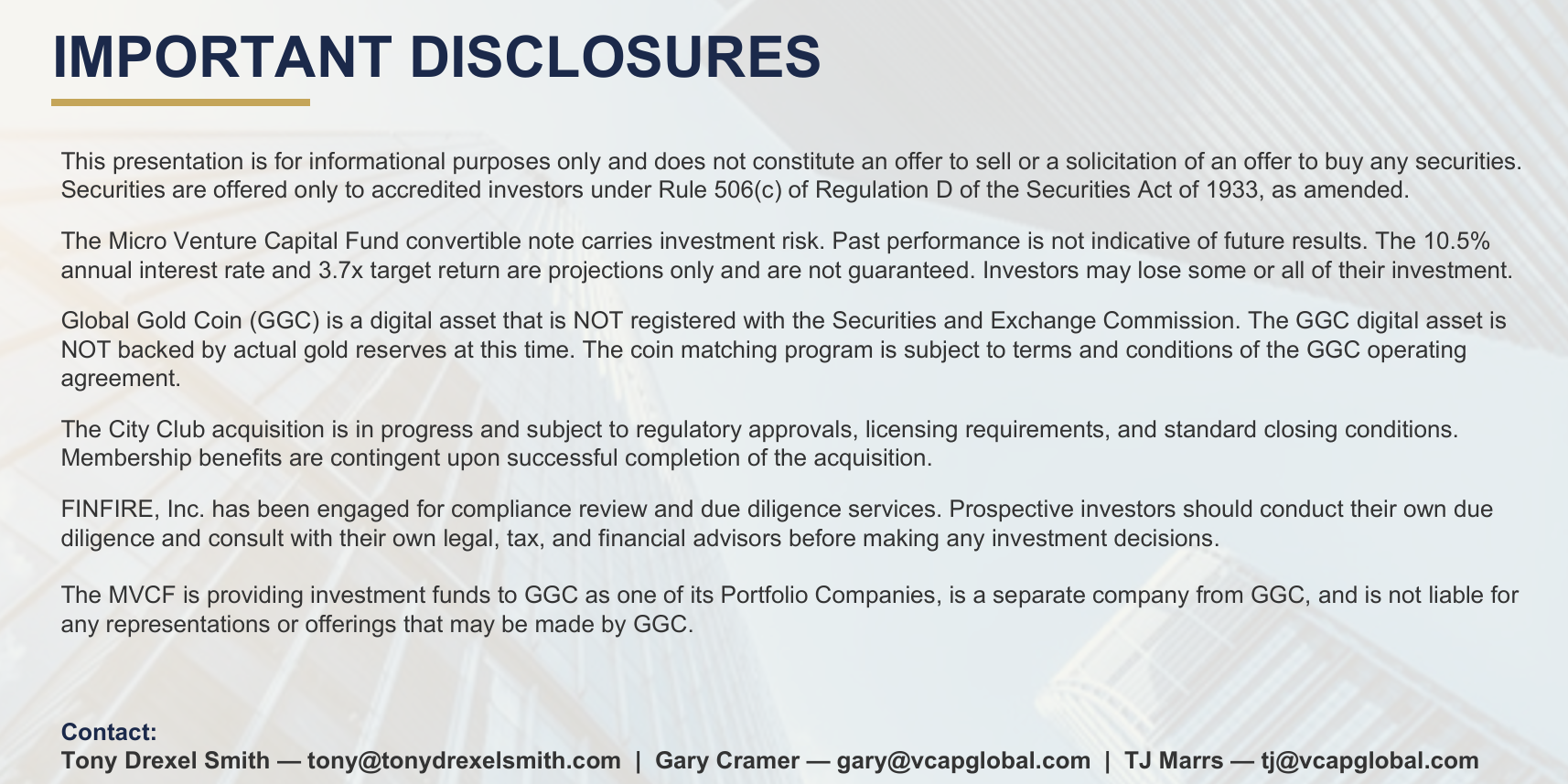
GGMC needs investor money to create the appearance of backing. One of the listed funding needed is:
“$1,000,000 — Real-World Assets — Backing needed for the GGC token before end of month.”
This means the “backing” is not coming from mining operations. It is being reverse-engineered using investor money.
They are using high-pressure sales tactics. The deck uses language more common in MLM rallies than in venture capital:
“We need $5 million before anybody leaves this room.”
“Pull out our phones. Scan the code RIGHT NOW.”
“180 units. 800 people. Do the math.”
This is urgency-driven fundraising, not professional capital formation.
GGC coins are given as a bonus. The deck ppromises:
“1,000 GGC coins issued per unit purchased.”
This ties Tony’s fund directly to the MLM-style token economy.
They are using lifestyle perks as investment incentives. Investors are promised a one-eyar Elite membership at the City Club — complete with spa access, cigar lounge privileges, pool cabanas, and private dining. The deck spends multiple slides describing the amenities, even though the acquisition is not complete and the benefits are not guaranteed. This is emotional bait, not financial analysis.
The disclaimers undermine the entire pitch. The deck admits:
- investors may lose everything
- the coin is not backed
- the City Club acquisition is incomplete
- benefits are not guaranteed
These disclaimers protect the presenters, not the investors.
The Portfolio Companies: A Credibility Collage
The deck lists 30 portfolio companies across six categories. But a closer look reveals a pattern common in credibility-laundering schemes.
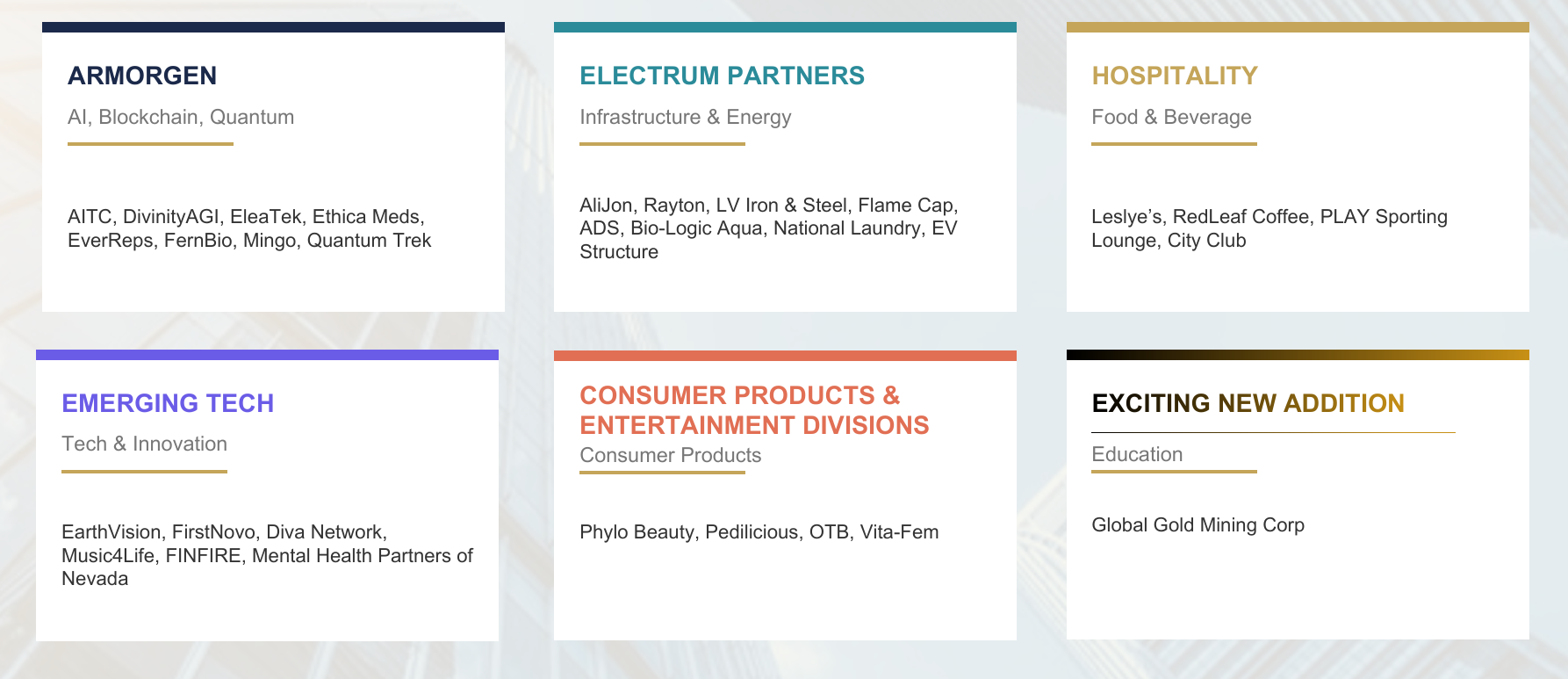
A Few Real but Tiny Consumer Brands
Companies like Phylo Beauty and Pedilicious are legitimate small businesses — but the do not validate a crypto-MLM.
MLM-Adjacent Coaching Platforms
Diva Network appears to be a personal development and networking platform — not an MLM, but MLM-adjacent in tone.
Shell-Like or Unverified Tech Names
Entities such as EarthVision, FirstNovo, OTB, and Vita-Fem have no verifiable public presence and resemble inactive LLCs or placeholder companies.
High-Risk Ventures
Electrum Partners and related entities are real but have a history of speculative operations and litigation.
The “Exciting New Addition”
The only company highlighted as exciting is GGMC — the same company receiving 40% of investor funds.
This is not a diversified portfolio. It is a credibility collage designed to make the fund look established.
Tony Drexel Smith’s Role in the Ecosystem
Tony presents himself as a “numbers guy,” a “solutions guy,” a “fixer,” and a consultant with decades of experience. But his involvement with GGMC and GGC raises serious concerns.
He is not merely preparing documents. He is:
- co-branding investor materials
- raising capital
- funneling money into GGMC
- offering token bonuses
- using urgency-driven tactics
- acknowledging the coin is not backed
- presenting a padded portfolio as diversification
His presence does not legitimize GGC. It simply shows he is willing to attach his name to high-risk, unverified ventures. Good job, Tony!
Why None of This Confers Legitimacy
The structure looks sophisticated, but sophistication is not legitimacy. The deck reveals:
- no audited gold reserves
- no verified mining rights
- no regulatory filings for the token
- no sustainable revenue model
- no independent due diligence
- no transparency in the portfolio
- no separation between the fund and the scheme
When you map the ecosystem, the picture becomes clear:
GGMC is the corporate structure.
GGC is the product.
MVCF is the pipeline.
Tony is the credibility bridge.
The Lane brothers are the promoters.
Investors are the fuel.
This is not a gold-backed crypto revolution. It is a layered fundraising ecosystem built on urgency, lifestyle perks, unverified claims and the strategic use of corporate entities to create the appearance of legitimacy. The documents do not validate the project — they expose it.
When Credibility Becomes a Commodity
The deeper you look into GGMC and GGC, the clearer the pattern becomes. None of the structures, documents, or personalities surrounding this project behave like a transparent, well-regulated, asset-backed enterprise. Instead, they follow the same playbook used by countless commercial cults and high-pressure financial movements: create urgency, manufacture legitimacy, surround the project with impressive-sounding titles and entities, and rely on borrowed credibility to keep people from asking the questions that matter.
Cults — whether ideological or commercial — rarely begin with overt manipulation. They begin with trust, and trust is built through credibility laundering. A polished deck, a long resume, a list of “portfolio companies,” a confident speaker at the front of the room — these are the tools used to lower defenses and create the illusion of safety. Once that illusion is in place, people stop verifying claims and start believing promises.
That is why the structure around GGMC and GGC is so concerning. The layers of entities, the urgency-driven fundraising, the lifestyle perks, the unverified assets, the reliance on personalities rather than audited facts — these are the same tactics used by groups that depend on belief, not evidence, to survive. When a system needs you to trust first and verify later, it is not operating in your best interest.
And that brings us back to Tony Drexel Smith. His public persona is built on documentation, packaging, and presentation — not on independent verification or regulatory oversight. When someone with that background becomes the face of a high-risk, high-pressure financial ecosystem, it raises reasonable questions about judgment, boundaries, and the kinds of ventures he is willing to align himself with. Trust is earned through transparency, not through proximity to a project that relies so heavily on optics.
In the end, the safest conclusion is the simplest one: when a financial opportunity requires layers of borrowed credibility, urgency, and belief, it is not an opportunity — it is a warning. GGMC and GGC have not demonstrated the transparency, verification, or regulatory clarity that would justify trust. And anyone who chooses to stand at the center of that ecosystem, lending their name and presence to it, inherits the same doubts.
You don’t need to wait for a collapse to recognize the pattern. The pattern is already here.
By Beth Gibbons (Queen of Karma)
Beth Gibbons, known publicly as Queen of Karma, is a whistleblower and anti-MLM advocate who shares her personal experiences of being manipulated and financially harmed by multi-level marketing schemes. She writes and speaks candidly about the emotional and psychological toll these so-called “business opportunities” take on vulnerable individuals, especially women. Beth positions herself as a survivor-turned-activist, exposing MLMs as commercial cults and highlighting the cult-like tactics used to recruit, control, and silence members.
She has contributed blogs and participated in video interviews under the name Queen of Karma, often blending personal storytelling with direct confrontation of scammy business models. Her work aligns closely with scam awareness efforts, and she’s part of a growing community of voices pushing back against MLM exploitation, gaslighting, and financial abuse.



Leave A Comment