



In every corner of human society — from political regimes to sales seminars — there’s a psychological engine quietly running the show: the totalitarian ego. It’s the mental fortress that rejects unwanted truths, clings to its chosen ideology, and shapes reality to match its own image.
And whether it’s draped in a flag, lit by candlelight, or smiling from a stage in a hotel ballroom, its tactics are always the same.
The Totalitarian Ego: Origins and Psychology
When psychologist Anthony Greenwald introduced the concept in 1980, he likened the ego to a totalitarian state — controlling, censoring, and rewriting information to preserve a preferred self‑image. At its heart sit three powerful biases. Egocentricity makes the self the lead actor in every story, bending memory so events revolve around “me.” Beneffectance ensures victories are personal triumphs, while failures are quietly outsourced to bad luck, unfair opponents, or hostile environments. And cognitive conservatism locks in core beliefs so tightly that even solid contradictory evidence is massaged, reframed, or dismissed until it fits.
These aren’t harmless quirks. They are the mind’s internal propaganda machine, serving the same purpose as a regime’s censorship office — defending the ruling ideology at all costs.
The Closed Loop Made Visible
On a mass scale, the same psychological defenses become tools of social control. Authoritarian regimes isolate their citizens from dissent, alternating fear with fleeting approval to create emotional dependence. They monopolize information so thoroughly that official truth becomes the only truth, fusing loyalty to the leader with loyalty to one’s own identity. Cult leaders work from the same blueprint: casting followers as uniquely “chosen,” labelling doubts as tests of faith, and recoding failures as moral weakness rather than flaws in the doctrine. The loop is airtight — leaving is not just betrayal, it is self‑erasure.
The Corporate Echo of Control
Multi‑Level Marketing schemes may wear business‑casual clothing, but the command‑and‑control structure is unmistakable. The upline assumes the role of guru or party chief, and the ideology is a “proven system” that must not be questioned. Any criticism is branded negativity, cutting participants off from friends or family who might break the spell. Quotas, events, and relentless recruitment keep people too busy and financially entangled to step back. Success is always a personal achievement to be celebrated; failure, they are told, comes only from not wanting it enough. Beneffectance, repackaged as motivation.
The Mechanics Without the Mask
Whether in a palace, a prayer hall, or a conference room, the anatomy of control is the same. A central authority defines reality and defends it with tightly managed information. Loyalty is non‑negotiable, enforced through fear, ritual, or financial dependence. Emotional manipulation is the glue — rewards for obedience, consequences for doubt. This is cognitive conservatism at scale, ensuring people remain inside the belief system long after it begins to harm them.
Why People Stay
Breaking away means confronting the wrenching cognitive dissonance of admitting, “If this was wrong, what does that make me?” Years of investment, both emotional and financial, trigger the sunk cost fallacy, making departure feel like throwing life itself away. And then there is the most powerful pull of all: belonging. Even a toxic community can feel safer than the vast unknown of going it alone.
The totalitarian ego doesn’t care about the costume — it thrives on control, certainty, and the human craving for meaning, weaponizing the same psychological defenses we all carry inside us.
By Beth Gibbons (Queen of Karma)
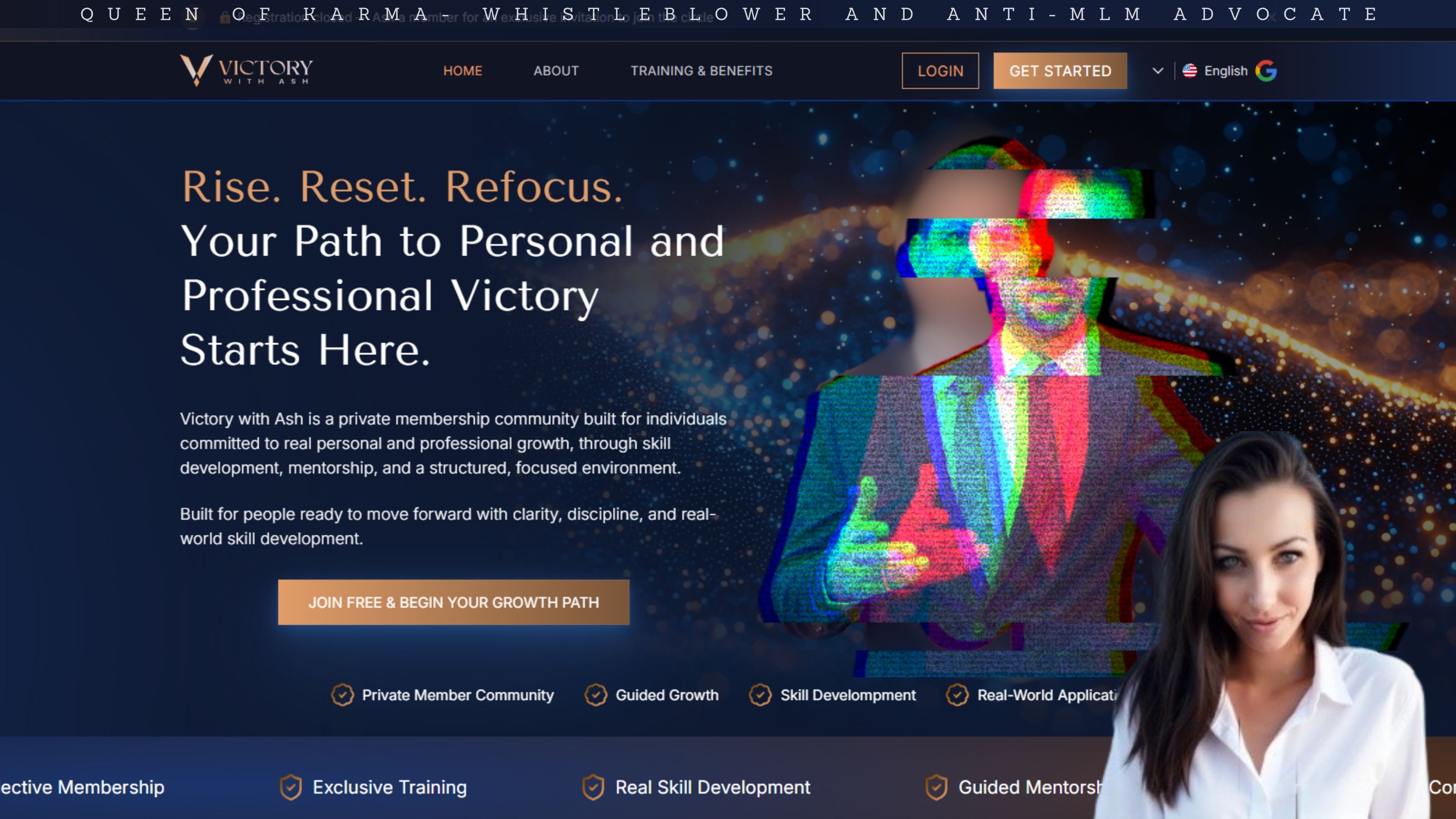
Beth Gibbons, known publicly as Queen of Karma, is a whistleblower and anti-MLM advocate who shares her personal experiences of being manipulated and financially harmed by multi-level marketing schemes. She writes and speaks candidly about the emotional and psychological toll these so-called “business opportunities” take on vulnerable individuals, especially women. Beth positions herself as a survivor-turned-activist, exposing MLMs as commercial cults and highlighting the cult-like tactics used to recruit, control, and silence members.
She has contributed blogs and participated in video interviews under the name Queen of Karma, often blending personal storytelling with direct confrontation of scammy business models. Her work aligns closely with scam awareness efforts, and she’s part of a growing community of voices pushing back against MLM exploitation, gaslighting, and financial abuse.





Leave A Comment