


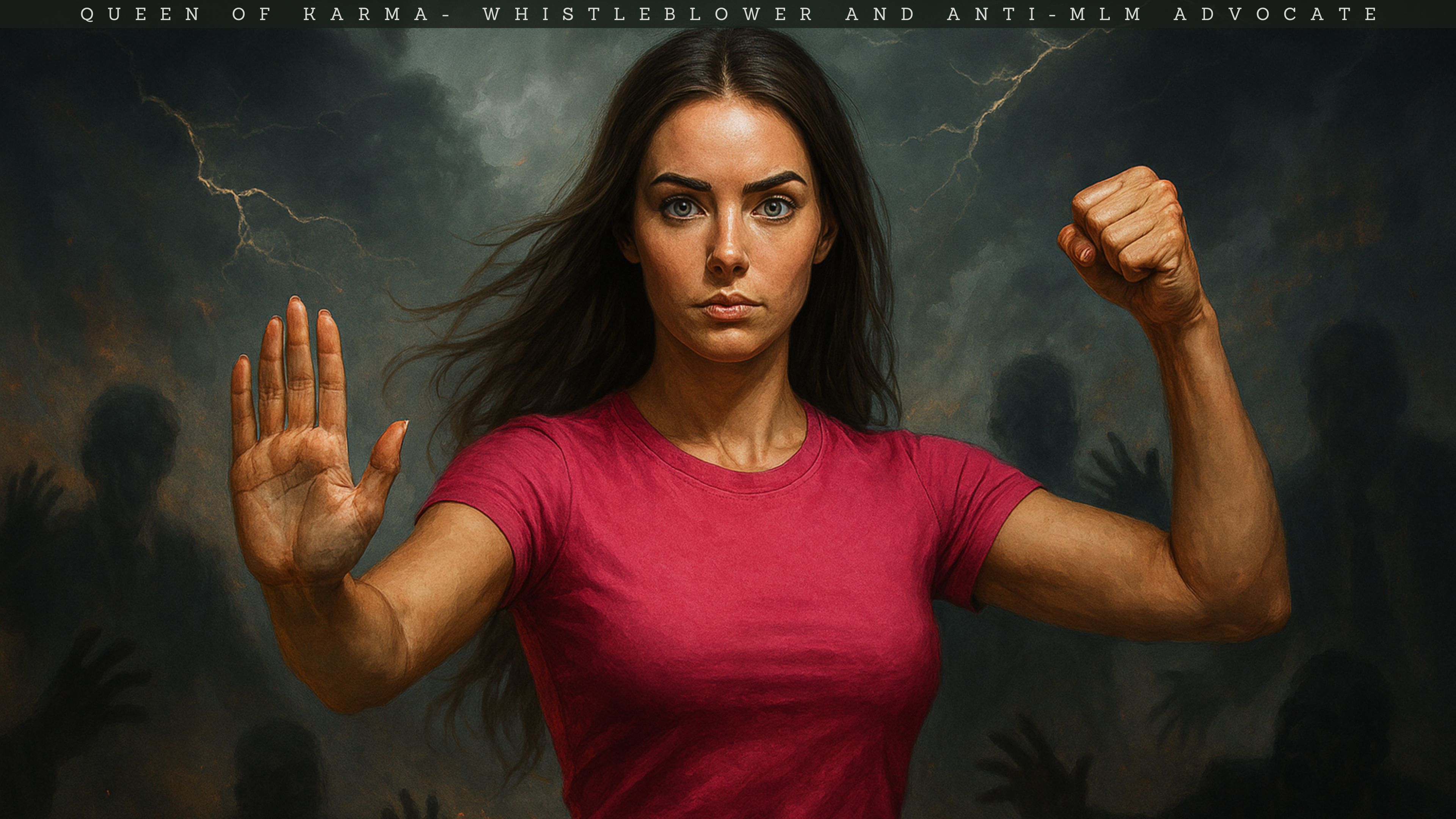
When I posted recently about the U.S. government shutdown, some people in my community responded as if consumer protection were a niche concern — something only relevant to scams and MLMs.
That reaction revealed a common misconception. Consumer protection is not a side issue. It is not “red tape.” It is the invisible shield that has been built over more than a century to keep ordinary people safe from corporate abuse, unsafe products, predatory lending, and systemic fraud.
And when that shield is weakened — whether through deregulation, defunding, or a government shutdown — the consequences ripple through every part of society.
A History Written in Crisis
The story of consumer protection is really a story of disasters that forced change.
In 1906, Upton Sinclair published The Jungle, a novel that shocked the nation with its descriptions of filthy meatpacking plants. Public outrage was so intense that Congress passed the Pure Food and Drug Act and the Meat Inspection Act. These laws laid the foundation for the Food and Drug Administration (FDA), ensuring that food and medicine could no longer be sold contaminated or mislabeled.
Just a few years later, in 1914, the Federal Trade Commission (FTC) was created to stop unfair business practices and deceptive advertising. For the first time, there was a federal watchdog dedicated to protecting consumers from fraud and monopolies.
The Great Depression brought another wave of reform. After the 1929 stock market crash devastated millions, the Securities and Exchange Commission (SEC) was established in the 1930s to regulate Wall Street, enforce transparency, and protect investors from manipulation.
The mid-20th century saw the rise of the consumer rights movement. Ralph Nader’s work on auto safety in the 1960s led to seatbelt laws and the creation of the Consumer Product Safety Commission in 1972. These weren’t abstract victories — they saved lives on highways and in homes.
After the 2008 financial crisis, when predatory lending and mortgage fraud wrecked millions of families, the Consumer Financial Protection Bureau (CFPB) was created. Since then, it has returned over $17 billion to consumers harmed by abusive financial practices.
Each of these milestones was born out of pain. Each was a response to real harm. Consumer protection has never been about theory, it has always been about survival.
More Than Scams
When people reduce consumer protection to “just scams and MLMs,” they miss the bigger picture.
Yes, it covers fraud and deceptive business models. But it also covers the safety of the food you eat and the medicine you take. It governs the reliability of the car you drive and the toys your children play with. It ensures the fairness of your mortgage, your credit card, and your bank account. It protects the air you breathe and the water you drink. It shields your data and your identity online. And it enforces your right not to be discriminated against in housing, lending, or commerce.
Consumer protection is woven into every part of modern life. It is the reason you can trust that a bottle of medicine contains what the label says, that your bank can’t legally hide fees in fine print, and that your child’s car seat has been crash-tested.
Lessons From Tragedy
History also shows us what happens when protections are absent.
- The Triangle Shirtwaist Factory Fire (1911) killed 146 workers because doors were locked and safety standards were nonexistent.
- The Thalidomide Tragedy (1950s-1960s), when a drug given to pregnant women caused thousands of birth defects, led to stricter FDA oversight.
- The 2008 financial crash, caused by predatory lending and deregulation, destroyed millions of lives and homes.
- More recently, Volkswagen’s “Dieselgate” emissions fraud, the Equifax data breach that exposed 147 million people’s personal information, and the Boeing 737 MAX crashes all remind us that without oversight, corporations can cut corners — and people pay the price.
The Shutdown Effect
This brings us to today. With the U.S. government shut down under President Trump, agencies like the FTC, SEC, CFPB, and FDA are either closed or operating with skeleton crews. That means:
- Fraud complaints pile up
- Recalls stall
- Wall Street loses oversight
- Deterrence evaporates
- State agencies are left stranded
Scammers know this. Corporations know this. When the watchdogs are asleep, the wolves move in.
Shutdowns don’t just inconvenience bureaucrats. They weaken the shield that protects every consumer, every worker, every family.
A Global Standard
Consumer protection is not uniquely American — it is a hallmark of modern democracies.
- The European Union enforces strict food safety and digital privacy laws.
- Canada’s Competition Bureau regulates false advertising and price fixing.
- New Zealand’s Commerce Commission enforces the Fair Trading Act and Consumer Guarantees Act.
When protections are weak, corruption and harm rise. Where protections are strong, people live longer, safer, freer lives.
Why This Fight Matters
Consumer protection is not a luxury. It is not “red tape.” It is the backbone of a fair society.
It is the reason you can trust the food on your plate, the medicine in your cabinet, the car you drive, and the bank where you deposit your paycheck.
So when we fight for consumer protection, we’re not just fighting scams and multi-level marketing companies and cryptocurrency schemes — we’re fighting for the right to live in a society where safety, fairness, and accountability are non-negotiable.
Every time consumer protection is weakened — whether by deregulation, defunding, or a government shutdown — history shows us who pays the price. And it’s never the billionaires. It’s us.
That’s why this fight matters. That’s why we can’t afford to look away.
By Beth Gibbons (Queen of Karma)
Beth Gibbons, known publicly as Queen of Karma, is a whistleblower and anti-MLM advocate who shares her personal experiences of being manipulated and financially harmed by multi-level marketing schemes. She writes and speaks candidly about the emotional and psychological toll these so-called “business opportunities” take on vulnerable individuals, especially women. Beth positions herself as a survivor-turned-activist, exposing MLMs as commercial cults and highlighting the cult-like tactics used to recruit, control, and silence members.
She has contributed blogs and participated in video interviews under the name Queen of Karma, often blending personal storytelling with direct confrontation of scammy business models. Her work aligns closely with scam awareness efforts, and she’s part of a growing community of voices pushing back against MLM exploitation, gaslighting, and financial abuse.




Leave A Comment