



Coercive control is a pattern of domination that strips a person of autonomy, liberty, and the capacity to think and act independently. It is not defined by physical violence but by systemic psychological, emotional, social, and neurological manipulation. Over time, coercive control reshapes a person’s identity, worldview, and behavior — often without them realizing it is happening.
Researchers describe coercive control as a “liberty crime” rather than a crime of isolated incidents. It is a slow, deliberate reshaping of a person’s reality through fear, dependency, isolation and domination. It is the architecture behind intimate partner abuse, cult indoctrination, high-control religions, extremist movements, and multi-level marketing schemes.
What Coercive Control Is
Coercive control involves a range of physical and non-physical tactics designed to instill fear, remove autonomy, and regulate a person’s everyday life. It includes:
- Isolation from support systems
- Surveillance and monitoring
- Gaslighting and reality distortion
- Threats and intimidation
- Financial control
- Micro-regulation of daily life
- Emotional manipulation
- Identity erosion
Unlike physical violence, coercive control is chronic, cumulative, and often invisible to outsiders. It creates a climate of fear even when no physical harm occurs.
Globally, researchers describe coercive control as:
- A pattern, not an incident
- A system, not a conflict
- A strategy, not a misunderstanding
It is the architecture of abuse.
The Neuroscience of Coercive Control
Coercive control does not just effect emotions, it rewires the brain.
Amygdala Hyperactivation
Chronic fear keeps the amygdala — the brain’s alarm system — in a constant state of activation. This leads to hypervigilance, anxiety, emotional reactivity, and difficulty regulating fear.
Prefrontal Cortex Suppression
The prefrontal cortex, responsible for reasoning and decision-making, becomes suppressed under chronic threat. Survivors often experience difficulty thinking clearly, impaired planning, trouble making decisions, and a reduced ability to resist manipulation.
Hippocampal Disruption
Long-term stress affects the hippocampus, impairing memory formation and recall. Survivors describe “brain fog,” difficulty remembering timelines, and trouble trusting their own perceptions.
Trauma Bonding and Dopamine Loops
Abusers alternate fear with intermittent kindness. This creates dopamine-driven attachment, emotional dependency, and a cycle of reward and punishment.
Polyvagal Shutdown
The nervous system oscillates between fight, flight, freeze, and fawn. Coercive control traps survivors in survival states.
Loss of Agency
Studies show coercion alters the brain’s sense of agency — the feeling that “I am choosing my actions.” Under coercive pressure, people feel compelled to obey.
The Psychology of Coercive Control
Coercive control exploits predictable psychological mechanisms.
Gaslighting
Abusers distort reality to make victims doubt their perceptions.
Love-Bombing
Early affection creates dependency and loyalty.
Fear Conditioning
Punishments for dissent create learned helplessness.
Information Control
Limiting access to outside perspectives ensures the abuser becomes the primary source of truth.
Identity Erosion
Abusers replace the victim’s identity with a group-approved version.
Cognitive Bias Exploitation
Coercive systems weaponize authority bias, social proof, confirmation bias and sunk-cost fallacy.
These mechanisms make coercive control feel like personal failure rather than engineered manipulation.
The Sociology of Coercive Control
Sociologists describe coercive control as a totalizing system — one that restructures a person’s social world.
Isolation
Victims are cut off from family, friends, and outside influences.
In-Group vs. Out-Group Thinking (Us v Them Mentality)
Outsiders are framed as dangerous, unenlightened, or spiritually contaminated.
Hierarchical Authority
Leaders become unquestionable sources of truth.
Collective Surveillance
Members police each other’s behavior, creating a culture of fear.
Normalization of Obedience
Compliance becomes virtue; dissent becomes betrayal.
These dynamics appear in intimate partner abuse, cults, extremist groups and MLMs.
Why Coercive Control Works
Coercive control works because it exploits the deepest, most universal human needs and weaponizes them. It does not rely on brute force. It relies on psychological architecture, social engineering, and neurological conditioning. Coercive control succeeds not because victims are weak, but because abusers use predictable, evidence-based manipulation strategies that override the brain’s natural defenses.
There are several core mechanisms that explain why coercive control is so effective across cultures, religions, relationships, and institutions.
It Hijacks Human Attachment Systems
Humans are biologically wired for connection. Abusers exploit this by creating:
Intense early bonding (love-bombing, spiritual highs, “instant family”)
Intermittent reinforcement (kindness mixed with cruelty)
Dependency loops (emotional, financial, spiritual or social).
This creates trauma-bonds — powerful emotional ties that feel like love, loyalty, or destiny, even when the relationship is harmful. The brain interprets intermittent kindness as reward, releasing dopamine. The fear and stress release cortisol. The cycle of reward + fear creates a biochemical addiction. This is the same mechanism behind gambling addiction, abusive relationships, and cult devotion.
It Rewrites Identity
Coercive control works by slowly replacing the victim’s identity with a new, group-approved version. This happens through:
Language Control (“Suppressive person,” “apostate,” “negative thinker)
Behavioral Control (dress codes, rituals, schedules)
Thought Control (mantras, affirmations, doctrine)
Emotional Control (shame, guilt, fear of punishment)
Over time, the victim’s internal voice is replaced by the abuser’s voice. Identity is not fixed — it is shaped by environment, community, and repeated messaging. When a group controls all three, it can reshape a person’s sense of self.
It Creates a Closed Reality System
Coercive control isolates victims from outside perspectives, creating a sealed environment where the abuser’s worldview becomes the only worldview. This is done through:
Information Control (banning books, media, “worldly influences”)
Social Isolation (cutting off family, friends, outsiders)
Echo Chambers (meetings, sermons, Zoom calls, group chats)
Us-vs-them Narratives (outsiders are dangerous, unenlightened, or evil)
When all information comes from one source, the brain stops questioning it. This is how cults, MLMs, extremist groups, and abusive partners maintain control.
It Uses Fear as a Behavioral Regulator
Fear is one of the most powerful motivators in human psychology. Coercive control uses fear strategically: fear of abandonment, fear of punishment, fear of spiritual consequences, fear of financial ruin, fear of losing community, fear of being shunned, and fear of being “evil,” broken,” or “unworthy.” Fear activates the amygdala, shutting down the prefrontal cortex — the part of the brain responsible for logic, planning, and resistance. A person in fear is easier to control.
It Exploits Cognitive Biases
Coercive control systems weaponize predictable mental shortcuts:
Authority bias — “The leader must be right.”
Social proof — “Everyone else believes this.”
Confirmation bias — “This fits what I already think.”
Sunk-cost fallacy — “I’ve invested too much to leave.”
Scarcity bias — “This opportunity is rare.”
Foot-in-the-door effect — “Just do this one small thing…”
These biases are universal. They affect everyone — educated, uneducated, wealthy, poor, religious, secular. Coercive control is not about intelligence. It is about human psychology.
It Normalizes Abuse Gradually
Coercive control rarely starts with extreme behavior. It begins with small, subtle shifts: “I’m just worried about you,” “Your family doesn’t understand us,” and “You’re overreacting.” Over time, the boundaries move. A little isolation becomes total isolation. A little guilt becomes chronic shame. A little control becomes complete domination. The brain adapts to gradual change. This is called creeping normality — the same mechanism behind climate change denial, authoritarianism, and abusive relationships.
It Creates Dependency
Coercive control systems make the victim dependent on the abuser for emotional validation, financial stability, spiritual salvation, social belonging, identity, purpose, and safety. When all needs are met by one person or group, leaving feels impossible — even dangerous.
It Exploits Shame
Shame is one of the most powerful tools of control. Abusers use shame to silence dissent, prevent escape, destroy self-worth, and make victims believe they deserve the abuse. Shame collapses the self. A person who feels ashamed is easier to dominate.
Coercive Control Across Contexts
Coercive control appears in many environments, but the tactics are remarkably consistent.
Intimate Partner Abuse
The most widely recognized form. Victims experience isolation, monitoring, financial control, threats, and emotional manipulation. Often without physical violence. Survivors describe feeling “erased,” “controlled,” or “like a hostage in my own life.”
Cults and High-Control Religious Groups
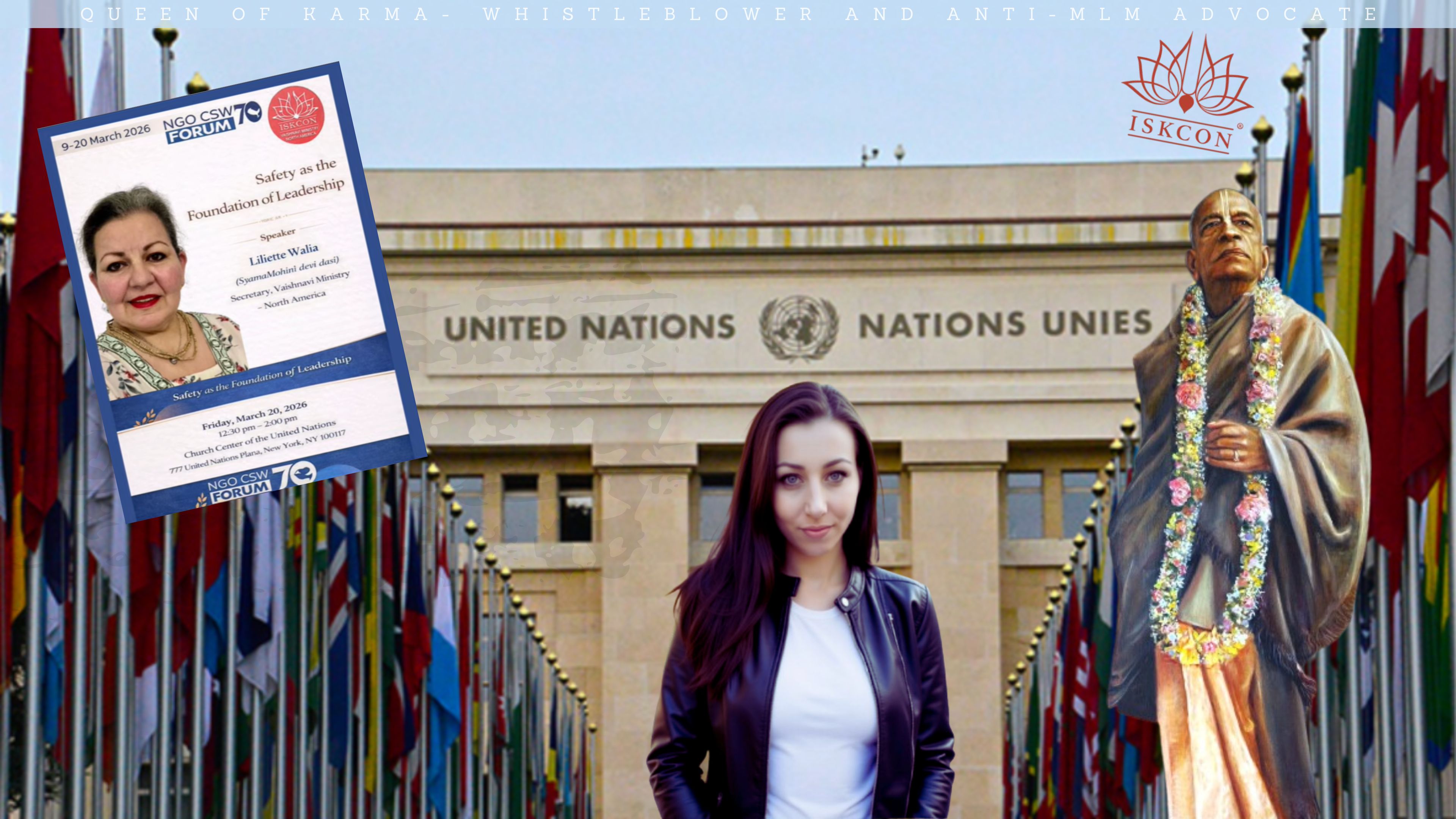
Scientology survivors describe disconnection policies, surveillance, punitive “ethics” cycles, financial exploitation, and thought-stopping practices. ISKON/Hare Krishna former members report isolation from family, strict behavioral control, punishment for dissent, and hierarchical obedience. Jehovah’s Witnesses experience shunning, information control, fear of Armageddon, and social isolation. Former members of the FLDS report forced marriages, isolation, surveillance, and punishment for dissent. Aum Shinrikyo is known for extreme coercive control, including isolation and obedience to a charismatic leader. NXIVM was a hybrid cult/MLM involving branding, collateral, blackmail and hierarchical obedience.
MLMs and Commercial Cults
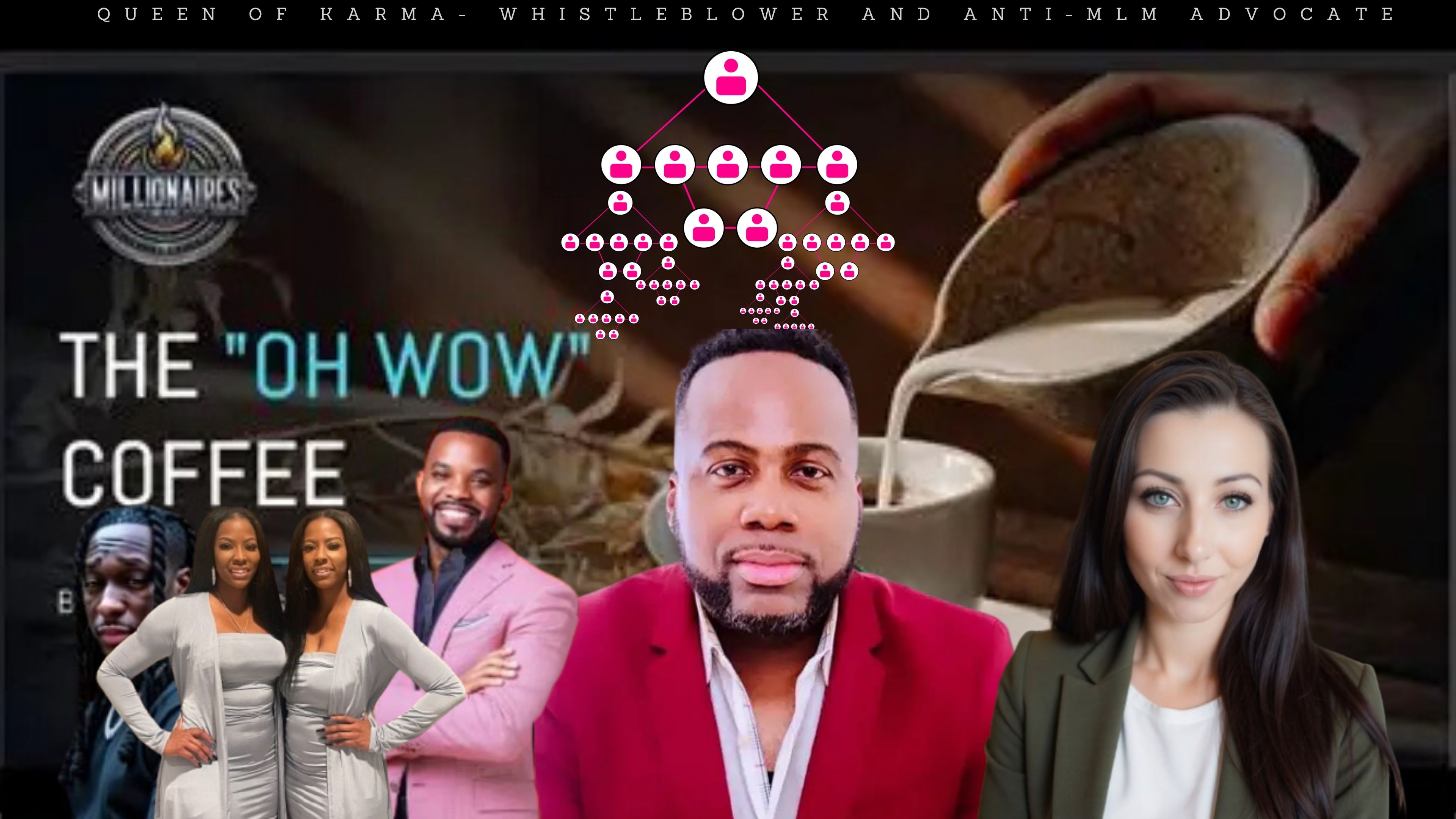
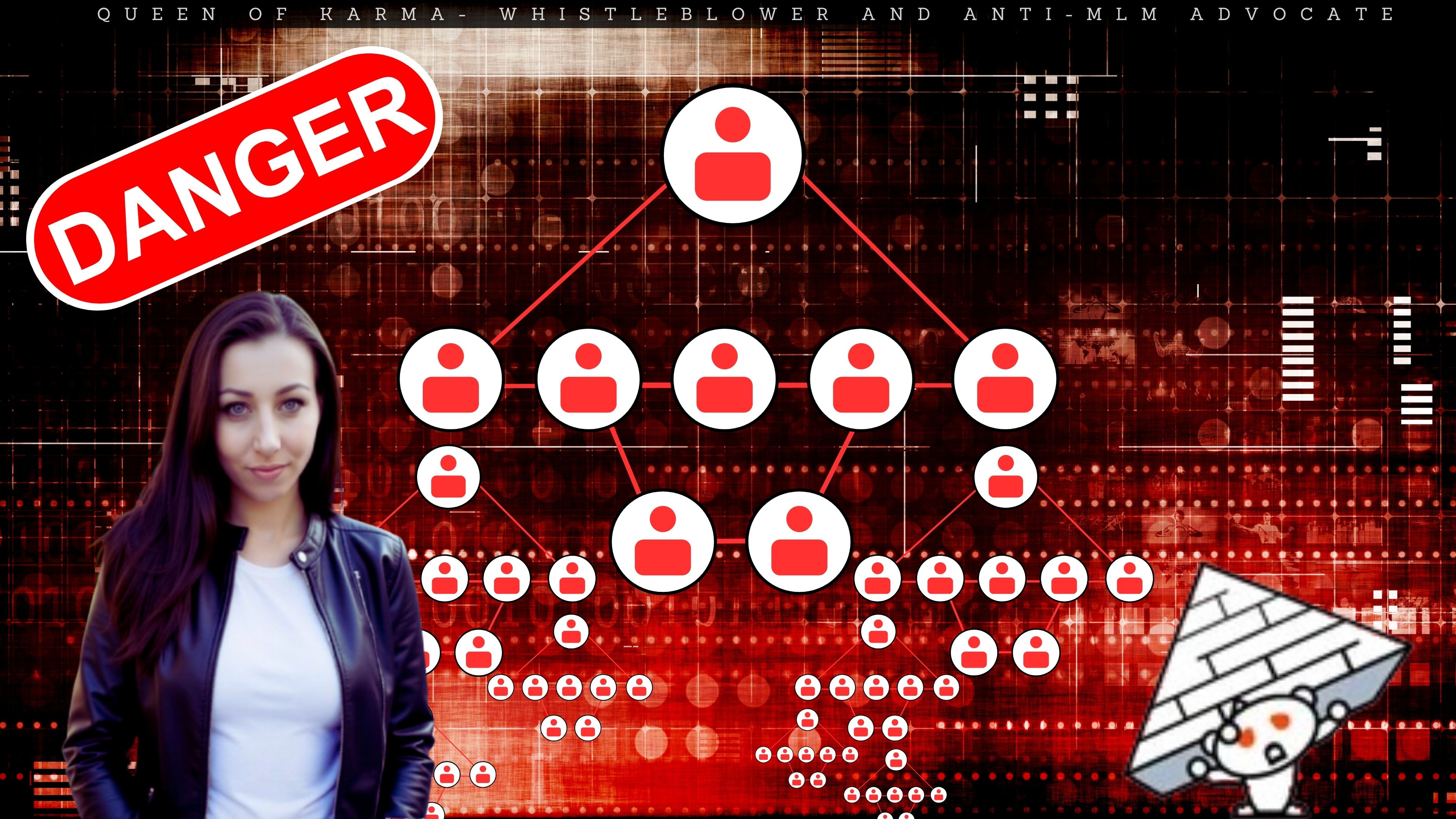
MLMs use coercive control to maintain financial and psychological dependency. Examples include Amway, Herbalife, Monat, LuLaRoe, ONPASSIVE, Young Living, doTERRA, Primerica, and World Financial Group. Common tactics include love-bombing during recruitment, shaming dissent as “negativity,” isolation from “dream stealers,” sunk-cost pressure, and financial exploitation.
Digital Cults and Online Radicalization
Online coercive control is rapidly growing. Examples include YouTube guru cults, Telegram “spiritual” cults, TikTok manifestation cults, discord extremist grooming, and parasocial coercive control. Tactics include algorithmic isolation, echo chambers, identity manipulation, and fear-based messaging.
The Impact on Survivors
Survivors across contexts describe similar experiences:
- “I didn’t realize I was disappearing.”
- “I stopped trusting my own thoughts.”
- “I felt like I was living someone else’s life.”
- “I wasn’t allowed to have my own identity.”
- “Leaving felt like escaping a mental prison.”
These testimonies appear across intimate partner abuse, cults, MLMs, and digital coercion.
Coercive control leaves deep, long-lasting scars — psychological, neurological, social, and economic.
Psychological Impacts
Survivors often experience chronic anxiety, depression, panic attacks, hypervigilance, emotional numbness, dissociation, and intrusive thoughts. Many survivors carry shame and self-blame. They also report difficulty trusting others and difficulties trusting themselves. Many develop complex PTSD, a condition associated with prolonged trauma.
Neurological Impacts
As described earlier, coercive control affects the amygdala (fear), the prefrontal cortex (reasoning), and the hippocampus (memory). Survivors may struggle with memory gaps, difficulty concentrating, decision paralysis, emotional dysregulation, and freeze responses. These are not character flaws — they are neurological injuries.
Social Impacts
Coercive control often destroys friendships, family relationships, community ties, and professional networks. Survivors may feel alone, misunderstood, disconnected, socially anxious and afraid to trust. Rebuilding a social world takes time.
Economic Impacts
Many survivors leave with debt, no savings, no job history, no references, no financial literacy, and no access to bank accounts. This is especially common in MLM survivors, cult survivors, and domestic abuse survivors. Financial abuse is a core component of coercive control.
Identity Impacts
Perhaps the most devastating effect is identity erosion. Survivors often say “I don’t know who I am anymore,” “I feel like a stranger to myself,” or “I don’t know what I like or believe.” Rebuilding identity is a slow, painful, powerful process.
Global Legal Frameworks
Countries around the world are beginning to recognize coercive control as a form of abuse.
United Kingdom
The Serious Crime Act (2015) criminalized coercive control in intimate relationships.
Scotland
The Domestic Abuse Act (2018) is considered one of the strongest coercive control laws globally.
Australia
Several states have introduced coercive control legislation, recognizing patterns of domination and abuse.
Ireland
The Domestic Violence Act includes coercive control as a criminal offense.
New Zealand
The Family Violence Act recognizes patterns of psychological abuse.
International Human Rights
Global frameworks increasingly recognize coercive control as a violation of liberty and autonomy.
Recovery and Reclaiming Autonomy
Recovery from coercive control is not linear. It is not quick. It is not simple. But it is possible — and survivors often emerge stronger, wiser, and more self-aware than before.
Education and Understanding
Learning about coercive control is often the first step. Survivors describe the moment of recognition as “like waking up,” “like someone turned the lights on,” and “like I finally understood my whole life.” Knowledge breaks the spell.
Trauma-Informed Therapy
Therapies that help survivors include EMDR, Somatic therapy, Internal Family Systems (IFS), Trauma Focused Cognitive-Behavioral Therapy, and Polyvagal-Informed Therapy. These approaches help survivors regulate their nervous system, rebuild self-trust, process trauma, and reclaim agency.
Rebuilding Identity
This involves exploring personal values, reconnecting with old interests, trying new hobbies, rebuilding self-trust, and reclaiming autonomy. Identity reconstruction is a core part of healing.
Rebuilding Community
Survivors often need to reconnect with safe people, build new friendships, find supportive communities, and establish healthy boundaries. Community is essential for recovery.
Rebuilding Autonomy
This includes making independent decisions, setting boundaries, reclaiming financial control, rebuilding confidence, and practicing self-advocacy. Autonomy is the antidote to coercive control.
Why Understanding Coercive Control Matters
Coercive control is the foundation of:
- Domestic abuse
- Cults
- MLMs
- Extremist movements
- Online radicalization
- High-control religions
- Abusive workplaces
- Manipulative relationships
It is the root cause of many forms of harm. Understanding coercive control helps survivors heal, helps communities prevent abuse, helps society recognize invisible harm, helps lawmakers create better protections, and helps advocates speak with clarity and authority.
Coercive control thrives in silence. It thrives in confusion. It thrives when people don’t have the language to describe what happens to them. When we name it, we expose it. When we understand it, we dismantle it. When we talk about it, we empower survivors to reclaim their lives.
I cannot stress enough how important this is. Especially in today’s society.
By Beth Gibbons (Queen of Karma)
Beth Gibbons, known publicly as Queen of Karma, is a whistleblower and anti-MLM advocate who shares her personal experiences of being manipulated and financially harmed by multi-level marketing schemes. She writes and speaks candidly about the emotional and psychological toll these so-called “business opportunities” take on vulnerable individuals, especially women. Beth positions herself as a survivor-turned-activist, exposing MLMs as commercial cults and highlighting the cult-like tactics used to recruit, control, and silence members.
She has contributed blogs and participated in video interviews under the name Queen of Karma, often blending personal storytelling with direct confrontation of scammy business models. Her work aligns closely with scam awareness efforts, and she’s part of a growing community of voices pushing back against MLM exploitation, gaslighting, and financial abuse.



Leave A Comment