



I didn’t set out to investigate any of this. It started with one chaotic post on r/antiMLM — a thread titled “Former BODi hun having meltdown.” I clicked it out of curiosity, expecting the usual MLM-adjacent theatrics. Instead, I found a comment section full of people trying to decode a very specific kind of unraveling: frustration, defensiveness, contradictions, and a growing sense that something had pushed this influencer past her breaking point.
That one post cracked something open. I wanted context. I wanted to understand the system that produced this kind of meltdown. And that curiosity led me straight into r/JoelFreemanEwoldsen — a subreddit that functions like a hybrid between a watchdog group, a snark community, and a collective archive of receipts.
What I found wasn’t just gossip. It was a window into a larger ecosystem: the fitness-influencer world, the BODi/Beachbody machine, the emotional manipulation baked into coach culture, and the parasocial fallout that happens when curated perfection collides with platform rules and real-world consequences.
The Public Figures at the Center of the Storm
Joel Freeman
Joel Freeman is publicly known as one of BODi/Beachbody’s flagship “Super Trainers,” a title the company uses to elevate certain fitness personalities into recognizable brand pillars. His programs — including LIIFT4, 10 Rounds, and LIIFT MORE — are marketed as efficient, results-driven blends of strength training and high-intensity intervals. His persona is built around discipline, grit, and a no-nonsense approach to fitness. In the BODi universe, he represents the dependable, science-informed trainer who can deliver transformation through consistency and effort.
His branding leans heavily on clean, masculine aesthetic: weights, sweat, boxing gloves, and a steady stream of motivational messaging. He is positioned as someone who embodies the “work hard and you’ll get there” ethos that BODi has relied on for years. To many followers, he is the face of the company’s modern era — polished, professional, and aspirational.
Megan Ewoldsen
Megan Ewoldsen occupies a different but complementary space in the fitness-influencer landscape. Her brand blends fitness with lifestyle, motherhood, and aesthetics. She presents herself as a “fit mom” who balances workouts, family life, and personal wellness with curated sense of ease. Her content is visually cohesive, feminine, and aspirational — the kind of influencer presence that thrives on Instagram and YouTube.
Her programs and routines are packaged as accessible but transformative, often framed through the lens of discipline, routine, and self-improvement. She speaks to an audience that wants structure but also wants beauty, balance, and relatability. Her brand is built on the idea that you can be strong, stylish, and in control — all at once.
Together, Joel and Megan sit at the intersection of corporate fitness branding, influencer culture, and coach-driven ecosystems. They are not just individuals; they are symbols of a larger system that blends aspiration, transformation, and monetization. Their public personas are polished, curated, and deeply intertwined with the BODi/Beachbody machine — a machine that has shaped the fitness landscape for over two decades.
And that is exactly why they attract both intense loyalty and intense backlash.
The System Behind Them: The Coach Culture Machine
BODi (formerly Beachbody) is a massive home-fitness empire built on subscription workout programs, branded trainers, nutrition products, supplements, and a sprawling network of “coaches.” The company’s marketing has always relied on transformation narratives — the idea that with the right program, the right mindset, and the right community, anyone can radically change their life.
The coach structure is where things get complicated. While BODi does not call itself an MLM, the structure mirrors many MLM dynamics: coaches recruit other coaches, income depends on downline performance, and emotional language is used to drive sales. Success is framed as personal virtue; failure is framed as lack of discipline. The result is a high-pressure environment where burnout is common and emotional breakdowns are normalized.
The Meltdown Post that pulled me into this rabbit hole wasn’t an anomaly. It was a symptom of a system that demands constant performance — physically, emotionally, and financially. This is the environment that shaped Megan’s behavior — and the environment that made her collision with platform moderation inevitable.
Influencer Authority Collides With Platform Moderation
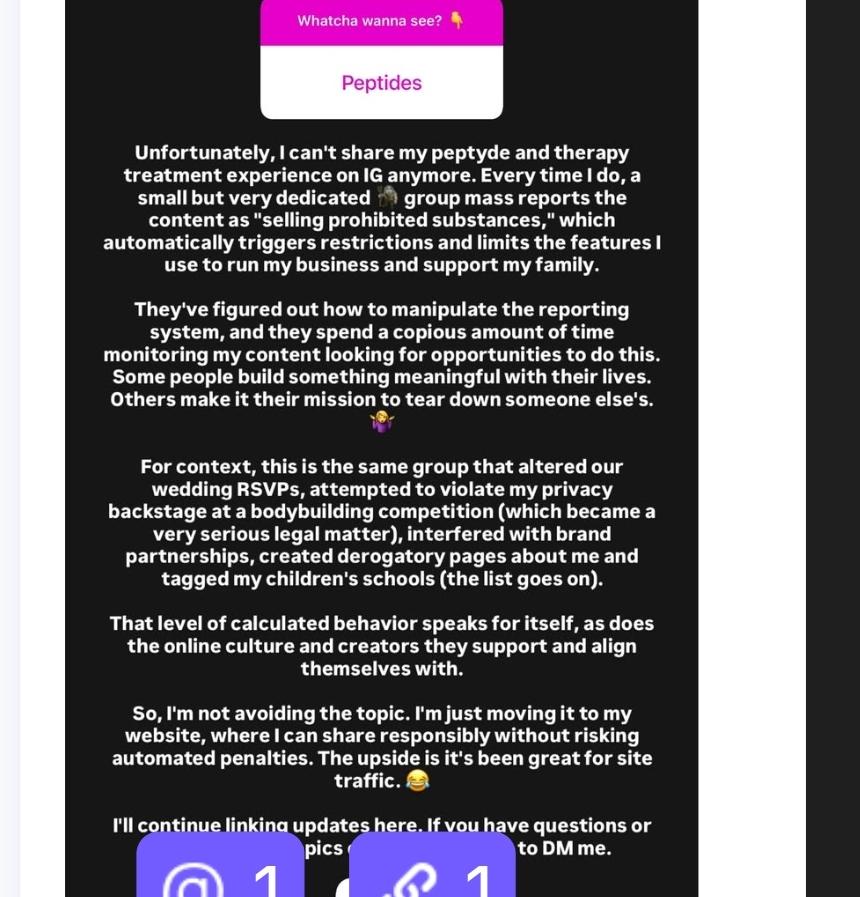
A major turning point in Megan’s recent online behavior came when several of her posts were removed for violating platform rules around medical misinformation These posts centered on peptides and BODi-aligned wellness products, framed in ways that implied medical benefits, hormonal effects, or therapeutic outcomes. Influencers often present such content as personal testimony, but platforms classify it as unlicensed medical advice, especially when it touches on metabolism, hormones, or disease-adjacent claims.
When the posts were taken down, Megan responded publicly and emotionally. She framed the removals as censorship, unfair targeting, mass reporting, and an attack on her ability to “share what works.” This reaction is common in the fitness-influencer world, where personal experience is treated as expertise and where the influencer’s identity is tightly bound to the idea of having discovered a secret to health that others “don’t want you to know.”
But from the platform’s perspective, the issue was not personal expression — it was consumer protection. Peptides occupy a medical gray zone, often requiring prescriptions, monitoring, and individualized risk assessment. When influencers present them casually or universally, it blurs the line between lifestyle content and medical advice.
For followers, the concern wasn’t censorship. It was safety. And for the subreddit, this incident became a catalyst for broader scrutiny — not because Megan “had a meltdown,” but because her reaction highlighted the tension between influencer authority, platform responsibility, and the real-world consequences of wellness misinformation.
The Subreddit: A Cultural Artifact, Not a Hate Mob
r/JoelFreemanEwoldsen is often misunderstood by people who haven’t spent time in spaces like it. It isn’t a hate mob. It’s a community built by people who once believed in the dream — the programs, the influencers, the transformations — and now feel misled, manipulated, or simply exhausted.
The subreddit functions as a watchdog space where users document contradictions, inconsistencies, and marketing tactics. It also serves as a snark space, where humor and sarcasm become coping mechanisms for people processing disappointment. It is also a processing space for former customers, former coaches, and former followers who are trying to make sense of their experiences.
Many of the people posting there aren’t angry at Joel or Megan as individuals. They’re angry at the system that shaped them — a system that rewards curated authenticity, emotional manipulation, and relentless positivity. The peptide incident didn’t create the subreddit’s skepticism. It confirmed it.
How the Subreddit Polices Itself
One of the most misunderstood aspects of the r/JoelFreemanEwoldsen community is the way it regulates its own behavior. From the outside, people often assume that snark spaces operate without boundaries, but this subreddit has a clear set of rules designed to prevent harassment, doxing, and personal attacks. The community draws a firm line between criticizing public content and invading someone’s private life. Posts that reveal personal information, speculate about children, or attempt to track down offline details are removed quickly, and repeat offenders are banned.
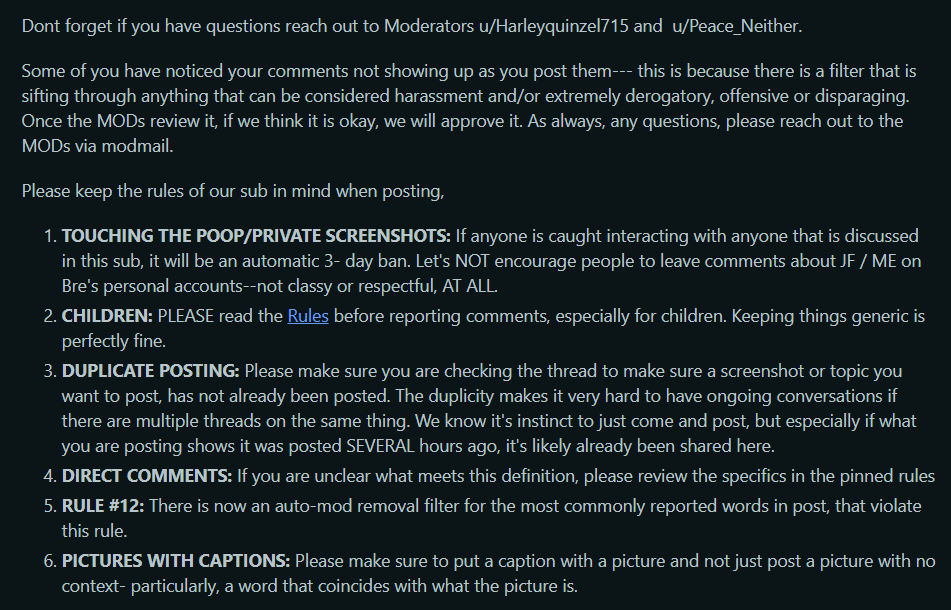
The moderators emphasize that the subreddit exists to analyze patterns, marketing tactics, contradictions, and the broader system surrounding BODi and its influencers — not to target individuals in their private lives. Users are encouraged to focus on publicly posted behavior, not personal identities or unverified rumors. This distinction matters, because it reflects the community’s underlying purpose: documenting the consequences of a system, not harming the people caught inside it.
The result is a space that functions more like a watchdog group than a mob. It’s a place where people process their experiences, critique harmful messaging, and hold influencers accountable without crossing into the territory of harassment. The rules aren’t just guidelines — they’re a statement about what kind of community this is and what kind it refuses to become.
The Patterns the Community Reacts To
One of the most striking things about this subreddit is how consistent the themes are. Users aren’t just pointing out random moments; they’re documenting patterns.
The first pattern is transformation marketing. Fitness influencers often present dramatic before-and-after photos, tight timelines, and “I did this, so you can too” messaging. The subreddit reacts to inconsistent timelines, repeated use of the same images, and claims that feel unrealistic. This isn’t about attacking bodies — it’s about questioning the ethics of selling transformation as a product.
The second pattern is emotional sales tactics. Coach culture often uses shame, guilt, urgency, and scarcity to drive sign-ups. The subreddit documents these tactics because they feel manipulative, not motivational.
The third pattern is parasocial contradiction. Influencers build intimacy by sharing vulnerability and “real talk,” but when followers perceive inconsistencies or curated authenticity, they feel betrayed. The subreddit becomes the place where that betrayal is processed collectively.
Why This Pattern Keeps Repeating
Fitness influencing rewards extremes. Influencers are rewarded for looking exceptional, selling transformation, and appearing relatable while being aspirational. This creates pressure to edit photos, curate narratives, and hide the structural advantages that make their lifestyles possible.
Coach culture rewards emotional compliance. It thrives on loyalty, community pressure, and relentless positivity. This creates burnout, breakdowns, and emotional volatility — the exact kind of meltdown that started this entire journey.
Parasocial relationships magnify everything. When influencers build intimacy, followers feel personally invested. When contradictions appear, the emotional fallout is intense.
This isn’t just about Joel and Megan. It’s about the system that shaped them and the followers who got caught in the crossfire.
The Coach Making Illegal Medical Claims Problem
A recurring issue in the BODi ecosystem is the way coaches and influencers drift into making medical claims they are not legally allowed to make. The business model encourages them to speak with confidence, present personal routines as universal solutions, and frame supplements as tools that can “fix” or “balance” the body. Over time, this creates a culture where wellness advice becomes indistinguishable from medical advice, even though the people giving it have no clinical training or legal authority.
This isn’t a matter of bad intentions. It’s structural. Coaches are rewarded for sounding like experts, even when they aren’t. They’re encouraged to talk about hormones, metabolism, gut health, inflammation, and recovery as if these are lifestyle topics rather than regulated medical territory. The moment a coach implies that a product can alter physiology or improve a medical condition, they’ve crossed a legal boundary — one that platforms are required to enforce.
When moderation happens, it often triggers defensiveness and public frustration, because the influencer believes they are simply “sharing what works.” But the deeper issue is that the system itself pushes unlicensed individuals into making claims that only licensed professionals are allowed to make. The community’s concern isn’t about silencing influencers; it’s about the safety risks created when medical authority is performed rather than earned.
The System That Creates the Fallout
The tensions surrounding BODi, its influencers, and the communities that watch them aren’t isolated incidents. They’re the predictable outcome of a system built on transformation narratives, unregulated wellness advice, and the illusion of authority. Influencers are encouraged to present themselves as experts, even when their expertise is self-constructed. Coaches are pushed to sell solutions they aren’t qualified to explain. Followers are taught to trust personalities over professionals. And when the boundaries of legality or safety finally push back, the emotional fallout plays out publicly.
The subreddit that documents these moments isn’t a mob; it’s a record of the consequences. It’s a space where former customers, former coaches, and former believers process the gap between what they were promised and what they experienced. The scrutiny isn’t born from cruelty. It’s born from disillusionment, frustration, and a desire to understand how something that claimed to empower them ended up feeling exploitative.
The story here isn’t about one influencer’s reaction or one community’s missteps. It’s about the ecosystem that produces these patterns over and over again. A system that rewards confidence over competence, performance over transparency, and emotional persuasion over informed consent will always generate conflict, confusion, and backlash. The peptide incident, the moderation, the defensiveness, the community response — these are symptoms, not anomalies.
Understanding that system is the first step toward recognizing why these cycles repeat, and why so many people eventually walk away from them.
By Beth Gibbons (Queen of Karma)
Beth Gibbons, known publicly as Queen of Karma, is a whistleblower and anti-MLM advocate who shares her personal experiences of being manipulated and financially harmed by multi-level marketing schemes. She writes and speaks candidly about the emotional and psychological toll these so-called “business opportunities” take on vulnerable individuals, especially women. Beth positions herself as a survivor-turned-activist, exposing MLMs as commercial cults and highlighting the cult-like tactics used to recruit, control, and silence members.
She has contributed blogs and participated in video interviews under the name Queen of Karma, often blending personal storytelling with direct confrontation of scammy business models. Her work aligns closely with scam awareness efforts, and she’s part of a growing community of voices pushing back against MLM exploitation, gaslighting, and financial abuse.


Leave A Comment