


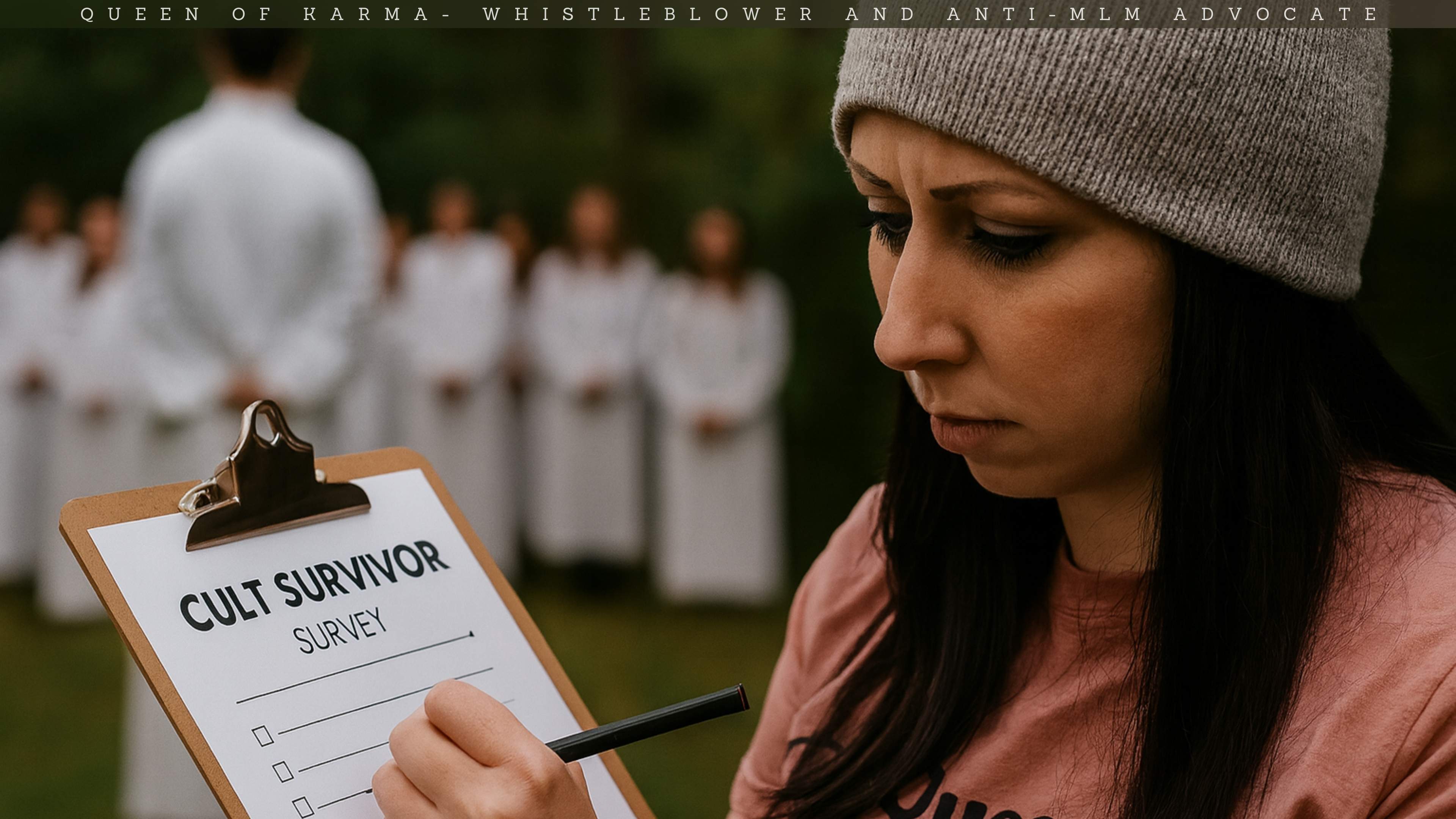
Nobody chooses to join a cult. What draws people in is not free will but carefully engineered manipulation. Cults rely on psychological tactics (such as love-bombing, false promises of belonging, and manufactured trust) to convince individuals that they have found a safe and supportive community. In reality, these groups exploit vulnerability and human needs for connection, gradually replacing autonomy with dependency.
For decades, researchers, advocates, and survivors have worked to unravel the mechanics of these tactics. Each step forward brings us closer to understanding the broader framework of coercive control. The Beyond Belief submission to the Victorian Parliamentary Inquiry into coercive control represents a watershed moment in how society understands cultic abuse and high-control groups. As one of the survivors who contributed testimony to the Victorian Parliamentary Inquiry, I know firsthand the urgency of shifting from belief-based frames to behavior-focused paradigms. Let’s explore the findings of the report, situate them within broader debates on coercion and autonomy, and underscore why survivor-led advocacy is essential for reform.
Behind The Scenes
The Beyond Belief Submission to the Victorian Parliamentary Inquiry presents a detailed survivor-led analysis of group-based coercive control. The information was attained through a combination of survivor testimony, academic research, and policy analysis. It reveals how coercive control operates through deceptive recruitment, systemic manipulation, and profound harm to individuals and communities.
The report moves beyond simplistic labels like “cult” to focus on behaviors and systemic control mechanisms, offering practical tools for legal and regulatory reform. This approach is essential because it centers the lived experience of survivors, providing a clearer understanding of coercion that is not dependent on belief or ideology.
The information was attained through survivor contributions to the inquiry, extensive literature review, and collaboration with experts in trauma, law, and human rights. This ensures the content is bot authentic and grounded in rigorous research.
By sharing this knowledge, the goal is to educate the public about the realities of group-based coercive control and to support survivor-led reform efforts worldwide.
Recruitment Dynamics
The report highlights how recruitment into coercive control groups is rarely a matter of free choice. Instead, it is a process of deception, grooming and exploitation:
- Deceptive promises: Groups present themselves as sources of healing, belonging, or transformation while concealing coercive agendas.
- Targeting vulnerability: Individuals in transition — whether through trauma, grief, or identity crises — are disproportionately recruited.
- Love-bombing: Early stages involve overwhelming validation and attention, creating dependency.
- Institutional infiltration: Schools, universities, charities, and faith communities often serve as pipelines for recruitment.
As a survivor, I experienced how quickly autonomy can erode under these tactics, long before I recognized the control being exerted.
Mechanisms of Control
The report synthesizes decades of research with survivor testimony to map out the mechanisms of coercion:
- Bounded choice (Lalich): Consent is compromised within closed meaning systems.
- BITE model (Hassan): Behavior, information, thought, and emotion are systemically manipulated.
- Trauma-informed insight: Prolonged control fragments identity and attachment.
- Group-Based Coercion Matrix: Six domains — cognitive, emotional, behavioral, social, existential, and linguistic — are assessed against human rights principles.
These frameworks validate what survivors have long known: coercion is not about belief, but about systemic control.
Impacts on Survivors
The findings document profound and lasting harm:
- Systemic dislocation: Survivors often lose family, housing, employment, and community.
- Persistent trauma: CPTSD, suicidality, and disrupted development are common outcomes.
- Gendered coercion: Women face forced marriage, sexual subjugation, and patriarchal control.
- Attachment disruption: Children raised in fear-based caregiving environments suffer long-term developmental harm.
- Digital surveillance: Spyware, forced account access, and harassment extend control beyond physical spaces.
- Medical comorbidity: PTSD is linked with chronic pain and illness.
My Own Journey reflects these realities: leaving the group did not end the harm, but began a long process of recovery.
Impacts on Families and Communities
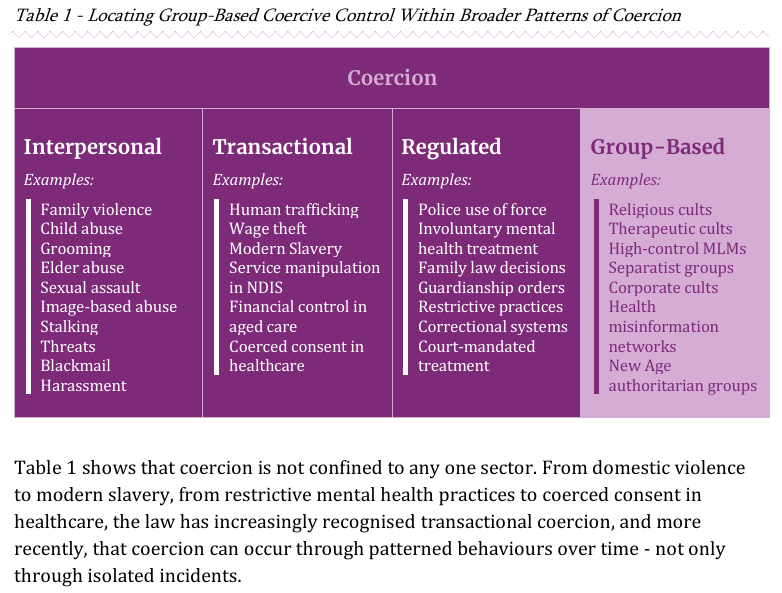
The report emphasizes that coercive control is not confined to individuals:
- Family enmeshment: Multiple members are recruited, reshaping hierarchies and loyalties.
- Estrangement and intimidation: Survivors face threats, defamation, and custody disputes.
- Community harm: Trust is eroded, whistleblowers are vilified, and systemic blind spots persist.
These ripple effects demonstrate why coercive control must be recognized as a public health and human rights issue.
Policy Paradigm: Group-Based Coercive Control
The report calls for a paradigm shift:
- Beyond “cult”: Belief-based frames obscure harm and stigmatize survivors.
- Behavior focus: Coercion must be assessed by actions, not ideology.
- Tools for reform: Group-Based Coercion Matrix, Risk-Pattern-Harm Model, Legal Mapping Tables, and Survivor Journey Models.
This framework provides regulators with practical tools to intervene before harm escalates. The report’s recommendations are clear and survivor-centered.
Their recommendations include:
- Survivor leadership: Embed lived experience in advisory and training roles.
- Legal recognition: Define group-based coercive control in law.
- Recovery support: Fund trauma services and exit pathways.
- Regulatory reform: Develop civil tools to intervene before criminal thresholds.
- Multi-agency coordination: Prevent siloed responses.
- Cautions: Avoid minimization, pathologizing survivors, or reframing harm as “lifestyle regret.”
In Conclusion…
The Beyond Belief report reframes coercive control as systemic, preventable harm. Victoria’s leadership in family violence reform shows that legal paradigms can evolve to protect autonomy and dignity. As a survivor who contributed to this inquiry, I believe this framework offers hope: not only for recognition of past harms, but for building safeguards that ensure future generations are protected from exploitation.

Survivor testimony is not just evidence — it is the foundation of reform. By centering lived experience, we can dismantle harmful myths, hold systems accountable, and create pathways to healing and justice.
I have included my submission, if you are interested:
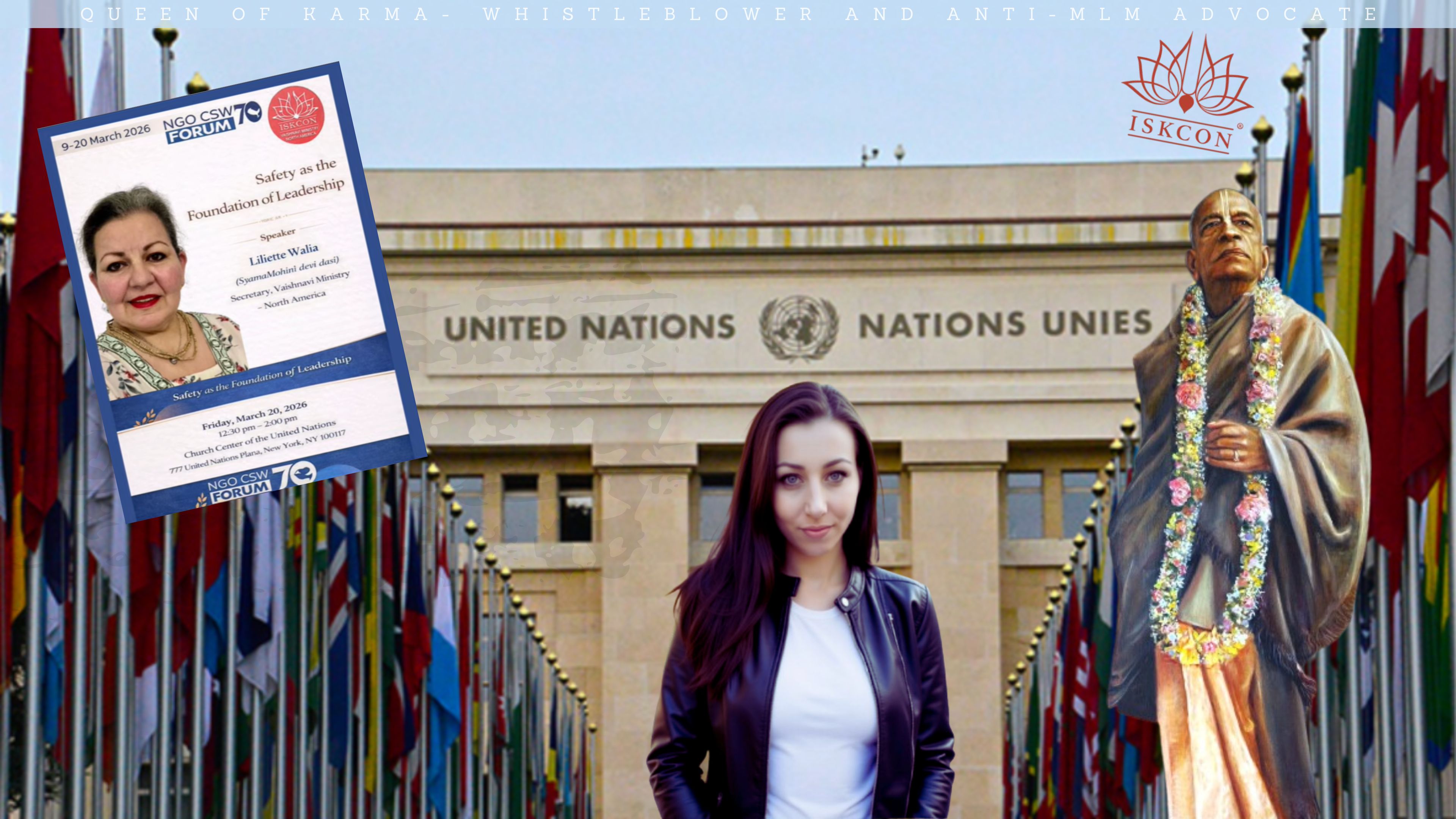
By Beth Gibbons (Queen of Karma)
Beth Gibbons, known publicly as Queen of Karma, is a whistleblower and anti-MLM advocate who shares her personal experiences of being manipulated and financially harmed by multi-level marketing schemes. She writes and speaks candidly about the emotional and psychological toll these so-called “business opportunities” take on vulnerable individuals, especially women. Beth positions herself as a survivor-turned-activist, exposing MLMs as commercial cults and highlighting the cult-like tactics used to recruit, control, and silence members.
She has contributed blogs and participated in video interviews under the name Queen of Karma, often blending personal storytelling with direct confrontation of scammy business models. Her work aligns closely with scam awareness efforts, and she’s part of a growing community of voices pushing back against MLM exploitation, gaslighting, and financial abuse.



Leave A Comment