



On a sprawling 12,000-acre ranch, thousands of followers of Elizabeth Clare Prophet — a woman they called Mother — were digging into the Earth. They built bunkers stocked with food, weapons, and supplies. They rehearsed survival drills. They chanted prayer in unison, their voices echoing across the valley like a strange, otherworldly chorus.
They weren’t preparing for winter. They were preparing for nuclear war.
The Valley of the End
Paradise Valley, Montana, looks like a postcard that never ages — big sky, thin air, the Yellowstone River cutting a line of silver through sage and meadow. In the late 1980s the ranch gates of one sprawling compound swung open to caravans of station wagons and buses packed to the windows. Inside were families who had sold everything — houses, businesses, heirlooms — to follow a woman they called Mother. They drove past signs warning of restricted access and parked beneath mountains that seemed old enough to witness anything. They were here to build a future underground.
They were followers of Elizabeth Clare Prophet, leader of the Church of Universal and Triumphant (CUT), and they believed they had been chosen to survive a coming nuclear war. They poured concrete. They stockpiled grain, generators, medical kits, Geiger counters. They practiced drills: who goes where, who carries what, how fast. When the siren sounded, you didn’t ask why. You ran.
Nights carried an eerie music. Hundreds of voices chanting “decrees” — rapid-fire spoken prayers delivered like a spiritual metronome. Children fell asleep to it, parents swore by it, and newcomers felt the sound burrow under the skin until resistance loosened. In that valley, under that sky, apocalypse felt both inevitable and manageable. The world would end, and they would live.
The Making of a Messenger
Elizabeth Clare Wulf was born in 1940 in New Jersey to European immigrant parents. She was a sickly child who encountered Christian Science early and internalized its promise of healing through spiritual law. In her twenties, she met Mark Prophet, a traveling salesman turned mystic who founded The Summit Lighthouse — a small but fervent circle blending Theosophy, esoteric Christianity, and a pantheon of “Ascended Masters,” enlightened beings said to guide humanity from subtler planes.

Elizabeth became Mark’s secretary, then his wife, and soon his partner in revelation. When he died suddenly in 1973, she took the mantle without hesitation. By 1975, she had formalized a new church — The Church of Universal Triumphant — and declared herself the Messenger, the uniquely anointed conduit for the Masters’ words. Under her leadership, the movement professionalized: retreat centers, schools, publishing arms, and a hierarchy of ministers and “keepers of the flame” who learned to organize, fundraise, and recruit with missionary zeal.
She was a paradox on stage — maternal and martial at once. Tailored suits and violet sashes; a softness that could turn steely mid-sentence; eyes that lingered on faces in a crowd with an intimacy many later described as disarming. “Mother” didn’t just occupy the pulpit; she filled the room.
The Teachings: A Cosmic Patchwork
CUT’s theology stitched together a thousand-year tapestry and called it now. Jesus was honored, but as one among many Ascended Masters. Karma operated like moral physics. Reincarnation threaded souls through epochs and civilizations. Saint Germain — the patron of the church’s “violet flame” —offered alchemical transmutation for sin and suffering. Atlantis and Lemuria were not myths so much as lost chapters in human development. America held a special destiny, a nation summoned to protect liberty and light.
At the center were decrees: spoken, paced, repeated until breath and rhythm locked. Members believed decrees cleared karma, banished dark forces, and build an energetic shield around people and places. In mass services the sound could feel relentless — a thrum of syllables like footsteps crossing a wooden floor, relentless and precise.
“We would decree for hours, our mouths cotton-dry, our throats raw. There was power in cadence — like plugging into a grid. Only later did I realize how much it bypassed analysis. You don’t think during decrees. You surrender to them.”
— Former member, remembered in a survivor support circle
Doctrine was a closed loop: the Messenger spoke; ministers taught; study groups reinforced the same frames. Doubt was reframed as darkness; questions as tests sent by the Masters. It made learning feel like ascending, and dissent feel like betrayal.
Recruitment, Belonging, and the Daily Machine
Most people didn’t arrive in Montana in purple robes; they came from living rooms, college auditoriums, yoga studios, Christian Science circles — places where esoteric ideas had already softened the ground. A friend invited them to a lecture. A book arrived in the post. A cassette talk found its way to a car stereo on a long drive. The pitch wasn’t fire and brimstone. It was purpose: you are not ordinary; you are called.
Newcomers were ushered into study groups run like small spiritual startups: calendars, goals, role assignments. There were decrees before dawn, communal work, classes for children, and regular “dictations” — the Messenger’s transmissions from the Masters, recorded and sold on tapes and later CDs. The community offered meals, child care, job leads, and an instant network of people who, for a time, felt incapable of betrayal. The social architecture mattered as much as the doctrine. You didn’t just attend; you belonged.
“When my husband and I first arrived, someone brought us a casserole and someone else fixed our radiator before the snow. It was the kind of neighborliness you dream about. Leaving felt like leaving oxygen.”
— Anonymous survivor
Belonging built the scaffolding for obedience. Over time, financial offerings escalated from donations to “pledges” to what many later described as pressure to sign over significant assets. It rarely felt coercive in the moment; it felt like underwriting a divine project. But bank accounts drained, and choices narrowed until obligations replaced agency.
Paradise Valley: Digging for the End
By the mid-1980s, the Messenger’s dictations sharpened. The Masters warned of a narrowing window. The Soviet Union, nuclear stockpiles, failing moral order-threads converged in a timeline that sounded both familiar (you could hear echoes on the evening news) and absolute (you could not hear them without the Messenger). CUT acquired vast acreage in Paradise Valley and began an ambitious civil defense program: blast doors, diesel, food-grade buckets, water systems, medical caches, maps, and assignments.
Children learned routes to their shelter pods. Parents practiced carrying infants and supplies while timing their runs. Guns appeared — “for protection” was the phrase adults used when children asked. There was a chirpy kind of cheeriness to the logistics — clipboards, duty rosters — but it sat atop a reservoir of terror. You can only set the table for apocalypse so many times before the table becomes the room.
“We slept with ‘go-bags’ under the bed. My mom had a list on the fridge — who grabs the baby, who grabs the meds, who grabs the prayer books. The first time the siren went during a drill I threw up. After a while, your body adjusts, and that scared me more than the siren.”
— Ex-member who was a child in the movement
To outsiders, it looked like a survivalist fever dream crossed with a New Age pageant — violet sashes and fallout shelters, ascended masters and MREs. Inside, it felt rational. The Cold War’s math made apocalypse thinkable, and faith gave apocalypse choreography.
The Non-Apocalypse and the Shattering
Then the calendar turned. The day and the season Prophet had urged them to prepare for passed without mushroom clouds. The shelters stood stocked, sealed, silent. Some members cried and laughed at once — relief laced with dread: what now? Others declared victory. The decrees had worked, they said. The Masters had interceded. The absence of annihilation was proof of salvation.
But the psychological scaffolding had taken a hit. Failed prophecy is a tectonic event in apocalyptic groups. For some, cognitive dissonance resolves through doubling down: we saved the world; therefore we were right. For others, it resolves by breaking: we were wrong, therefore everything collapses.
“I walked out into the Montana sun and felt like my bones were hallow. I’d built my adult life on a timetable that vanished. I didn’t know how to grocery shop without thinking about fallout. I didn’t know how to love my husband outside of a mission.”
— Former CUT member
The organization’s outer shell began to crack. Media framed CUT as a “doomsday cult.” Lawsuits and regulatory scrutiny followed — land use, taxes, weapons, zoning. Internal conflicts grew louder. Families divided between loyalists and leavers. Children — now young adults — bolted for universities and cities, sometimes without telling anyone, because telling anyone meant facing an argument they didn’t think they could win.
Life After the Bunker: Wounds and Reckonings
Leaving didn’t feel like leaving a club; it felt like stepping off a cliff. Everything outside had been framed as spiritually inferior or morally compromised. Ex-members describe mundane tasks — finding an apartment, booking a dentist — as existential tests. Therapy rooms in Bozeman and beyond filled with people disentangling faith from fear, purpose from performance, love from loyalty.
“There are skills you don’t learn when the future is a bunker. How to plan for next summer. How to commit to a job because you won’t be underground in six months. How to raise a kid to dream about college instead of rations. It sounds small until you realize it’s your whole life.”
— Survivor, years after leaving
Some families reconciled. Others never did. Financial recovery varied widely — those who held back assets rebuilt; those who signed over everything spent years in economic gravity. A few splinter groups kept versions of the teachings alive. The main organization, reduced and scattered, maintained services and study groups, but the era of mass rallies and shelter drills was over.
In the late 1990s, Elizabeth Clare Prophet was diagnosed with Alzheimer’s disease. The Messenger’s voice — once the drumbeat of certainty — dimmed. She died in 2009. The church she left was quieter, smaller, a shadow of the mobilized machine that had once dug into Montana ground to meet the end.
The Psychology of Apocalypse
To grasp CUT’s pull, you have to see the psychology in context. The Cold War saturated everyday life with existential threat. In that environment, three mechanisms moved people:
- Fear transmuted into certainty: Fear scrambles cognition; certainty calms it. Prophet offered a coherent narrative: the world is perilous, but there’s a plan, and we have it. That swaps helplessness for agency. Even terrifying certainty is easier to bear than shapeless dread.
- Charismatic authority: Max Weber’s “charisma” isn’t just charm; it’s the perception of extraordinary access to truth. Prophet’s mix of warmth and command created a suggestibility loop — listeners felt both cared for and directed. In that state, messages bypass skepticism and land as guidance.
- Belonging as anesthesia: The communal structure — shared work, rituals, language — acts like a social sedative. Belonging reduces the felt cost of conformity. When your identity, childcare, employment, and friendships all live inside the same circle, disagreeing means risking social oxygen. Most people choose air over argument.
“I didn’t join a cult, I joined a family that knew my name. The doctrine came later — almost like the house rules. You don’t notice the rules until the house starts to feel small.”
— Anonymous survivor
Philosophically, CUT met a hunger that’s rarely acknowledged but widely felt: the desire to inhabit a story larger than yourself. Being “chosen,” fighting “darkness,” participating in civilizational mission — these frames supply meaning at industrial scale. They sanctify sacrifice and soften the pain of ambiguity. Once installed, they’re potent and resilient.
The Sociology of Collapse
Movements like CUT don’t fall only because prophecy fails; they fall because the social architecture that sustained belief can’t absorb the shock.
- Centralization and fragility: Authority concentrated in the Messenger. When her predictions failed — and later, when her health declined — the legitimizing center weakened. Decentralizing communities can adapt; centralized ones fracture.
- Ritual inertia vs. reality checks: Daily decrees and routines created behavioral inertia. But external pressures such as media, regulators, lawsuits introduced repeated, undeniable reality checks that rituals couldn’t metabolize.
- Boundary maintenance breaks: CUT relied on strong boundaries (us vs. them; light vs. dark). As members left and returned with firsthand accounts of life outside, boundaries blurred. Hybrid identities emerged — ex-members who still loved aspects of the community or practiced but rejected apocalyptic control. That hybridity is kryptonite to absolutist frameworks.
- Generational churn: Children raised in movement schools met broader culture — universities, workplaces, relationships — and developed plural identities. Many refused to return, even when parents stayed. That breaks transmission and accelerates decline.
Sociology predicts that groups either harden into small, insular remnants or diffuse into mainstream-adjacent communities with softened doctrines. CUT did some of both. The bunker era ended; the archive era began.
Philosophy and the American Idea
CUT’s cosmology wore an American face. The frontier myth — remaking a world at the edge of known maps — found new expression underground. Survivalism, patriotism, and esoteric spirituality braided into a narrative of choice: America as a stage, followers as cast, history as script.
That philosophy does real work. It turns contingency into destiny, randomness into pattern, vulnerability into vocation. Its danger is the price it demands: obedience to a singular interpreter of meaning and a willingness to subordinate personal judgment to cosmic frames. In CUT, the Messenger’s authority was the hinge. Turn the hinge, the door swings; rust the hinge, the door sticks; remove the hinge, the architecture collapses.
“We were taught God spoke through Mother. If the world is ending and God is talking through your pastor, you don’t weigh pros and cons. You pack the bags.”
— Former member
Scenes from Inside: Survivor Vignettes
The night of the drill
“We were in the kitchen when the siren went. My dad grabbed the baby, my mom grabbed the radio, I grabbed the decrees. We ran past neighbors doing the same ballet. Underground, the air smelled like plywood and bleach. People whispered like church. I remember thinking: if this is the end, it sounds like a library.”
— L., left in the 1990s
The cost ledger
“I signed over my inheritance in a burst of faith I wish I could bottle and throw into space. At the time it felt like underwriting destiny. Years later, the spreadsheets are a map of grief — numbers I can’t get back attached to a future that didn’t arrive.”
— M., accountant, left in the early 2000s
The first ordinary summer
“After I left, I planted tomatoes. I planned nothing bigger than dinner. The first July thunderstorm I didn’t check the radio. I sat on a porch and let the rain hit my knees. I cried because I didn’t have a mission anymore. Then I cried because I didn’t need one.”
— J., grew up in CUT
What CUT Reveals About Manipulation — and Resilience
CUT reveals a lot about manipulation but it also teaches us about resilience.
- Manipulation thrives on ambient fear: Leaders don’t need to invent dread; they harvest it. The Cold War primed the pump. CUT offered a vial labeled “control.”
- Systems beat slogans: The daily routine is the real lever — sleep schedules, chant cadence, volunteer rosters, donation cycles. Control arrives as calendar entries, not thunderbolts.
- Exit requires replacement, not void: People don’t leave a totalizing community into nothing. Successful exists are scaffolded — new networks, practical support, and ordinary rituals that rebuild the muscle of self-trust.
- Survivors carry wisdom: Many ex-members become the best teachers of critical thinking and compassionate skepticism. They know the instruments by their sound.
The Long Tail: Legacy and Lessons
Elizabeth Clare Prophet died in 2009, but her movement’s residue remains — in archives, in Montana’s shelters, in small study groups, and most of all in the bodies and memories of people who lived the doctrine at scale. CUT is a case study in how American spiritual entrepreneurship can hitch mystical ideas to survivalist machinery and produce something both mesmerizing and damaging.
It’s also a mirror. Anytime a leader promises certainty in exchange for surrender, anytime a community converts belonging into leverage, anytime fear becomes the drumbeat of faith, the pattern reemerges with new names and new costumes. The content changes; the structure recurs.
“People ask if I regret it. Regret is too simple. I understand why the story worked on me. I also understand my life better for having left. Both can be true.”
— Survivor reflection
The Prophet Who Wasn’t
The bunkers in Paradise Valley stand like fossils of a story that failed to become fact. Elizabeth Clare Prophet’s voice — once the metronome of a thousand prayers —has gone quiet. What remains is a cautionary chord about the human hunger for certainty and the costs extracted when certainty is placed in another’s hands.
CUT promised survival. What it delivered, in the end, was a lesson: apocalypse sells best to the people already afraid, and it’s always the leaders who profit first. The rest are left to climb back to the surface and relearn the ordinary: tomatoes in July, porches in the rain, dinners planned one day at a time.
If you read this until the end, you know the mechanics — how it began, why it pulled, how it cracked, and what it left behind. And if you’ve lived any part of it, you know something deeper still: leaving a doomsday cult is not the end of fear; it’s the beginning of your own story.
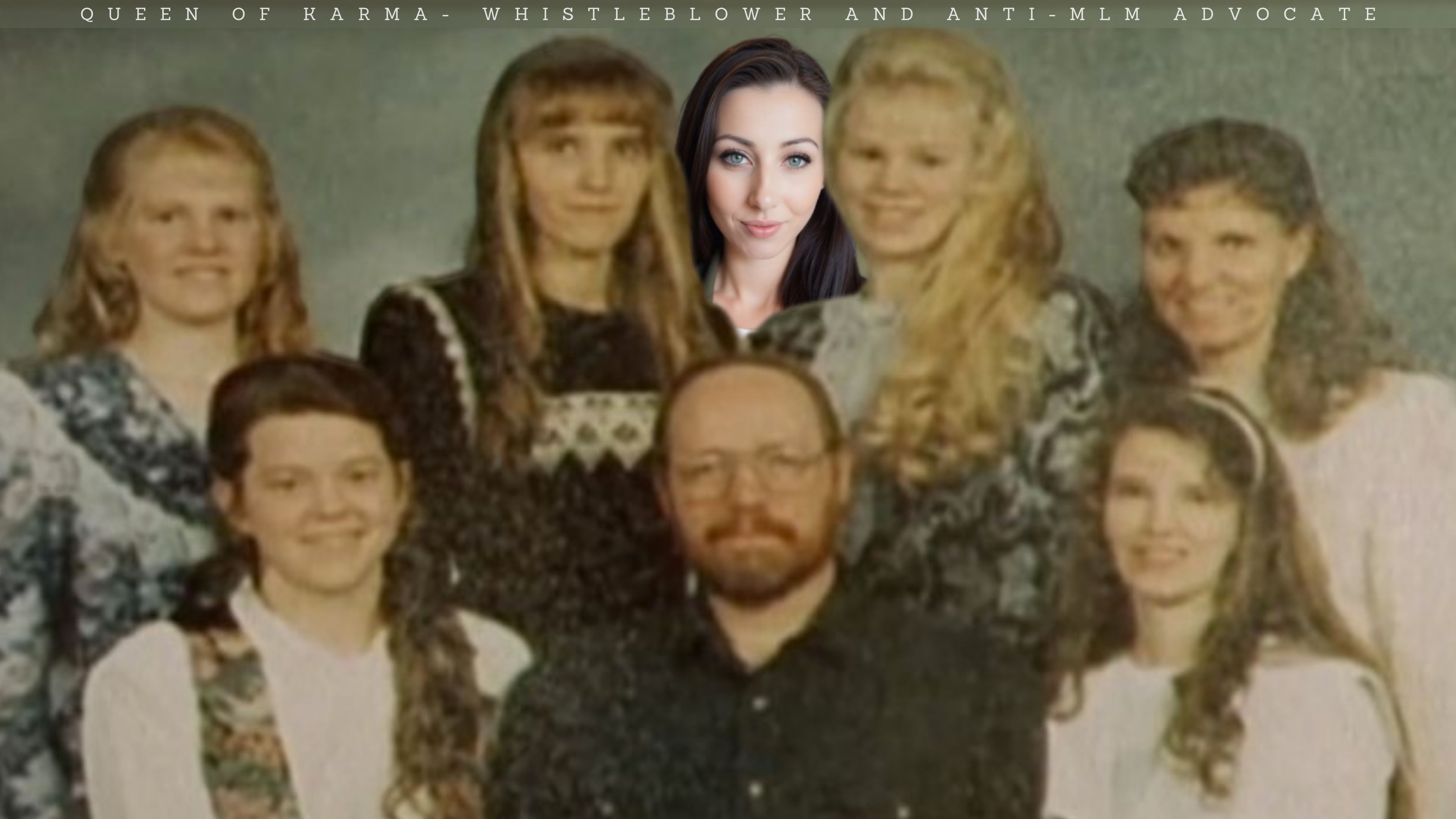
By Beth Gibbons (Queen of Karma)
Beth Gibbons, known publicly as Queen of Karma, is a whistleblower and anti-MLM advocate who shares her personal experiences of being manipulated and financially harmed by multi-level marketing schemes. She writes and speaks candidly about the emotional and psychological toll these so-called “business opportunities” take on vulnerable individuals, especially women. Beth positions herself as a survivor-turned-activist, exposing MLMs as commercial cults and highlighting the cult-like tactics used to recruit, control, and silence members.
She has contributed blogs and participated in video interviews under the name Queen of Karma, often blending personal storytelling with direct confrontation of scammy business models. Her work aligns closely with scam awareness efforts, and she’s part of a growing community of voices pushing back against MLM exploitation, gaslighting, and financial abuse.





Leave A Comment